
Also Available On






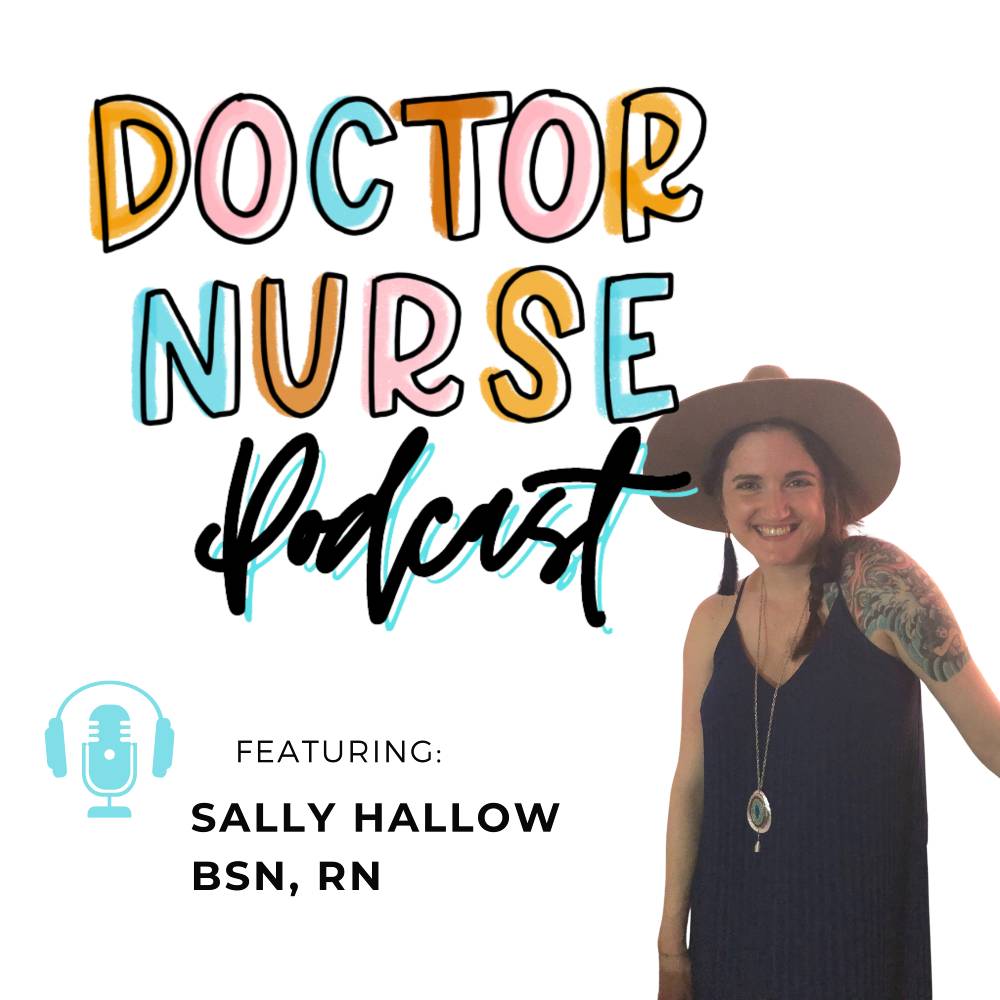
Sandra Pagenta: [00:00:00] Welcome Sally onto the doctors podcast. Sally is a bachelor’s prepared nurse. She finished her degree in 2017 after obtaining her associate’s degree in 2016. She has experience in med-surge tele and floating and has had. An absolute love for the fast paced environment of the floor after battling postpartum depression and postpartum anxiety with her second son, she went per diem to focus it on her family and her mental health.
So she’s learning how to set boundaries and make her career work for her. And through that she developed something called the nurse mama program.
Sally Hallow: We’re shooting mama method. Yeah.
Sandra Pagenta: And so she developed this program to help new nurses and new moms find themselves after having the baby and kind of getting back their lives.
Setting good boundaries and really finding themselves after they have a baby and they go back to work or stay at home or whichever. Right. So she’s married [00:01:00] and she has two boys, Rocky and sunny, and she likes to on her free time do a little bit of reading, cooking, gardening, and stuff. So super great.
Thank you for being on and yeah, let’s dive right in Sally. So what is your current job, your current role? Tell us what you do for work.
Sally Hallow: Okay. So right now I am a per diem nurse I kind of just pick and choose where I want to work and when I want to work. So I’m all set. Kind of a travel nurse, but I only work at hospitals nearby.
So because the rates are just so high right now, I’ll pick up like an eight week contract or a 13 week contract. And then I’ll take a little bit of time off in between. So just very flexible, but still working MedSearch float pool. I love it because. I tell them when I’m working.
And I work when I want, and I make more money working two nights a week than I ever made working full-time
Sandra Pagenta: at the bedroom
Sally Hallow: serious. I’m [00:02:00] serious because the rates are just so much higher..
Sandra Pagenta: So then that’s kind of your main gig.
Sally Hallow: So probably about a year ago, I would say maybe not quite a year ago, I started my entrepreneurial journey and I started my own business.
And what I do is 12 week mentorship programs for nurse moms. That’s my only clientele. So that they can feel like they can enjoy their lives, have work-life balance, have Things that light them up in time outside of just being a nurse and a mom. Because that was a long journey for me to get there.
So I kind of get made like the CliffsNotes version to give to other moms.
Sandra Pagenta: That’s really good. So by going through your journey with your sons, you took some time to kind of reflect and figure out what it is that you would have needed. Coming right out of the birth of your sons. And then you were like, let me give that information to new nurse
Sally Hallow: moms.
Yes. Because I don’t want anybody to feel how I felt[00:03:00] after I had my kids and went back to the bedside. I just felt like after work and taking care of my kids, there was nothing left over. I had given everything I had to give. And I wasn’t enjoying my life. I was just getting through. My life, , like getting through this 12 hour shift, getting through my days off so that it could be go back and that’s not a great feeling.
I just want all them to be in a place where they can actually enjoy their kids and enjoy their work and enjoy time away from all of that. Because, , we were human beings before we became nurses and moms. So you had to get back to.
Sandra Pagenta: I identify with that so much, because that was exactly my same journey.
And I remember my first day back at work, after I had my son, I cried the entire walk into work. And I remember walking in the door and they were like, welcome back. And I was like, welcome back. Like I just miss my baby. This is [00:04:00] not welcome back. Like, I remember being so bummed. And when I, when I read your story and your bio and your journey, like what are the things that you recommend to a new mom that is going back?
What’s something that you could say, when a mom contacts you, where do you start them in that process?
Sally Hallow: There’s a lot of guilt, right. For a working mom. I would say the first thing is to reframe that guilt. So I felt guilty that I couldn’t be there with my son every second of every day that I was missing things.
And that I had to work for so long because I work 12 hours. I was gone. Before he woke up and by the time I came home, he was in bed already. So I just felt like I’m missing so much for me that looked like cutting back on my hours at work. So I would miss less. But also if that’s not an option to reframe how you look at going to work and what kind of.
Lessons, you’re going to be teaching your [00:05:00] children when they look back and say, oh wow. My mom worked really hard. She had a job that she enjoyed, hopefully. That’s the first thing is there’s just this overwhelming sense of guilt about everything, but there’s always a way to reframe that.
Something that’s actually gonna make you feel good. So that’s usually my first piece of advice
Sandra Pagenta: when you take on a nurse
Sally Hallow: yes. And to set boundaries at work because your family is more important than your job. I’m gonna say it like you could die tomorrow and there’d be a new nurse, , working your jobs.
So. But that’s your family’s not going to recover as quickly. So I just encourage moms to like look at what’s the most important thing, and then put the energy and focus on that. And don’t stress so much about the work stuff, especially when they’re asking you to like pick up extra and switch shifts and all of that, like, don’t feel bad setting that boundary to be like, no, I can’t do that.
Sandra Pagenta: Yes, yes, yes, yes. And [00:06:00] so, so kind of what you’re describing is something that I had spoken about on another podcast, which is this idea that nursing supposed to work for you. When I went to my boss and I said, because I was full on ready to quit , I was unhappy. I had done it for three months working four tens.
So I’d wake up, go to work. My kid was asleep and then I would come home and I got maybe two to three hours. And with my kid before it’s time to go to bed. And I’m like, I only seen him like three horses today. Like, that’s just, he’s been up for 12 and I’ve only seen three. It was just, like you said, that you killed that you carry throughout the whole day.
And then you feel guilty when you’re at work. I think you’re right. I think reframing the job and just reframing what it is that you’re doing for your family is super helpful for me.
That’s one of the things that I’ve kind of tuned into, like, I know what I’m doing cause I’m helping my family and in that Thinkspace space, I feel a lot better about leaving. So I think that’s a really good tip, but also changing your nursing career and going, I’m just going to forgo without the cat.
And I’m going to go in and do this [00:07:00] thing, because this is going to bring me more happiness, but sometimes more money doesn’t bring you happiness, right?
Sally Hallow: No, I feel like there’s like out there that says there’s like a set amount of money that if you don’t have that, you’re unhappy because you can’t support yourself, but then you can go up exponentially.
It doesn’t add any joy.
Sandra Pagenta: Exactly. Exactly. And so that was a conversation I had with my husband. I said, , this we’re at that number. We should be fine. Let’s adjust our lifestyle so that I can have the peace of mind of knowing. I spend more days with my son at the house. And so that I think is just fantastic advice
Sally Hallow: I just wanted to say to another reframe that I made is that my time is the most valuable. Thing, not the money is the time. So as soon as I think about things is in terms of, well, how much time is this going to take? Do I really want to spend my time doing this? The money is like secondary.
Sandra Pagenta: When my kid hit the planet, my time became, I can’t even put a value number on it.
It was just like, [00:08:00] I, this is the most valuable resource I have. So a shift, I’m giving them my life for that shit. Right. Again, that mindset change of like, Nope, I don’t need to look at it that way anymore. Like, this is my life now I’m giving away. I’m taking away time from my kid.
For you. So you’re going to pay me for one. I’m going to get paid. You’re going to make sure it’s, it’s it’s lucrative, but then also do I’m really going to weigh my lifestyle against that and say like, I don’t need these things to have that lifestyle. If it means I’m not going to be able to have my time, let go of that stuff.
That’s really good. I like that. What was your specific journey to this spot in your career? And I, and we had spoken about it a little bit before the podcast, but kind of tell me what you went through from the time that you graduated your first degree, your associate’s degree in 2016, kind of what inspired you to be a nurse and then kind of lead me through and walk me through the process of where you got.
So you’re here now doing kind of this, this dual role.
Sally Hallow: Sure. So nursing is actually, my second was my second career. I went [00:09:00] back, I think I was 30. When I went back to school, I used to work for NBC news as a content moderator, which is like the person who reads the comments and like deletes all the really bad ones.
Sandra Pagenta: Oh,
Sally Hallow: six years. I want to say. And after even just a couple of years, that’s when I went back to school and I was like, this job is going to burn me out so quickly. Cause you just see everything negative. That I’m constantly, I was like, I can’t do this. So that’s when I started thinking, oh, what do I want to do with my life?
I want to help people. I want to. Not be in front of the computer all the time. So that’s kinda what led me into nursing. So my last semester of nursing school, I found out that I was pregnant. I did not know I was pregnant until I was 25 weeks. Yeah. Figured it out when he started kicking. Then he came. He was born in January. I graduated in June and I started [00:10:00] my first job in like July or August. So starting my journey as a nurse and a mom at basically the same exact time. And it was very overwhelming learning everything to be a med surge nurse is overwhelming as it is.
Plus add on top of that. Trying to figure out mom’s stuff, trying to work twelves when I’d never worked twelves before. Nights trying to figure out when to pump when I was going to have time to do that. It was a lot. And so, like I was telling you before, I think I had undiagnosed postpartum with my first and then just didn’t I didn’t realize it because everything was so new.
I didn’t really realize that something was off. But when my second son was born, I’d been a nurse for a few years at that point. And Going back was when I just started to feel really depressed and anxious about the idea of having to go back to work after my maternity leave ended. And I had like a [00:11:00] meltdown where I was just couldn’t get out of bed.
Couldn’t take care of my kids. Couldn’t do anything. Cause I would just felt so much anxiety and stress and. Was miserable. My husband found me like that and he kind of started the ball rolling to get me into CSI psychiatrist who. Told me, I was battling postpartum, which I pretty much already knew, but then she wrote me a prescription for antidepressants.
And then I went home and said, okay, whatever, I’m not, I’m not taking these, I’m going to fix it all myself with self care. And I tried that for a few weeks. It did not work. And I ended up going on the medication. So at that point, I was back at work full-time day shift, med surge and it just, I tried it for awhile.
It did not work and maybe made it 11 months after the birth of my son. So maybe like six months of being back full-time before I just was like, this is not. Is, I just don’t have enough time with my kids and [00:12:00] it, for me, it wasn’t even so much the 36 hours a week that I worked, it was that I didn’t get to make my own schedule.
It was, they, they tell me when I come in and they tell me like three months in advance. And a lot of times stuff would come up and no one would switch with me and it gave me so much anxiety. And that’s when I was like, what, if I go per diem, I can still work three days a week, but at least I get to tell them what the days are.
And I can tell them that day if I want. Yeah. That’s when I made the switch and I have not looked back since I’ve been very happy with my decision to do that. It’s been very flexible. So that was February 3rd, 2020 that I went per diem. And then obviously the pandemic hit in March. And I would say probably that following fall is when I was like, , Imagine if I was in the place I was before and going through all of this stuff with the pandemic, I don’t know how [00:13:00] people are doing it.
And that’s what really called me to start this business. It really started as a community, just for nurses and moms to kind of come together and feel like they had support and grew from there to where now I do mentorship because. It’s just a lot. There’s a lot. And. I just feel like nurse moms need support and need somebody in their corner telling them like, yep, I get it.
I’ve been through the exact same things and I still go through it, but it can get better, , it’s not perfect. But it can be a lot better.
Sandra Pagenta: I had a girlfriend of mine. She ran into me yesterday and she was like, Hey, how are you? And I did like the same thing of good. How are you?
And she said, good. And then I just went, I’m not good. I’m not, it’s a lot being a mom. Working being a nurse, working in the hospital and the whole vaccinate and vaccinate don’t please vaccinate mandatory vaccinations. You don’t vaccinate. You get COVID. If you do get vaccinated, you still get [00:14:00] COVID. It’s just this constant mask don’t mask.
I mean, it is draining. And whenever you’re standing there on the front lines and you are taking care of people, and you’re supposed to smile and be happy and take care of people and then come home and be this mom that’s on. And she just kind of looked at me and I was like, so yeah, you might not want to ask me how I’m doing. I thought it was so great that way you said that because it’s like, I you’re right.
It is a lot like, and I think it’s okay for, for moms and nurse moments to just go like, I’m overwhelmed. Like I need an outlet. I need someone to talk to. What services do you provide for your mentor?
Sally Hallow: So we do weekly calls as a group every other week, and then individually, every other week.
And so I do lessons about things like finding time for yourself and how to boost your energy and how to set yourself up with good routines and that kind of thing. And then a lot of times, One-on-one supporting them with what they need that week. So I just got off a [00:15:00] call and, we just talked about things that went well for her that week things that didn’t go well for her that week.
And that gave her a little bit of advice on how she could improve the things that didn’t go so well. I know nurse moms are very busy, so I CA I give homework, but it’s. Very little, the homework, and it’s just really taking very tiny gradual steps towards making your life better. But it’s very like baby steps because that’s how you actually stick with it, ?
And I feel like that’s me ever since I got diagnosed with postpartum, I started taking medicine. It’s just every day taking like a little tiny step in a direction that’s gonna make me feel better. And so maybe I’m like just a year ahead of the women that I work with on that journey, but I’m still working on stuff too.
Back to what you said. The reason why it’s so difficult for us right now is because there’s no break. So you’re a nurse. So you’re taking care of people at work and then [00:16:00] your mom, so you’re taking care of people at home, and then you’re in the middle of a pandemic. So you’re hearing all about it at work and worrying about people at work and patients with COVID patients without COVID and then you come home and it’s like, now you’re worried, , about your kids getting COVID or.
So there’s no break. It’s not like there’s no off time.
Sandra Pagenta: Yes. Exactly. I think it’s great to one, I think bring awareness to that and create a space where people can feel safe going I’m overwhelmed and I need help. And I think that’s also some of the first steps is just admitting, right?
Like we need help. And another thing that you said that made me think about, I think it might be scripture, but it talks about how a little tiny rudder can move a big ship. But that like these huge cruise ships have little tiny rudders that like move them just a little bit. And then it changes the entire directory that the ship is moving.
Right. And so it’s like, you don’t need to make huge big changes. It could just be as simple as growing. I’m not going to work that one day a week. And that might be the [00:17:00] thing that changes it for you, or, what? I now have this really great, , Driven thing that I do every day. And I just do the same thing every day.
And it gives me a sense of control when I get ready in the morning or whatever
Sally Hallow: it is. I would say that actually, when you try to make those big sweeping changes, it’s usually not successful. Like, think about new year’s resolutions. Like I never say to my new year’s resolutions, we were for like a day or like a week.
And then I forget about it because it’s not sustainable. You the little changes and the little tweaks are gonna make the lasting change. It takes a long time, but you kind of start building momentum too, ? So maybe one little thing and then it builds and builds.
Sandra Pagenta: So it was thinking of two books, the first being atomic habits, that’s one book that is so good about kind of reshaping your mind on things.
And then another book called the compounding effect, which is just the little things compounded or the things that create great change. Give me an example of in your career, [00:18:00] one of the bigger successes that you had
Sally Hallow: By far the best decision I’ve made in my career was going per diem. Absolutely. I didn’t have the confidence to do it for a long time. I completely, and like a hundred percent credit. Whole life nurse on Instagram for inspiring me to do it because I just kept reading her content for old, like a year plus.
And then finally was like, let me crunch the numbers. I was like, actually, I could do this. Like, why am I not doing this? I’m doing it nerve wracking at first. Cause you’re like, I don’t have stability and this and that, but I have not looked back once.
Sandra Pagenta: There’s this book called the four hour work week and he talks about how everyone is like so afraid to do things and that we let fear stop us, but he’s like wherever you’re afraid. And at first, when I read that line, I was like, this guy’s crazy.
Like, and then I was thinking about it and I was like, I’m afraid to tick tock. I ticked talking. , I’m afraid to go. Do a triathlon. [00:19:00] I didn’t even do a triathlon, like whatever it is that you’re afraid of, he’s like move in that direction. And I think it has something to do with like when something’s in the dark and shadowed and cloudy, it feels, scarier.
But once you walk in and you turn the lights off, So, so scary, ? And so you kind of realize that you’re like, oh my gosh, this is going to be so scary. This is going to be, I don’t know what’s going to happen. It’s cloudy. It’s not clear. I don’t know.
I don’t know. I don’t know. And then you just walk in the room, you turn the lights on and you’re like, oh, I can do this. I can go per diem. Actually. I’m gonna be making more money if I go per day. Like, why am I making myself miserable? Yes,
Sally Hallow: absolutely. I think too. A lot of fear is the fear of failure. So that’s, you’re afraid that you’re not going to succeed.
And if you follow that whole train of thought out, and even if the worst case scenario is I don’t succeed, it’s really still not that bad. It’s like, okay, well then I’ll just go back to working. Full-time. I’m pretty sure they will hire me.
Sandra Pagenta: I feel like you read the book cause that’s pretty much what he says.
He’s like play off [00:20:00] formation and he says it in the book or play out the worst case happening. You wouldn’t be without a job, you live under a bridge. Like, , whatever it is. And he’s like, it’ll be fine. Like you’ll figure it out. And it’s true. Like, and the crazy part is, is that you’ve never had that worst, like worst case scenario happen.
Right. And so the thing that you were afraid of. Or the worst case scenario never even happened. So it’s good to think about it, but still do it anyway. , I don’t know. I just think that’s so great. So
Sally Hallow: because it is like, oh my God, I don’t want to look stupid. I don’t want to feel, especially like, yeah, my Instagram is starting my own business.
Like that was a big place where I was like, I don’t want to look stupid. I don’t want to put this out there and nobody signs up and this and that, but then I just go back to like, well, that’s not why I started doing it. I started doing it to help nurse moms. So as long as somebody is getting something out of it, I’m just going to keep showing up and see what happens.
Sandra Pagenta: I love that Sally. I love that keeps showing up. Yeah. I think that’s a Bernay brown quote where she [00:21:00] says sometimes this curious thing is just showing up. It’s just like, just keep coming. Yeah. I think that’s
Sally Hallow: awesome. And hang up. And then I love when she says, like, I don’t want to hear from anybody who’s not showing up.
It’s like not in the arena, like your opinion doesn’t matter.
Sandra Pagenta: I think I saw that in regards to like, I think it was Simone Biles. People were like dogging her out about the whole gym. I don’t even know the details about it, but I just remember thinking like,
Sally Hallow: yeah,
Sandra Pagenta: I’m not commenting on that because I can barely get my legs around for roundhouse.
So. I got nothing to say
Sally Hallow: to this girl.
Sandra Pagenta: So tell me a little bit about maybe one of the challenges that in your career you had to overcome. I think you’ve pretty much shared like a big chunk of it. But anything specifically that you can kind of look back on and just remember a moment in your career that you felt like.
Was it a turning point for you or a mountain that you had to climb?
Sally Hallow: I would say my orientation as a new grad, I did not feel supported at all. I felt like they did not care that I had a kid at home and needed time to go pump and do things., my preceptor was [00:22:00] kind of a bully, I think anyway, I went home crying every night from my preceptor being mean to me, but it was my learning style. Like I thrive on positive reinforcement, not like everything I did wrong kind of thing, but I almost quit a couple times. And I think I’m just very stubborn by nature. And I don’t like to put things that I set my mind to. So. At one point, it kind of, , we all had like a meeting and it was my preceptor, my manager, and the preceptor was like, I think you should think about working on a different unit.
I think this unit’s too hard for you, blah, blah, blah. And that just kinda like pissed me off. And then I was like, all right, I’m going to show him and then got and got it. Better over time to the point where like I made it off of orientation. I went into med surge because you’re supposed to go into med surge and do your couple of years or whatever, but I’m still here.
I like it. If I could tie to that guy and tell him, look, I didn’t need [00:23:00] to go to a different unit. I know what I’m doing.
Sandra Pagenta: So any mentors, anyone along the way that gave you really good advice or, I mean, clearly not that guy, whatever that guy is, he’s the worst, but was there anybody along the worse, but was there anybody along the way that was really great or did kind of come alongside you and encourage you to either start your business?
Sally Hallow: Yeah, well, so I will say that I switched preceptors after that meeting. And my second preceptor was a lot better. I have a mentor who also does coaching her. Name’s Laura Wiley and she does the brightly balanced method, which is for more geared towards new grad nurses in general. But she is my mentor who encouraged me to start my mentorship program and I still work with her and she helps me kind of. Gives me those confidence boost. I wouldn’t be doing this without her., I think it’s really hard to go into the known all alone. Everybody have a mentor [00:24:00] because it’s just somebody in your corner to support you in whatever that is that you need support in. I just feel like it’s so valuable to us to have somebody there to.
Kind of push you a little bit, but also support you in whole and hold you accountable. And my husband too, I should probably give him a little shout out because he’s had to deal with it. Everything, , me going to nursing school, me doing my orientation and going to nights, losing my mind thinking, oh, I can switch days and days will make me feel better that not working, like all of it.
And starting a business. He’s been very, very supportive of all of it. And so, and it’s a lot. So I think. She deserves a little shout out, plus if I don’t give them one, I’ll hear about it later. So
Sandra Pagenta: last question. Tell me about a piece of advice that you would give a nurse who starting off on her career. She’s brand new. She just has a diploma in her hand, nurse or nurse practitioner that you think I wish she would’ve known this when I would [00:25:00] have gotten started. They
Sally Hallow: need you more than you need them.
Come on,
Sandra Pagenta: girl, come on,
Sally Hallow: let your job make you feel bad about anything. If it’s what schedule you can set, what you, your expectations. And they can either work with it or you’ll find somebody else who will, because it’s. There’s a shortage or whatever. I don’t really think there’s a shortage, but yes, they need you and you want to set that precedent early that I don’t do this, that’s it?
Because I won’t do it.
Sandra Pagenta: It’s the same way in relationships, right? It’s that you teach people how to treat you mentality.
Sally Hallow: Right? And the thing is when you’re new, you want to please everybody and you want to prove yourself and prove your worth.
And so you will. Take the crap and they’ll give it to you. So you need to learn very early that no, you, they need you. And in order for you to stay at the job, you need to set [00:26:00] those boundaries because I don’t know, I still work at the bedside. I work with a lot of new grads and. I would say at least half of them that I talked to are already quitting and going outpatient, going to different units, going to different jobs because they’re already burnt out after a year.
How
Sandra Pagenta: have you been able to stay? Because I was burned out after six months and enrolled back in school cause I was ready to tap out. I was a nurse for three years. But I literally would take the days that I would work and I would use it as fuel to stay up late and study that’s how much I did not enjoy being on the floor.
I want to know like what it is that keeps you going back, like in a healthy way, not like a, this is all I have, so I’m just taking it. But like, I like this. Like what about it? Do you think.
Sally Hallow: I really like the fast pace. And I like that. I see a bunch of different problems and different people every night.
Like, I enjoy that. I love talking to people. All my patients, I’m [00:27:00] always getting their whole life story by the time the 12 hours is over. And I, I liked that connection. And I set boundaries. Like I don’t work extra. I don’t switch shifts. I usually don’t work on the weekend. I only work two nights a week.
That helps.
Sandra Pagenta: Yeah, exactly. So, , yeah.
Sally Hallow: I totally know what you want. Then give them all the days I can not work. I will not work. And that’s it. I, they text me every single day to come in. I just don’t I say, no, I’m working my two days and that’s it. That’s all you’re getting out of me.
Sandra Pagenta: What you’re telling me is I know myself and I just know what I’m going to do and when I’m not, yeah.
Sally Hallow: Med surge is not for everyone. And if it’s not for you, that’s okay. Do something else.
Sandra Pagenta: Exactly. And so the last part of this interview is the rapid fire questions. These are just fun. Fly by the seat of your pants.
Can’t prepare. Here we go. You ready? All right. So are you a cat person or a dog?
Sally Hallow: Dogs.
Sandra Pagenta: Okay. Dogs. That’s right. You were introducing me to your dog earlier. And what’s your favorite holiday
Sally Hallow: Hanukkah.
Sandra Pagenta: That’s [00:28:00] awesome. I wasn’t expecting that one. Very cool. And then are you a talking or a text person? Like what, what do you prefer.
Sally Hallow: Text probably, but I talked to sometimes it depends, but probably different
Sandra Pagenta: texts.. Well, Sally, thank you for coming onto the podcast today and chatting with me and sharing your journey your super vulnerable journey about your struggle with postpartum.
And it’s something that I can really identify with. As I had a similarly hard time coming back and I think it’s really great. You use that experience to springboard your desire and your passion to help others.
Sally Hallow: Thank you so much for having me and yeah, it’s been so rewarding to find something that it makes me feel so good to help other people going through what I went through.
So that’s like all the rewards.
Sandra Pagenta: I know you had said that you’ve come out of this just recently. But what not a better time to shine light than when you were just there. Like you are so close to it. The feelings are still pretty palpable, [00:29:00] so you’re able to connect. Well, thank you for your time, Sally. Have a wonderful
Sally Hallow: day. Thank you. You too.
Podcast Description
Latest Episodes
Doctor Nurse podcast brings you weekly shows to help INSPIRE, EDUCATE AND EMPOWER nurses with true stories of initiative and impact.
Doctor Nurse podcast brings you weekly shows to help INSPIRE, EDUCATE AND EMPOWER nurses with true stories of initiative and impact.
Latest Episodes
Doctor Nurse podcast brings you weekly shows to help INSPIRE, EDUCATE AND EMPOWER nurses with true stories of initiative and impact.