Also Available On






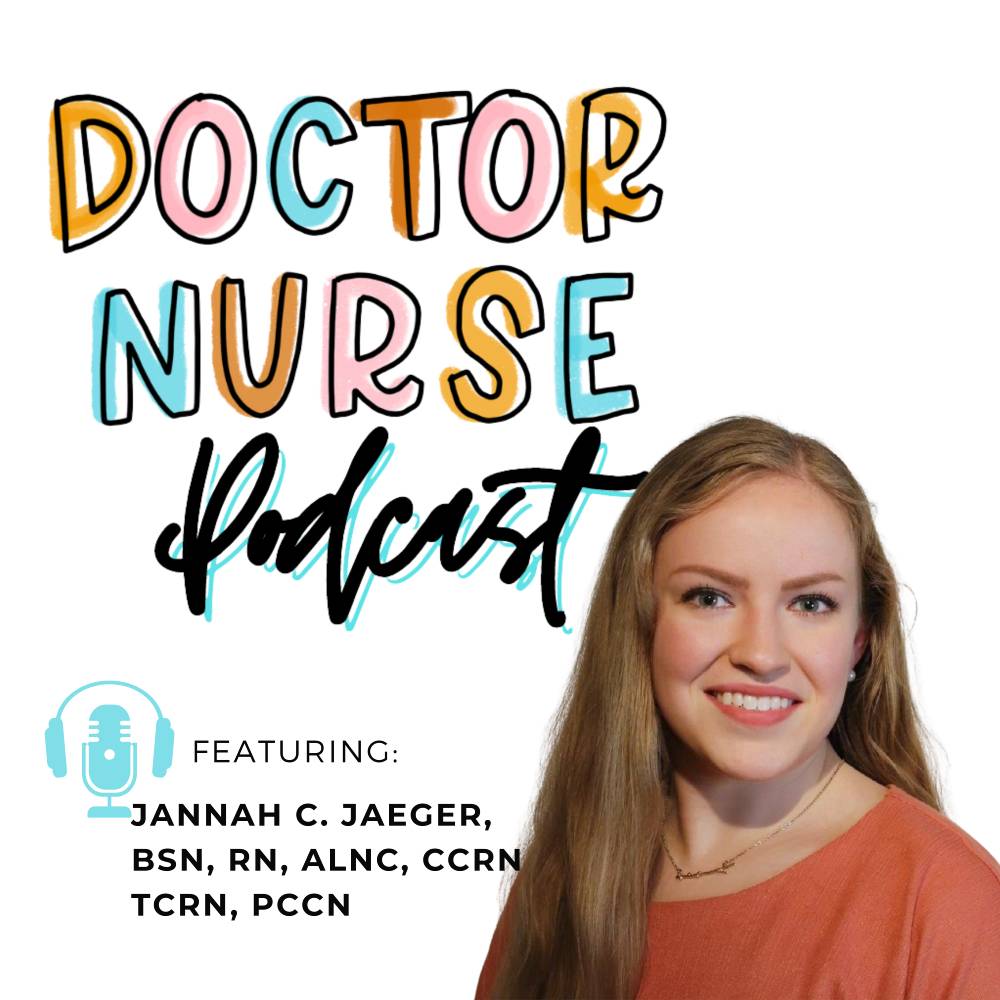
Sandra Pagenta: [00:00:00] Hi, Hannah. Welcome onto the doctor nurse podcast. I’m so happy to have you on today. . Hannah is the owner CEO of the blue Ridge medical legal consultants. Business that she is the legal nurse for, and she also works as an outpatient surgery nurse. She’s in both worlds right now, which is something that me at the doctors podcast really, really likes nurses that are pursuing also, not just hospital jobs, but also finding their niches and other areas.
And she’s contracting with another legal nurse consulting firms to find cases and to find. Hannah enjoys being outdoors reading, and has gotten recently addicted to baking from the pandemic. And she’s been watching the British cooking show, the greatest cooking show or
Hannah Jaeger: show great British baking show.
Sandra Pagenta: He got addicted to baking. So yeah, that’s Hannah. She’s going to explain to us guys her journey. To legal nurse consulting. What took her there and share how and what she’s doing right [00:01:00] now with her career. Welcome, Hannah. I’m so happy to have you on today. Thanks for having me.
Hannah Jaeger: I appreciate it.
Sandra Pagenta: Yeah. So Hannah, let’s dive right in. What is your current role, your job title? I explained it a little bit, but really explain what you do for.
Hannah Jaeger: So what I do for a living right now I work in an outpatient endoscopy center. So I do that four days a week for eight hour shifts. And then the rest of my time is spent on my business, basically.
I am an independent, legal nurse consultants, sub contracting right now. Um, but yeah, it’s
Sandra Pagenta: basically what I do. You work at the endoscopy center, you said you work, how many hours.
Hannah Jaeger: 32 hours a week right now, 39, about eight to 15 hours additional are spent on my business.
Sandra Pagenta: That’s a pretty good mix.
And are you just helping with people going asleep, waking up, making sure they’re ready for procedures, or are you involved in what aspect of the endoscopy are you involved
Hannah Jaeger: in? So the nurses basically run the center. It’s one organization, three different centers. So we [00:02:00] do the pre-op side. We also are the nurse in the procedure room.
And we do the post-op. And so we can also do the surgical tech role if needed. So we kind of do everything and just kind of show up and do whatever we need to. Gotcha.
Sandra Pagenta: And then tell us about your side hustle, your business, what, what you got going on there, which is pretty
Hannah Jaeger: cool. So yeah. Start it. So I want it to be a legal nurse consultant, basically since I was a new grad, I just thought it was really cool.
I loved how the nurses got to work with the attorneys and be an influential role in a bunch of, you know, really important medical cases. When I had been a nurse for about two years, I emailed a legal nurse consultant in Pennsylvania and asked her advice on what I should do.
And she basically told me I needed a lot more experience because legal nurse consultants draw on a lot of their own nursing experience. That’s like what? You’re marketing, you’re marketing yourself basically to the attorneys. Got it. So I kind of formed my career so [00:03:00] that I would get the experience I wanted to.
I spent the next seven years in the trauma center in Baltimore. Right. I worked in three different units that are kind of built up, everything I needed to work in the, a lot of the medical malpractice cases. And then two, well year and a half ago now at the beginning of the pandemic, April 4th, 2020, I registered my L’s.
And then the pandemic it, so that kind of set everything back. But I officially started work on my legal consulting business in December, 2020 and have been kind of slowly building it up from there. Cool.
Sandra Pagenta: Whenever you decided, or you found interest in the career and she told you, you didn’t have enough experience.
So use that. Okay. I’m going to go into the areas where I think it will give me the experience I need. How did you know that? Like, how did you know that trauma would be where you need to go for that?
Hannah Jaeger: Because I kept seeing billboards and ads for all the lawyers who you like, if you were in a car accident, call us.
So I was like, Hey, that looks like a good area. That’s really [00:04:00] smart. I ended this, I just found it fascinating.
Sandra Pagenta: Yeah. And so how long did you work in trauma before you went into legal nurse consulting? How many
Hannah Jaeger: years? Seven years, seven years as a nurse. And then I realized I couldn’t really do this for my entire life anymore, so I thought it was time to start looking into legal consulting.
Sandra Pagenta: I remember in your journey, you had said that you went from trauma to ICU or were you in the ICU trauma?
Hannah Jaeger: So yes, to both. The R items Kelly center in Baltimore is the only standalone shock trauma center in the entire world. So it’s basically its own hospital. So I started out on like an intermediate care unit, and then I went to two of their ICU.
So kind of did the whole gamut.
Sandra Pagenta: We’ll probably kind of segue into the next question so how did you get there? What was your specific journey from the time that you decided I’m going to be a nurse to all right.
I’m now opening my own practice. Walk us through the beginning of part of your journey is probably I think where I’d like [00:05:00] to start.
Hannah Jaeger: So I should probably preface this by saying that I got into nursing because I thought it was cool when I was 15.
People have these stories of how they want to help people when not, which is great. And I do enjoy helping people, but I literally thought it was cool when I was a teenager. So that’s how I got into it. So I started working at Hopkins in organ transplant. For my first new grad job.
Yeah, totally like a very specific random unit. And I burned out there. I’ve burned out at three of my four jobs, so burned out there. Didn’t really recognize it at the time, but I moved that’s when I moved to the trauma. That was something I’d always been interested in and just talk to the legal nurse consultants and this kind of trying to plan my career.
So I moved there. The first job I had there was amazing. I loved it. I moved out of it because it wasn’t an ICU and I wanted ICU. So I went to a, an ECMO trauma unit. An ECMO is the lung bypass. It’s extra corporal membranous oxygen visitation. It’s basically [00:06:00] like the lung and heart bypass. And I burned out there too.
And I left there after a year because I just could, wow. I couldn’t handle anymore. And then I moved to a neurotrauma ICU, which I loved. Like I loved all my coworkers. I liked the patients, my managers were amazing, but I ended up burning out there too, and I realized it at the beginning of the pandemic.
And that’s when I started looking into getting into legal consoling, because I was like, okay, now’s the time maybe bedside is just not for me anymore. I’ve got the experience I want. So it’s time to. Time to do everyone and myself a favor and move on. Yeah.
Sandra Pagenta: So whenever you first decided to become a nurse, I heard you said you were 15 years old.
Did you go and get your associates degree? Did you then get your bachelor’s degree?
Hannah Jaeger: I went to Howard community college which is a, an associate’s degree college in Columbia, Maryland. And I did that because my dad said he’d pay for one degree.
And I was like, all right, so I better get this degree. [00:07:00] So I went there, got my associates degree. I started working as a nurse lived at home until age 25 when I bought my house. And since I lived at home I was able to save, you know, a lot of money. So I was able to buy my house and pay for my bachelor’s degree, which I did online at Ohio.
And I wanted to graduate without any student debt. So that’s what I did. And it worked out pretty well.
Sandra Pagenta: I feel like I have a friend who’s from Ohio state and every place we would go, he would keep going, oh, wait. I know that I was so sick. I was so like stupid. Cause he was saying that and I was like, what are you doing?
Why are you doing that to people? And he was like, it spells Ohio. So like,
Hannah Jaeger: oh my mom always laughs at me because I have an Ohio state sweatshirt. But since I went online, I didn’t like get the full experience. So I’ll be wearing it like around a DC or whatever. And people yell OAH at me. It’ll just go straight up on my head.
I just don’t answer. And she yells it for me. She laughs to be every time.
Sandra Pagenta: Yeah, no, because I, I, I, when I watched that interaction, I was like, oh, that’s kinda [00:08:00] cool. Like, I wish we had something like that. Yeah, so, okay. So you go get your bachelor’s degree. Your dad offers to pay for your associates, which is hilarious.
You make sure to get your bachelor’s, but you’re at home. You buy a house, which is awesome. And then you spend the next seven years as you walked us through in the trauma, either in the ICU setting or in the intermediate step down type settings and then burning through and burning out of these critical care jobs where you’re working as an ICU nurse.
Leads you to this legal nurse consulting. So I’m sure a lot of our nurses are interested because you see these flyers, they come to your mailbox, like be illegal nurse consultant. I’ve gotten them because I was interested in it. And I kinda didn’t really understand like what they did. So could you walk us through really what a legal nurse consultant, how she’s involved in the, the legal atmosphere.
Hannah Jaeger: Yeah, so legal nurse consultants. We basically [00:09:00] interpret where the medical. Resources for attorneys. So just like being an ICU nurse, like a label consultant, you can do a ton of different things. So there are the legal nurse consultants who are expert witnesses in their field. There are the ones who do just workman’s compensation.
There are the ones who do the medical exams with the physical. What I do right now is the medical record review and report writing. The attorneys will basically send me medical records. However many files they got the most I’ve had, I think was like 15,000 pages of medical records that you then have to comb through and write a report.
And it’s usually at first a merit review. So we read through the records. We determine if there was, negligence, malpractice, anything like that. We make a recommendation to the attorney based on our findings, and then they either take the case or they drop the case. And if they decide to take the case, then usually they’ll say, The records back to us, along with any additional ones that they [00:10:00] found.
And we write what’s called a chronology report. So that’s basically listing out in table form every single medical record, listing out all the inaccuracies, all the discrepancies all the missing records that are mentioned in the medical records that we have. And then we send that report back to them and then they take it from.
Sandra Pagenta: Interesting. You’re kind of the go between to determine if the case is worth taking. If you look at a case and you go, it’s pretty ironclad, like everybody did what they were supposed to do, then an attorney will go, okay. Yeah. Okay, well then I won’t take this case, but if you’re like, no, this is a mess.
This is bad. I don’t know what your terminology is. Like, this is a torch, but if you’re
Hannah Jaeger: like, that seems to be evidence of negligence.
Sandra Pagenta: Yeah. Say that. And then that was what prompts them to go. Okay, great. Well then we’ll go ahead and take this and we’ll pursue it for legal recourse.
Yes. Which is pretty neat. And so what are the [00:11:00] other areas that your career can go into? Is there other things that you see yourself going into with this legal nurse consulting? Or is this really where you want to stay?
Hannah Jaeger: No, I actually would like to do forensics. I’ve always been interested in forensics and more of like the criminal cases.
So I actually took two friends. Classes in college because I was so interested in it and I still have the textbooks for them. So my dream would be to become a forensics legal nurse consultant expert, and kind of work in that area.
Sandra Pagenta: Okay. Is this like CSI type stuff? or like special victims unit?
Hannah Jaeger: A little bit. Yeah. So it would be more more of the. Like the criminal cases, the murders, the strangulations, the dead bodies found, was this foul play? Was it natural death, that sort of situation.
Sandra Pagenta: So legal nurse consultants, nurses, they work on these cases.
Yup.
Hannah Jaeger: Yup. We do interest. We can look at pictures, look at a body. [00:12:00] And especially with a trauma background, like I have, we can tell them kind of what caused it. Things like that.
Sandra Pagenta: Interesting. Yeah. So what are some of the things that you had to do to get your legal nurse consulting certification?
Hannah Jaeger: So there are several ways to do it.
You really don’t need a certification to become a legal nurse consultant. I wanted it because I know that attorneys look at a certification. More than experience just in my personal experience. So it’s easier to say like, Hey, I have this certification then, Hey, look at all my years of experience, let me show you how that can help you.
So I went through it’s called L S. Stat with RN market. Okay. And they actually, it was a really good program. It was 120 credit hours of education. They provided a massive comprehensive education on what legal nurse consultants do. They gave me a whole marketing package. They gave me my website. It was a really, really good trip.
And then they gave me it’s called the advanced legal nurse consultant [00:13:00] certification, which is their own, they have their own organization, their own certification. So that’s what I got.
Sandra Pagenta: Did you have to take a test in order to graduate from
Hannah Jaeger: this program? Yes. Yeah. There were multiple quizzes throughout the program and then a test at the end plus to practice cases, start to finish that they graded and gave me feedback on.
Wow. It was very, it was very involved and very, very good. I’m very glad I did it. How long did it take you to complete the
Sandra Pagenta: certification?
Hannah Jaeger: About two months, I did it pretty fast. They give you I believe, six months to a year to complete it, but I, you know, this was in February, 2020, so I didn’t know the world was going to shut down.
I was like, let’s okay, let’s get this rolling. Let’s do it as fast.
Sandra Pagenta: Good for you. The legal nurse consulting certification, was it super expensive?
Just for my own like verification, I’m just wondering
Hannah Jaeger: it was about $6,000. Whoa. That is
Sandra Pagenta: not
Hannah Jaeger: cheap. No, it’s not cheap, but they do have a guarantee that if you don’t get a first case, you get all of it back. So yeah. Yeah. Basically 100% guarantee that you’ll get at [00:14:00] least your first case. Wow. So that’s good to know.
I know. I was like, well, might as well, you know, worst thing is I get a case.
Sandra Pagenta: Do they help you get a case? Or do you have to pursue it like in this group that you’re a part of? Whenever you work with this consulting group, do they find the cases for you?
Do they show up at your door? Like how does that.
Hannah Jaeger: They give you all the marketing resources that you need, and then they basically tell you how to do it. And then you have to market to people in your area and figure out kind of how it works for you.
Sandra Pagenta: How do you get people like you don’t, you’re not ambulance chasing, right?
Hannah Jaeger: No, I have, I have my website, I have business cards. They actually really advocate for packets. They say that attorneys never open the, regular. The regular size envelopes, they opened the big envelopes first. They tell you to put all your marketing materials in one of those, big nine by 12 envelopes, mail it to the attorneys follow it up with a phone call and the attorneys will probably open your packet first when they get them out.
Sandra Pagenta: Interesting. You market to the attorneys and then they send you business? You just [00:15:00] go just within your local area or do you send a package to like,
Hannah Jaeger: I’ve just been the local area right now, but with the subcontracting I’m doing, I’m working mainly with the attorneys? Well, the attorney cases, I don’t work with the attorneys, particularly when I’m contracting, but from Georgia, Florida and Califor.
For, for my marketing purposes, it’s mainly just the Maryland DC area.
Sandra Pagenta: Gotcha. And then the group that you’re a part of, they send out to farther places?
Hannah Jaeger: Yes. They do the marketing for me basically.
Sandra Pagenta: And you do the cases for them. And then for your, like your own work, you send cases, you send your name out to people around.
And then they send you business as well. So you kind of have like two sources of input for business, you’re double-dipping in the area around you getting known locally, which is really smart because those are the people that. They’re kind of in your niche, they know you’re in your area, but
Hannah Jaeger: then all women owned businesses are big now. So
Sandra Pagenta: this is smart. Super smart Hannah. Oh, okay. Cool. Since owning your own. Business [00:16:00] and kind of pursuing that. What have you found as you’ve gone about kind of working in both worlds? Does working in the hospital kind of fuel your desire for entrepreneurship or is it vice versa?
Has your entrepreneurship made you appreciate your role in the hospital?
Hannah Jaeger: A little bit of both. I really enjoy making my own schedule. Working when I want to having weekends and holidays off. Yeah. I do miss the hustle and bustle of the ICU. I feel like I thrive in that environment, so kind of both kind of both a little bit about.
Yep.
Sandra Pagenta: Okay. Also, do you think that over time you would like to be more in an entrepreneurial role and step back from the hospital? Or do you always want to be an okay. That’s kind of
Hannah Jaeger: your end goal? Yeah. I specifically got this outpatient job because I can slowly scale back on that.
While I build up my business to kind of transition. Very
Sandra Pagenta: smart, very smart. Well throughout your journey. And you’ve explained it really well, kind of your [00:17:00] process to how you got to where you are today. Could you give us one of the, big success that you had in your career high that you look back and you go, that was, that was a really neat moment as a nurse or even a in your legal nurse consulting career.
Hannah Jaeger: Well, recently I got a case In my legal nurse consultant career, it was a pretty involved case. I don’t know exactly how much I can say, but basically the patients had died, unfortunately from. After a surgery. And I looked through the medical records, I did all my research, things like that.
The family wanted to Sue because they thought that the nursing home that they had sent him too, had done something wrong because he basically was in the hospital, went to a nursing home for one night. They found him unresponsive in the morning, went back to the hospital and he eventually died so that they, they thought the nursing home.
Yeah, it was really sad. They thought the nursing home did something wrong. So they were trying to Sue. But it turns out that it was actually just a really terrible, rare surgical complication which I [00:18:00] had discovered. We sent them back to the attorney that the attorney decided not to take the case.
Which is really, I, it was a very, very sad outcome, for the family and the patient. But I, I did appreciate that we could get to the root cause of the problem and provide them with an answer, even if that meant, not suing and not getting any monetary compensation for the.
Sandra Pagenta: Yeah. I feel like what you just provided was closure,
Hannah Jaeger: right?
Yep.
Sandra Pagenta: Yeah. Whenever you are a parent, a mother or father, that’s your parent, you do kind of want to know , okay, well did somebody just like, not check on my dad? I, you know, like, and it’s just like, no, he had a really rare. Complication from surgery. And that’s the risk that you take with those surgeries.
Hannah Jaeger: When most people Sue, they just want closure. They want, someone to pay someone to tell them what happened. So, yeah, it was good that we were able to provide them.
Sandra Pagenta: Interesting. That’s really cool. And then tell me about one of the biggest challenges in your career. I mean, you’ve talked about burnout multiple jobs, ICU [00:19:00] jobs.
And given the atmosphere of COVID and everyone’s just , and I kind of struggle a little bit because I do feel nurses, we are super resilient, so there’s a part of me that’s wanting to make sure I keep encouraging. I don’t want us to be discouraged and I don’t want to add to , kind of a negative, nurses are treated bad.
We’re, you know, you know, fight the man. I, I kinda don’t want to do that, but I do want to say. What is something that as you’ve gone through your career and you’ve got, it might be the burnout. It might be other things that you felt like was a challenge that you had to overcome, because I think that’s what nurses are really good at is we are good at overcoming challenges.
, . So tell me a little bit about maybe one of your experiences that you can think back on your career.
Hannah Jaeger: Yeah, we are really good at overcoming challenges. And the funny thing about burnout is that nobody wants to burn out. I learned that . I loved my job. I loved the ICU job. I loved all my coworkers.
My managers were amazing. It wasn’t them, it was just, I just burned out and I tried not to, you know, I, I stuck with it. I even switched to night shift to see if [00:20:00] that would make things easier, which it did not those, I was the wrong choice for me, but yeah, it’s. Burnout is really hard. And I think that it’s becoming more and more prevalent today.
So I think if we, as a nursing community, just talk about it more and help each other through it. Like I went and saw a therapist at work who helped a lot, just removing that stigma of burnout because nobody wants to do it. It just happens. So I think if we can all support each other and talk about it more, just talking about it will help.
No. What
Sandra Pagenta: did burnout look like for you?
Hannah Jaeger: So for me, I was extremely tired all the time. , no matter how much I slept, I couldn’t catch up. I woke up tired. I went to bed tired. I would have like a little purse of energy in the afternoon. I also gained a lot of weight, which wasn’t. Yeah. I didn’t really recognize it until I was like, wow, this is, this is a problem now.
And. Along with that. I couldn’t lose it. I was actively trying to lose weight, could not lose weight [00:21:00] just because of all the stress. My body was telling me I’d had enough. Basically. I had another
Sandra Pagenta: nurse on my podcast and she described burnout. And it sounds like in both situations, it was the same.
It was almost like a neglecting of self in both situations. And it ended up leading to her. Getting diagnosed with auto-immune disorder and she talks about all these podcasts. And so
Hannah Jaeger: that’s what I have and bodies now.
Sandra Pagenta: That was an issue that was her exact issue was I think thyroid. And she was describing it to me and my heart broke because I remember telling you before we got onto the podcast was just, I was so burned out from work that I would come home and study because I knew that was my ticket out of here. It was like, this is my ticket out of this mess that I don’t enjoy. And so did, did the legal nurse consulting kind of ignite the fire towards nursing again for you? I know this like corny way, but it wasn’t like the wind beneath your wings as you were like going to work. And
Hannah Jaeger: it is now yeah, when I was still [00:22:00] working in the hospital, I kind of did the same thing with, by legal consulting as you did with studying. Like I would come home, work on it.
Cause I knew like that’s what I had to do to get out of here. But now it is like now I’m really interested in nursing again. I love learning things I always have. So I love little things that come across in cases that it didn’t know before researched them all up. So it’s, it has ignited it a little bit more.
That’s really cool.
Sandra Pagenta: And I think that’s good for people to hear because I think they think, well, it’s going to be harder to get out and it’ll be harder to learn something new. And what you might find is that might be the thing. That makes you fall back in love with what we originally all went into nursing for, which was to help people.
It’s a really cool medicine. I think it’s just something that I never realized. Again, I thought it was starting a podcast, it was going to be this super draining thing, but it’s been something that’s brought a lot of joy and something that’s like it’s yes, it’s new, it’s different.
It’s maybe sometimes kind of hard learning new things, but it [00:23:00] actually. Opening doors to things that I would not have realized I would have enjoyed more than what I was doing. The,
Hannah Jaeger: I just kind of have to find your niche. Right.
Sandra Pagenta: So any mentors along your journey, anybody along the way that really helped you or gave you some advice that you felt like was really beneficial you’d like to share with my listeners?
Hannah Jaeger: Yeah, actually some of our leadership at the trauma center has been amazing. Karen McCullough, Is the nurse educator for my unit over there. And she was the president of the American association for critical care nurses back in, I want to say 26, 13, 20 17. And she’s been really great just because she’s so excited about all the new things.
She’s really supportive of nurses. So I love learning from her and she kind of kept sparking my love of learning and I’ve been trying to find some legal nurse consultant mentors. I just joined one of the online chapters from the American association of legal nurse consultants. Because I need some connections there.
Some mentors in that field. Yeah. Yeah. You always need to always be [00:24:00] mentors wherever you go.
Sandra Pagenta: I hope you find one. I hope. Hi universe center one, but it really cool. We’re going to manifest it right here on the podcast. There you go. And. All right. Very cool. So what advice do you have? For a new nurse starting off, she just got her associates.
She just got her bachelor’s she’s got her diploma in hand. She just passed her in class and she’s like, now what do I do? What is something you wish you would’ve known sooner? What do you wish somebody would have told you?
Hannah Jaeger: You’re never stuck. You’re never stuck in one job. You never have to do anything.
Nothing is the wrong tool. Whatever it was, the right choice for you is the right choice. No matter what anybody else around you is telling you.
Sandra Pagenta: Good. I like that. I like that. And what if there’s a woman who’s considering legal nurse consulting and she’s like, ah, I don’t know. I mean, do I have what it takes?
What’s some advice you have for one of those women, or
Hannah Jaeger: men, let’s go for it. You never know unless you drive and everything you need to know about legal consulting, you’ll learn along the way. So yeah, it’s a lot of education.
Sandra Pagenta: [00:25:00] Well, anything else you’d like to share with our listeners? What if somebody wants to check out your website? Where do they find you?
Hannah Jaeger: Blue Ridge mlc.com and I’m also on Instagram at common sense.
Sandra Pagenta: Okay. And what do you have on your Instagram? Just like little
Hannah Jaeger: that’s a little nursing advice.
Yeah. Factoids, little nursing advice, things. I posted something today with bright about brain entries, the different lobes of the brain and what it will look like if a particular load is entered. This is so, so little affects like that.
Sandra Pagenta: It’s really neat that you knew the trajectory of your nursing career, like early on.
That you wanted to do this and you’ve tailored it around this. I did not do that in my career whatsoever. So it’s really neat to hear that you had this end goal and you’ve always kept that in the, well, I kind of did it one way, but never with something where I could be an entrepreneur. And I never did that.
And that’s something here that I think is really cool that I really want my listeners to hone in on. Is that while you were working in doing your Drudge work, you had your [00:26:00] eye on entrepreneurship. How do I make my own thing? How do I get my own thing? And , I find that really admirable,
that’s the smart way to approach your nursing career, you know, you really do. All right. So for the last part of the podcast, I do a rapid fire questions, questions,
Hannah Jaeger: questions.
Sandra Pagenta: Okay. And yeah, these are just flying by the seat of your pants. Quick-fire ready. All right, let’s go. Tell me if you could teach one subject in school.
Brain
Hannah Jaeger: trauma
Sandra Pagenta: brain trauma. Yeah. Okay. That’s interesting. Next one. What is your favorite?
Hannah Jaeger: Water is that weird?
Sandra Pagenta: Super cool. Um,
Hannah Jaeger: We’ll do that. I like Scott really? Like the island PD, scotch. Yeah.
Sandra Pagenta: I’m a plant. I like water. Okay.
All right. Maybe your parent or someone that loves you wants to buy you a birthday cake. What would they put on that birthday cake?
Hannah Jaeger: Probably be chocolate with either coconut or peanut butter or maybe both.
Sandra Pagenta: Awesome. [00:27:00] Awesome. That’s it. Thank you so much for coming onto the doctors podcast today and chatting with me. I had such a good time and it was so easy to your career. Thank you for sharing.
Podcast Description
Latest Episodes
Doctor Nurse podcast brings you weekly shows to help INSPIRE, EDUCATE AND EMPOWER nurses with true stories of initiative and impact.
Doctor Nurse podcast brings you weekly shows to help INSPIRE, EDUCATE AND EMPOWER nurses with true stories of initiative and impact.
Latest Episodes
Doctor Nurse podcast brings you weekly shows to help INSPIRE, EDUCATE AND EMPOWER nurses with true stories of initiative and impact.