Also Available On






[00:00:00] Welcome Elizabeth to the doctor, nurse podcast. So happy to have you on today. Thank you. I’m glad to be here. All right. Let’s dive in. So can you describe to our listeners, what is your current job role and title? Sure. My current job role is actually as the owner of windings wellness. It’s an outpatient, private practice for mental health in Jacksonville, Florida.
And I am a board certified family, psychiatric nurse practitioner. So I specialize in medication management and therapy and lifestyle medicine. And my favorite populations to work with are children, adolescents, and families. But I also do enjoy working with adults. , I just, for my day to day work. Have more children and adolescents in my practice.
Gotcha. Is there anything else that you’re involved in outside of your practice? Yes. So I also work with a national organization called plant strong, and we have the privilege of [00:01:00] hosting five to seven day retreats for adults who would like to make a lifestyle change. And we specialize in plant-based nutrition and lifestyle medicine.
And it’s really fun. It’s like an educational vacation where you get to eat a lot of yummy food. So I am part of the medical team overseeing participants during those retreats. That’s really cool. So how did you get to this specific spot in your career? What was your journey? So I started as a registered nurse at the Malcolm Randall VA in Gainesville, Florida after attending the university of Florida and I was on a surgery floor and.
Unfortunately, there were multiple veterans who had complications due to uncontrolled diabetes. And they would have amputations. And it was really hard for me as a new nurse to have the same patient come back for subsequent amputations.[00:02:00] I may be their nurse for a toe being removed and then a foot, and then below the knee.
And it actually was. A little traumatizing to see that the medical system continued to just remove parts of the human body for a disease that I was under, the impression we should be able to manage through medication, diet, and lifestyle. It kind of sent me down a rabbit hole to better understand nutrition and lifestyle medicine.
And there was actually a dietician on the floor who encouraged me to read the Omnivore’s dilemma. By Michael Poland. And then I watched forks over knives, which is a lovely documentary that highlights how plant-based diet can improve your health and reverse disease states like diabetes. And I actually, at the time would contact one of my undergraduate nursing professors and say, we [00:03:00] really need to get nurses in here doing , there are clinicals are doing a project to support patients after they’ve had an amputation to help them make these changes. And she would reply. You need to go back to school to be a psychiatric nurse practitioner. And I was like, no, no, that’s not me. I want to be in the acute care. You know, I always wanted to be in the hospital.
So the more I. Dove into the literature and the research. The more I realized that was a natural inclination for me to want to know about human behavior and, and behavior change. And my next job was actually in the emergency room at north Florida, regional, where again, Just seeing complications due to either lifestyle and or disease states that could be mitigated by behavior change or lifestyle change.
And that solidified [00:04:00] my decision to go into mental health. And so I went back to school, became a board certified and family psychiatric mental health, and started practicing. At the time I had already moved to Jacksonville, Florida. And so I started practicing in an outpatient clinic here and it was great, you know, learning about the role as, as much as it was great.
It was also really challenging because there were no other nurse practitioners at my clinic. So it felt quite isolating to have to continually advocate for either supervision or , Just the opportunity to have collaboration with other prescribing providers, not just therapists. And I worked with really supportive physicians that did help me.
It just wasn’t a seamless transition. So I think that was discouraging at the time, but ended up working out. [00:05:00] Okay. But it was hard and and isolating, and I think, you know, That’s part of where, when, when you sent this podcast idea to me, I was like, this is so important because I didn’t have someone I could turn to, or I didn’t know any other psychiatric nurse practitioners besides those in my cohort or my professors.
So anyway, then I did continue with my education after my masters and I got my doctorate. And while I was doing my doctorate, this plant-based nutrition. Piece of my life had really become important, not only to me, but also to the way I was practicing. And it’s very important that we’re practicing evidence-based interventions and the evidence is there.
It’s no longer a question is plant-based nutrition of an important part of the medical conversation, which is encouraging. However, in 2014, 15 and 16, I think the psychiatric. [00:06:00] Professors didn’t really want to hear about it. And I had to petition my committee to do my doctoral research project on nutrition.
So as a graduate student in psychiatry, pursuing my doctorate, I wanted to do my project on the relationship between diet and lifestyle and depression. And ultimately I was able to do that. But again, It took a lot of advocacy and back. My me continuing to say, like, I would like to do this. So what was, what was their rationale for pushing back on that?
We already know there’s a correlation between your lifestyle and mental illness. So we cannot say that there’s a causation. How can you prove with a DNP project or how can you do something? That’s a qui intervention. Because the DMP is not a full research project, like the PhD level. So you’re trying to [00:07:00] stay at a lower level of the IRB approval.
So I think they were saying, this is either beyond the scope of the degree that you’re getting. And if you want to do it, you can get a PhD or just pick something else. And is what they said to you. Oh, crazy. Yeah. But just to show you like how genius what you were pursuing was because they were like, in order to do what you want to do.
You have to go get a PhD like if you just, you know, this sounds great, but you need to do the work for it. Which is, it is what it is. I am grateful, you know, I was able to string something together that was meaningful method criteria for my degree. But what I will say was the most pivotal experience.
Throughout that part of my journey is I actually had the privilege to do an internship at the true north health center in Santa Rosa, California. So with the DNP, you cannot do additional clinical hours in your [00:08:00] current specialty or where you’re working. Yes. And so, right. And then it’s like, are you kidding me?
I have to do. More work and not get paid. It needs to be meaningful and enjoyable. So I spent five weeks in Santa Rosa and I had, I think, a total of five days off. I mean, I worked for the whole time I was there and the true north health center has been in practice since the eighties. And what they do is they actually bring people in for.
Water only fasting juice fasting as well as just to come in and you could have an evaluation. And if you just wanted to eat healthy and be a part of the community there, you can do that. So this was a completely different practice of medicine and it was really rewarding. So that was just. Great because it not only was clinicians using evidence-based practice for lifestyle [00:09:00] medicine, but it was the first time in my nursing career.
I saw people getting well. I mean, I could remember like tears in my eyes taking someone’s blood pressure who had had chronic hypertension and been told you will never come off of your blood pressure medicine. And we had started titrating and then we’re day three of a normal blood pressure. And we are saying to them, Hey, I think we’re going to stop your blood pressure medicine today.
And it’s a really moving experience to. Have that privilege of being welcomed into such a vulnerable moment with individuals. And it’s hard not to take that and then to continue pursuing it to, you know what I mean, to, to see something profound and then go, oh, whatever, I’m just going to go back to my job, keep doing what I’m doing.
So I think that was really.
Yeah. [00:10:00] Yeah. Or like, I’m not crazy like this, this is meaningful stuff and more people should know about it. So that is kind of, you know, the journey for me from the bedside all the way through my doctorate. And then I did have. Some very traditional roles. As a psychiatric nurse practitioner, I worked at a local children’s hospital and was on the inpatient pediatric psychiatric unit.
I’ve also been carrying outpatient clients since 2014, right after he graduated. And so I definitely have immersed myself in the medical model and kind of. Our standards of practice for behavioral health care and psychiatric care. However, it’s married with. Lifestyle medicine and looking at the whole person, which I think on a couple of episodes I’ve already heard on your podcast, you know, really the nursing model is that’s [00:11:00] formative to our training, looking at the person and what is their lived experience.
And so I think that also is just foundational to my practice. Yeah. I’m like smiling ear to hear. Cause listening to you talk and I’m like, she gets it like she does. She’s looking at the total person. She’s not just saying like, oh, let’s just throw some meds. You’ll be fine. Let’s just cut a toe. Let’s cut the foot off.
You’re like, you’re just, you’re looking at the total person. And that really is what we’re taught in our training to do as nurses. And I just think it’s so beautiful, how you’ve married your medical training as a nurse practitioner in psychiatric medicine. And you’re marrying that with nutrition and lifestyle changes and how you are.
You found an area that needed a nurse to step in and bridge that gap. And you stepped in and did it and you’re doing it. And that’s what more nurses need to do. Because we are so close to the bedside, we have the opportunity to see what’s missing. We [00:12:00] have the opportunity to be annoyed at how something is not really great for the patients overall, even though it might get them out of the hospital today or tomorrow, it doesn’t affect.
Their longevity or their life, or it doesn’t change that it just keeps them going. And I think that was as a new nurse, the biggest challenge, because I would see something and I would go to the surgeon and say, Hey who talks to the patient about. The fact that they’re sad that they used to have two feet and now they only have one.
And the surgeons would just kind of look at me perplexed and say, I don’t know, we can put in a consult, you know, they’re healing, great. Their wounds are non-infected. They’re going to be discharged within however many days. So. I think that’s also a barrier when you’re new, you don’t understand the system or who to go to and it’s so [00:13:00] fragmented, but you, as the nurse are stuck in the room with the patient after everyone else leaves.
And so then it’s that very palpable gap. Like what you’re saying, like some of the moments where you’re just feeling annoyed or frustrated or confused, but you’re like, I don’t know how to implement the change. I’m amazed at what you’ve done.
I’m amazed at how you’ve built your career. I think that you provide such an incredible service and then your wellness company that you own. Tell us a little bit about that. I am practicing in Jacksonville, Florida right now. I’m just in clinic three days weekly. So I’m working Tuesday, Wednesday, Thursday, and they’re full clinic days.
I have outpatient. Behavioral health clients. So I’m doing therapy and medication management, and then it’s out of network. So everything is not billed to insurance, which as much as I would love to be able to open up and have more access to. [00:14:00] Families who need to see someone on their insurance.
Again, the system is incredibly broken and that is so incredibly cumbersome as a solo provider. But I’m full. So, I mean, I opened in January of this year and I’ve had. For the month of May, have 90 total visits give or take, who wants to come in this week? That’s not on my schedule, but it’s, it’s busy and we need more mental health providers.
So you know, I’m grateful for, for the work that I do. It’s been a hard year for everyone. Our kids are feeling it, our parents are feeling it. So a lot of what I’m doing right now is therapy and then medication management, when indicated and. I know it’s different, not part of my own practice, but I did get the go for our lifestyle medicine retreats for this coming fall.
So our team is gearing up for those events that will be in September and October of this year. So [00:15:00] that’s also on my radar, which I’m excited about. . And what, throughout this process, would you identify as a big success, something that you said, or you think this was really a turning point or this was really a moment that I think back was a high in my career.
I would say.
Choosing to go to true north health was a huge risk. It was undefined to my program, to my current place of work. I took six weeks of unpaid leave to travel and to do that. And it was a huge risk, but it was one of the things that I would do again, if I could So I’m really, really grateful for that. And it led to so many wonderful relationships and opportunities and also education that I’m really thankful for.[00:16:00]
And then I would also say another success is learning how to advocate for myself and leave positions that were no longer in alignment with my values, whether that’s personally or professionally. And that’s really scary. And I, and I have done that two times in my career where I’ve chosen to leave an organization where I might really value people on my team or my direct supervisor, but the organization did not either value nurse practitioners or facilitate growth opportunities.
And so I think those were. Hard decisions, but they were huge successes because out of them came opportunities. I couldn’t have scripted. And so when you’re standing on one side of a decision, you can’t really see the other side. That’s scary, but I’m grateful to have been able to [00:17:00] have enough.
Opportunities that I’ve just taken the risk and seen it worked out okay. Or better. That was so well said. And then I was thinking like, that’s also one of your biggest challenges, which is another question that I typically ask, but you kind of answered both of them is just having to advocate for yourself.
Ended up leading to you overcoming jobs that were going to hold you back from being able to apply for autonomous practice. I mean, to give you that ability to advocate for yourself is the, I think the biggest reward and now you’re, you’re actually an autonomous provider. Can you tell us a little bit about that process?
Yeah. Oh, for sure. So in the state of Florida, if you have been out of school for longer than five years, you need to. Out of graduate school, you will need to do. I believe it’s 40 hours of continuing education in psychopharm. Oh, Nope. You’re not all psych, sorry. In pharmacology. So 40 hours of pharmacology and [00:18:00] then 40 hours of a differential diagnosis.
And there are enough continuing education providers out there now that are ANCC. Certified or the equivalent, so that graduate level certification for continuing education. So those are the two biggest hurdles, as far as things that require time and energy. And then you have to have been in practice. I believe it’s 3000 supervised hours and you have to have your own malpractice insurance.
So, I mean, it’s not. Cumbersome and, and no agregious acts with the board of nursing or the state, like your license has to be in good standing. So the criteria is actually quite simple and you just submit everything to the board of nursing and it’s, there’s no fee associated, you just have to apply. So I was really excited.
I was so nervous that I wouldn’t get everything in, in time because it passed early December. And my last graduate course where I had psychopharm [00:19:00] hours that would go towards my license was in December of 2015. Anyway. So I was like fingers crossed. Yeah, please, please, please. So anyways, everything went through, they processed it relatively quickly.
So it was it was a good experience for me. That’s great. That’s great. And working for yourself by yourself, how has that experience been? It’s great. I will say I am a rather social person. I do enjoy interacting with others. Given this current year with COVID and how we’re still coming out of social distancing and all of these protocols that are needed right now, it has been ideal.
So I have my own little private practice where I can sanitize and make sure all of those things are in place. And I would say about 60% of my clients do come in person and then 40% I’m doing tele-health with, but it’s lovely. I can manage my own schedule. I can. Give the clients that I’m seeing [00:20:00] my time and I have a great EMR and billing platform.
It’s all seamless. So all in all, how, if you don’t have administrative skills, you will need someone to help with that. But other than that, I would say. It’s really wonderful. If you are a clinician who enjoys what you’re doing and you’re competent and capable, then you have administrative skills and you can get those things in order then.
That’s great. You’re pretty incredible. My friends like this is, this is so cool. And I’m so happy that you’re sharing your story for other nurses out there to hear just that it’s doable. That it’s possible that it’s not this crazy labor intensive process. That you can do it.
That’s really cool. Any mentors, anybody along the way that helped you get here? That you’d like to shout out or just say like, yeah, this, this was big for me to get me to where I am today. I would say my life has been shaped by amazing mentors. So [00:21:00] prior to nursing, but then in nursing, absolutely. And you know, in school, definitely Dr. Snyder. Was was somebody who was phenomenal and I’ve maintained a relationship with post graduation. So I’m really grateful for her. And then I actually did something called the valor program through the VA when I was an undergrad nursing student and Kathy Galvin was my nurse and I worked with her for a full year.
I think a lot of the courage that I had to do what the patient needed, no matter what, not to break rules, but right. To see the patient advocate for the patient to go back to the physician to speak up is because Kathy did that and she instilled that in me. And so I’m really grateful. I think a lot of that, the kind of like core identity as a nurse was shaped by her.
And my mother [00:22:00] is also a nurse. And so I think, you know, there are ways that that has impacted my life, that I probably don’t even know. And I, I couldn’t articulate, but I definitely know that that she has been a wonderful guide and. A mentor in my life. And then my dad, I think one of the things that I’m so grateful for is I’ve had a team of parents where if I’ve wanted to take a risk and do something, they’ll, they’ll troubleshoot with me.
And then they’re like, all right, go for it. You know? And it’s not that every single thing I’ve done has been. Wonderful or succeeded by any means. I definitely have a long line of failures and life lessons and times when I’ve crashed and been frustrated, but I’ve had parents who I could turn to and, and they’ve been, phenomenal and I did get married really young.
So I actually got married when I was. In nursing school as an undergrad. [00:23:00] And I don’t know that my husband’s a mentor, but I would say he is the most supportive. He’s probably, you know, most supportive biggest fan. He helps me visualize my dreams and to have a spouse who says, oh yeah, this is, this is super important to you.
I know it’s totally fine. If you need to take five weeks and go like do this grueling internship. I definitely couldn’t. Have taken all the risks that I have, or I wouldn’t be where I am without his support. So I definitely for giving shout outs, you’ve got a shout out to Jordan winnings because he’s the most patient supportive person.
And, and I mean, I have a lot of ideas, Sandra, like all the time. I’m like, Ooh, what about this? What about that? And so Jordan’s really good at helping me, like, let something boil to the top and go with it. That’s amazing. That’s amazing just to have that support, [00:24:00] which fun fact. He was a paramedic firefighter for quite a while and he is known nurse.
So we’ll see where his nursing journey takes him. But yeah. Yeah, that’s cool. You’ve probably inspired him watching your career and what you were doing. That’s really cool. So, what advice do you have for a new nurse at starting off in her career? That has got her piece of paper certificate in hand.
And she’s standing there with the world in front of her. What advice would you give her? Oh, I would say be brave. You need to try things. You need to work and not like work hard, but you need to figure out what you like and what you don’t like in nursing. And there is no rush. I think one of the biggest.
Challenges throughout nursing education is there is this sense of a time clock. You’ve got to figure it out by a certain time. You have to go back to school by a certain time. [00:25:00] It’s just not true. Every experience you have is going to build towards who you are as a nurse and who you are as a person. And so I think it’s really important for new nurses, whether that means RN or a APRN to take their time.
Because we don’t, we don’t get that back. And I think that is the biggest lesson I’ve learned from my patients is to just be present and take your time. Other things that I would tell new nurses is ask for help. Don’t worry about not knowing what you’re doing. You’re not supposed to, like, you’re supposed to know the general rules and keep people safe and follow the rules of your license, but ask for help.
Sleep. If, if all of us could just prioritize sleep, I think the world would be a nicer place. I think work would be easier. And I think our brains would be happier. So I think nursing is hard and exhausting. So if new [00:26:00] nurses could prioritize sleep, get sunshine, eat your veggies and make memories. I think one of the things that I cherish the most.
So I’m at like my 10 year anniversary of graduating with my undergraduate degree. And I love looking back on all of the environments I’ve worked on or the people that I met. And it’s just, it’s cool. if you’re in a hurry and you’re rushing through everything, it’s really hard to savor it or make memories and to learn.
But I think if you’re kind of looking at each part of your career as an opportunity, To grow and, or just have fun. You’re going to make great memories and that’s going to add up to a pretty wonderful career. I think those are the things that come to my mind when I think about, I wish someone would have told me those things when I was a new nurse, not just.
All of the, be on time, don’t get stuck by a needle, make [00:27:00] sure you’re wearing the right shoes, that kind of stuff like, okay, we need to know that. But what about me as a person and as a nurse and as a provider, I think that got overlooked. Beautifully said beautifully said. And I agree. I agree. And I think that’s why the doctors podcast has come about because I felt the same.
I felt that that slow down. Take your time, savor what you’re in glean in the moment knowledge, because it’ll just take you so much further. I really feel like that is. So important and I didn’t hear it enough. And so, yeah, I think it’s great that, you know, what you said was so encouraging to the new, to the new nurses and even the ones that are currently in their jobs and in their roles.
So just say like, just soak up what you’ve got going on now, pay attention, make memories, and take care of yourself. And I think the rest of it starts to fall [00:28:00] in place when you put those big things in the right. Frame of reference. So, all right. The next part is the rapid fire questions. So tell us a book you’re currently reading.
Ooh, maybe you should talk to someone. Is that the title of the book? Yeah, it’s a book written by a therapist and it’s about her experience going to therapy. And I had a few people recommend it to me, so I started reading it. Very cool. What are you got on your Netflix? Okay, hang on because there’s a few, well, If I could have something on repeat on Netflix right now, it would be Schitt’s Creek.
Oh, you’re the second one to say Schitt’s Creek. So good. So good. Give it a chance it’s cringy, but it’s so good. And another one, if there could be a movie actor to play you in a movie who would play you Reese Witherspoon, that one was easy. [00:29:00] We are like, Soulmates. Oh my gosh. I see it now. She would, yeah. I don’t know if she would do, do your role justice, but she can do it.
I believe in race. Well, Elizabeth, it has been such a joy chatting with you. Your journey is incredible and super inspirational. So keep doing you girl. Thank you. Thanks so much. And I’m so grateful that you’re putting all of these episodes out there. It’s really meaningful.
Podcast Description
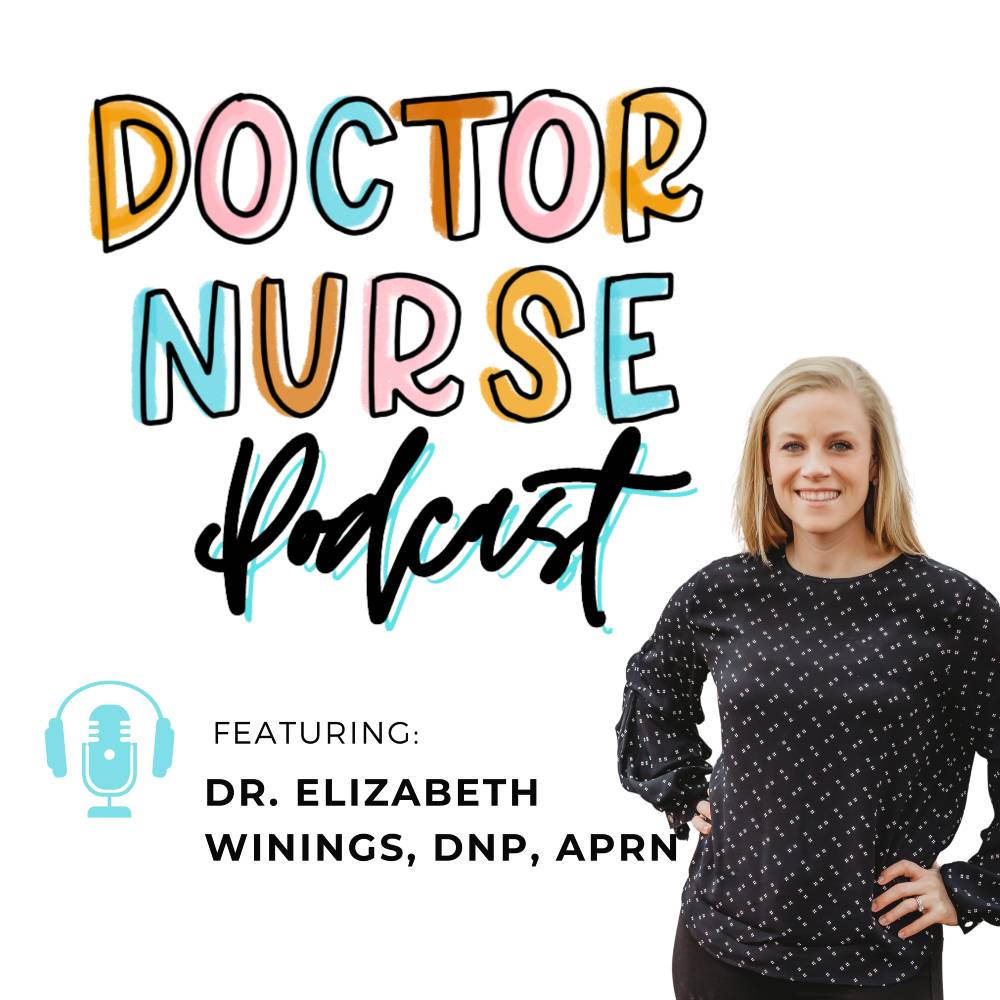
Elizabeth Winings, DNP, APRN is ANCC Board Certified as a Family Mental Health-Psychiatric Nurse Practitioner. She completed her undergraduate and graduate education in Nursing at the University of Florida. She also has advanced training in Plant-Based nutrition, completing her doctoral internship in nutrition and lifestyle medicine at the True North Health Center in Santa Rosa, CA, and Plant-Based Nutrition Certification through eCornell.
Dr. Winings specializes in the relationship between diet, lifestyle, and mental health. Working with children and families, she practices with the understanding that health is composed of physical, mental, and emotional experiences. Her time working as a surgical nurse and emergency department nurse inspired her pursuit of practice in mental health and plant-based nutrition. Dr. Winings provides interdisciplinary expertise in medicine and mental health to help individuals navigate the stages of change. She practices locally in the Jacksonville area at Winings Wellness and nationally with the Plant-Strong Retreat team. Dr. Winings believe in the healing power of communication, restoring relationships, and living a healthy lifestyle.
Latest Episodes
Doctor Nurse podcast brings you weekly shows to help INSPIRE, EDUCATE AND EMPOWER nurses with true stories of initiative and impact.
Doctor Nurse podcast brings you weekly shows to help INSPIRE, EDUCATE AND EMPOWER nurses with true stories of initiative and impact.
Latest Episodes
Doctor Nurse podcast brings you weekly shows to help INSPIRE, EDUCATE AND EMPOWER nurses with true stories of initiative and impact.