Also Available On






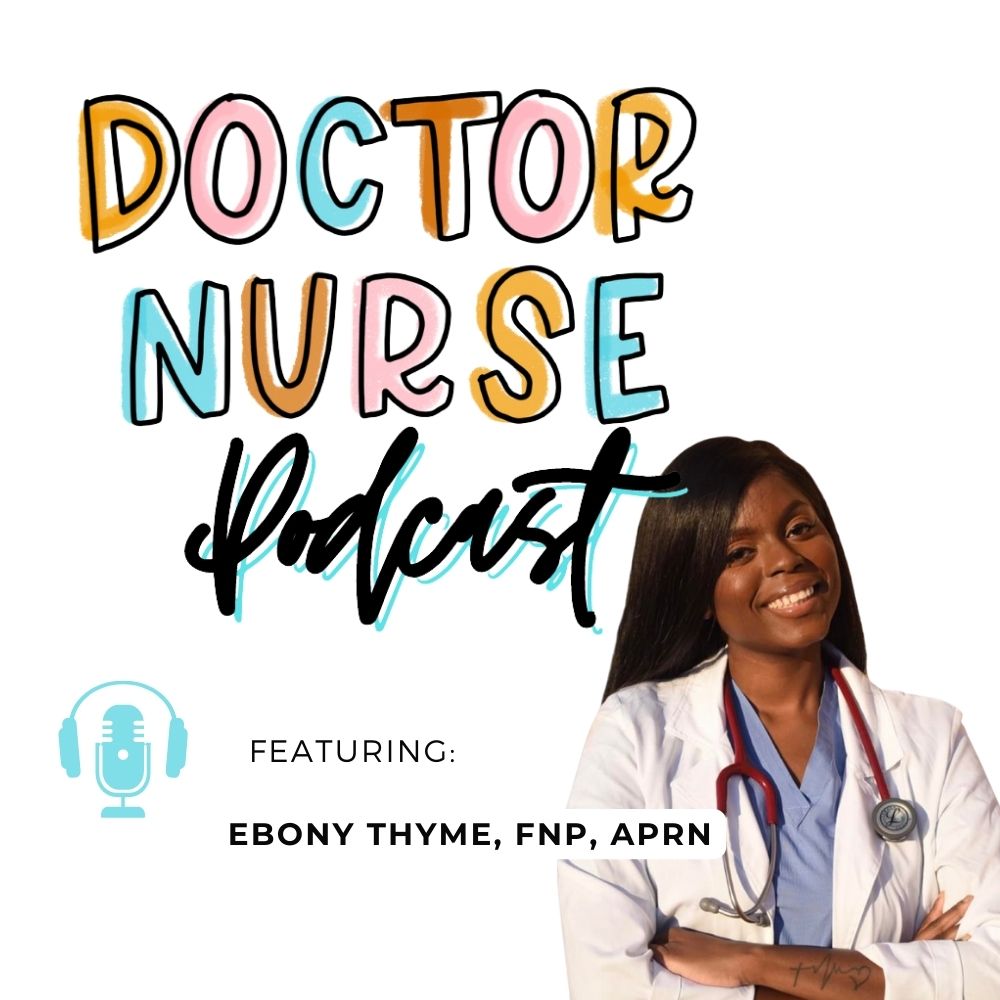
Sandra Pagenta: [00:00:00] Hi, doctor nurse podcast, guys. Thanks for listening today. I have a special guest Ebony time is with me today. She is an MSN APRN. She completed her BSN In 2014 and she started off as most of us do in med surge nursing. And then about after about two years of doing that moved right into the medical ICU, while she was working as a nurse, she began to go back for her MSN and family, nurse practitioner. She finished that degree in 2018 and has been working with. Urgent care, locum, tenon provider. She’s been pretty much teaching other nurse practitioners, how to become locum tenens providers. Because again, as I told you before the podcast, I know nothing about this. So I’m really excited to hear about what she’s carved out out of her for her. Ebony likes traveling. That’s her passion. It’s all over her Instagram page. She’s popping [00:01:00] on Instagram with all her travel excursions. I cannot wait to hear from this guest today. Thank you for coming on Ebony and sharing your wisdom with my audience.
Ebony Thyme: No worries.
I’m glad to be here.
Sandra Pagenta: So let’s dive right in. Explain to me what your current role and your job title is and what do you do for a living? Walk me through your job.
Ebony Thyme: I started doing local, but I’m a family house, nurse practitioner. A lot of people ask, well, what kind of nurse practitioner are you do?
Locals or what? Like what. Do you just jump into like critical care and then psych and beat? No, I’m a family health nurse practitioner at baseline. I graduated with my family nurse practitioner degree in 2018 and I started locum tenens four months after working my staff job in urgent care. So I worked in urgent care.
After being a travel nurse, I was a travel ICU nurse.. After graduating with my my master’s in 2018, I didn’t go into like studying for my boards and stuff right away. I just went straight into travel nurses. So I did work like as an [00:02:00] RN for a year, while I was studying for my boards. I loved the lifestyle of, being a travel nurse at that time. I ended up taking my boards and then I was like, all right. Yeah. Enough is enough travel. Nursing is done. You need to go back and used to work as a staff NP. So I worked in urgent care. Now I was so used to the freedom and flexibility.
Plus at that time I started like growing my travel page at that time. And I was just like, ah, this ain’t for me. you got to request the time off. See if, see if. You’ll get the time off. And it was just like, it just was not for me. I was also like working solo as a solo, urgent care providers seeing like 25 to 35.
I now, now they see a lot more due to COVID, but I was seeing like 25 to 35 patients a day. I was. Getting used to, I kind of battle for orientation after like day three, I did two days of like shadowing and then D three, I was off orientation and by myself. So the only people that I had, I know, right.
The only people I had to reference to [00:03:00] was the people that I did orientation with. And like some of my classmates it’s crazy. And I was just like, oh my gosh, What does this
Sandra Pagenta: the deep end and you’re not even touching swim.
Ebony Thyme: Yikes. Yes. What really got me into locums was not even like the workload, cause I kind of got used to being a solo provider.
You, I use UpToDate so much and proxies. I use this so much. That’s not even what like stopped me from leaving that staff position. I remember that there was a specific provider that told me that she was like, I’m only if she worked the opposite days that I did.
She also works solo seeing 25 to 35 patients. And she was like, I’m only here because they’re paying me to wait. And I was like I said, so I’m doing this and they’re not even paying my tuition. So before I decided to leave, I actually went to them and was like, Hey, do you guys provide tuition assistance?
Which is something I probably should have said when I interviewed. But I think I was just so happy to like, get that position. I’m like three twelves. I still got my freedom in [00:04:00] some sort of way. And then they told me, no, we don’t do that no more. After four months I had ended up applying for locums on locum tenens.com.
I did hear about. When I was in school, they had came to our job fear. I just didn’t know. The term was like you locum tenens. I didn’t know. That was the term. A lot of people butchered that term so much, but
I thought it was a cool idea while I was in school before I started becoming this avid traveler. I just thought that profession that was for me already, I just didn’t know the term.
Sandra Pagenta: Like whenever you, they came to your job fair, like a little whisper was like, this might be for you, but then you were like, not in a quiet, quiet, we just got to get a job.
We just got to get paid, be happy
Ebony Thyme: to have a job. And I say, you already told me hands down that I was going to need experience. And I was just like, oh, Well, I can’t do that right now. Maybe I’ll revisit it another time. Maybe I won’t. But even that, like I knew it was for me before I was an avid traveler, which was like crazy to me.
Fast forward, I [00:05:00] was like, oh, let me think about that job, that career path. And so. Randomly I have read online locum tenens.com. And so I applied, I put my resume in and I applied for months of urgent care experience. My first job wasn’t even in urgent care, it was in primary care.
Sandra Pagenta: Your first locums tenens jobs. There it is was in primary care, but for my listeners that are like, okay, so what is that? What does that mean? What does that primary care job entail?
Ebony Thyme: Of course. Is basically as travel nursing, a lot of people probably haven’t done travel nursing neither, but basically what it is is that you are considered a temporary providers.
So you fill in for vacations, you fill in for maternity leave FMLA. You’re there for, maybe you can be there for up to a year, like at a facility for uptake a year. You can be there at a facility for three months. You could be at a facility for six months with extension. You don’t work for the [00:06:00] company necessarily. You don’t work for the hospital, the clinic necessarily. So the clinic of the hospital is not prepaying you, nor are they providing you any benefits because you’re not considered their staff employees. You are hired as an independent contractor by a locum company.
So you have stuff like whether it be health Barton, associates, comp health, So many different types of locum tenant companies, they are the one paying meal. So they reach out to the clinic or the clinic reaches out to them and was like, look, we need X amount of providers. We have a provider that just left.
We need somebody to fill in. And like I said, the feeling could be maternity leave at. Ma I felt at one time for a provider that was on orientation for two weeks. So two weeks they needed me there by the provider was still there, but getting oriented by another provider. So I did contracts as long as six months.
I haven’t did any year contracts, but there are contracts that are a year only because I do other things outside of locums. And so what happened is like I have applied on [00:07:00] locum tenens.com. Pretty much like indeed. And recruit has started reaching out. So basically the need was for a primary care clinic, but this clinic was a little bit different.
It wasn’t only primary care. It had chronic conditions, but it also had most of the patient clientele was HIV positive. So I, at that time, So like prescribe, diagnose, treat HIV patients. On top of that, we have other infectious diseases and I’m not talking about basic, STDs, but I’m talking about like tuberculosis.
I finally got to treat tuberculosis, active cases of tuberculosis. I got to treat hepatitis as well. That primary care clinic specifically was primary care. You see some chronic conditions like diabetes, hypertension, but then you also see that specific population. When it comes to locums, you might work in urgent care, but you might not see the typical things that you would see in urgent care in one place compared to another place. So there’s some like clinics that I work at that I will see [00:08:00] more of like STDs or maybe more families like that come there for their needs and stuff like that.
Whereas other clinics, like I work for, it’s less of a demand. So it all depends. And that’s what I like about local tenants. you can add on your resume, like this is a skill, like now I say I’m, I, I know how to prescribe HIV meds. I know how to diagnose, I know how to treat and monitor HIV.
Then you can find positions that needs an HIV specialist. Maybe any kind of clinic, primary care HIV clinic, like,
Sandra Pagenta: What I love about what you’re describing is that it’s allowing you to build up your resume in a way that you don’t have to take a job and sit in it for a year and realize one, I hate it.
Or two, I actually kind of liked this. It allows you to build your resume. By getting exposure to different things and really figure out what you like it. She lets you test before you, you know, get really committed. Yeah. So are you taking jobs in your same city or other cities?
Ebony Thyme: So I’m licensed now [00:09:00] only because I do not have a compact license. I’m originally from New York and New York is not a compact state yet. What does that mean? So basically where like you are able to get licensed in one state and you can just get your NP license in other states without having to apply for your RN.
And you just have to like simply Google online and see which state is a compact state. You have to have mail going to that state. You technically have to live in that state per se. And then you can apply for your compact license and that sense. Much cheaper that way. So I’m not licensed in a lot of states because New York, isn’t a compact state.
I’m licensed in New York DC. California, which is one of my good states as well. And I’m nice. And some, one more, I can’t
remember,
Sandra Pagenta: but he loves California by the way everybody does. Every is like it’s utopia. It’s I dunno, what’s going on over there, but every nurse is like, love California. Love California.
I don’t know what they give their nurses, but they’re so always happy.
Ebony Thyme: It’s [00:10:00] nice. It’s warm out there. It’s very, I love the trees out there. I think that’s, it is beautiful. I love it out there. I’m from New York originally. So I do a lot of assignments out here. I do a lot of per diem assignments out here.
Sandra Pagenta: Got you. You can do locum sentence jobs at different states that you were describing. You always come back to your home state because you don’t have a compact license, so you can’t go anywhere in the United States. You can only go in these places that you’re licensed
Ebony Thyme: all of the states.
And here’s the thing about locums that I’m about to tell you about. All of the states that I’m licensing, I can work in the thing about locums is that there’s two ways that you can get a license with locums. They can actually help you get a license and exchange your work for them for.
So if I wanted to go to urgent care in Arizona and there’s a need in Arizona, the locum company will pay for your license. They will literally reimburse you back for your license as long in exchange your work 30 days with, at that urgent care at least 30 days. And so that [00:11:00] license is yours.
Then there’s some states where you’re like, okay, I know I’m never going to really go back there, but I work for this three months and you could just pay for my license and any time they need a need and that state, you have that license, that’s totally yours. I don’t go that route. I like to keep all of my licenses, so I don’t mind paying for it and getting reimbursed back because it’s my license.
But when you do the other route, though, the locums is in charge of that license for that state. So anytime they have a need, they will reach out to you like, Hey, Do you want to use your license for the state? That, we paid for it and you’re like, okay, sure. Like those are more for like the states that you probably wouldn’t really go to, but they might pay well and you have a license then why not work there?
And on top of that, the other perks about being the locum and this is not all companies, but this is most companies. They will pay for your transportation, your housing, and it’s not always a hotel. Your your rental car rental. They’ll pay for your DEA license. They’ll pay for your license, get licensed in that state.
Like it’s cool. Like it’s so much you can ask for so [00:12:00] much when it comes to locums. I’m not saying all companies is going to give you the same thing, but I always be like, it doesn’t hurt to ask
Sandra Pagenta: wow. The family. So you, you did the primary care locums and now you’re doing urgent care, correct? That’s your, your current
Ebony Thyme: actually right at this very moment, I am finishing up my occupational health.
Now I have occupational health under my belt. I’ve been here since January, so I have occupational health nurse practitioner. So now I have urgent care, primary care. I’ve done HIV. I have occupational health now under my belt. Speaking
Sandra Pagenta: of things under your belt, Because now that my listeners understand that you’ve got this locums tenant locum tenens job that allows you, I’m not going to edit it either.
I’m going to leave it on there. How many times I screwed it up, so it can be a part of some real or something. Now that you have this inside your tool belt, I saw, I saw through my stocking that you just completed some aesthetic training to be a nurse injector. And you’ve also got your local.
Locum [00:13:00] tent tenant guide that allows other nurse practitioners that are interested in this to learn certain things like these little nuggets that you’re dropping along. You have an extensive course where you help people learn how to do this. So take me through those two new things that you just.
Ebony Thyme: Sure. I’ve been doing this since 2019, and it’s not easy because with locum tenens, you are basically eliminating the employer that would normally give you the benefits. There are some companies that still work as a W2, which is what the employer would normally give. Health insurance, 401k, et cetera, et cetera, like from a normal like, job.
Right. Most of the companies though, they don’t give you that you eliminating the, anything that an employer would normally give you. When I started, I messed up, I owed 30 K on my taxes. I didn’t have like a good retirement like plan in my head nor did I have like I’m a financial advisor.
At that time I didn’t have malpractice. I ended up getting [00:14:00] malpractice insurance relatively quick, but I didn’t have my practices us for the first few months. Cause they were covering it. Locums do cover it. You just have to look in details to see if it’s like, has the tail end to it as far as like, okay.
Sandra Pagenta: So like when you leave.
Ebony Thyme: Right, right, right, right. So they worked, I practiced with malpractice insurance, but then I decided, oh, let me get my own malpractice since I jumped around a lot. I didn’t know this stuff at that time. Right. I didn’t know. Like the biggest thing is when you eliminate an employer, now you’ve got to start thinking about your future financially.
Right.
Sandra Pagenta: It’s almost like you’re an entrepreneur, like you’ve got your own business.
Ebony Thyme: You’re your own business because you’re looked at as an independent contractor and entrepreneurs are independent contractors. When I first started, I didn’t know about LLCs. I didn’t know that I could have them pay my LLC instead of paying me.
And then I can pay myself from my LLC just like a business. I didn’t know none of that stuff. I had to figure stuff out along the way. Now we’re fast forward two and a half years later and [00:15:00] I’m like, wow. I learned so much. I forgot to mention that locum sentence can be nurse practitioners.
It could be anybody in the healthcare field. Cause I know a lot of local tenants that are occupational health OT, PT. It’s so many therapist therapist, you can be. So, but my specific program is geared towards providers. So it could be medical doctors, it can be physician assistants and those practitioners only because I’m kind of familiar with providers.
But it can technically, if you are arming, you could be like, Hey, I want to work as a 10 99 employee, which is an independent contractor and call it a day and do the same thing that I do. So mine is geared towards my audience and my, most of my audience are nurse practitioners, but you can relate. Any kind of healthcare worker.
And so it basically the way the core squat works is that it basically teaches you like, what is a locum? Because not a lot of people know what a locum is first, how flexible your schedule can be around, around locums because you’re eliminating the employer. So nobody’s really telling you [00:16:00] all, you need to request these times off and you need to have seniority.
Nobody’s telling you that stuff. So now you’re making your, you’re designing how your year. Around your local tenants jobs that you do, and it doesn’t necessarily mean that you need to travel to different states. I’ve taken a contract. My current contract actually is 30 minutes away from me. They’re paying for my Uber to go there all the time.
And coming back home all the time, they’re also paying for this hotel that I’m staying in right now. I also worked the contract that I can, that was walking distance where I didn’t need them to provide me that where I will have them go up on my hourly pay because I didn’t need any of their benefits. It basically module one pretty much teaches you what is a locum, but how you can navigate through knowing what you want as a local tenant. Maybe you might be a school nurse practitioner. And, during the times where school is not in session, you might do local tenant works during the winter break or the summer break, you know, so it’s very flexible in that sense.
Right? It goes into that [00:17:00] and then it starts going into like the nitty gritty stuff that you need to know, like malpractice insurance, which is something that. I ended up finding about financial advising learning how to like start passive income as aesthetics as a passive income for me now, like I just got my aesthetic certification.
So now that’s become a passive income for me. Once I started practicing aesthetics. My local tenant guide has passive income from me. My travels it’s passive income for me. So you have those things. So we speak about that. Each person. Has a specialty that I felt like they needed to speak rather than me.
Cause I can only speak from my end. I don’t have kids right now. I can’t tell you how your life is going to look around local tenant with you having kids. That’s why I have a recruiter in there speaking as well. I also have a set financial advisor. I have a financial planner, health insurance.
That’s another thing. I have my own insurance as a single, woman with no kids. What about family? So I have a health insurance advisor that they can [00:18:00] reach out to directly in there. A lot of people don’t think about this, but estate planning, living wills, power of attorney. When you do make this money that’s extra money, or if this is your main source of income, where your money going to, like when you start to develop passive income and where you don’t want it to go to the government, you want to make sure that everything is aligned with where it needs to go to.
Should something happen to you, especially during the pandemic. So we have an estate planner in there as well, so it’s a very extensive guide. When I came up with this, it can be for any kind of business owner, to be honest, but I focus more on local tenants because this is what I do.
And local tenants is a business itself.
Sandra Pagenta: No, I’m very impressed. When you say that these, these are different things that you’re doing as side hustles and different streams or revenues or different, different streams of revenue that you have at your disposal. So doing the aesthetics training. Having the guide as a way to generate revenue, generating revenue through , doing the local [00:19:00] locums locums tenant job. You’re just creating all these different streams of work that you’re doing, which is absolutely incredible. And then again, like you said, with the guide, you’re not having an actively managed that that’s. Creating revenue as people download and, and use the guide as they move into this new career. And you’re helping them navigate pitfalls and little things that you can help them avoid possible headaches and things.
Ebony Thyme: I even have a CPA and they’re like my CPA’s and they’re talking to them about it. Everything was prerecorded now, but I had a prelaunch, which everything was live.
So at that time, anybody that came had their personal questions answered, like it was amazing. And then we have a Facebook group as well. They have, if you have a Facebook group
Sandra Pagenta: of any, how did you figure out that this is something that you wanted to create?
Ebony Thyme: I figured out this was something that I wanted to create after.
I felt like this was something that I was, never going back to a staff. Because I’m not going to lie and be like, oh, I always knew I wanted to [00:20:00] do this. But then in the back of my mind, I was like, how can I do this? I don’t even have a, I don’t even have a 401k. Like I don’t have a retirement plan and I need that employer and need that health insurance. I need to find a job that was going to pay my tuition. I felt like that when I first started, I’m like, ah, this is temporary. I’m going to go back and get a staff job, settled down, have a husband have kids. When I realized that Ebony, no, you’re not going back.
Like this is something that you like to do. And this is something that is possible for you to do without employer. I was like, I need to show people how to do it because it can be messy if you don’t know what you’re doing, I’m in a few Facebook groups. And then even like experienced people are asking these questions, like, what do I do?
Do anybody got a good CPA? It’s so much. And if your CPA don’t know what you do or understand what you do, it can be complicated as well.
Sandra Pagenta: What’s really neat is that you’ve shared, it was through some of the struggles and the things that you noticed that you realized there was a hole, there was something that needed to be [00:21:00] filled and that there was a gap.
And so you said, why don’t I close the gap? Why not me? Why not? Why not invest in myself. And there’s a couple of themes in the way that you’re thinking that I really want people to understand. I got to believe that I’m never going back to that. And when you change your mindset and you think I’m going to go at this by myself and you write that, you know, that little balloon or the shackle or whatever it is that ties you to the hospital and you let it go, it’s free.
To a certain extent. It’s scary because you’re like, oh my gosh, I just did this. I can’t believe it. I can’t believe I’m going into the alone, but at the same time, it’s so empowering to hear how you have, you have pretty much made your degree and what you’ve learned. Your business and the business of your mind, you’ve created that.
And you’ve set up shop in so many different ways, more nurses need to hear like, use what you’ve got and market it. You can’t.
Ebony Thyme: They [00:22:00] don’t teach us this in nursing school. They don’t teach you how to become a business or how to utilize your degree where you want to get into things like I’m so happy that a lot of providers and nurses and healthcare professionals are just realizing, like I could branch off into Ivy, hydro.
I can branch off into aesthetics. I can open up a med spa to start my own practice, my own cost of church service. Like I, that just makes me happy because now everybody gets realized in this and everybody will get to that point when they realize that some people not no offense against the people that do want to be, working on the employee, maybe they get good benefits and that’s okay too.
But my whole goal is. For people to realize that they can also craft their dream career. And that’s exactly what I do. I never used to talk about it at all, people were like, do you work? Like you? Like how you say, like,
that was my first page, my first page, front page. I just post travel stuff. Nobody knew what I was doing. They was like, she a nurse. I think she’s a nurse. I [00:23:00] don’t know, I started talking about what I do outside of traveling, and then they’re like, oh, I’m putting it together now.
Sandra Pagenta: And so you take these locum tenens jobs and. You kind of go like, all right, so I’m going to work this period of time. And then I’m going to go travel for this period of time. And it’s through these breaks in your job that you’re able to go do. Another thing that you’re passionate about that fills your cup, which is traveling and brings you a lot of joy.
And then you can go back and work these jobs and the places that you enjoy living and you get to be all over. It really is. So cool. How nursing provides you, such incredible opportunities. If you just see what you can build on your own. What an incredible journey. And, and would you take me through, again, throughout this time, and you’ve kind of shared some little ups and downs, but a real moment in your career that you.
Oh, this is crazy. A challenge that you had to overcome, that you were like, this might break me, but it didn’t. It made you
Ebony Thyme: [00:24:00] stronger throughout my whole career. Okay. That’s great. Cause I had so many downfalls throughout my whole career.
Sandra Pagenta: The one that you’re just like this one’s the top.
Ebony Thyme: I would say the most devastating point of my life was failing my INCLAX.
Sandra Pagenta: I would’ve never thought that about you.
Ebony Thyme: Yeah. Yeah. I fell my NCLEX the first time. I, when I speak to you know nurse practitioners that are in school and like nursing students that are, in school stuff, I tell them to take that time. Somebody wrote me the other day and I say, just take your time and breathe, because I didn’t do that my first time around.
I didn’t, I studied all day and night, and that was just what I did. I lived off a coffee snack throughout the day. And then I took my boards and I felt with 75. Devastated the second time around. I reversed things. The second time around, I had put myself first and my needs. First I went on vacation. I went out with my friends.
I went to see my [00:25:00] family. I scheduled my study time. Then I questioned myself. I was like enlisted in my study and a lot less, like, should I be studying more? I was like, no, like I found myself retaining the information more when I took breaks.
Yeah. And then once I did that and I studied and I went to take my NCLEX. The second time I passed with 75. So I failed was 75 and then I passed with 75. That that was a pit. That was a point in my life where I was just like, oh Lord, what am,
Sandra Pagenta: I
Ebony Thyme: don’t know.
Sandra Pagenta: Hey, look what you’ve done.
Tell me about a time that you were like, sitting in some fabulous place and you’re like, how is this what I’ve been able to carve out?
Ebony Thyme: We spoke about that already, and I felt like my distance it moment, like I said, was when I decided like I wasn’t going back. All the doubts that I had and was like, this is it. Like, I like what I do. Like people it’s not traditional, but it works. And I love it and I can still make income. And when I’m on vacation, I have my good old laptop that I do tele medicine.
So it’s like, it’s [00:26:00] like, it’s never a dull moment for me. And I get to pretty much craft my career. And that was the aha moment for me. Personally. I always loved teaching, so it’s just like now I see that people are engaged in what I do. And even the other day in my Facebook group, one of the girls was like, Hey, I just want it.
I feel like this is a safe space. So I felt like I could say this. She was like, I just wanted to let you guys know that I quit my job after the course, she was like, I quit my job. I’m looking for local attendant position now. And I’m about to start the business that I always wanted to do.
Wow.
Sandra Pagenta: You’re inspiring people. Yes. Those are
Ebony Thyme: the highs. Yes. That’s definitely a high for me. It makes me feel good. .
Sandra Pagenta: Along the way. Has anybody mentored you? Has anybody come alongside you and yeah, that’s kind of like,
Ebony Thyme: yeah. There’s no information out there about being a locum. By the way, when I started, I only knew what I, what I learned at the job fair for it.
Maybe 10 minutes before they was like, oh, you don’t got the experience. And then like, you’ll go on YouTube. You’ll probably find my [00:27:00] YouTube, if anything. But you won’t see much information on. Being a locum tenant. It’s this misconception that people do that after they retire too.
And just not enough people know about it. I get this every place that goes to like, oh, I didn’t know what, what does it call? Nope. No one. So, yeah. Yeah. it’s just one of those, like, I didn’t know. Yeah.
Sandra Pagenta: Yeah, no, it’s so true. You know what? It’s so interesting when we first got on, I said that I was like, I know nothing about this.
And you’re like, yeah, it’s pretty standard. It’s what everybody says.
Ebony Thyme: . I’m so used to it. I think I like when people don’t know, because it gives me the moment to explain and it gets me so excited. I like I’m ready to change your career right now.
Sandra Pagenta: That is so neat. Ebony and I like the last question of, of the podcast and the one that I ask all the nurses and I say, Hey, listen, when you first started off Ebony at that fair, which I think is weird that they come to a job fair with new nurses. And they’re like, you don’t have any experience.
That seems kind of strange.[00:28:00] Right? So they’re there and you’re a brand new nurse, nurse practitioner, whichever. , what is something you wish you would have been able to go back and tell Ebony that day that you think somebody needs to know a new nurse? What do you think she needs to know before she starts off on her career?
You wish you knew.
Hmm,
Ebony Thyme: let me think about it. What I would let me think of that. Oh yeah. So I would, I would tell that new nurse not to settle for anything less. I’m big. Just going for what you want to go for. What I tell a lot of people that are in my course is even if you see that it says no new, not open to new grads apply for that job.
Even if you don’t even see where it says, like whether or not you need to have experienced. So not just supply. The least that you won’t get, you won’t hear back from them. You may get back to them. They might even call you two years later after you already got the experience somewhere else, just supply because there’s jobs that reach out to me.
I’m like I applied for this three years. So yeah, I would tell like a new nurse, new nurse practitioner, just [00:29:00] so believe in yourself and just don’t settle. Don’t settle because I feel like what I do. When I first started, I didn’t ask enough questions when I started that first urgent care job,
I kind of was just happy that it was three twelves. And I didn’t ask about tuition reimburse it. I didn’t ask about CMS. I don’t recall a lot of CMS or vacation times, or I don’t recall having a lot of perks that came along with that job. And I was just happy to get in my foot in the door. And that’s not a way that you should be if you’re just graduating.
They put experience, again, experience get experience, but really if it’s something that you don’t want to do, if that’s not where you want, like.
Sandra Pagenta: I think one of the things too, that another guest on this podcast has said is, is really, if you are, if you are not qualified or you don’t have the experience for the job, when you’re interviewing show yourself to be the person that they want for the job. I feel like some jobs, like it’s like, okay, well I really didn’t have experienced it, [00:30:00] but they love.
The way that I was, and I got through the door maybe further into the interview process because I just showed who I was. And so that’s another thing I feel like what you’re saying is really true. It’s like, just go for it.
Ebony Thyme: Right. I tell the cause there’s a lot of a lot of new grads. No, it’s more people that have experienced in my Facebook group for locum tenens and I always tell them, and we also speak about it in the course.
Actually the recruiter speaks on. Which is pretty cool, but just go in with what you like, be yourself, tell them what you can do, like show leadership skills that you had, like when he was a nurse and maybe it was a triage nurse, maybe he was a leader of the diabetic educational group, whatever the case may be.
Sign up for training courses, seminars, those kinds of things, because that makes you look good, especially when you interview me. And that’s the same thing that goes with locums too, because you can absolutely be a new grad. I was semi new four months. I was still pretty new, but I’ve known people [00:31:00] that are like new grads.
Actually. There’s a few of my group that got accepted into a local position jobs as a new. And you just show pace yourself, like show skills. Like I did trading, I did this, I, I learned how to suture. If you’re going into something like urgent kid, I learned how to interpret x-rays and EKG is, I did a course on that and now I’m skilled in this.
I have certification in this. I don’t have aesthetics experience, but I went and got my certification in it.
Sandra Pagenta: Your go getter. You’re a hustler and you’re not afraid. You’re not afraid. You’re just going to give it a shot. Being in the roles that you’ve been in is really allowed you to just walk into something you don’t know.
And you’re like, oh, I’ll figure it out. It’s kind of amazing that you’ve been able to do that and you’ve built that habit of being uncomfortable. Well, being comfortable with being uncomfortable. Thank you so much for all your advice today and sharing your journey with my audience and give a shameless plug.
Can you let people know where they can find you.
Ebony Thyme: I have school pages, my child who pays, I’m actually going to Dubai next week, finishing this contract one [00:32:00] Tuesday, and then I go to Dubai on Wednesday. And so look out for that. You can follow at front page underscore E Eby on Instagram.
That’ll show off showcase all of my travels as far as nursing and locums and things like that. You can follow me. At AB ebb, the MP on that page. I’m also on YouTube travel with ad on YouTube. It’s a mixture of travels and what I do for work as well.
Sandra Pagenta: I’m going to put all the links in the show notes.
So guys, you don’t have to write anything down, just know that you can find her on Instagram. You can find her on YouTube, and then I’m going to put all the links to her coursework. If you’re interested in locum tenens then you can see how to do it, how to get it, how to do it in a way that.
Give you less problems and you’ll be ahead of the ball game with the truth that Ebony’s going to give you in regards to the position.
Ebony Thyme: You got it right the last time.
Sandra Pagenta: So for the last part of the interview, I have any rapid fire questions. Questions, questions, [00:33:00] you ready? Let’s do it. What is the most common thing you impulse buy?
Ebony Thyme: What do you mean? Like in like,
Sandra Pagenta: I can’t help myself.
When I see her pair of red shoes, I buy every pair of red shoes or like, I am obsessed with lipsticks and a certain shade or like, whatever, whatever it might be.
Ebony Thyme: I would say my biggest impulse buy. Oh, you mean by like, oh, okay. That sounds like by B Y I like Louis Vuitton, so I like going to the Louis Vuitton store.
Even if I don’t buy anything in it. I like to see what new products they got. Definitely
Sandra Pagenta: a travel nurse.
Ebony Thyme: Yes. And then I may buy something and then I have to stop myself. Like, even though it’s not time to treat yourself and I was like, okay, come back for it. Then I’ll go online. And then I look at it and I’m like, okay, let me go by
Sandra Pagenta: problems. What is one chore you definitely like to pay to have done for you?
Ebony Thyme: Hmm, that’s a good question. Actually would pay somebody to cook for me. I know how to cook, but like with me being on the road so much, [00:34:00] I think I forgot how I do a lot of meal prepping.
So it’s like, I think I’ve forgotten how to cook. I think I just need to. Take some time off a few months off.
Sandra Pagenta: Our last question is if you could learn a language in one week, what language would it be?
Ebony Thyme: Spanish. Spanish.
Very simple, because the reason why I like stuff that’ll make me more marketable. Everybody wants to know.
Sandra Pagenta: He wants to know about how to get more skills.
Ebony Thyme: Exactly. So Spanish is very simple and I actually have a story. I know we’re about to wrap it up, but I had randomly went to Guatemala on a one way and almost started Spanish class. Yeah,
and I was like, okay. Yeah. I was just like, okay, I gotta go.
Sandra Pagenta: Ebony, thank you for your time. And thank you for all the little nuggets you dropped along today’s episode where people can learn about this. Really neat way to invest in your career. So thank you so much
Ebony Thyme: having me.
Sandra Pagenta: Yes.
And guys, don’t forget to enjoy the journey.
Podcast Description
Ebony Thyme is a Family Nurse Practitioner and she has 8 years of nursing experience plus 2.5 years of experience as a traveling locum tenens Nurse Practitioner. She is the owner of the Wellness Thyme Health which is the company she created to help other healthcare professionals avoid the common pitfalls of becoming a locum tenens provider. In her free time she loves to travel and working as a traveling NP gives her full autonomy to go where she wants when she wants.
Ebony Thyme’s links: https://linktr.ee/ebbthenp
https://www.wellnessthymehealth.com/travel-with-ebb1647075637678
Doctor Nurse Links: https://linktr.ee/DoctorNursePodcast
Wanna start a side hustle? Subscribe to the Doctor Nurse Podcast and I will show you how to start: https://view.flodesk.com/pages/6253188857d9b15fd00f8329
Latest Episodes
Doctor Nurse podcast brings you weekly shows to help INSPIRE, EDUCATE AND EMPOWER nurses with true stories of initiative and impact.
Doctor Nurse podcast brings you weekly shows to help INSPIRE, EDUCATE AND EMPOWER nurses with true stories of initiative and impact.
Latest Episodes
Doctor Nurse podcast brings you weekly shows to help INSPIRE, EDUCATE AND EMPOWER nurses with true stories of initiative and impact.