Also Available On






Sandra Pagenta: [00:00:00] Hi, welcome Chris to the doctor, nurse podcast. So happy to have you on today.
Krish Chopra: I’m so excited to be here. Thank you.
Sandra Pagenta: For those that are just tuning in, can you kind of describe what it is that you do, what your company is about?
Krish Chopra: I am a co-founder and I’m the CEO of NP hub. We are the largest nurse practitioner, preceptor placement agency in the country. We help students find clinical sites around the country because for whatever reason it is graduate nurses, get the.
Students. Universities do not help them find clinical rotations. And as a result, what you have is thousands of nurses every month, really that are delaying graduation that are unable to find preceptors that are begging and pleading literally cold calling to try to find a clinical site. And that’s where we come in. So I’m a CEO of the company. We have been really fast growing we’re. I think at last [00:01:00] count, maybe around 45 employees we handle well over 2000, 2,500 placements a year now between wow. Every, every month we’re helping at least 200 students. And the truth is we could probably help another two, 300 like this if we had more preceptors.
So that’s really you know, my main job here is. Helping my company grow, making sure that we’re doing the right thing. I believe you can build a business and care about your community and care about the customers and clients that you serve. And for whatever reason, the nurses get the shaft. They’re like our teachers they’re overworked and underpaid and. I think I kind of class for myself as like a nurse advocate in the way. That’s maybe how I think about it. Yeah. But that’s like the answer. Yeah.
Sandra Pagenta: That was one of the reasons why I wanted to have you on the podcast and to have you come and talk to nurses, because a big focus of the doctor nurse podcast is creating a level of self-efficacy for nurses to.
Ask for what they’re worth and to go out and find side hustles. Your business and what you’re the leader of is [00:02:00] an opportunity for nurses to generate. Some side revenue from their skills and their expertise. One of the things I’d like to kind of touch on before we dive more into what NP is, how much can nurses make all this stuff?
Tell me why is it that you think nurses or universities aren’t plugging in their students with preceptors? Like what is going on there in your opinion?
Krish Chopra: Oh, that’s a really good question. I think that for whatever reason at the in graduate nursing, what you’ve had is because the typical student is typically older, they’re working full time.
They’ve probably been an RN for a few years. They tend to be a bit older of a crap. So you’re not, it’s not a direct program, right? You’re not going from, or, I mean, you see it sometimes now where you go all right. To NP. But I think a lot of nurses have their opinions about it and they don’t like that.
Right. You wanna have nursing experience. So as a result, nurses tend to want the flexibility. And I think universities have created this more hybrid, online model. They have accommodated [00:03:00] for it. When you decentralize. The location of your students, it’s hard to build a clinical site infrastructure.
That’s like the fancy way of saying like, okay, because you go online and now you recruit students from multiple different states. You can’t build in these clusters of rotations in every state, but if you focus on like, say Atlanta or New York or whatever, it’s easier just to like build in a hub in one area, even though that’s challenging.
I think that’s what’s happening
Sandra Pagenta: in the space right now..
Krish Chopra: I, I think you. Look, a lot of universities as amazing as they are, they are under staffing, their clinical departments. So that way there’s very little emphasis time or energy given to the preceptor.
So the preceptors are like, no, one’s helping me do anything. And they just, they have to do all the heavy lifting.
Sandra Pagenta: Tell me a little bit about how you developed NP hub and how you saw this gap, and how you filled it with your business and kind of walk me through your entrepreneurial
Krish Chopra: journey.
My very first company I [00:04:00] started failed actually, was that in real estate investing, which just made no sense cuz I was 23. I didn’t not invest in real estate. But my basically what had happened is I had quit a full-time job in New York City, moved down to Atlanta to sort of restart stayed up six months , of money.
I kind start a company. And that first company, like I mentioned failed after four months. So I had two months of expenses running. Like I had lessened like eight grand in my name. And I was 20. Four at the time less like burning through my savings and I just needed to prove to myself I could be an entrepreneur in my culture, like, you know, I, I like I’m a first gen Indian in the, in the us, in our, and like our culture, if like you’re smart, you become a doctor and an engineer, every stereotype that exists, guys.
So like, that’s like real . And that didn’t fit for me. Right. I was never like the book smart person. So yeah. I wanted to prove myself. I could be an entrepreneur. And my first company, I started helping medical students find clinical rotations. And in, in that organization, that business, we partnered with universities.
Typically it was international [00:05:00] programs and we were sort of like their outsource placement department and we had a student for two. There are core rotations for 48 weeks. And then there are electives for like 26 weeks or whatever. It’s like a total of 70 or something like that. And in the med school space, we were like one of 15 competitors.
We did a good job and it was cool. Yeah. But we never, I never realized that, like I could never imagined that us NP programs put their students through the ringer like this. Like I always thought it was like, okay, these international programs are underfunded. Okay. Like I get. But in the NP space, in us, in the us, like you have that bias, like how could we do this?
And again, at the, at the RN level, it’s set up pretty well, right? It’s like you have your clinicals. Like you go through these, you go through this over and over and over again. You’re really focused on passing end cuts. Like you’re just going hard at it, but the NP programs are so just. I don’t wanna say poorly organized it’s the wrong word, but they’re just, [00:06:00] it’s organized differently.
Sandra Pagenta: So in the end, it’s that thing that you were saying? Yeah, it’s decentralized. So it’s more fragmented. That’s exactly. I think maybe that’s the word. It feels very fragmented. No you’re and you do feel alone. A lot of nurse practitioners. Students will describe feeling like kind of a lone island, cuz you go to school online, you’re working as an RN and you’re just kind of all by yourself.
Like it just feels very alone.
Krish Chopra: Through that process. The hospitals where you’re working at, they don’t care about you. You see everything that’s happened in the last two years. Like I think I can accurately say that and I don’t think anyone would bother. And then your NP programs.
Aren’t able to give you the personalized attention. So literally you’re graduating and you have this massive imposter syndrome. That’s what MP are going through. But to finish up on the story thing in the MD space, we were one of 15 competitors and we did a good job. I was proud of the work that we did in the NP space.
If we don’t do what we did and we didn’t make that transition. These NP students aren’t graduating. So for, for [00:07:00] me, it was just a matter of like, I can run a good business in the NP space, or I could do something unique in the NP space and like really get to help a community that gets, they’re underserved.
They lack resources. Yeah. And they get overlooked. So that was a model
Sandra Pagenta: I love your first story that you told me. About your first nurse practitioner that reached out to you and was asking for help. And she was emotional when, again, again, like you weren’t even servicing NPS, like they came to you.
Yeah. And they’re like, could you help me? Yeah. And that’s what really got you into that business. It actually is a super like emotional story that you shared with me.
Krish Chopra: It was our first year of business in 2015. And I was outside of Starbucks in Atlanta, Georgia. And I get this call because again, we’d worked with med students and we had like a website, so people would enroll saying, okay, could you help us reach out to me, et cetera.
And it was an NP student and she was from Walden University. I didn’t even understand what our requirements were. We had no idea how to even price, but she basically said like, I’ve sat out a year I cannot [00:08:00] find a preceptor I’m in Atlanta and I just need a pediatric preceptor. I just happen to have recruited a preceptor in Lawrenceville, Georgia, which is like, kind of like a suburb of Atlanta. So yeah, they call this preceptor like, Hey, would you take this student? This is the documents they need. It’s a little bit more than normal, but just, can you sign it and return it back to me.
And within two, three hours, we had this back. She was literally crying. Like she was just like, how does this, she didn’t understand it. NPS, I think are used to being alone and being isolated and for having like a service that could just kind of get it done for them was just right there for yeah.
Sandra Pagenta: There is a level of that isolation that then continues into practice, you end up becoming a provider that works independently that thinks that. It enhances a scarcity mindset because if you think preceptors are in abundance and I’ve got options galore, then you generate and you operate differently as an NP. But if you’re in this mindset of. There’s not enough preceptors. I can’t get anyone to find a preceptor for me. And you think all of a sudden, now [00:09:00] you’re gonna be like, oh, let me have pay transparency and let people know what I’m making. And then let me make sure that there’s enough money for me to get paid. A salary that I feel like is appropriate for the work that I’m doing and not just taking whatever physicians offer us and just go, thanks for the job.
It just keeps us in this scarcity mindset. It just is so limiting . You shouldn’t have a preceptor shortage issue. This seems completely just awful to me that we, you don’t have enough preceptors because we should be presenting enough options so that every nurse practitioner, student can find someone so that we can have this abundance mindset of come there’s enough for all of us.
Krish Chopra: There’s enough. I agree with you. 300%, because so here’s something interesting that you said, like, when you are an RN before you’ve gone to NP school from a ho from like a balance sheet hospital perspective. And I know like, when I say something like this, people like, oh, we’re, we’re more than a balance sheet, but from like a hospital perspective, you are on the cost side of service, right?
Mm-hmm you are under the line, anyone’s looking at [00:10:00] financial statements. You’re under the line, your cost. Yes. But when you are an NP and you’re a provider, you are no longer that you’re an income generating in the business case, what generally happens if you generate income, is that you are paid your base, which is, should be a fair base.
And there is some sort of incentive bonus, right? Let me ask you something. When you’re at practice and you see if in a day you can give incredible care to 25 patients versus someone else who can give incredible care to 20 patients. Well, then you were 25, 20% better. 25%. Excuse me, math. Oh, my dad would hit me right now. You were 25% better. And, and that there needs to be a reward for that because otherwise what ends up happening is then why not? Why would you continue to work hard? We don’t need to, to have this mindset of you should do this out of the goodness of your heart and have that be this sort of like opposite sign of like being [00:11:00] financially abundant, if that makes sense. Right? Like why
Sandra Pagenta: can’t those two things coexist? Why do co gimme a good person and want to make money? Why are those two things mutually exclusive? I don’t understand that. I don’t understand that. And that’s one of the things I wanna start generating conversations around for NPS showing what you’re worth. Also having a good heart. You can still be a nurse practitioner, those things intersect and that’s okay.
I want nurse practitioners to create side hustles, to do things independent of their workplace. If their workplace isn’t paying them what they deserve, then go and find and create and do things that are gonna bring you money. To supplement your income. Eventually you can leave that other job and go do the thing that brings you joy and lights you up in an entrepreneurial space.
If you want to, if not, you can find another company that’s gonna pay you. You can go into industry, you can go into corporate. Like there are spaces for nurses in every field, especially if you feel like you’re not being compensated appropriately. And I love [00:12:00] that NP hub is an option for nurses to generate.
Some income. And with that being said, please, describe to me the structure of NP hub and describe to me kind of. How the process works.
Krish Chopra: Absolutely. So I think the easiest reference point I like to explain is Airbnb. So we developed a platform. Helps connect nursing, NP students with preceptors around the country. The idea, like you said, a few minutes ago, was that again, NP students, preceptors, preceptors are massively underappreciated.
So our model was okay, let’s bring them together and let’s appreciate this community. That’s all we do. We appreciate the community. And then on the other side of the students side is these students are begging, borrowing, pleading for a preceptor. What if we gave ’em. What, if they can actually choose a preceptor they wanted to work with as opposed to begging for anyone that says yes.
Right. And that’s why you can look at it. So on the NP hub on the, on the platform, which if you go to our website, it’s there, you could basically search for preceptors, given your criteria. If you’re a student, Okay. So, Hey, [00:13:00] I’m looking for a women’s health preceptor in Dallas, Texas to start on this date and then you’ll see maybe five options come up or three options come up or 20 options or whatever.
If it’s primary care in a, in a market, it might be like 20 options. And then you literally can open up these tabs and read through the description. Okay. Hey, the patient population is this. This is the type of patients that they see. This is the dress code that they have. This is a note that the student, a preceptor might leave for the student.
Hey, I, I want to have fourth semester students, preferably because I might wanna hire you afterwards. So like first semester student notes. Okay. I, this is a fast face clinic. They see 30 patients a day. I’m not equipped there, but this is a slower clinic. They see five patients a day, 10 patients a day.
That’s good for me. I wanna go. So those expectations are matching their experience. So on the students side, they have this platform they can come into on the preceptor side, right. For them, it’s making this experience easy for them because it it’s been such a massive barrier to precept. [00:14:00] If you want a pre student, you basically can like randomly just like put it online, put it on social media or something like that.
And like a million students are gonna start messaging you, you don’t know anything about them. You don’t know their resume. You don’t know their experience. You don’t know anything about them. When you get a request, when you’re a preceptor on our platform, you basically reach out to someone on our team and they basically give you this walkthrough.
They ask you these questions, they interview you. What’s your clinic. Like what are the patients? You see everything that every student’s gonna ask you over and over and over and over and over again, every time they wanna know about your experience. We put it up there. Then when you get a request, then you get a text message.
Hey, you got a request check out at under dashboard. Okay. You could request our CV. You wanna interview? Okay. Let us know. We’ll organize the interview for you. Not everybody just wants a random student. That’s understandable. you, what we’ve seen is preceptors people want to precept, but the issue is a lot of times at work they’re bogged down with they’ve either had two issues that have happened.[00:15:00]
They’ve had bad students in the past. That’s ruined for them or at work it’s really busy and they’re afraid gonna slow ’em down. So you may wanna interview them. You may wanna communicate with them. And I think for us being the barrier in between does two things, it makes the student take the preceptoring experience more seriously, and the preceptor takes it more seriously as well.
Cause when there’s a financial exchange, there’s also a sense of ownership over this.
Sandra Pagenta: I love this quote that says when you pay, you pay attention I love that. That’s a good quote because isn’t that great because when you it’s a great. There’s this kind of connection between the moment you fork over money, you’re a little more invested in, okay, where’s this going? What’s happening? Cause it hurts a little bit, right?
Krish Chopra: On the preceptor side as well, when they’re receiving some sort of compensation as well, compensation, they’re taking it more serious.
Yes, it’s true. It’s more than just, oh, Hey look. Yeah, come shadow me a little bit. And oh, things are getting busy. Don’t show up today. No, no, no. We don’t have those issues.
Sandra Pagenta: What you’re [00:16:00] describing is that the people that are paying for this service, they really want, they want a good clinical experience.
Krish Chopra: You’re a thousand percent, right. And it’s funny, we’ve actually had some of our students eventually turned into, obviously we have, our students eventually become preceptors, but we’ve actually had in, in several cases now our students open up a clinic in their old preceptor ended up being the collaborating physician in some cases. Why?
It’s like really cool to see. That’s incredible.
Sandra Pagenta: That’s incredible. Let’s talk a little bit again, to finish up and, and wrap up. How can MP sign up and again, what is the.
Average pay. What are the average, preceptor pay and then how do they sign up to join NPF?
Krish Chopra: Ah, that’s a great question. So how you sign up is basically you can go to npf.com and then there’s a button at the top become a preceptor and you can put in your information there and someone on our team will reach out to you.
That’s probably the fastest way. Any other way is you can also. Even though it’s, it’s kind of rare. You could also just go to our website and you’ll see our phone number and shoot us a text saying, Hey, [00:17:00] I wanna precept and believe me, someone’s gonna call you real quick.
Sandra Pagenta: they’re hungry. They’re ready for you.
Krish Chopra: Oh yeah, I got, I got a, I got a team that’s on it right now. In terms of compensation. So it, it does, there is a range, right? So different specialties. We basically have tried to create as much ownership of this as possible. So we allow our preceptors in a way to sort of like choose their own pricing.
We’ll let you know what, what the typical is and if you wanna increase it or you wanna decrease it based off what the typical is in your area, and that’s based on specialty and location, you can do that. I would say on average, most of our preceptors take two students a semester. And I would like to say that a thousand per student is very reasonable.
You know, it could be, did you hear that thousand per student? it could be less seven 50. It shouldn’t be any less seven 50. It could be more if you’re like a really hot specialty in like New York city or like LA fine, we’ll get it. But like thousand per receptor team.[00:18:00] When you’re taking two students a semester for, so you’re taking eight students a year, that’s eight grand.
You’re taking six students a year. That’s six grand.
Sandra Pagenta: Guys nurses should not be broke or burned out. We should not be again, check out MP hub. See if it’s something that you wanna do with your business. If you own your own business, taking on students, just extra income. I know students will. Especially MP students would love to see an entrepreneur. We want more people doing what we are all doing. So we’re not short staffed and we’re not all tired and we’re not exhausted. Like there’s a, there’s plenty to go around. I definitely feel like we need to do a better job at cultivating an abundance mindset, having students on letting them see what you do. Not only that it will change you as the preceptor. If you can create connections, if you can mentor. Take this person that you’re bringing on as a student, you [00:19:00] might find that. You could actually end up changing their lives. You could end up being the person that they go to. I had this one preceptor and she did this and it changed my trajectory for my life or whichever.
And that’s really what it’s about. We’re not in competition. We’re supposed to be collaborating with one another. And I love that story that. They ended up collaborating at the end of their preceptorship because they were like, you’re great. And I want you working with me and we should have, that should be the mantra that we have in nursing
Krish Chopra: I agree.
You know, We made our pricing strategy. You know what it was, we paid our NPS the same. We paid our MDs. It was really important to me. When we were creating this, we were gonna pay our NPS. The same pays are MD. So the kickback was like, yeah, we made less money, but that’s fine.
Cause just because you can charge, see for us just cuz you can maybe pay receptor less cuz they’re not used to being paid. Doesn’t mean you should doesn’t mean you could just cause you could charge a student more. Doesn’t mean you should, you know, there’s ethics involved with how you do things, right.
You have to be able to sleep at night. I wanna [00:20:00] make it super clear cause I know like my, my, my team is gonna be like, you didn’t say it the right way. . We will co we pay our preceptors more for the longer the students there. So one of the things that really drives me nuts is people aren’t really valued for their time.
Like this is just like historically, right? So you do extra work, you should get paid more. You take a student on for 200 hours. There’s more compensation. You take a student off for 60 hours with less compensation. That’s reasonable. That’s fair. Yes, we know. That’s fair. Yeah. Yeah. So I want everyone to know that.
So you take it on these students for longer hours. It’s more than a thousand everyone. So keep that in mind. It is crazy how many students preceptors have told us that having a student, especially for the preceptors that are sort of like on the fence, it’s like maybe they had a year to, you need a year of experience to qualify, to be a preceptor.
That’s like the student, the rule for every school. These preceptors, these new preceptors, these fresh NPS with one to three years of experience that still have that sort of like Ang sometimes they’re like, I’m not ready to teach. I don’t think I can want. there’s so many preceptors that they do it and they, and it’s like this [00:21:00] confidence boost of how much do they know they were there.
They were right there in NP. They still remember what it was like, they feel that’s lonely in NP program. They’re the best preceptors.
Sandra Pagenta: Yeah. That makes so much
Krish Chopra: sense. You know, so if you’re scared about it and you’re like, oh, I’ll do it in a few years. Just think about. Preempting one student is not a commitment, just try one and see if it actually is like you’re not ready yet.
Or if you’re just a little.
Sandra Pagenta: that’s really good. Any other qualifications that they need? I would say
Krish Chopra: that you know, one year of experience, valid license, obviously yeah, the, the, the key four or five specialties tend to get the most requests, which is primary care. Women’s health, pediatrics psych mental health.
They tend to get the most in just NP in a major.
Sandra Pagenta: That’s why I love MP hub, cuz it’s like, okay, I can go do that. I can go make more, a little bit more money over here. And $2,000 that can, you know, again, if you’re saying $8,000 a year, That can, that can change the needle on certain things, paying on your house quicker that can [00:22:00] change the needle on student loans up your student loans that can change the needle on putting away for your college for your children.
That, changes the needle for a lot of things for people. And so. Yeah, we can’t underestimate these little things that we can do as we work at a bigger micro job, macro job and we can have our hand in multiple pots. You never wanna just be in one pot.
Krish Chopra: I agree with you. I think what, what really kills me is that this understanding that I feel like I would never have these conversations wouldn’t happen when I’m talking to MD preceptors or M., this is what bothers me the most is that they’re doing the same thing. But in one it’s just like this ideological thing of, oh, I shouldn’t be able to do this or we should do this.
We should just have the goodness of our heart. That’s what you hear. Every time I’ve talked to a university. Oh, we’ve paid preceptors. No, they should do the goodness of their heart. I’m sorry, nurse who hasn’t, you know, been seen a patient in 50 years. What’s happening right now is you [00:23:00] cannot scale education.
You cannot solve the, the healthcare shortage in the us by the goodness of someone’s heart. This is now how you fix a problem. You fix it to a scalable solution that fits everybody. Okay. Yeah, sure. I wish Uber was free and I could get free transportation everywhere in the world or public transportation.
Every city was free, but that’s not how you
Sandra Pagenta: works. Nurses have been taught to just go work in the hospital, don’t look around. Don’t and it’s like, Nope, we need to be questioning.
We need to be looking around. We need to be seeing what our other options are and not feel like we can’t do other things. And I think that that is also how we end up staying oppressed is by not seeing all the options that we have. You can’t dream when you’re told narrowly, you can only go here. So I’m only gonna be a primary care nurse practitioner, but yet I found out afterwards, it’s like, oh wait, I can first at the bedside. Like what? Oh, I can help like harvest like veins and I can learn how to do what.
I didn’t know that.
Krish Chopra: I didn’t know. [00:24:00] Interesting doors.
Sandra Pagenta: Let’s open them up. Let’s let people see what’s going on around here. Let’s let the left hand know what the right hand’s doing. Let’s talk, let’s talk. That’s
Krish Chopra: interesting. You’re right.
Sandra Pagenta: And we can’t have those conversations. If we aren’t collaborating, if we aren’t talking again, scarcity mindset, doesn’t allow for more opportunities. Yeah. It decreases opportunities. It create, you look at problems instead of this could possibly solve.
This could actually be solutions by looking at it through an abundance lens. No, you’re,
Krish Chopra: you’re absolutely right. Yeah. You’re describing like a growth mindset, a growth oriented, a growth mindset community of nurses. That there’s probably not nearly enough of them out there. And I would imagine then you kind of bring in like these expert nurses kinda like yourself, or like the lead NP to kind of do a talk and like share that with the community and really get this knowledge transfer.
Sandra Pagenta: Yeah. And there’s some of those communities out there. Yeah. A lot of nurse practitioners are creating them. I’ve been to a couple of them. I’ve been a part of them and they’re great. You just go and you [00:25:00] talk about the things that you wanna be a part of and you, you are passionate about and things that you wanna see in nursing. What I love is that the people that are in charge of them really wanna make sure that the people. Being fostered and they’re being seen and they’re being, you know, encouraged and stuff like that. So they’re out there for sure.
So for the last part of the interview, I’m ready, which we do rapid fire. Okay. These, these are coming at you fast. You ready? Am I allowed to curse? Good. No, that’s here we go. What’s the best age to be?
Krish Chopra: The age you
Sandra Pagenta: are. The age you are. All right. And what is your favorite game of all time board game,
Krish Chopra: board game?
I, chess chess comes to mind. I like chess. Chess. Yeah. I got chess.
Sandra Pagenta: Okay. Oh, okay. The game of strategy. And then what are you most grateful for in the whole wide world?
Krish Chopra: My team. I [00:26:00] care a lot about like, especially like my first 15, 20 employees. Like, it, it, it gives me a reason to try to get better. I do a lot.
I do a lot of what I do for them.
Sandra Pagenta: Yeah. That’s really cool because that’s, again, leadership trickles down. Right. And so they know when you care about ’em, they know when. They know when you you have that servant, like you would do anything for these people. People work differently when they feel that way.
Krish Chopra: I think from a preceptor point of view, it’s you guys have gone underappreciated for a long time. And you shouldn’t be, whether you precept with us, you precept with someone else. There’s more than enough to go. right, but you should get support. And I think that’s the biggest thing. It doesn’t need to be this hard. So that’s, I don’t know. That’s my
Sandra Pagenta: part. I’m on NP hub guys. It’s not something that I’m just preaching and I’m not about. And I think that again, more NPSs need to just.
Jump on. We need to support our nurse practitioner students. And ain’t nothing [00:27:00] wrong with getting paid while, while you do it.
Podcast Description
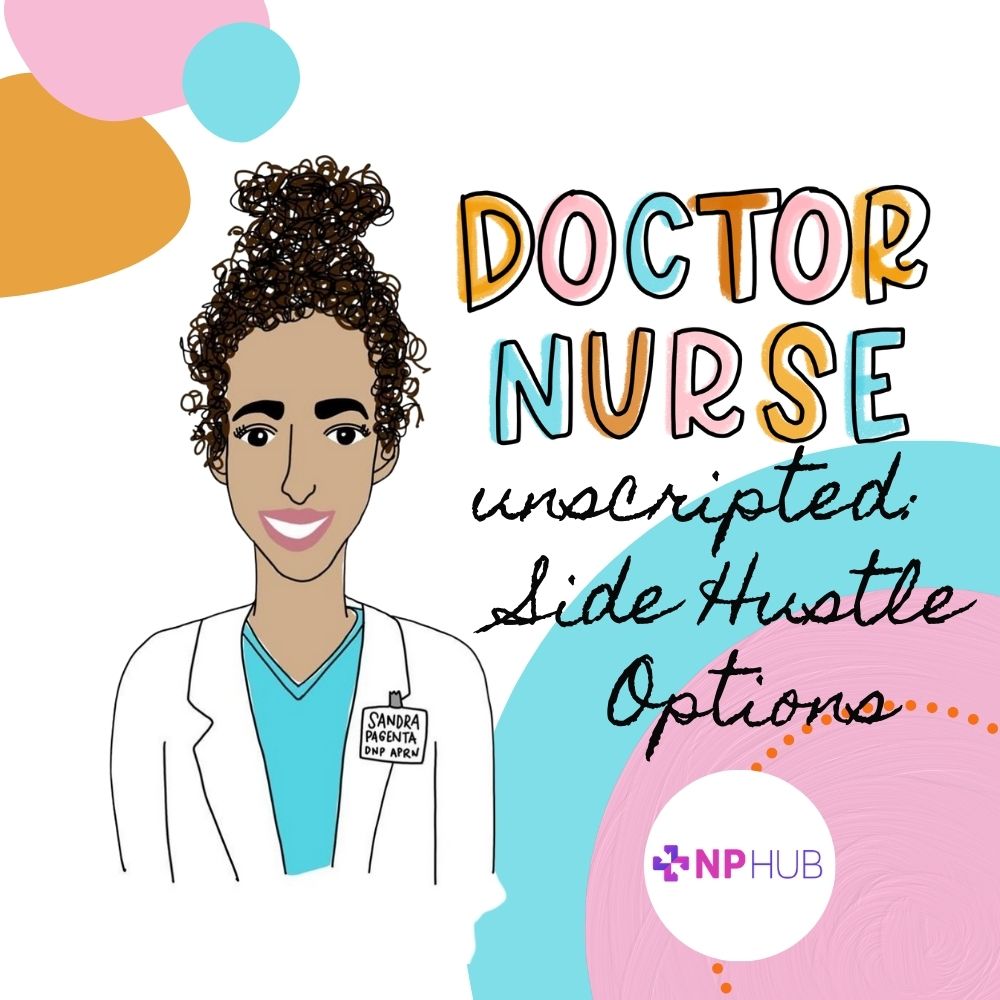
This month on the Doctor Nurse Podcast Unscripted we are hearing from Krish Chopra. He is the co-founder of NP Hub, which is the largest NP preceptor placement agency in the country. In this 25 min convo (sorry it went a little over my 15 min promise) we talk about the start of NP Hub, the heart of the company, and why I think Krish should never have a problem getting NP preceptors! He explains how to become a preceptor and how much you can make- teaching someone how to do the work you do- day in and day out.
I won’t spoil how much you can make, but the amount is a pretty penny and can serve as extra income for your household!
NP Hub Preceptor Sign-IP: https://nphub.com/preceptor/beforelogin
Use my referral link when you sign up! sandr842E0
Doctor Nurse Links: https://linktr.ee/DoctorNursePodcast
Wanna start a side hustle? Subscribe to the Doctor Nurse Podcast and I will show you how to start: https://view.flodesk.com/pages/6253188857d9b15fd00f8329
Latest Episodes
Doctor Nurse podcast brings you weekly shows to help INSPIRE, EDUCATE AND EMPOWER nurses with true stories of initiative and impact.
Doctor Nurse podcast brings you weekly shows to help INSPIRE, EDUCATE AND EMPOWER nurses with true stories of initiative and impact.
Latest Episodes
Doctor Nurse podcast brings you weekly shows to help INSPIRE, EDUCATE AND EMPOWER nurses with true stories of initiative and impact.