Also Available On






Sandra Pagenta: Hi Krista. Welcome to the doctor nurse podcast. I’m so excited to get into this conversation
I really want you to just take us from the top and, and actually the top being, what is your current job title? What do you do for a living?
Christa Rymal: Yeah, that’s a great question. Thanks for asking. So I currently run a health and wellness retreat center. So my exact title is CEO co-founder.
And co-owner of a retreat center in Northern Minnesota. And at our retreat center, we host some general health and wellness retreats for those looking to improve their overall health, prevent chronic disease live a great in particular second half of life. And then we also host a number of retreats specifically for healthcare professionals given that’s my background where we offer continuing medical education credits and really focus on helping healers heal by self.
So giving nurses, doctors, NPS, PAs, the whole gamut [00:01:00] and opportunity to say, Hey, I matter, my health matters and it’s okay that I take time to take care of myself. I started that company in 2017, it actually used to be a family property that we then kinda, shifted into kind of full blown retreat center.
But that was catapulted by some of the things we were talking about before we hit record which was having an abundance of time in my. Focused on the impact that lifestyle medicine and functional medicine can have in improving health. And that was a really unexpected juncture in my career in healthcare.
So I started as a nurse at the bedside. Did a number of different things from ICU telemetry, med surg, spent about seven, eight years as a bedside nurse, but pretty quickly into my career, I started to shift into different leadership positions which eventually took me from being a nursing supervisor in a hospital to supervisor of our primary care clinics in a larger healthcare system to, [00:02:00] being the director of diabetes and endocrinology for multiple hospitals and clinics in the twin, in a healthcare system, in the twin cities area.
And through that position, I saw people so hungry for something different and it was not just patients, but it was also providers, clinicians who were so burned out on prescribing the same kind of algorithm of medications that often led to what every patient dreaded, which was insulin. Now some people need to be on medication.
I am, , fully aware of the fact that there are certain people who that is something they need either in the interim or they just need because their diseases that advanced, but there’s such a great window for people to improve their health with the changing so many parts of their lifestyle.
So many parts of nutrition, sleep, stress management movement that oftentimes I think providers want to prescribe that they want to [00:03:00] recommend that, but I saw them holding themselves back cuz they didn’t feel like they knew enough about how to do it. Well. So I really started to implement some programs during that time where we took patients and their families into places like a local kind of well known kitchen where we could work with a chef on how do you cook healthy food?
And we had endocrinologists there and we had diabetes educators there and we really talked about like the whole gamut of it. Right. Cause it’s so interesting to me that we prescribe all this medication and then we’re like in time with your food and patients, oftentimes we’re like, I don’t even know what that means.
I don’t know how to do that. I eat radically if at all And so we really talked about the component of nutrition and the impact that that can have on improving health and disease management. And then we also talked about, , if you’re on medication, how you time that well, so it works the best.
And then we have families involved, right? Because, , change, as a solo human can be really hard. I mean, change is hard all the time, but if you have a tribe, if you have your family, if you have your friends that are doing it with you, oftentimes that will lead to more [00:04:00] success. So. And Sandra, , as much as like we love stethoscopes and , our, like so accustomed to seeing white coats, it’s really also very healthy to talk about health outside of the four white walls of clinics and hospitals, and like make it, so it feels really relatable for people because most people don’t live like we do or have inside clinics and hospitals.
They need to know how to work in a gym. They need to know how to cook in a kitchen. They need to know how to, , take a hike outside. So trying to make healthcare something that we just kind of take outside the box. And then I literally did that at the point. So created all of that up there for people to enjoy in a different way.
Sandra Pagenta: So when people go to your retreat at the point if they’re healthcare providers, can they take classes on health and wellness and, and cooking and, , nutrition, food, nutrition, all these different things.
You offer that with like CME credits and stuff
Christa Rymal: We do. Yes. Which I will tell you. I am so [00:05:00] grateful. The healthcare system that I spent most of my career with, in terms of the tr my traditional career and traditional medicine, they have sponsored our CME credits and they have been so gracious in terms of offering steaming credits for yoga, for meditation, for culinary classes, with the wellness chef.
And I think if there’s some silver lining, it’s so cool pandemic, I think it’s that, , we have realized the rate of the rate of burnout has become so friend center. It was there before the pandemic. So we’ve been doing this pre, 20, 20, but since 2020, it’s been easier to capture healthcare system and healthcare leader’s attention because everybody’s like, I don’t really know what to do right now, everyone everybody’s so learned out, and needing self care.
And so fortunately M healthcare view, which is the healthcare system I spent most of my career with has been so incredibly supportive of giving. Providers the opportunity to really learn how to practice [00:06:00] lifestyle medicine and functional medicine, but also like just take care of themselves. So usually what’s good for our patients is good for us.
For a long time, like it was siloed. Like it had to be like, test be for the patient. They’re like, well, there’s a lot of healthcare professionals who are patients or are going to be patients if we don’t do something about it. We do offer CME credits, which is great because it’s tricky for healthcare professionals to take time away.
Right. It’s not always easy to get away from your practice or your family, or you already worked long hours. So we quickly saw the need for that to be, , kind of valued by also offering the CME credits.
Sandra Pagenta: Yeah. What I love about what you’re describing in this retreat is it’s a, an escape or just time away from the hospital for providers or other nurses, nurse practitioners, PAs, other healthcare professionals to really kind of isolate themselves, get quiet, which is something that I talk about all the time on my podcast.
Because I don’t think that we spend enough time [00:07:00] alone. We spend a lot of time distracted by our phones and distracted by life and family and career. And we don’t spend enough time in the quiet places of meditation spending time alone, seeing if we’re connected with what we’re doing.
And I know you’ve told me this before, but people have gone out to your retreat and left and just been like, I can’t go back to this. Like I did not realize that my soul was screaming for attention. My soul was screaming for space and for boundaries. And so I’m gonna go back with this renewed sense of, I’m not gonna go back into that same hurricane of stress again. I do wanna kind of hear about some of the experiences that you’ve had with healthcare professionals that have gone kind of in that acute burnout stage and what you’ve noticed that your retreat has been able to bring out of them.
Christa Rymal: Yeah. , and it’s, it’s Ugh, this the last years has been so profound, the things that have unfolded at the point and, and we’ve had to be [00:08:00] really mindful to create a very safe space, always.
But the level of emotional fragileness that has walked in, , to our doors this year in particular has, has been really deep. We had one retreat, I’ll never forget this, , in our introductions within the first hour, not one healthcare professional could get through without just breaking down sobbing.
They finally felt like they had a place. What I realized is they finally felt like they had a place that really said you matter, your health matters being in a community of support matters. And that just allowed them to just kind of shed this survival layer that they had carried for, , probably years and then really intensely the last couple of years.
And we’ve had a couple of keynote speakers who really do a great job, helping guide people through kind of processing trauma mm-hmm while finding gratitude and thankfulness and peace and mindfulness. And I had one nurse. I’ll never [00:09:00] forget this. She said, Christa, this place is like a hospital for healthcare professionals.
And I was like, my goodness. I love that. I just love that actually makes me tear up a little bit as I’m saying that, but I don’t think the general population realizes what healthcare professionals give. It tends to attract a certain person and usually someone who’s gonna give 110% and they will often put peop others before themselves.
And so this is really a place where it’s like, no, this is you putting you before everybody else. And that is incredibly important. Not, I mean, for first and foremost for you, but it’s kind of that old, , saying, right. Like we all have on a plane, it’s like put your own oxygen mask on first. And I don’t know why that’s so hard to do in healthcare for all of us, but it is.
So we’ve seen people, Reconnect to their purpose of why I became a healthcare professional. Cause I think that’s so easily lost in the rat race. Right. It’s always, , do we have enough staffing, [00:10:00] this patient’s coding, , all of these other things that we kind of sometimes disconnect from our purpose of why we went into it and that’s usually to make a difference.
And so a lot of people realize the difference they’ve made, cuz it’s been so clouded by all the chaos. Right. So it’s reconnecting to that purpose, but then we’ve had a lot of people too, who and, and this one I’ve struggled with a little bit, but I’m also like, this is part of taking care of healthcare professionals.
I had a nurse practitioner say, and she works in a large Minneapolis county hospital and she said, Christa, I love what I do so much. Like I can’t imagine not doing it, but she also said that every time I go back into that hospital, I feel like I’m going back into an abusive relationship because they don’t really care about me.
They’re not looking out for me. It’s me fighting a system every day to do what I wanna do and what I know I can do and how I can make an impact. But it’s just like this constant clash. Right. And we’ve had some [00:11:00] people who have chosen to leave the profession because they just don’t feel like the environment can support their own personal wellbeing.
And, , that’s okay. Like, I don’t know why healthcare professionals, we do feel like we have to wear this badge of like, well, I don’t need to sleep and I don’t need to eat and I don’t need to use the restroom. And that makes me a better person. And I’ve done that. I get it. I mean, I have been guilty of it, but at the end of the day, it leaves you.
with very little right. Little health, little more to give mm-hmm you relationships failing. I mean, so it’s,
Sandra Pagenta: it’s okay to sh yeah. And your health begins to fail. Mm-hmm
Christa Rymal: yep. Your health begins to fail. And so for, for some people in certain circumstances, , their level of fatigue is so great that it actually is better for them and prob , and better for the healthcare system too, just to embrace that and say, do what you need to do to take care of you.
And I hope the healthcare systems are saying, we’re here to support you. If you wanna come back and we’re here to support you. If there’s another profession that feels like a better fit. [00:12:00] But we’re kind of here just to be that catalyst, right. To do whatever that healthcare professional needs. Of course our goal is, I mean, , , I sometimes struggle a little bit, cuz people are like, well, you got out, but I wanna get out.
And I’m like, well, I still have such an affinity and love for medicine and healthcare. Like I, I, I love it. I just knew that I, the way I wanted to drive change was really outside the box for a healthcare system. Right. And I could have stayed and I probably would’ve beat my head against the wall, like on a daily basis.
Because everything I wanted to have been like, well, you can write a grant for that. That’d be a great thing to write a grant for. And I just finally was like, what? I think I can do more good in the world and more good for healthcare professionals. If I just step out and kind of break through some of those barriers, right.
Outta the gate, and just say, we’re going to learn and do and experience wellness and health in traditional ways and non-traditional ways. And you can embrace ’em both here. You can be both.
Sandra Pagenta: I have two thoughts. My first [00:13:00] thought is, the impact that you have.
Is greater outside of the hospital system because the hospital system is a cons is a constraining system. It’s only, they only allow certain things because it’s a huge organization. And your ability to really change people’s lives in a meaningful way is very limited there because you are working up underneath a corporation, you stepped out on your own and created this, but you also took risk.
So anyone that’s saying, oh, she got out. You have to realize that she got out and she’s putting her own skin in the game. You’re not just getting out and running on other people’s, , good graces. And you’re just unicorns and ponies and, and blueberries and hoping everything works out. Like, no, like you’re taking the risk, just like the organization is taking the risk, which is why they can’t just let you do whatever inside the organization, because they don’t wanna risk.
Whichever you then said, listen, instead of being up underneath [00:14:00] someone, who’s gonna tell me what to do, because they don’t want me to risk their business. I’m gonna risk my livelihood, my home, my finances. And I’m gonna go create the change that I know the hospitals can’t do because they have their constraints.
So I don’t think that’s anything you need to feel. Sorry about if anybody’s like, man, she got. Put your skin in the game and you can get out, like everyone has that opportunity to do that. That’s my first thought. And then my second thought is as you’re talking and I feel like maybe a listener was thinking, okay, so what is happening at this retreat?
Like, is she passing out like cookies where everyone like has a brownie and like things change for them? , what is she doing at these retreats that are making people go back and question their lives? And I was thinking maybe you can give us like a rundown of like what a retreat weekend looks like.
If you can break down, like this is the time most people spend, , this is roughly the cost of this thing. And like, this is what we do depending on this time, because I know that there are nurse practitioners that maybe they’re like, [00:15:00] I’ll take a week off. Like, I’ll go. Like, how can I, what can I expect from this experience?
I just wondered if maybe you could touch on that. And then, yeah. And then we’ll transition to, I wanna hear about a challenge because again, going back to putting your skin in the game, I know that someone that’s like, oh, she got out, like you got out, but it wasn’t always rainbows and butterflies and everything was great.
Like you’ve had challenges, so let’s start there and then we’ll move on to that one as the next one. So tell me about the retreat and then we’ll move on to a challenge.
Christa Rymal: Well, I’ll kind of answer it with a premise of a tagline that we have, and I was a little nervous to introduce it to a couple of physicians who are gonna be keynote speakers at one of our first retreats that the first retreat we had post or in the middle of the pandemic, I should say.
And I said, , we came up with this tagline, what do you think of it? And here’s our tagline rebel and be well, and they just kind of sat there and looked at me and I was like, do you like it? And they’re like, we love it. I was like, you do okay. That’s I said, , it kind of. [00:16:00] Gives us that like rise up and like that empowering us to like, we can be well, like we don’t have to do.
And I, I’m not trying to pit like system, , healthcare professionals, cuz I spent a lot of my leadership career trying to be a translator between the two, right. Because I value what the front lines do. And I also value it. Leadership does and often they’re just speaking really different languages, but for those who are actually providing hands on care, it really just empowered them to say like my health matters, my wellbeing matters.
And so that’s been a huge focus for us these last couple years in the middle of, , the pandemic and since March of 2020 is kind of empowering healthcare professionals. Like you can rebel and be well, even though there’s all this craziness right now in the world inside healthcare systems. Yeah.
And how that looks in particular the last few years. Oftentimes in the morning, we’ll start with a couple of options for a workout. People can do yoga, or we have a log garage gym, cuz at our retreat center it’s it’s all [00:17:00] big log buildings kind of on this beautiful peninsula, surrounded by lakes.
So you feel like you’re in nature everywhere you go, including our gym. So people can work out in the gym with a trainer. We take yoga class with a yoga instructor. And then our wellness chefs will have like this beautiful breakfast spread and no, it’s all incredible food. It’s all very healthy. Our chefs are very first and, creating healthy, delicious meals, but I always like struggle when I say healthy people, , think they’re just eating like tofu and beansprouts and I’m like, no, like these are like five star meals, like they’re in.
You just even forget like that it’s insanely healthy, but because it’s so delicious, so taste so good. Yeah. They, I know it’s they prepare three meals a day for everybody. They’re all five star. We have so many gorgeous pictures of the food that our chefs create on our website. And it’s, we, people have, like, I think they just come for the food, which is fair.
It’s very fair. Our chefs are that great. And then we often we have a variety of speakers. So I speak on continuous glucose monitors preventing chronic [00:18:00] disease. , how lifestyle medicine can improve and functional medicine can improve health and wellbeing and kind of go to some of those foundational components of.
Like we talked about inflammation and glucose management. So some of it’s really tangible, relatable science data, , experiential I’m wearing, everyone gets a glucose monitor at a lot of our retreats. So they get to see how things are impacting their health. Like aren’t really stressed. What happens when I eat a good meal, what happens if I do work out versus not, you get to experiment with all that.
And then we also have a lot of great keynote speakers that come in and focus on, , how do you process trauma and how do you create healthy goals for yourself? How do you get back to mindfulness and gratitude in a time of deep stress and brokenness? So we have psychologists who lead this.
We have physicians who lead this. Who’ve done a lot of, , work and, and around self care. And so we have like this huge gamut. And so we kind of break it up into different, , small [00:19:00] groups or larger groups. When I say large groups. It’s usually like 30, 35 max, that’s kind of an intimate group.
You get to know each other. You’re like right in front of the presenter and the speaker to ask questions and engage. And our setting is really different. I mean, Sandra, you’ve probably been to like over a hundred CME where you’re in a hotel conference room, , bright lights, bagels, pop sit there all day.
And we’re like, yeah, it’s just the
Sandra Pagenta: thought of it is training me. so the thought of it just draining me. I’m like, yeah, yeah, yeah. Our
Christa Rymal: setting is very different. You’re in a big blog cabin and there’s a fire going and we’re like wear your baseball cat, put on your yoga pants. If you don’t care, like drink coffee, drink a tea, sit there and learn.
And then after we don’t let people sit usually for longer than a few hours, then we’re like, Hey, let’s go and take a hike. Let’s go out on the water and kayak or paddle board, or like, let’s move for a little bit and then come back. And oftentimes our chef will have another incredible meal and, or they can hop in the kitchen with the chefs, actually get [00:20:00] CME credits for taking a culinary class with them where they go through, , from the oils that you use at the beginning of your cooking experience, to the things that you top off, , you’re avocado brownie with and everything in between about how you can.
Kind of fall back in love with cooking and culinary experiences, but make it doable, right? Like our chefs make it really attainable. And something that they can translate to like, oh, I could do this at home. Then we do some more conferences, , sometimes we’ll go out and take like a sunset pontoon ride and have a little dry farm wines, which is a lower sugar wine.
And we have done so many things. We had another physician come in. She’s dynamite. She’s written a book on forest bathing. She’s an OB
Sandra Pagenta: ride. Did you forest bathing?
Christa Rymal: Bathing? Yes. So it’s this practice of going in and she’s really used it for clinicians experiencing burnout. And she actually works.
Part-time at Deepak retreat centers too, but she let us through the process of forest bathing, which is really [00:21:00] tapping into all of your senses and how you can by the practice of being in nature. Take. All your senses from a sympathetic state to a parasympathetic state. And she actually is part of our national park system.
She’s also the medical director of all trails and she helps people figure out how to write nature prescriptions for nature. Like there’s actually a prescription you can write for nature therapy and forest bathing. And it’s so cool. So, I mean, we have so many different things. We usually close the evening with a sound bowl meditation.
So if weather permitting, we take the sound bowls outside, we kind of gather around this beautiful fire. Everyone lays down. You’re looking at up at all these gorgeous pine trees with the stars just above. And we have a couple of sound bowl therapists who just play this beautiful sound bowl meditation,
Sandra Pagenta: which just, oh my gosh.
Sounds amazing.
Christa Rymal: Yeah. Take people down, , into a very deep, relaxed state. And yeah, I mean, we just it’s, it’s honestly, I have to, sometimes after you’ve worked in a hospital setting every now [00:22:00] and then I’ll have this moment where I look around, I’m like, This is my new hospital. Like, this is my new place.
Like, this is so exciting and I’m so happy to,
so we, we do, , practice, obviously a lot of learning, but it it’s, it’s so personal and it’s so, impactful. And it’s so meaningful that even our education sessions feel like a 180 from what most clinicians are used to experiencing. And then we do a lot of experiential wellness cause what good is learning it.
If you don’t practice it, right. Like do it, like learn it and live it. So we give people an opportunity to really do both in their time there. So, yeah, it’s, it’s really fun. Everyone is a little bit different, but part of our core curriculum is we always have these five things for people to experience themselves, which also benefit their patients, which is sleep community restoration, movement, and nutrition.
So you will always experience the gamut of those, whether it’s a two day or a four day or a five day retreat, those will always be [00:23:00] immersed into the experience. And then kind of, depending on the retreat topic, people can, , learn and, and experience many other things
Sandra Pagenta: too.
Hearing you talk about what goes on there. I could just see, , being up underneath the stars, having the really cool bowls and the background, just creating that ambience of just peace and tranquility and just kind of, again, just quieting your soul and seeing what floats to the top and what, what themes or, or thoughts or feelings just you give space for those things.
And yeah, like I kind of got emotional, just like thinking about like, oh my, how much that would comfort the soul. Regardless of like what your religious background is, regardless of like what your political, all that other stuff, just meld all that stuff away. Cuz it’s just overwhelming and just really just quiet down this part of yourself that you, you don’t really give a lot of space for. And I know more nurses want that as well. And again, you didn’t wake up [00:24:00] one day and have this retreat. Somebody didn’t just walk over and say like, here’s all your dreams on a silver Plata.
You had to fight for this. You said, you’re not against the system because you were that person that was translating what leadership needs to have done to the people. But I know there’ve been some challenges along the way. Could you describe maybe a time that you really had to fight for what you believed in or had to overcome something that you’re like, this is so scary and you just fought through it to get to the end.
Hey guys. Thanks for listening to the podcast. I hope you’re enjoying the conversation. I want to take a second to remind you guys to join the doctrinaires podcast email list. Weekly. I send out emails about podcasts episodes. Blogs on creating with information about nursing motherhood, finance. Health and wellness.
How to build side hustles. It’s all there. I want to provide nurses with information that I’m gleaning as I grow my business and my [00:25:00] podcast. Let’s get back to the conversation
Christa Rymal: Yeah, it’s a great question. , because being an entrepreneur is not something, I don’t even know if I took a business class in my undergrad actually. I’m like, so being an entrepreneur is a whole nother yeah, unique challenge. A very rewarding one, but there’s, I mean, I could spend hours talking on the podcast about like what it means to be an entrepreneur.
And, and that is something I’ve definitely grown a deep appreciation for. I look at people now who started something ground up and like blown it up and I’m like, oh my gosh. Like, I can’t even imagine what that took you cuz I’m doing something little here and it’s like a lot. Yeah. So I will say, I, I wanna, I’ll go back to another quick thing that you mentioned Sandra and , interestingly enough, and I guess this probably flows into the principle of what happens at the point.
Retreats is I initially left my leadership position in healthcare to take care of my dad full time, who is terminally ill. And I, I, after it took me stepping out, and even though I was still [00:26:00] caring for somebody, , in a very different circumstance, leaving healthcare gave me kind of a backwards view of what was happening in healthcare.
Right? So that process of just stepping out for some significant time gave me a different lens at which I could look through. It was still with so much admiration and beauty, but that process of doing and being somewhere different helped catapult me into saying, okay, I can go a little farther with this.
Right. And I had, I mean, I learn every day. I mean, I almost like. I have a big lesson that comes to my way, like on, on a regular basis, some of them are hard. Yes. Some of them are wonderful. So I would say just looking at life as it’s been the last few years, the, it was challenging to figure out how to get a group of 30 to 40 nurses, nurse practitioners, doctors, NPS, who are coming from ER, ICU all over the hospital.
Right. And [00:27:00] everybody’s ideas around creating a safe space, safe space, looked a little different, right. So I had to navigate like, do we have people tests? Do we check vaccine cards? Do we wear masks? Do we just do , I mean, how do we gather people safely, right. But still make this a really profound experience.
And honestly, I really what I first and foremost, , is obviously making sure everybody’s health and wellbeing is protected. But second part of what I wanna offer is a space where people can leave all of that behind. And that was really hard to find a spot in the middle to do that the last couple years.
And I thought I just kind of had to like, hold my ground and trust me, I had a lot of different opinions swirling around me about it. Like, you should be doing this or you should be doing that, or this is too much, or that’s not enough. And I had to just like, literally at times go outside and like round myself and be like, Christa, , you’re doing, , you’re keeping [00:28:00] people as safe as humanly possible here, but you’re also giving people an opportunity.
To tap into something that distances distances them from that because that’s their life all the time right now. And they actually, I really saw a need for people not to ignore it, cuz it was a huge part of what people had to release and process, but not make it this thing that was like, , this constant like, Gosh, almost like a battle wound.
So they were just like carrying all the time. Yeah. It was like, Hey, how do we start?
Sandra Pagenta: Yeah. I just, I got a picture of like like a weight, like carrying this constant weight or like a yolk around your neck that just con something you constantly have to drag. Or like one of those guys that are in those silos, , where you’re like arms in your head and just your head is like sticking out.
And you’re like stuck in this thing that you have to drag that around. It’s exhausting. And I love, like, I agree with you. I think what you’re saying is people are burned out from having to be hypervigilant, right? Like there’s a hypervigilant that you can only keep up for so long. And it’s crazy because[00:29:00] you, you get burned out from not being able to stay vigilant.
Forever cuz you’re just like, I can’t live like this. Like I can’t constantly be in this state of fear with every single thing that I do. And second guessing and over checking and cleaning and wiping down and masking. And it, it does begin to wear on your soul in a way that you just, you kind of get used to it.
But then the moment that you’re like, wait, I can drop all this. You just realize how heavy that yolk has been, that you’ve been carrying. So I hear exactly what you were trying to do. You were trying to keep people safe, but also just let people drop that yolk for a period of time to get a break and rest from it.
Yeah. That’s a really hard, hard thing. So what did you end up finding? Yeah. As,
Christa Rymal: as an entrepreneur, that was a really tricky spot and I actually kind of wondered initially when we relaunched retreats 20 early, early 20, 21. If, if initially kind of thought healthcare professionals would be like the last people that would come.
And, but ironically Sandra, they were the first [00:30:00] people like knocking at the door, like help us. Like, we need a place to go. Like, , we don’t need anymore pizza parties or donuts brought in, like, we need a place like respite, really. So, , we just worked through it. And of course, as the world, like changed constantly during these last few years, , we tried to morph with it, respectfully and appropriately, but we also really did want people cuz we saw the trauma that, that brought right for people, whether mm-hmm , , in, in the world you think it’s necessary or not.
It’s, , it was really traumatic what healthcare professionals went through and, and giving them a space where they could work through that. Right. And it’s hard to work through something if. Part of what was causing trauma is there. So we had to follow you really be mindful of that. So, and, and everybody came diff , like the whole world, right.
Everybody came from a little bit different place. So we, we somehow navigated through it, like just shy of a miracle. I guess I would say, but our team we really supported each other and our keynote [00:31:00] speakers too. We worked really mindfully and just had really great conversations around it. And so it was not, , at the end of the day, I had to stay grounded in like, okay, here’s where we’re gonna stand on it.
But it was a collaborative effort of our whole team, really bringing a lot of different, great perspectives. So we have a dynamite group of health and wellness. Experts from Reiki to massage, to, , health and wellness chefs, to mindful coaches, to psychologists, to physicians, to nurses. I mean, we just have this like phenomenal team of people that come together and made the last couple years incredible.
Interestingly, ?
Sandra Pagenta: Yeah. So, and how often do you do your retreats? Is it like three times a year? Five times a year.
Christa Rymal: Good question. And obviously this last couple years was just a little bit different. Cuz we kept our spacing our numbers down. So we had a little bit more space and elbow room for people, which we have a lot of that anyways, but we really extra mindful of that.
Yeah. So the last couple years we had about six to [00:32:00] seven a year, a year. So now moving forward we’ll hope to have more, but we’re also looking to reach out, not, I mean, to obviously to healthcare professionals and healthcare systems though, but healthcare professionals have their own unique stressors for certain.
But what we have found is we started to get these calls from people like, well, I’m a teacher. Like, I, I need this too. Or, , I’m preventative this, or I’m in an office and I need to need this. I mean, there are so many other industries that also really need these same principles. So we’re also gonna spread our wings a little bit and open up more opportunities for additional professionals and people to come in because burnout is so prevalent across the world right now.
Yeah. Everybody needs opportunities for, yes. And wellbeing. So we are gonna hopefully have more, , world allowing we’ll have more in the year ahead for healthcare professionals and beyond, and then in between that is so fantastic too. We have other groups in between our retreats that will [00:33:00] come in and rent the space and, and host their own events too.
So we, we have a great space that we, , wanna see more people have the opportunity to use it and experience it. Humans are humans are humans, no matter what you do, and most of need the same that’s
Sandra Pagenta: part of business has been. Maybe the most challenging for you to master coming from your nursing background.
And what have you found has been the easiest because you are a nurse and your background is in nursing. So what has been the most challenging that you had to master and then what has been the easiest transition because of your nursing background?
Christa Rymal: That is a great question. I love that question.
Sandra Pagenta: okay.
Most challenging. I just thought about it. I was like, I didn’t you prepare for this, so sorry.
Christa Rymal: So I actually had a father with a great to deal of business acumen. So he was like this business superstar, right. So I watched him function and run a company and do really well in a business [00:34:00] operation and leadership standpoint.
So I learned a lot from him kind of by osmosis and observation. But yeah, when that actually falls on your shoulders, I was like, I haven’t done a P and L like I haven’t, , I mean, I’ve done a lot of leadership, things like managing a team and leading people was easy-ish for me, like all the detailed business elements that are needed to run a business, are challeng we’re challenging, still are challenging, to be honest.
I still have to really think about them and rely heavily on other people and our accounting team. And, , in high, like going backwards, I wish I’d taken some more business classes. And then my master’s in healthcare leadership, that leadership was a big focus, but again, not like operations of running a business.
And when you’re a smaller business, you kind of have to wear a lot of hats. Like I wish I could have a CFO. That would be awesome, but that’s not in my budget. So you just have to figure how to do a lot on your own. And That’s been a huge challenge and, and I’m gonna beg to say most people in healthcare, [00:35:00] haven’t had a lot of business or, , even leadership courses.
So that’s been the biggest challenge. But here’s the cool thing about why I think nurses rock at entrepreneurship. I don’t know if there’s another profession that has more grit than nursing really truthfully like, Ooh, so much grit. I mean, we, as a, as a profession will do whatever it takes to make sure our patients are WellCare cared for.
And I don’t know if the general population understand. What that means but you do. And it means like we, I do crazy things. We see crazy things. We hear crazy things. We absorb a lot from the healthcare system, from the patients, from their families, from our colleagues. And what I have yet to see a nurse who does not rock a shift and make sure that like, everything is as good as it possibly can be given that 8, 12, 16 hours, whatever they’re they’re working for.
So that gr that same grit that it takes to get [00:36:00] through the clinic day or a hospital day is the same grit. It will take you to get through a day as an entrepreneur. And I have some good friends who are now who are nurses, who are now running their own independent businesses. And I see it all the time and it’s like, it, it gives me like great joy just to share that nursing comradery of like, Dang.
We’re strong, like stronger than yeah. We sometimes give ourselves credit for, and maybe stronger than is recognized. Right? So there’s a lot of resilience, determination, grit in every single nurse I’ve met and I have to pull on really deeply, but that’s, I think that’s the greatest gift and the greatest asset of being an entre, a nurse entrepreneur. And at the end of the day, Sandra, I mean, we, you can appreciate this also is probably a lot of people can. We’ve had some really crazy days happen. Like you don’t run a retreat center and have everything go perfectly.
Like we’ve had water leaks or, , the hot water heater go out or the oven stop working or, , something [00:37:00] something’s not going. Right. And , and we have 50 people that are arriving in two hours. I’m like, oh no, , panic mode. And then I have to stop. And I’m like, Krista I’m like, you’ve like run codes.
You’ve had like people almost die. You’ve revived people. You’ve had family members make death threats, deposition. You’ve had nurses walk out on the job. I’m like, nobody’s dying here. like, you, like, we’ll figure this out. Nobody’s dying. So it gives me a different perspective which is good. And I, I, , it’s kind of maybe a little odd that that’s like my that’s my threshold.
There’s probably not a lot of business people walking and going well, nobody’s dying. It’s fine. But as a nurse, you just have a different perspective. Like, , nobody’s fallen out of their bed. Nobody’s, , all those things, right. That you experience as a nurse taken out their IV or pulled out their NG tube.
It’s like, I can handle a broken heater.
Sandra Pagenta: Yes. Well said, I love that. And I agree with you a hundred percent that there is a resiliency in nurses and almost every nurse. Now it’s not a blanket statement. It’s not one fits all. Some [00:38:00] people just don’t have what it takes, but I feel like if you’ve been nursing for any period of time, you have made it.
You have resiliency to start something on your own and continue to fight and push. To see it completed to work through all the issues. I love that perspective of no one’s dying. And that is something that I talk to my husband about too, about his job. And I’m like, did anybody die? Nobody died. So you’re fine.
, like, and so it’s true though, because we legitimately have that perspective at our jobs of just like, , people do do pass away. And that is something that is a very present, real, real, and present danger of every point of our jobs. And so again, like I used to have dreams that I would have never checked on my patient, the entire shift and the patient had died in the room and I never, like, it would be a nightmare.
I’d wake up. Like, how was I so negligent? I never went into the patient’s room and I never had done that, but it was this constant, real fear that I would just never go into the room and find the patient not alive. And so again, I just feel like when [00:39:00] you do put it in perspective and you do weigh it against things, you can look at a situation and just go.
I could deal with this. It’s fine. Yeah, it just need, we can just keep going. And then also I feel like nurses are so innovative, and able to create, , things, to help them in moments that they’re short.
Nurses we’re so geared for entrepreneurship. Yeah, because you are able to just create things on the whim, be resilient, stay in the fight.
So I guess for the last question is, , If you could go back to Krista, when she had just started off in her career, she was a baby nurse. And , she was working out those different jobs, cardiology, , it saw that you were in ortho, you’ve been in primary care, cardiac care. You’ve done all the things.
If you could go back to her and let her know one thing about her career, that you would want her to keep and wanted piece of advice. You’d want her to toss and say, hold on to this throughout your whole career, don’t let it go. Don’t ever lose sight of this. And then one thing that you would tell her and don’t, you dare listen to this.
Christa Rymal: Gosh, that is such a great [00:40:00] question.
Really good question. And I loved your answer to the. Entrepreneur part of the last question to in innovation. Like that was great. I love that. That’s such a great point in terms of nurses who are considering being entrepreneurs or, or are I love that this is a good question. I haven’t been asked that one before.
But I would say, , no matter what you do as a nurse, I really believe in this sounds a little cliche, but like you really make a difference. And I think that difference initially when I started nursing and I did my EMT and I did some extra emergency medicine training, cause I thought I was gonna be a flight nurse.
And I thought I had to do like this. These really. Big interventions to make a difference in someone’s life. Like the, like the bigger, the better, right? Yeah, the more serious, the better, the more dramatic, the more, the better. And what I found in my career is often, it was like those little soft things that were like, that actually was what really made a difference in somebody’s day or the family’s day.
And those are [00:41:00] taught in nursing school. And, , some things you have to experience, you can’t be taught everything. Like you have to figure ’em out on your own mm-hmm . And my first couple years of nursing, I was so focused on the clinical intervention of what I was doing, that I maybe didn’t focus as much on the soft skills that were needed.
And then I started having more opportunities where I was like, I mean, of course you have to do the things, right? Like you have to hide, , hang the IVs and get the medications and change the wound dressings, blah, blah. But it was the. Moments where I stopped to have the conversations or listen to somebody or address somebody’s deepest concerns, or let them release something that they’ve been holding onto and were worried as they approached surgery or death, or those were the moments that like made a huge impact in someone’s life.
So I guess if I could, as a nurse, you’re gonna always, always, always make a difference, no matter what you’re doing. Like, I can just tell you if you’re nursing, you are making a difference. But don’t let go of those soft skills. I mean, it’s [00:42:00] kind of almost like this full circle right. Of what I see clinicians professionals needing at the point, retreats.
Like they just need someone to genuinely care about them and care about their wellbeing and our patients need that too. They, and, and, , so it’s, it’s kind of goes back to that where we all kind of need the same thing at the end of the day. Right. And it’s just. Being listened to being understood, having someone care how we’re doing on the outside and on the inside and giving us permission to take care of both.
And I wish I knew that a little bit earlier on in my career. , but again, some things you just have to learn at on your journey. And so yeah, it’s kind of that whole spectrum of it. Doesn’t always have to be the biggest intervention to make the biggest impact. Yeah.
Sandra Pagenta: Yeah. Sometimes less is more mm-hmm, the things that you think , are gonna be making a huge difference are sometimes the little things and it’s not even in marriage.
I mean, we can apply that to almost anything in any relationship. It’s the little things it’s my husband making me coffee and he’s like, I got coffee for [00:43:00] you. And. Oh, God. Thanks. Thank you. It’s like, it’s, it’s a cup of coffee, but it’s that? Yeah, exactly. But it’s the thought of like, he’s taking care of me and he’s doing the little things to show that he cares.
And so yes, he could do big things, big gestures. I’m not gonna like, turn it away, like new diamond earrings or flowers, and I’m not gonna be like, no, I don’t want that. But I’m just saying, when he makes me a cup of coffee, I feel loved, ? And so honey, if you’re listening you can do those things.
I just feel most loved
a cup of coffee. So yeah.
Christa Rymal: And, and I get, , I don’t think there’s anybody who doesn’t intend on or doesn’t wish they had time to do all of those, but just, , remembering that if there is that moment, right. For anybody, it’s, it’s an opportunity that we will sometimes pass up. Quickly because we don’t think it’s relevant, but sometimes it has a bigger impact.
Like, I don’t know about you Sandra, but I can think of a couple of patients in particular where they were carrying something really heavy inside. And I I’m sure I missed this many times, but these particular few, , when you stopped to say, , are you okay? , it seems [00:44:00] like there’s something more, , that you want to share or that you need.
And, and I don’t wanna miss it. And then they let go of whatever they needed to. And, and I was like, wow, like that was a lot to hold onto for a lot of years. And I can see where, yeah, the fear and the stress that you were caring or impacting you in very profound ways. So letting them release that was important.
And important for their care important for their right.
Sandra Pagenta: Yeah. A hundred percent that those are all things that again was wide nurses can never be replaced by robots. No one else can do this job, but a nurse. And it is imperative that nurses see their value at the bedside because, and to be compensated as so as well.
Because it is something that if you are well, and if you are well inside, you could have these moments where you look and see that someone’s suffering or that someone is, , going through something. And that is something that a robot dispensing meds [00:45:00] can never do, because it requires a level of empathy that we learn in school.
The ability to really sit with people in these hard times of being in the hospital. I’m not being well and really get into that space with them that I believe BNE brown talks about and heard different, , books that I’ve read about, , empathy and what that looks like. And sitting in those dark spaces with people, nurses get access to those spots all the time.
And we are invited in to really tough spaces with, with, with nurses. And so to summarize, , you would say, hold on to the little things that you’re doing. And what would you say for someone to toss? You would say, don’t listen to this piece of advice because I just don’t think it, it matters or it’s not gonna be as big of a deal if I don’t know if you touched on it, maybe I missed it.
But what did you say would be a piece of advice that you would just say, don’t listen to this,
Christa Rymal: , it would go back to that, honestly, like, know your value kind of what you hit on, but I think nurses often need that reminder. It’s like, we all know it intrinsically, right. But we aren’t [00:46:00] always externally validated in that.
And. , some, this two things come to mind, , occasionally, although I think it’s becoming less and less, I’ll be like, we’re just the nurse. I wanna hear what the doctor has to say. I’m laughing. I’m like
you have, , occasionally a physician walk in the room and then they’ll leave. And the family be like, could you, could you explain that to us? Could you help us understand? And like, sure. So there’s a great language and skillset. Clearly that is deeply respected, , in the physician population and the mid-level providers and in nursing, it’s like, don’t devalue your skillset.
Don’t devalue what you, yes, it’s equally as important as every other person. And I don’t care if you have a two year four year, six year, eight year 10. I don’t care how long you’ve go to college. I mean, it’s just, you have yep. A deep value and nobody can take that from you. And don’t, don’t let anybody take that from you because I see that happen a lot in healthcare systems and that’s good.
And then the other thing, , would, would be just , Dream big, like in, , at nursing too. [00:47:00] Like I honestly, I have a daughter who I just dropped off at college. Who’s going to now go into nursing and I’m like, honey, like it is fast and far and wide. Like there’s a million things you can do.
So don’t feel like you have to lock in to like, I can just do this. And that’s the beauty of the profession is you can do 20, 30 plus things in your career or you can stay in your one specialty and that’s okay too. But yeah, it’s awesome that like you can do so many different things. Agree and beautifully said that I’ve done a lot of different things and, and honestly like loved them all.
Just different phases of life and different things calling you. And it’s great that you can pursue that in your career. So I would say to nurses, like if you’re someone who wants to experience do try, like go do it, , and, and don’t hold yourself back. So that would be my other piece of you
Sandra Pagenta: guys.
That’s very good. So for the last part of the interview, it’s the rapid fire questions question. Ooh, [00:48:00] what are you ready? Let’s do it. I put you probably don’t eat. So I’m just gonna ask you a pizza question, but I don’t even know. Do you eat pizza? okay. Well, probably not. Okay. What’s your favorite holiday?
Christa Rymal: for the pizza one. Cause I do, but it’s not that often. And it’s gluten free would be like, oh, this is so boring. It’s gluten free. Like the last I just made is I used venison basil. Tomato SA no cheese and gluten-free crest and we made it in our Woodfire pizza was so good.
Sandra Pagenta: It was really good. That sounds so good.
Yes. Okay. That sounds good. Sign me up for some of that..
Christa Rymal: I would love to just go eat Chicago deep dish every day, because I actually would, that would be great.
Oh. But that won’t work for me. Like then I won’t be able to live to be 80 and I will be super unhealthy and like not able to get out of my chair. Yes. So I’m making a
Sandra Pagenta: choice a hundred percent. Yes. Doesn’t mean, I don’t think
Christa Rymal: to find different things. So I like equally as much better. Just better, healthier.
Sandra Pagenta: Yep. I do the same, cuz my knee would flare up really bad. My poor toddler would be an like covered in eczema. And so yeah, we’re like as much as I would love to eat regular, like [00:49:00] gluten full past, I mean, not pasta. I, I love all the alternatives to pasta now that I eat, but like gluten free or gluten Laden pizza, I would just be punished for it.
I’m like, bam. Okay. I’ll I’ll pass. It’s just not fun anymore. Yeah. And then Ooh. I feel like, because you’re at this beautiful retreat, like what’s your favorite season? Like at the retreat?
Christa Rymal: Good question. I love fall in Minnesota. It’s so beautiful. It’s like this like comfortable temperature, like a little bit of breeze, gorgeous, like orange, red colors all over.
It’s so pretty. Yeah. But I’ll tell you that, interestingly enough, there we treat season that people tend to come the most too is winter. So really. Hmm, yep. Which is very interesting in Minnesota. Interesting. It’s
Sandra Pagenta: cold here. Yeah. Yeah. It’s cold. Yeah. I feel like, but maybe it’s, again, just that like the atmosphere, like quiet, calm.
There’s something about winter that is like slowing. It’s just a very like, [00:50:00] yeah. It’s just like chill, like, and maybe like the cold retreats. I think you guys do like cold plunges and stuff like that. Do you guys do cold plunges? We
Christa Rymal: do. Yeah. And that actually is really, yeah. That’s what people are super drawn to.
Like the cold plunges. We did dogs sledding last winter. So yeah, we did some interesting things and it is just so peaceful. Winter’s beautiful, but I’m always intrigued and it’s like, those are retreats that are like waiting list. I’m like, gosh, that’s so interesting to me, but I love it. I mean, it’s great.
Sandra Pagenta: Very cool. Yeah. So Paul was my, well, thank you so. I would imagine it’d be beautiful. Yeah, for sure. Krista, thank you for coming on and chatting with my listeners and sharing everything that you’ve gone through and building this business of yours. And as a nurse, like the challenges that are specific and unique to nursing, and how you’ve overcome them with, , the simple and more complex elements of business.
And combining that with nursing and figuring out how to do something to help, impact the lives of not just other [00:51:00] patients, nurses, and, , PAs and doctors, but also expanding out to teachers and , office workers, anybody that just needs space to rest and relax and to learn about how to care for their bodies.
you’re making a bigger impact than you would ever realize than you were, , in those moments at the hospital, you even have more impact. Now that’s further reaching that people go back to their jobs or back to their homes and back to their, , perspective areas and their different from the time that they spent at your retreat.
So it is far reaching the tentacles of change that you’re able to, to do with, with what you’ve, what, with what you’ve built. So it’s very inspiring. So thank you.
Christa Rymal: Yeah. Thank you for having me and thank you for having this platform too. It’s so needed. I mean, what a beautiful gift you’re giving our profession, right.
Just to continue to push them to. Be the best they can be and not, , self limit and just embrace all that the nursing profession and, and healthcare professionals can experience do [00:52:00] be give. So thank you for that.
Sandra Pagenta: Yeah. Yeah. Thank you and guys, thanks for tuning into this week. I’ll link all of her show notes, all of her, , places that you can find her that in my show notes today.
And guys, don’t forget to enjoy the journey of your career.
Podcast Description
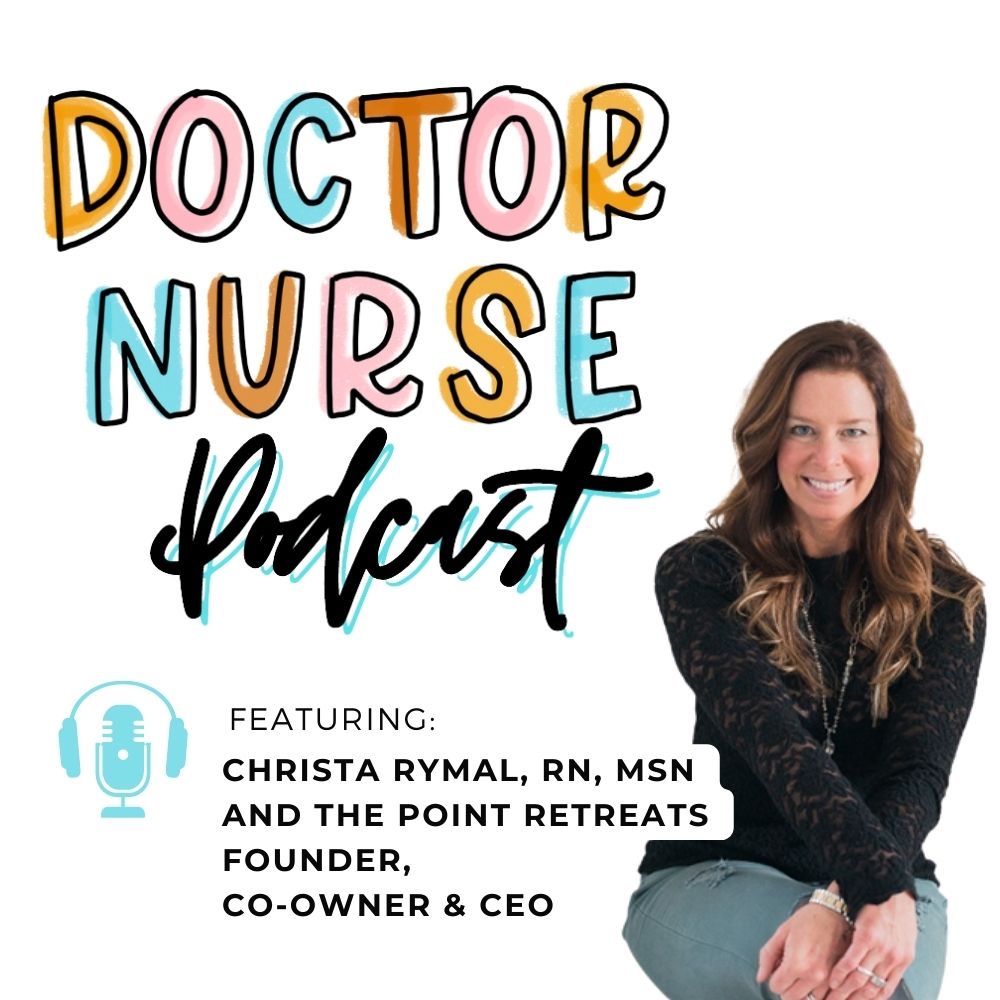
Christa Rymal, RN, MSN is The Point Retreats Founder, Co-Owner & CEO. She has worked in the healthcare industry for over 20 years in emergency medicine, cardiac care, orthopedics, primary care, diabetes education and endocrinology. She has a Bachelors Degree in Nursing, Masters Degree in HealthCare Leadership, Advanced training from the Institute of Lifestyle Medicine at Harvard Medical School, Institute of Functional Medicine, and American Academy of Functional Medicine.
It was during her time working as a diabetes nurse educator, followed by her role as Director of Diabetes Care and Endocrinology, that she was motivated to be a change agent in the way we treat and manage chronic disease. She was alarmed at the increased prevalence of diabetes and the complex nature and cost of managing the disease. She was inspired by those patients who became partners in their care and with the right support, education, and coaching were empowered to make lifestyle changes that resulted in improved health and happiness. After initiating a “Living Well with Diabetes” series of classes with a local culinary kitchen, where providers, patients, and family members participated in innovative disease management cooking classes, she was determined to bring the science and practice of lifestyle medicine to more people living with a chronic disease or aiming to prevent one. This was the starting point for her change in personal health, passion for lifestyle and functional medicine, and the turning point in her career in healthcare. She realized the important role that nurses serve as they speak the language of medicine, healing, and health.
After reaching out to those who have personally or professionally inspired her journey to improved health, their dynamite “The Point” team of experts was created! Experts in lifestyle and functional medicine, but equally as important, experts in pursuing adventure, sharing laughter, providing support, encouraging greatness, and helping others achieve their personal goals! When she’s not spending time at “The Point” you can find her spending time with her family and friends, watching her daughter’s basketball and soccer games, hiking, camping and canoeing in the Boundary Waters, downhill skiing, spending time on our farm, playing pickleball, yoga, traveling, going to a music concert, cooking, or continuing to study all things related to health, fitness, nutrition, and functional/lifestyle medicine.
Latest Episodes
Doctor Nurse podcast brings you weekly shows to help INSPIRE, EDUCATE AND EMPOWER nurses with true stories of initiative and impact.
Doctor Nurse podcast brings you weekly shows to help INSPIRE, EDUCATE AND EMPOWER nurses with true stories of initiative and impact.
Latest Episodes
Doctor Nurse podcast brings you weekly shows to help INSPIRE, EDUCATE AND EMPOWER nurses with true stories of initiative and impact.