Also Available On






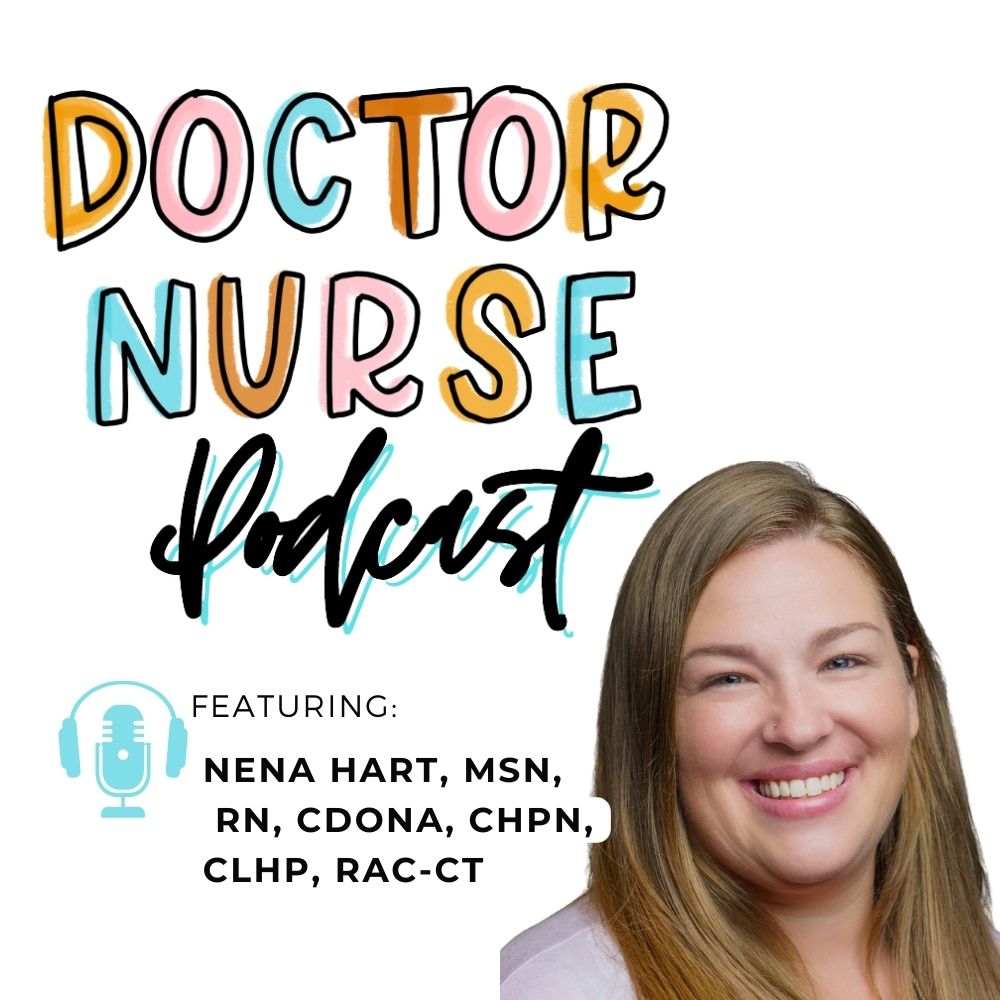
Dr. Pagenta: Dr. Nurse Podcast Community. Welcome back to the show, Nina Hart. I am so happy to have you on today and talk about your business. You are the owner of Heart Healthcare Solutions which helps post acute care companies take back operational health of their organization, improve efficiency, stop the vicious cycle of critical staffing, enhance survey outcomes, and ultimately improve patient care.
And kind of how you’ve launched another branch of your business which is helping nurses create their own businesses, which is pretty. Cool consulting businesses. So guys, she’s back on the podcast to share her latest endeavor, which I’m so excited about. We were talking about prior to getting on first off, welcome.
You know, so glad to have you and yes, I cannot wait to, to dive into what you’ve been doing in this new kind of pursuit.
Nena Hart: Thanks so much. I’m really glad to be here.
Dr. Pagenta: Tell me a little bit about kind of what you’re doing, what this new role is what your new business is kind of taking.
Nena Hart: So this kind of new branch is Heart Healthcare Consultants. Over the last year as I was working my own consulting business, I started having a lot of interest, a lot of Facebook messages from nurses, a lot of comments on my posts about what I’m doing, like I wanna do that too. I’ve always been interested in that. How can I start? And so from a personal level, it’s really hard to respond to all those in a way that’s actually helpful to nurses.
There’s limited help I can actually offer, if you message me and say, how do I start a consulting business? I can’t walk you through that via Messenger. It’s impossible. So I felt like I’m kind of letting them down. I’m not really being that. So I started putting together a course pieces of what I was doing and the things that my coaches had taught me that was really helpful.
And then the things that kind of left out that weren’t so helpful, I didn’t really connect or align with, because a lot of the people I’m connecting with are a lot like me. So I’m like this is confus. Or I don’t understand, or I could not implement this part. So I took kind of the best parts and started putting it together into a course, and then I realized A lot of people just can’t do a course.
I, I can’t often just do a course. So it morphed into this coaching program, this 12 week coaching program of impact and income as your own boss, and it’s a consulting training program for nurses who wanna launch a consulting business and don’t know where to start or how to figure out what they would do.
Which seems to be the main problems that I was getting asked about.
Dr. Pagenta: So for my listener, that’s like, okay, wait, what is she talking about? I didn’t listen to that episode, her first episode. Walk me through that journey, that last part of that journey that we talked about. Again, guys, I’ll link the episode in the show notes so you can take a look and listen to her career journey.
But you had this traumatic situation moving to Hawaii, super expensive place to live. You with sole breadwinner and you get fired from your job. And yeah, you would, you know, sold everything back on the mainland and you’re living in Hawaii and the bottom falls out and so I kind of caught you as you were starting your consulting business, which you told me how much money you made.
It absolutely blew my mind how much money you made from your consulting business over the last three years since we’ve talked. And that’s what made people go, how the heck are you doing this? How are you making so much money? Teach me how to get started. So kind of walk me through.
Nena Hart: Yeah. I was really stunned by that whole entire unfolding situation, to be honest.
So exactly what you said. You hit every note. We moved to Hawaii to take my dream job after I had totally fried myself trying to define my own success in my job for. 12 to 15 years in healthcare leadership. Everything I did was about being recognized by my employer, working harder than everybody else to get ahead, to be noticed, to be promoted, and it worked.
My job was my success. I was always successful at work. I had never had problems at work then I take this dream job. Just give away everything to make it work, right? Mm-hmm. , get there, overcommit myself, and get fired Five weeks in without a good reas. I mean, they just said it wasn’t a good fit and they were right.
There are a lot of takeaways now reflecting. It still feels like yesterday, I’ll be honest, it feels like that happened yesterday. That was the most devastating thing that ever happened to me. I know that sounds silly, that being fired was the most devastating thing that ever happened to me. But when your job is everything you.
It was crushing. So through that situation, I had been applying for jobs as I got fired. And a physician called me and said, Hey you applied for a regional quality director position and it’s filled. And I was like, oh, well thanks for letting me know. Right and he’s like, I saw in your resume that you worked for this other competitor for five weeks.
What happened there? And I said, Well, they fired me. You know, he already told me the job is filled. Right. I got nothing to lose here. Actually, they fired me. And he’s like, really? And I said, yeah it didn’t work out. And he’s like, yeah, me too. Actually, that’s why I started my company. I was in that role that you were in, and they fired me as well.
And I was like, wow. And he’s like, yeah, you started my own hospice. Yeah. He’s like I’m now the CEO of my own hospice here. And I saw on your resume below being fired that you’ve done a lot of accreditation and compliance stuff over your career. I was like, yeah I led a very large hospice achc survey in Tennessee for a single provider and really had a great team and great results.
And he’s like, what would you think about doing some consulting and just helping me do that? And I was like, wow, I’ve always wanted to do consulting. I would love to do that. Right. And I also have zero income and a 5,000
Dr. Pagenta: I’m free right now.
Nena Hart: Actually my schedule is clear. So he’s like what did you make as ceo, if you don’t mind me asking?
I was like, well, it kind of pans out to about 125 an hour. It’s the most I’ve ever made in my life. And he’s like, well, I’ll do one 50, I’ll do one 50 an hour. And I’m like, okay. Sold. Right? Like, they didn’t start out for me as this very clearly defined. I am now a consultant and here are my rates and here are my packages.
Here’s what I have to offer. And I think sometimes as nurses in our task brain mind, we want it to be very cut and dry and professional and clear. And it’s not like that all the time. Sometimes it’s just seeing where something goes.
Dr. Pagenta: So figuring it out as you go.
Nena Hart: Figuring it out along the way. I didn’t have a program for accreditation when he called me.
I had nothing. I had no job, I had no income, I had nothing. Wow. So I started working with him. I worked with him for the rest of the year. I worked an average of 15 to 25 hours a. The rest of the year and, and matched my CEO salary From that, I also started developing out some stuff I had made as a director of nursing in the past.
Put it in a little folder and shared it in a Facebook group on. The Friday before Memorial Day weekend and I was like, Hey, I put these forms together. I made as a director of nursing to help with survey and they’re in a little, in a download folder. It’s 27 bucks, I hope it helps you out
posted it in a couple Do N Facebook groups and on Monday. When I woke up, there was $2,700 in there in PayPal from that folder. So a hundred directors of nursing in those Facebook groups bought that download folder for $27. That’s now $200. That’s 15 years of my experience I put in those forms.
Imagine how many hours. That saves them.
Dr. Pagenta: Okay, wait a second. . So, ok, hold up. That’s crazy. So you took your expertise from all your years of being directors of nursing and you created a document so what was valuable in there that people were like, ah, gotta get it.
Nena Hart: So as a director of nursing, I had to do a lot of audits and there’s a lot of things that need done step by step that are hard to keep track of. So it’s hard to know as a new director of nursing what I’m supposed to be looking at, I don’t even know what to look at. I don’t know the regs as a new do n to know what I should be.
Check. , and there’s not always resources for leaders in healthcare. There’s a lot of pressure to be the one who knows everything, but oftentimes you’re not the one who knows everything, right? You just the one who took the spot, who took the keys, right? So yeah. I put forms that I had created from different survey audits and regulatory checklists.
That’s all it is. Think about if you opened up Microsoft Word right now and literally made a bullet point sheet of everything you knew about one very small topic, like all the mistakes you could make or things you could overlook when you’re doing this one thing. I just put 20 of those in a folder and sold it.
What’s it did? $30,000 in 2021. I’m sorry. They did $30,000 in 2021 from May to December.
Dr. Pagenta: girl, you’re such a,
Nena Hart: but I started putting myself out there in ways that I had been too afraid to. I had been putting my knowledge of, survey and regulatory into a course platform since 2020, so for over a year and never shared it with anyone. I don’t even think I told my husband about it for months.
Once you get past this threshold of fear and actually put yourself out there with a very clear message, Hey, this is what this is. This is what it’s for. This is the price. This is the problem it solves. Here it is. If you want it, great. If you don’t, I’m not a salesperson. I’m not trying to push it.
Dr. Pagenta: Cause it’s just helpful information, right? Let’s talk about the role of a D do N because somebody’s like, okay, wait, I don’t even know what a do N is. What was she doing? I don’t understand what that job title is.
So describe what a do n is again, for someone that didn’t listen to the original podcast that you did. Break all this down and then talk. Kind of something that you mentioned as well. Or we’ll just talk about kind of what a nurse consultant is.
Nena Hart: That’s a really great, great question because it is a question that I get more than any other question is what is a nurse consultant? What do they actually do? I don’t get it. So a DOM or a director of nursing is in almost any setting that you can think of. There’s a clinical manager, sometimes they’re also called a clinical manager, depending on the structure of the organization.
Usually the DO n is above the clinical manager. They are the end all, be all of all clinical activities in the facility. So in long-term care, where I came from, the do. Has all of nursing underneath them and often, even oversight over housekeeping and dietary and just depends on the structure.
I mean, they are the end all, be all. If a nurse doesn’t show up, it’s my phone that’s ringing. I am responsible for every clinical thing that happens. I’m responsible for survey, for outcomes, for falls, for wounds, for discharges, for therapy outcomes, for reimbursement, for capturing documentation. All of it.
So there’s a lot that goes into that role that new leaders who haven’t done this just feel very overwhelmed walking into this role that feels impossible sometimes.
Dr. Pagenta: I think what you’re describing just really quick is I. And for those that are listening, you go from managing maybe your department and managing just your little thing.
You get comfortable and then you get promoted to this next level of leadership that you feel unprepared for, right? And so what you provided was that bridge for, let me help get you quicker. To, the point where you’re like, okay, wait. I know what I need to manage now and I know how to manage it and what I need to keep my eyes on and how to do that work
Nena Hart: thinking of my experience coming into that role, it took me well over a year to feel like I understood my role. As a charge nurse, you, maybe you’re lucky to get six weeks of training. Really lucky. , right? Mm-hmm. to get six weeks of training, and then maybe after a couple months, three months, you’re like, I’m an expert.
I know my schedule, I know my expectations, I know the policy on this. It took me, I would say, a year and a half to start feeling like I knew what I was doing as a director. Wow. So, In the long term care model there, these consultants that float around, they have a a region of buildings, and that was my ultimate goal at the time, was to become a consultant, have this freedom to not be in one building all day to be a resource for all the buildings.
I thought that was what a consultant is, and a lot of nurses think that too. A consultant is an internal employee who provides support or. Resources to a region. And that is true. Kinda like a float nurse. Exactly. That is one. Or like a leader in a float role. Like a regional? Yes, A regional. Okay. Like a regional.
So while that is true, that is a consultant, there’s a lot of conflict of interest there. You’re still an employee. You can’t choose your hours, you can’t choose your pay, you can’t choose your travel. And you really have a conflict of interest. If you wanna bring something up that could put your job in jeopardy, you’re not gonna bring it up.
Or I’m not.
Dr. Pagenta: Ooh, give me an example of that.
Nena Hart: Well if I failed to audit correctly, my one building, and they come in and find all these mistakes, and it was my job to do that audit and I failed to do it accurately, or I found something and I’m like, should I bring this up? If, if I bring this up, the director in that building gets fired and I have to go sit in that building and it’s two hours for my house and I don’t wanna do that, so I’m just gonna try and work it out so I don’t have to go cover that.
that’s a conflict of interest. Whereas an external consultant who is a nurse expert in one area who partners with organizations to provide specific guidance on a solution to a problem that they have that’s costing them money or staff. If I’m external, I’m gonna be like, Hey, this is going on right here.
I’ve found this right here. Here’s what you need to do to fix it. I don’t care what your employee dynamics are. I’m not involved in. It doesn’t affect me or my job if I call out the issues you’re having. So I think sometimes nurses who look at consulting opportunities as employees don’t realize you are still an employee of that company.
You don’t have control over. All those things I mentioned. Yeah and you’re also still bound by your employment to them.
Dr. Pagenta: And I’m even thinking if you have to report to a do N then if they’re like, Hey listen, this is a problem, and they’re like, no, it’s not. It’s not a problem and you just need to deal.
So all of a sudden, like even if you are bringing that. Yeah. Yeah. They don’t wanna hear it because it’s like, I have to deal with it. I don’t wanna deal with that, or it’s gonna take so much effort and time to reverse this problem. So just ignore it. It’s not that big of a deal. So then now when it all falls apart, you’re standing there and they’re like, well, who brought it up?
I did. Yeah, I did bring it up. So now you’re on the chopping block, right? So it’s just better to keep your mouth shut if you know that the person you’re working for isn’t gonna really make any change.
Nena Hart: You really can’t be objective as a consult. When you’re an employee now, there’s nothing wrong with that.
I want, that was my ultimate career goal at one time, so I’m not dogging anyone in a consulting role. It’s an amazing opportunity to impact and to really be an expert in an area, and I’m just suggesting that you can also do that independently without being an employee and have a lot more control. Now, as a consultant for an organization, they’re gonna say, I want you to go to Lexington, Kentucky, and you need to stay.
Monday through Friday to five until that facility is stabilized and you’re like, well, I live in Akron, Ohio and I have kids and I don’t wanna stay in Lexington, Kentucky, eight to five, Monday through Friday. Right? I don’t wanna have to do that. And working for yourself, you make those decisions. I can be available to you.
Monday afternoon, all day Tuesday and half of Wednesday. And then I need to head on home. Okay, thanks. And you set your own hours, your own rates, and your own travel availability. And really, that’s something for me that is super important to have, the clarity of control over my work life balance. Now I go to the, I don’t even schedule myself for work on Friday.
My kids get off at. So sometimes on Friday while my kids are at school, I’ll go to the beach and then they get home at noon and then I spend the rest of the afternoon with them because I can’t try to pressure myself into working more hours. And the beautiful thing about consulting is you don’t need to work more hours.
Now I try not to schedule contracts around hourly I don’t even guarantee hours anymore. It’s gonna be $20,000 to get this one. Period. If that takes me four hours, cuz I’m an expert and I’ve done this for 15 years, then it takes me four hours. Great. If it takes me 40 hours to get that result, then it takes me 40 hours.
But you still get that result. So yeah. Wow. , there’s a lot more. Yeah. But sometimes that can be scary to nurses to have that, unchecked, you know? It, it’s a lot of, you have to define that for yourself. You have to take control of that and, and make those choices. Yeah. Yeah. And you have to know your worth.
Where’re not making them for you.
Dr. Pagenta: Cuz you sound like someone who knows their worth. You know what your schedule is gonna be. You’ve got your priorities straight and you’re not deviating from, these are my non-negotiables. So it either works or it doesn’t
Nena Hart: but I didn’t, I was a corporate nurse. I, I literally almost lost my marriage over not having clear boundaries between work and home.
I would work until 11 o’clock at night, cuz I thought that would give me recognition. So after I got fired and someone didn’t recognize my worth, I realized holy cow. I am super burn out . I got fired because probably a lot of it was my fault and I just didn’t realize it, how fried I was and how disengaged I really was.
Yeah. And it finally started, and it’s been almost two years now since that happened. I got fired on January 6th, 2020. So in three months, November, December, January, it’ll be two years and I am just peeling the layers of this onion of burnout that I think is a very easy term to throw around, but this is deep seated stuff.
Over 15 years of me being a high performer and trying to show my worth. And not having boundaries, not giving my family any of the priority they deserve, not giving my marriage the priority it deserved because I was so worried about looking successful at work.
Dr. Pagenta: So for a nurse that’s sitting there and she’s Hearing your story. It’s hitting her in her heart. She’s like I’m there. I am in that same position. I’m burned out. I’m tired. How can someone get started with nurse consulting? Say they aren’t in long-term care, they’re in something else. Yeah. What are you able to see that nurses are able to move into in this nurse consulting?
Nena Hart: There are consulting specialties for every single area in healthcare. There are finance, there’s business management, sales strategy, infection control, wound care, acute care, shared governance, magnet status, it, privacy technology, data analytics, education. I could literally go on and on. I actually have a list of 40 specialties that a nurse should consider.
There’s legal nurse consulting, which is really hot right now. That’s not something I do. The thought of being deposed makes me wanna hide in a hole in the ground. But a lot of nurses are interested in forensic nursing, legal nurse consulting. There is limitless areas that consultants are currently needed and used and if you Googled something you were interested in and you already found a nurse consulting company for that, instead of saying It’s taken say, yes, there’s a market for this cuz somebody else is doing it.
Success.
Dr. Pagenta: Yes. That is a really good mindset. And again, switching mindset is something that you and I were talking about repeatedly I think this is sometimes hard for nurses to break free from of this employee mindset there’s a lot of security in an employer having somebody there that’s gonna take care of you and offer you benefits and we’ve got your back until they fire you and you’re standing there like, I got fired as well. I’m losing my job. Yeah. So sorry. We don’t have funding for you next year. Good luck. And now you’re like, oh, mom, this isn’t my mommy and my daddy. They aren’t taking care of me I am on my own. And so that mindset shift is something that can be given to you because you’ve been fired , and you’re like, oh, okay.
Or it’s something that you can begin to cultivate. So kind of can you describe to me what an employee mindset is versus kind of this breaking how to break free from that mentality and go, eh, not my worth. I’m gonna start kind of exercising this muscle of nurse consulting for myself.
Nena Hart: Just an example, over 10 years ago, I re, I was researching opening a CNA school.
I’ve always wanted to work for myself in some way. I’ve always been interested in business. I went to the Chamber of Commerce. I talked about getting business grants. I talked about funding. I made a business plan on opening my CNA school. I even toured locations and you know what happened? I started asking, what if, what if no one enrolls?
What if I spend all this money and get a loan on equipment and a and a lease and I can’t pay it? What if I can’t pay myself? What if I don’t make exactly the amount that I need to make? Every two weeks, I realized I wouldn’t be getting a paycheck. There wouldn’t be guaranteed money anymore, and I quit. I let it go.
I never looked at it again. I dropped it right there. Because I was the breadwinner and I knew the what ifs might come true, I might not make enough money. So for 10 years, I worried that I wouldn’t make enough money to replace my director of nursing salary, which my first director of nursing salary was.
$25 an hour. Okay. So my daughter is 17 and makes almost that working in the kitchen at the resort by our house. Okay, . So I’m serious. I’m dead serious. So, I thought, gosh, I won’t make enough money to replace my $25 an hour, and we will go under what will happen. We’ll die. We’ll, we’ll shivel up.
We’ll be homeless, right? Yeah. So all that. I would not let go of that guaranteed paycheck 10 years. Right? So I’m forced, that is pride from my hands. I’m fired. I am forced to let it go. I’m forced to let go of my CEO’s salary of $250,000 a year, and I’m like, I will never be able to replace this with another job.
Every job I looked at was a hundred thousand dollars. Right? Which would’ve been great in any other setting. But for what I had just committed to for the next 12 months and moved my entire family across the ocean, it wasn’t enough. It wouldn’t even pay rent.
Dr. Pagenta: I mean so why is so expensive, right? Right.
Why is nuts, right? Yeah.
Nena Hart: So the moral of this whole story is, Had I let go of my guaranteed paycheck 10 years ago, I could have been charging $250 an hour like I did last year, , you know, so it’s like these, these these things that we hold onto for security, that employers supporting us that quote unquote guaranteed paycheck.
Hey guys. And thanks for listening to another episode that doctrinaires podcast unscripted. I would like to take this time to let you guys know about the doctor nurse podcast website. On this website. I have free resources for nurses that are looking to up their career. Maybe start a side hustle. I also have my Etsy shop where I’ve created really cute digital downloads for nurse practitioners. In regards to life. Pregnancy. Planning. As well as portraits guys check out my resources@thedoctorspodcast.com and let’s get back Episode.
Nena Hart: Yeah, I got guaranteed a paycheck for five whole weeks, and then they guaranteed me. They gave me nothing. Yeah. Yeah. So it’s like this guarantee that we think we got a paycheck, I think the pandemic in some ways really opened a lot of eyes with this. Even the travel nurses getting their pay changed, right?
Like, oh, sorry, the rest of your contract is at a thousand dollars a week. Cause we don’t have the $5,000 a week, we guaranteed you, oh, we don’t have any more hours for you cuz there is no hazard pay or whatever the situation is. It’s at their convenience. And as a person who has a business, I realize that now too.
I have to do what I have to do. So if I don’t have hours, I don’t have hours. Right? Yeah. So it’s like when you are an employee, you are completely subject to whatever makes that business thrive. So one thing I realized looking back and I had a coach who challenged me to do. She said what would you have been paid if you were a consultant for a company that you did something amazing for?
Well, for me, I had $660,000 in six months of, overtime and agency labor that I eliminated from a hospital where I was the director of nursing. Right. Guess how much of that $660,000 I got for doing that? Guess how much they gave me for doing that? $0 and 0 cents. Guess how much of that I would have gotten as a consultant?
Let’s be generous. We’ll say over six months, I charged, 10%. Right? Which is, is high. I probably wouldn’t charge 10% of an outcome depending on how big the problem was, that would’ve been $66,000 for six months for one contract, and I didn’t even do anything extra above and beyond what I knew how to do as a director.
Just my experience from knowing like, This is the positions we have open. Here’s what I need to do. We gotta get creative. We need to limit our overtime. What’s causing it? Drilling down into the problem. So any problem you’re solving for your organization, you could be solving as a consultant and actually getting the money for solving it instead of doing the work of an employee.
Because organizations know employees cannot fix problems for the organization. And wait, say that again. So if you’re an employee and you go to work and you’re doing your working, you’re not fixing problems. They know hiring another director of nursing isn’t gonna fix the problem with turnover for directors of nursing
hmm. So if there’s a company and they’re like, we’ve had 10 directors of nursing this year. None of them have been able to reduce our wounds. None of them have been able to fix our surveys. None of them have been able to reduce our turnover, an outside person can come in and do that cuz they’re not your employee.
They do not do the day to day. They do not have a full workload on their plate.
Dr. Pagenta: I just got that. Yes, it’s true because you’re seeing patients, you’re doing whatever. You’re taking care of people. You don’t have time to fix the problems cause you just wanna survive ’em and go home . And what happens
Nena Hart: if you don’t do your task and see your patients, you get in trouble.
So you’re not gonna take time away from what you know you’re held accountable for. Most people to go above and beyond and add multiple extra hours for nothing, right? Some of us have this natural thing that we can naturally do as part of our jobs, like I was talking about with. Reducing agency and overtime.
Cuz I had done that before. Right. It was a natural part of what I do, but I didn’t have to do that. No other do. N before had done that. They told me they hadn’t been free of agency in 10 years before I was there. Cause you just hold staff. Right. I can remember at least 10 years that we’ve had full-time travelers.
She said it could be longer than that. So they had people covering full-time roles from the mainland because Hawaii’s really challenged in labor and. You have to be really, really intentional to find local staff that’s good and make sure they’re trained well enough cuz they’re, a lot of them are new grads or from other countries.
And if you don’t really give them the extra training they need and help them get their licensure, they can’t work here. So yeah, so simply implementing a program where we added an extra four weeks of training. Got us three on Island RNs from the Philippines who were amazing nurses, but they were afraid they wouldn’t get enough training.
They were afraid they’d make a mistake. They were afraid they couldn’t get their license. They didn’t have contacts to reach out to. And a normal hiring manager is gonna be like, Nope, see ya. Right. So we had to stop the process and make extra time for them to say, Hey, you can do this and we’re gonna support you and here’s how, here’s how we’re gonna support you, and we’ll check in every three months and make sure you still feel comfortable and we’ll give you extra orientation shifts above and beyond to make sure you understand and we’ll help you submit your license with the reference letter.
So that was something that a normal employee. Did not take the time to do in the past. Right. So those are programs that I could take, I could implement that program for another organization right now. Oh, are you a remote, rural healthcare system? Relying completely on agency. As a staffing consultant, I can help you eliminate agency and overtime and get all local.
Onboard. How does that sound? We, we estimated it’ll save you about $500,000 every six months at least.
Dr. Pagenta: Based on our, yeah,
Nena Hart: on our past clients. That is consulting.
Dr. Pagenta: So you scale this business slowly, right? So I remember you telling me earlier as well for someone that’s like, okay, but I don’t have any experience.
So how do I go in and say, oh, I can be a nurse consultant. Let me show you what I can do when I haven’t done anything. So how do I do that? But I remember you telling me when you were talking before the podcast that you started off. Slow or lower than what you were currently charging now, which you’re charging an astronomical amount, but you had to say, Hey, listen, this amount I’m charging now is because I wanna show you that I can do it.
And you’ve kind of had to start at a lower rate. And then once you’re able to get some momentum, you quickly scale up your value and your worth through what you charge, right?
Nena Hart: Yes. So a little piece onto that before. Address that is subcontracting is a great way to start. So now I subcontract with several other consulting companies who you can make a connection with on LinkedIn and say, Hey, I’m interested in what you do.
I’d like to learn more. That’s it. Subcontracting for nursing. Start a conversation. So subcontracts pay 75 to. Maybe 150 an hour. Okay. In the lower range, because it’s not your contract, you’re, you are on a team of consultants working on a very large contract and they need help, right? Yeah. They can’t manage it without other consultants, other experts on the team.
So sometimes I’ll be on a team of 10 or 20 consultants all working on one big implementation, one big contract. So they say you’ve got 40 hours, however you spend it, you work for. , here’s what your piece of the contract is. Here’s what your audits or you’re one of the subcontracts I did, I literally just called and got offs.
The hospice was switching over their insurance providers and got a new provider number, and we just had. 2000 patients to get insurance offs on. They said, you’ve got 60 hours, it’s a hundred dollars an hour. Just call the insurance company. I sat on hold for about $500. Okay. So it’s like they just needed somebody to help get the offs and it’s 2000 patients, right?
The employees can’t do that. No employee can can spend their whole day getting offs on all the new patients so they don’t lose their revenue. They would’ve lost revenue for all those patients. So there are projects out. That you can help with without owning the contractor, going to get it for yourself.
And that’s a great way to start. Wow. But also my first contract, he told me what he was gonna pay. He said, I’ll pay you 150 an hour to help me get accredited. I didn’t say three 50. It is right. Like I charge three 50 and that’s my bottom line because I was not an established consultant. I was exploring an opportunity and I was open to it.
Now, I know I can do it. I know what the outcome is, I know what the result is, and I know how I’m gonna do it. So I can go into that conversation much more confidently. But it wasn’t always like that. Yeah. It’s something to see what you enjoy and what you wanna do, and what you have a strategy to do, and what solution you can offer, and then kind of morph it into something that’s a package that’s a service that you can confidently say, I can help you with accreditation, six months, $350 an hour, or $25,000.
Whatever you feel more comfortable. Right, so
Dr. Pagenta: it’s
Nena Hart: awesome evolution of Yes. Figuring out how you can very clearly message what your solution is. That’s it. Yeah. That’s the thing you have to know. You can’t be like, Hey, I’m a consultant and I will help you with anything you have for me to do. Yeah. That’s an important, you have a,
Dr. Pagenta: you have to have a.
Nena Hart: You have to know what you provide to a company, right? Yeah. And a lot of times just looking back over what you’ve already done is enough for a lot of people to see. When I show up, people always say, X, Y, Z or I always get complimented on ABC or when my priority, when I walk into a new place, the first thing I’m gonna do.
Spam. Maybe that’s your specialty.
Dr. Pagenta: That is so good, man. So many nuggets you’re dropping. What is the hardest part of owning your own business, launching this whole thing just branching off your heart of Healthcare Solutions. What has been the hardest part of owning your own business and kind of stepping out into this new role has been,
Nena Hart: I think kind of what you’ve alluded to already part of it is self-discipline. It’s really tough because I’m the boss of me and, you know, this guy runs a real loose ship like, type of thing, you know right. I don’t wake up in the morning, I don’t schedule calls.
Early in the morning at all. First call is not before nine, cuz I will not make it on the call. Okay. Yeah so figuring out like what I need to be able to be productive and also creating boundaries with. More hours does not equal more success or more money. And that’s a trick. That’s an employee trick
if you wanna pick up an extra shift, we’re gonna give you a hundred dollars bonus pay and we’re gonna give you $50 an hour and you’re like, Ooh, I need that money. I’m gonna pick up that shift it does not work like that in business, truly, less is more. The more you extend yourself and overextend yourself, the less you bring to the.
So for me, that’s been a mindset shift where I will find myself working and working. My kids get off at two Monday through Thursday, and really, I know in my brain after two, I’m not gonna get anything done. I can’t have any calls. They’re gonna come in, they’re gonna want my attention, they’re gonna wanna snack, they’re gonna be bouncing off the walls and doing handstands. So it’s like a, my focus four snacks. Ok.
Dr. Pagenta: I was gonna say all the snacks. So my focus.
Nena Hart: Is not going to be on my work and I’m not going to be productive. So right now I work only while my kids are at school. So I work from eight to two, Monday through Thursday, and I work from eight to noon, sometimes on Friday, depending on what’s going on.
Last Friday I didn’t work at all, so yesterday. Yesterday was last Friday, but yep. So I did not work. So it really looks. Does working until seven does. Sitting and staring on at my laptop with 42 tabs open really look like productivity and really bring in income. I’ve had to really focus my mindset on what is an income generating activity for me?
What is a a time suck for me? Right? I even had a content calendar one time that had a green Post-It note, and anything you were gonna do that brought in. Was a green post-it note, this is gonna bring in money and if you’ve got a red post-it note that’s like social media covering up a green post-it note.
You better take that red one off for that day no more. So it’s really focusing on. What is actually moving my business forward and what is actually bringing me down? Where’s my energy at, with what I’m doing? That’s been really hard for me because I have been in this employee mindset, this corporate leadership mindset for 15 years.
Where more is more. And right now more is just heavier for me.
Dr. Pagenta: Oh ok. That is so good. That’s the part I’m gonna have to quote that part cause it’s more is heavier. I totally align with.
Nena Hart: One of my coaches said, only a fool weighs value in pounds. And so it’s more, is not more, more is just heavier to carry sometimes.
So I’ve really been trying to scale back on what I expect of myself. I expect too much. So I’ve really had to do a lot of personal, reflection on where I find value and where I’m just perform. Wow. Cuz I feel guilted into it. Cuz I feel like I have to, I should be doing this. I try not to should on myself anymore. That’s really smart. I don’t on you either. You shouldn’t doing, you should be doing that. Know what I should be doing. So I’ve had to have a lot of compassion for myself in that
Dr. Pagenta: way. Oh my gosh, this journey has been so cool. Mm-hmm. like that. I mean, honestly, that’s the hardest part of owning your own business is don’t should on yourself.
Like I just, again, more is not more like finding the things that. , you know, are going to actually bring value. And you know, it’s so funny because I just got offered another collab, Hey Sandra, let’s add on something. And I went, and again, my NA reaction was just yes. You know? And I was like, stop. Yeah, stop it.
And
Nena Hart: I just point,
Dr. Pagenta: yes, you were pregnant, you’ve got a lot. And so I had to say no. I had to say no. That was good for.
Nena Hart: And so that was hard to control back.
Dr. Pagenta: Yeah. Yeah. But what you just said just reverberate with my soul of like, she’s right. That work is so hard to just go, no, that doesn’t move the needle on my business.
I don’t need to do that.
Nena Hart: But what’s really important to recognize is that I did not come to these conclusions alone. These were not things that I just realized one day I have paid for coaching as I’m like, okay, I need to invest in this business being a real business. There is no plan B for me.
This is. This is what I’m doing. I’ve had to invest in that. I have skin in the game. These coaches that I have paid to help me develop my business are the ones who are telling me, you seem like you’re hustling for this really hard, and is that the kind of business you’re trying to have where you hustle for the rest of your life like you have for the last 15 years
mm-hmm. like challenge account, right? Call me out I had one of ’em say something they see it on your face, like even zoom. And call you out and say, You seem like you’re really overwhelmed right now and really in a negative place, like just bam, okay, I am.
Yeah, so I wasn’t coming to all these golden nuggets alone. Sometimes we cannot do that internally. I was not in a place where I knew enough about business to do that for myself, and I was also in a place of deep recovery where I had been hurt and crushed and could not even see. The possibility I did not see the possibility of being fired, turning into having my own business, which I had dreamed of for 15 years.
Wow. So sometimes we need to realize that we need help. And I know a lot of the times nurses and, and just people in general are like, well, I’m not paying for that. Well then don’t expect to get to where that person is cuz they have paid for that. They have invested in that. Those things are the things that have given me the ideas for the things I’m talking about.
So sometimes we can’t generate that alone without help from the outside.
Dr. Pagenta: Man, that is, that is so poignant. That is so poignant and beautifully said. And again, I think nurses need to hear that the best money you can spend is not in stuff. It’s not in sometimes even investing in other things. It can like, oh, I bought a real estate property or I bought this or that.
Like sometimes that’s not it. Sometimes the best thing you can do is just invest in yourself. Yourself. Yes. Building up your skills or building up your mindset or changing your mindset around something, cuz that other stuff comes down the road. Cause you’ve changed the way you look at things and, yeah.
Yeah. I think that is so well said. M and again for a nurse that’s like, all right, I’m sold. I wanna know what she’s doing. I wanna get involved. She needs to help me. She’s blowing my mind right now. I want her to coach me. I want her to teach me how to do something for myself. Starting small subcontract work whatever. Where can they find you? How can your business help nurses? Cause that’s one of the things that I like having coaches on, but I really want them to explain specifically how they can help the nurse that is listening to this podcast. The nurse practitioner that’s like, or the do n that’s like, I, I want to get involved in consulting. I’m sick of this.
Nena Hart: Everything I’m doing, I’m doing from my own personal experience. So I don’t speak about things that I don’t know about. So anything that I’m sharing with any nurse and as much as I can provide that for free without overcommitting myself I wanna do that to help nurses.
I want nurses to see these endless possibilities that are literally all they have to do is let go. So I had this control issue, so, I have a Facebook group for nurse nurses that wanna be self-employed nurse entrepreneurs and come and impact as your own boss. And I think it’s self-employed.
Nurses income and impact as your own boss on Facebook. I started the Nurses Making Waves podcast, which is a experiment for me. And thank you for all of your Help and support with that. You’re amazing. You are definitely some of the inspiration behind that. So I have on their nurses who talk about their own business, how they got started what their challenges are.
And then I have the impact and income coaching program that is essentially if you’re like, I’m very serious about starting a business. I need a strategy, I need a proven process that is gonna work if I implement it. And that’s a 12 week program. So there’s recorded content that you can access forever.
But again, I also realize that that doesn’t work for everyone. So we do have weekly calls, where we talk about how to get through those areas where we get stuck and it helps me too and we hear each other’s stories where we’re stuck, what we need to do give each other inspiration and encouragement.
So that’s really been amazing. I also have the 40 consulting specialty areas. It’s just literally a list. It’s a Word document of over 40 different areas that you could consult in as a nurse, and that is in that Facebook group that you can go and find in the free resources section.
Dr. Pagenta: Wow, that’s fantastic.
It’s one of those things that when you, when you see that things are being offered to you and you don’t take advantage of them, you can’t be mad if things don’t change for you. I get people on my dms or they’ll send me messages like, I don’t know where to start and I don’t know if I can, you know, that seems easy for you to say, and I’m like, It’s not easy for me to say, actually, it’s super hard for me to say You don’t realize what we’ve gone through, you and I and different nurse nurses to get to this point where we’re like, no, no, we need to break free from this.
How do we get free? And it’s only through the hard crucibles of fire that we go through that we become these Phoenix Rising and I just want more nurses. See you don’t have to have that employee mindset that you can set yourself free and you don’t have to go dos and quit your job and do this radical thing.
But you can slowly build, you can slowly grow and you can slowly pull yourself from that super glue magnetism that employers have over nurses.
Nena Hart: And just start making connections. If you can’t quit your job, just start making connections with people you wanna work with, or companies you’d like, you just start making connections with the right kind of people.
Connect with me, connect with you, those are the kind of things that are really important. Yeah.
Dr. Pagenta: No, I a hundred percent agree. My light just went out and that’s not gonna, that’s fine. It’ll come up on the YouTube video, but you can still see me. Yeah, my Super Sunday light just went out. But anyway, yes, that is well said and I agree to start your network is your net worth.
So the more people you’re exposed to, the more things that you see. I love that. The more exposure that you have, you’re just like, ta Okay, well then I don’t have to keep this singular view. There’s so many more things that I’ve been exposed to. The podcast has done that you have these conversations with nurses on your podcast and so you’re like, whoa, I didn’t even know there was some other nurse that went through the same thing that came to the different result or whatever.
It’s just really beautiful how we all do that. So again thank you for your time today. Thanks for coming on the podcast and sharing everything with me. I feel like we should do another rapid fire. Cause I did rapid fire with you before, so let’s do like a rapid fire to close it out.
I’m the worst at these. All right, go ahead. If you could pick a character to play you on a TV show, who would it be? I already know who I think you should have play you really? But I’m just like, but I just wanna like see, like what you say,
Nena Hart: play me on a TV show. Who’s the one that’s in the notebook with.
With Ryan Goslin. I like her. Oh,
Dr. Pagenta: yeah, yeah, yeah. Rachel? No. Rachel Mc Adams. Emma Stone? Yes. No, no, no. Mc Adams? Yes. Okay. Yeah, no, totally . So, okay. I know I’m just gonna say this, but you totally look like Ashley Graham. Have you seen her before? Yes, I think you look like her. She’s beautiful. Hey, I’ll take that Yeahs.
She’s like a supermodel, right? Like she’s so beautiful and every time I look at you, I’m like, she looks like Ashley Graham. Like you totally look like her. So thank you. Let me tell you that. And if you had to give someone a book you read, which would it be?
Nena Hart: Think and Grow Rich, Napoleon Hill. Oh, that’s a solid choice.
Thinking for a change. John
Dr. Pagenta: Maxwell. Oh, you got two John Maxwell’s good. He’s solid too. And oh, just for, I think I know this. I think I know this answer. No, I don’t think I know this answer. I know a lot about your life, but I don’t know about this. What was your first job, your very first.
Nena Hart: Subway baby sandwich maker Subway, 5 0 5 an hour.
Dr. Pagenta: What is their slogan your way? I dunno. Eat. Eat.
Nena Hart: that should be a sign.
Dr. Pagenta: Oh. Guys, check her out. I’ll link all our stuff in the show notes. Again, thank you so much for your time and your energy and just your outpouring of love for nurses. It just is inspiring. It’s lifted my wings. You’ve giving me wind, my wings. Thank you. I love you so much. Right guys. Enjoy the journey of your careers.
Podcast Description
Nena Hart is a Registered Nurse with a Masters in Nursing Administration and has a history of transforming stagnant operations struggling with their staffing and systems into thriving regions with high-performing teams.
Through more than a decade of post-acute care leadership, Nena has seen the negative effects of staffing instability on census growth, quality and survey outcomes. Nena was able to grow the census in her own region from 700 to over 1500 patients and opened 10 denovo locations, all in under 3 years.
She is a certified ACHC and CHAP accreditation consultant in Home Care, Palliative Care, Hospice, and Home Health. As the area vice president of operations, she led her region to the largest single-parent provider survey in the nation at that time.
She is a Certified Lean Healthcare Professional (CLHP) and is the Owner of Hart Healthcare Solutions, which helps post-acute care organizations take back the operational health of their organization, improve efficiency, stop the vicious cycle of critical staffing, enhance survey outcomes, and ultimately improve patient care.
She worked her way up the corporate ladder for over 10 years and was finally recruited to her “dream job” as a CEO in Hawaii, only to be fired five weeks later.
Left with a huge new lease and no income, she started her own consulting and coaching company, working from home, matching her CEO salary in half the hours, in her leggings.
She now helps other exhausted nurses embrace entrepreneurship and love nursing again with her podcast and coaching business Nurses Making Waves! She lives in Hawaii and enjoys reading, cooking, doing puzzles with her kids, and going to the beach with her family during “normal” office hours.
Nena’s First Episode on the Doctor Nurse Podcast:
Nena Hart’s Links:
https://msha.ke/nursesmakingwaves
https://www.instagram.com/nursesmakingwaves/
https://www.facebook.com/groups/nursesmakingwaves
—————————————————————————————–
Follow up with the Doctor Nurse Podcast here!
Success NP- Etsy Shop developed by my best friend and me who are both Nurse Practitioners and create beautiful designs for your life! Check us out.
Picmonic covers thousands of hard-to-learn facts and topics, to help you master the material that healthcare students often struggle to learn. This study system helps boosts nursing and nurse practitioner students’ confidence and grades. Picmonic learning system students increase retention and test scores. Why does Picmonic work? Years ago, psychologists and education researchers found mnemonics to be an effective tool in increasing retention and memory recall. Today, lots of different strategies for learning and memorization using mnemonics exist including keyword, phrase, music, and image mnemonics. Using the idea of image mnemonics and applying clever pictures and humorous characters tied together with story and audio — and put it online to create the ultimate studying system for retention and memory recall. Use code DOCTORNURSE for 20% off your subscription.
Become an NP Preceptor and make up to 8,000 bucks a year!
Latest Episodes
Doctor Nurse podcast brings you weekly shows to help INSPIRE, EDUCATE AND EMPOWER nurses with true stories of initiative and impact.
Doctor Nurse podcast brings you weekly shows to help INSPIRE, EDUCATE AND EMPOWER nurses with true stories of initiative and impact.
Latest Episodes
Doctor Nurse podcast brings you weekly shows to help INSPIRE, EDUCATE AND EMPOWER nurses with true stories of initiative and impact.