Also Available On






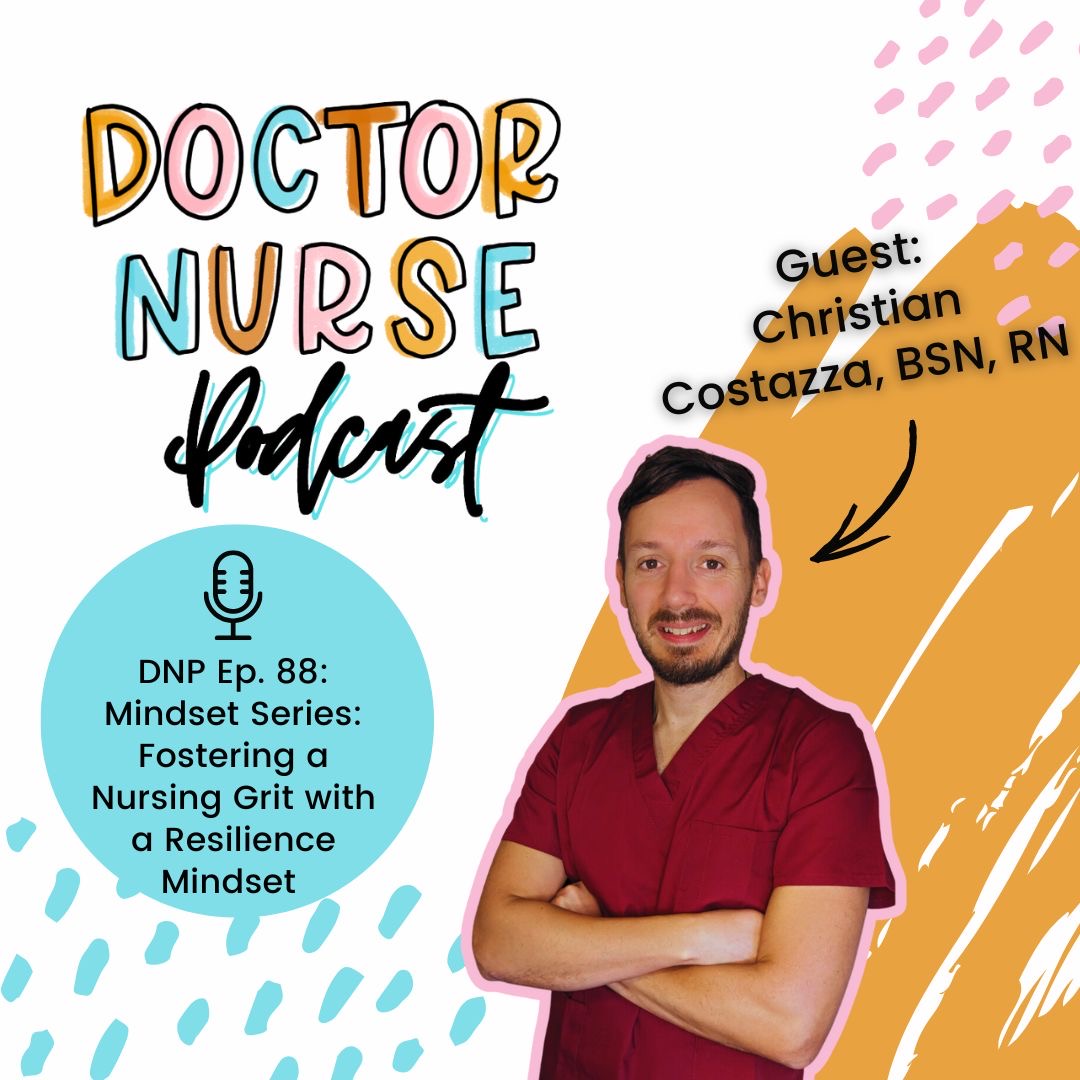
Sandra Pagenta: Doctor Nurse, podcast fam. Welcome to another episode of The Doctor Nurse Podcast. Today on the podcast I have Christian, is it Senza Costa.
Christain Costazza: Costazza
Sandra Pagenta: Costazza. I love it. This beautiful last name. Well, welcome to the podcast. Christian was born in Italy. In 1984 and had a pretty challenging childhood. You lost your father when you were very young had some, you know, bullying in middle school and just decided that you, at some point when you were going through high school, you wanted to become a nurse.
So you got your B ss N in nursing. You graduated in 2012 and then you looks like you opened up a, a nurse-led business while you were in Italy, but you wanted more. So you headed out to Ireland and you worked in Ireland as an Italian nurse with very basic English, and then through the years, kind of moved to different areas, England, working in the nicu, cath lab, and then somehow found yourself to the United States.
Last year you moved working as a nurse and. You’re also working and to, to build a business, a coaching business which I think is super cool on the side. And you have a podcast, which is the Mindset Nurse podcast. You are just building these little different things, these little avenues, these little revenue streams to create a, a fulfilling nursing career.
And today we’re gonna talk a little bit on the podcast about resiliency. ’cause I’ve been kind of doing a mindset series on my podcast, so I wanted to have you come on and talk about those things. Welcome. My partner. Thank you
Christain Costazza: so much. And I’m, you know, very flattened about the introduction. Yes.
Sandra Pagenta: So it’s a great story.
Christain Costazza: Yeah. So you’re right. I was born in Italy back in 1984. Sounds pretty historic now, but it’s school. And I, I had very I, I would say, you know, until I was 10, it was kind of an average childhood. Then I lost my. My family always been like in interpret uh, they had businesses, they ran things around, so always been exposed to that sort of world.
I. But I wasn’t really into it. But then when my dad passed, my mom had to go full-time working for myself and my brother. Everything changed. You are absolutely right. Middle school was a tough time for me and I got bullied, but I’m so grateful now if I think about back, you know, because that build up.
Resilience and where I am now. I did finish my high school and I got a little bit I would say affected by the influence of some teachers back then who said to me, you should go back to work. You should go back. You should go into work not to college. Because I don’t think you can do it.
And I was thinking, wow, thinking back that now, you know to tell that to a 16, 18 years old, this is a tough story, you know? Yeah. And, and I went into the workforce and I, my first job was a forklift operator, which was good fun, to be honest. I made some money. And I, and I went into, and I always had at the back of my mind, I wanna become a nurse.
Sandra Pagenta: And that was only where, why, why did you have that in the back of your mind?
Christain Costazza: Well, I guess a lot has to do with my dad passing. He passed with a, a cardiomyopathy, hence why I am a cardiac nurse now. And, and I always had that sort of, I remember going into hospital when it was very sick. And that was early nineties.
So obviously, They weren’t CTDs, they weren’t like many things around when someone had cardiomyopathy. That was it. You know, it was for symptoms management. And I remember seeing all these nurses coming into the room. Doctors, they seemed very important talking about things. They were kind of joking with me.
They knew obviously what was going on. I didn’t know. And then kind of probably. Sat at the back of my mind for many, many years. The point that I always, the person that when someone had problem, they used to come to me or what should I do? And I say, I don’t know. You should do this and that. And I, you know, I, I’ve learned that the power of asking questions to people and then to basically sit and listen.
Which is great. Yeah, yeah, yeah.
Sandra Pagenta: And that’s very interesting. Okay, so fast forward to you. End up going to nursing school. Yeah. And you went in nursing school in Italy? I did, yeah. Okay. And then you decide you started a business in Italy for nurses, or what did you do in Italy? Is is your side hustle business?
Christain Costazza: So basically I started, I finished nursing, my college degree, my bachelor, and I sat with two other colleagues and I says, what shall we do? Everyone is going into the hospital, everyone is going to this job. I don’t think it’s the right path. And then we were chatting about it, a lot of yes, no, yes, no.
And we decided why should not we launch a nurse lab? Which was a new thing. Italy is a very different environment for healthcare. It is very doctor led, so he is always a doctor in charge of everything that you don’t have Nurse practitioners, it’s very, it’s very different. The nurse does a lot, but it hasn’t gone much room and capacity to do things.
Or, you know without a doctor overseeing everything. Yeah. So we decided to go into the community to start offering like home care nursing. We started with partnering up with physiotherapist. Now they even expanded. I left down the line, but now they have. I think midwives, they offer so much.
Wow. It’s, it’s, it’s coming up like a massive business and I’m so happy for them. For me, back then it was fulfilling, but I felt the world is such a big place. I wanted to explore more. Yeah. And, and my girlfriend at the time was now is my wife decided to Getting like a, a trip and says, let’s go on holiday and on vacation and we go to Ireland, which was something I always said, oh, I love Ireland.
I dunno why, but let’s go. And we went to, to Dublin it. We stayed for about a week, fell in love with the city, and I says, why? Why don’t we move here? And she says, what? No way. And I says, yes, let’s do it. I didn’t have, you know, an idea of how we work, what to do. So I started digging into bridging my registration to their council and everything around it.
And then obviously the big question is, would I be able to work in an English environment? I don’t know. So let’s try, because you always spoke Italian, right? Yeah, exactly. So I started like this intensive courses around the city, my, my hometown city back home, and. Well, I said, I’m, I’m ready. Let’s go. So we went.
It’s fairly easy for us because we are a European, so with the European committee you can fairly move, you know yourself around. Yeah. So you don’t have to do much. And it’s just a submit documentation, pay a fee, and wait. It’s like moving between states here. It’s very slow.
Sandra Pagenta: Yeah, exactly. Yeah.
Christain Costazza: And. I then started looking for jobs.
I applied for the first job and I remember it was like a private hospital with a sort of a medical generic floor. Yeah. I sit, I sit at the interview, I have these three people in front of me and they started asking me question. They, I for who is not familiar. The Irish accent is very strong. Yeah. I remember looking at them and says, what are they talking about?
Sandra Pagenta: Apparently no English. You’re like, I dunno,
Christain Costazza: it’s, yeah, I, I thought I did, but I, you know, I could like, kind of float around questions and give like, specific questions answering to specific questions, but it wasn’t very, very, you know direct to answering them. I think the hiring manager, yeah, the hiring manager stopped me and says, can I tell you something?
I said, of course. But I says, I don’t think we’ll ever, ever employ you to work in the kitchen. And I says, what?
Sandra Pagenta: So wait, they said they wouldn’t even employ you to work in their kitchen? Yeah. And you’re a nurse?
Christain Costazza: Wow. I’m, I’m a nurse and I thought, There we are.
Sandra Pagenta: Challenge accepted
Christain Costazza: ex. Exactly. I’m a very positive person and I think I laughed back then, and I, yeah.
And I said, okay I went home and talked to my girlfriend, wife, I mean, I say wife, and I said, you know what? They told me this. So we have two options. Either we grab and we cast the first flight and we go back home and we continue with our life to, we do something about it. And guess what it is?
Something about it. I went to intensive English classes. I started looking into it. I even took the I Ls test, which is like an academic test, which it wasn’t even required just to test where I was. It went very well, and then I applied for a job in nicu. And the reason why is because this big hospital was, Advertised everywhere it seems like so nice.
And I thought within myself, I don’t have a critical background yet. I guess everyone is talking about going to medical, go into med-surg, do these two years, learn the ropes and then go wherever you want. And I, it didn’t, yeah, it didn’t resonate with me. And I says, I’ll go for the nicu. And Mya said, are you sure?
It’s like, and it’s like intense. I said, yeah. I mean, I applied, I asked some questions. They’re happy to provide training. They’re gonna slowly go through things with me. Yeah, let’s go for it. So I remember going in for my first interview and I was sitting in this waiting area. It was full of people, and I started asking questions.
And, oh, so where are you from? What you do? What’s your background? They were all Irish native speakers, and I said, oh, here we are again. I’m the only foreigner. And then, and I started hearing a little bit the process, but then because I knew that English wasn’t still my. Sort of strength. Yeah, I did. I did something that I learned down the line to do all the time.
I applied for a job. I dig so deep into the history of the hospital, the unit. I knew everything I knew, I knew all the credentials of the unit. I knew all the, I even knew the days and the times of the medical rounds. I, I downloaded T D F I downloaded everything from the. I’ve asked the HR to send me some information about the hospital, what was coming.
I knew everything, and I created a sort of a, a sort of a presentation, sort of, it wasn’t even a presentation. I realized that down the line, it was a presentation, but it was not my intent. And and I started talking about things and I remember the, the nurse manager saying, well, you know, In 20 years of career, I’ve never heard anybody knew knowing, you know when the medical round happens?
Yeah. And you, you know, of course you, I hired you. Yeah. Yeah. They, they, I knew when they were like credential for I think they had, I don’t remember now. It’s called golden. It’s basically when you hit the target, when the mother’s breastfeeds enough babies, they get this golden credential. Yeah, it’s some sometime.
I don’t remember now. It’s been too long. But then they said, yeah, you are hired. And I says, what? Yes. Then I started, yes. Mission accepted.
Sandra Pagenta: Yeah. So then you worked, you worked in Ireland. I know you hopped over to England. So then what brought you to the United States? I.
Christain Costazza: Well, England was my bridging between the states were like back of my mind once again since I was 16.
I always says I want to go to the States. I don’t know how, I don’t know when I’ll end up there. England was, is what give, has given me everything from the nursing point of view. ’cause I did all the roles. I started as a C lab nurse, which I once again is because of my dad passing with cardiomyopathy.
So I thought that I was the way, but I realized that. Thinking about it while I was in nicu, it’s a process behind it. And, and then I became like director of two departments. I, I work as a clinical nurse specialist in our failure running my own clinics, which is basically a nurse practitioner that works under the supervision of a doctor, which is in a different room in the same hospital.
You can basically uprate down to treat medication and then it can signs them off. So I, I did everything and then I applied for a job in the US with my background and history said, yes, we’ll give you the green card. Wow. So I applied for the process. Problem is between me applying and then me getting here, covid hit.
So everything got delayed a little bit. Yeah. And then that’s when I reached burnout and it came out of nowhere. So I wasn’t even, you know, I was happy. I was I thought I was happy. That’s, that’s probably, I rephrase that and then I got floated around. I end up working in Covid units. I had to deal with situation.
I wasn’t ready. And this is in England? In England, yeah. And that’s when I reached for out and I says, oh wow, what shall I do? You know, and I remember sitting in the car crying and I said, I’ve never cried before. You know, work what I’m doing. Oh my gosh. Which is basically now thinking about, it’s like having emotions is actually normal.
It should be normalized. Yes, yes, yes, yes.
Sandra Pagenta: Like having those like outbursts of energy, that’s actually healthy for your parasympathetic nervous system is to like, Have those just fits of crying. ’cause it just lets out the pressure and it’s that release valve, right? To just kind of give you Instapot, the release valve on an Instapot.
Like Yeah. You know, you hit it and all the steam blows outta the Instapot. It really is that same thing. So it’s actually good. And that’s not. Something to even laugh or squa at. It’s like, it’s sad, like it hurts my heart to hear you. Just like, so like that nursing could just bring you to this point of like complete burnout where you’re just sitting in a car sobbing over your career.
COVID and what it did to nurses and just break, bringing us to the breaking point is something that, again, like I said, is. It just breaks my heart to hear that like it just got so bad that that’s where people were, were ending up. What I love so much about your story, Is about the resiliency that you describe throughout these different spots in your career.
And then, you know, again, here you are trying to come to the United States and boom, COVID hits. And so it’s like, okay, great. Like here we are again. Another challenge I have to navigate in order to get to this next spot. And so when you were describing, I was listening to your story, it just kept coming back.
This. Theme kept surfacing as you were talking of this dude is so resilient. He just, he does, he takes a licking and he keeps on coming back. Like, and that got me looking and thinking about the resiliency mindset of nurses and how, how, what does that look like to be resilient? Because what you describe in all these different spots in your career, Is systems that are really broken, right?
Like we saw how broken the healthcare system was with Covid, right? And we saw at different times when you would go from different hospitals in your story, how they would say things to you that was like, did we really say that to someone? Like, did we really like, instead of encouraging people, instead of finding moments to build you up, we kind of tear you down and you have to find that within yourself.
And so, Like we were talking before the podcast, I really want to inspire nurses to, yes, we work in a broken system, but how do we develop resiliency? What does that look like? Because I believe the broken system is what brings about the burnout, but how do we create the resiliency to move about? In a broken system for our benefit to prevent that burnout that sets in.
And so I’ll let you finish up your story, but then I wanted to break into that a little bit and maybe we can share some ways that you feel like are good techniques to help build resiliency. And yeah, that’s kinda where we’ll take it. But if you’re just tell me a little bit more about your story and then we’ll break into that and then yeah, we’ll kind of finish up.
Christain Costazza: Yeah, A actually, that nicely slides into what I was about to say because when I was there crying and then I, you was still my old self thinking, oh, I’m crying. I’m a man. I’m in the car. What am I doing? You know, all thise insecurity, you know, give you a hug. Yeah, yeah, yeah. Exactly. And I hug myself and I think, you know, Once again, I thought I’ve done it so many times.
I have. There always two options is like, do nothing about it and keep complaining or do something about it and change where you wanna go. Yes, and that is always, and that’s kind resilience is the resilience. Self that always surface up. And then I started, I opened Spotify, first time ever in my life. I didn’t even know the podcast section.
I looked podcasts and I says, that’s what I need to do. And I found this podcast about this big podcast about mindset and I started listening to it. And I started every day. And that’s something shifted in me. And that’s great. You know what you said about the system. The system is broken, the system has problem, everything else in the world.
But what we can do, we can change ourselves. And then if we change ourselves, everything else around us looks different. Yeah. So that, that’s, yeah, that’s, that’s the big thing, you know, and sometimes I, you know, I, I, I hear people in the corridors over the years and, oh, oh, I don’t like this. I don’t like that.
What are you doing about it? You know, keep complaining about it. It’s gonna keep, bring your energy levels down. It’s gonna keep, like, share the same. Problems without a solution, you know? And complaining without solution is like, doesn’t really resonate with me. So I kindly always step away from that and thank you very much.
So that’s where I started exploring more healing sort of techniques. And then my favorite one is meditation. But meditation has to come from a place of, I understand what’s going on first, because it’s like, Okay, you can change something, but what do you need to change? Mm. So that everything, I guess in my opinion, everything kind of fits together from the point of view of having like the strong wise or knowing where you’re going, why you wanna go there, knowing.
Getting to down and write a plan. So journaling, it’s very important. So like putting on paper, because it’s like having this big math problem. If I’ll tell you, solving this problem, would you write it down or would you think, you know, out in your head. Yeah. In your head. You know. So that’s the same for our brain is a beautiful machine is a calculator.
You know, it likes to solve problems, but you have to give the right problems to the brain first. Yeah. So if you write, if you write it down and you start writing about, you know, I wanna get there, how. Then you write down steps. It doesn’t have to be perfect. ’cause perfection is a big fiction. It doesn’t exist.
It has to be like functional. That’s what I like. And then you start thinking, okay, I need to do A, B, C, D, F, G. Okay, so the B doesn’t resonate with me. What can I do? An alternative? And then you start digging around and you start planning and then you try. And what shifted for me and I. Build up the resilient myself that I love is seeing challenges and anything that goes wrong as a content opportunity.
In the past, I used, I, I used to fear and run away from, oh, this is not gonna work. I’m not gonna try it. But how do you know if you don’t even try? You know, what can you learn about it? You know, I’ve started and tried so many things, but then I sit down and think, okay, it didn’t work. Why? And what actually brought me.
That journey. What does brought me and what’s is teaching me for the next level. That’s how you evolve basically. Yeah, and, and meditation is massive in my life. It’s a non-negotiable time. I wake up every morning, every morning at 4 30, 4 30 am regardless, Monday till Sunday, and I feel so pumped up because I do my meditation, I do my reading, I do my routine.
Everyone is asleep in the house. So I do have my me time, I do my LinkedIn, and then I go off to work. When I started in my new role and I started telling everybody I wake up at four 30, everyone starts saying, what are you sick? And I says, no, I’m very, I’m very, actually, I, I’m very healed actually. What about you?
And, and then I do my day, and then I come home. I kind of, not every day, I don’t sit every day to write down about what happened throughout the day. Sometimes I do it, sometimes I just chat with my wife about it, but comes always from a point of what can I learn about it? That’s not a tip. If you, the people that has a family or have children, what I, we love to do is we sit at the table and then we talk about what was for us, the grass, the cloud, and the mud.
Ooh, I love
Sandra Pagenta: this. Yeah. You do this with your children?
Hey guys. Hate to interrupt the conversation, but I need to remind you guys to check out the Success NP Etsy Shop. It’s an Etsy shop that I created with my best friend, and we create a ton of digital products for nurse practitioners merch. All the different things to keep you going in your NP career.
We noticed that there was just a lack of content for nurse practitioners out there, so we decided to go create it. So check it out. I have it linked in the show notes. And be sure to support us cuz again, you’re supporting small nurse business owners. We would love to have you guys check out our merch or refer our shop to someone who you think would enjoy the content. If you guys are liking this podcast, please gimme five stars on Apple podcast. Any, love that you throw at me helps keep my audience engaged, keeps people coming to check out what we’re creating here. Thanks for being a part of our community and consuming the content on my podcast.
And let’s get back to the conversation.
Christain Costazza: Yeah. She’s six and she loves it, so we sit down. She always want to go first and says, the grass for me was, and she can say something that it was okay, but no extremely well. Then cloud is something that brings her like so much happiness. Something that really made a difference for every day, and the mud is something that didn’t go as planned, but then it doesn’t stop there.
What can you do then? To not let that affect you. And I love it because I can see her in what she says, what, how she reacts to the situation that is a reflection of us. And then it’s, it’s cool. That’s a big thing that for us helped a lot, especially with her moving across, you know, different countries.
That’s helped a lot. Yeah. Going back to the resilience, you know, self and the healing. I think there’s a lot of things together that people can do, but meditation is a, is a big one. And yeah, and I know, and a lot that’s, most people think about meditation like this monk on the top of a pick and then thinking, but it’s not like that.
It’s anybody can do it, you know? And yeah, it’s so many options and it’s so personal. And then I love it.
Sandra Pagenta: What I love and you, what you just described is that you’re, you’re giving this knowledge to your child. So how much far ahead of, of the game will she be just by having processed this as a little one?
I love that and I love that you’re creating that environment in your home and you’re creating that mindset so that when she is older, she’s already got these synaptic, you know, connections in her brain that, yes, that was hard, but it’s not forever, and this is just a moment, and there was an opportunity in that and to keep looking and keeping that mindset.
From that. And then I guess to kind of, I wanna make sure I close out your story. That you’ve got, you know this, you know, you’re in the uk, you have this moment, you know, your breakdown. You’re like, okay, that’s it. I need to create a new mindset around my career and my job. And then you come over to the United States, you get a job here, you transitioned from working in England, the uk now you’re working in the United States. I had to be a lot better than coming from Italy to Ireland, but ’cause you’re able to speak the language and then living here in the United States and you’ve launching, this program to help with mindset shifts with nurses and teaching them that.
What are some of the things that you’ve been finding in your podcast journey and kind of that whole new leg of your career?
Christain Costazza: So well, yes. Moving to the US has been a big change again, but mitigated. But as you said, me moving first to Ireland and England. So there are so many similarities and obviously it’s always adjusting, but it’s you, you do it from a.
A point of experience, you know, you know what to expect. The social security is just called in a different way. The building up your credit score is just different, but it’s the same, you know, all these things that are not on news anymore. And yes, I created the whole life journey. That’s how I like to call it because, and I work mainly on one-on-one.
I’m planning now to launch a, a sort of a membership to make it more accessible to everybody because what I did, I can, I think what has been done once can be done. Billions of time by anybody. It’s just sitting down taking the time and then actually take the actions to do it and make it happen. And we never have to forget that.
Our thoughts drive our feeling, our feeling drive our thoughts, and eventually that our wires, our subconscious patterns to do something. And then that’s everything comes after, you know, one after another. I like to, to teach my, my little one these things because we are what we’ve been told the first seven years of life.
Oh, and yes, and, and then basically that can change. We have external things that we can control, like school environment and everything, but we are so important for our kids and what we tell them. Hard wire them in reacting than in life to, you know, different situation in different ways. And, and it’s better to tell them from day one.
How to deal with that, then having them to heal down the line as I did so, which is possible, but obviously it’s easier if you have a guide or somebody that that’s gone, has been there before and says, well, you know, I’m not gonna tell you that because that’s, this can lead to this, this disbelief that any life can affect affect you down the line and then can be very toxic.
So, Yeah, the podcast has been a blessing. I’m, I’m connecting with so many people. I’m talking about these things nonstop, and then what I found is a lot of people that wants to go into business force the process. So I, I have to in six months do this. It is all about following followers. No, it’s about being intentional and loving the process.
I’m falling. Yeah, I’m falling in love with the process of where I’m getting. I don’t care how when it’s like, you know what you need to do, you are, I’m enjoying it and I’ll do it every day. And then let’s see what the universe, brings in the life.
Sandra Pagenta: I love that, and I love that you are being intentional and you’re following the, and you’re enjoying the journey.
Yeah. ’cause those are things that I talk about all the time in my podcast. I, I end with that line because it’s true. Like it is so much in nursing about when I become a B S N, when I become an rn, when I become a, a nurse practitioner. When I become, when I become, when I become this thing. And you’re delaying this sense of contentment and happiness until you get to this mountaintop.
And then when you get there, I mean, When you get to the end of the mountain, you just go, okay, now what? Next? You constantly have this lack of fulfillment and enjoyment. And, and, and again, I’ve, I’ve read the story and I’ve heard Michael Phelps, right? Yeah. He’s this incredibly accomplished swimmer and he’s,, multiple Olympics and a multiple medals and this one medal HA 50 and he is got all these medals and he says at the end of his last Olympics, he went into a deep depression afterwards.
’cause he said, I got there and I said, Now what? And so what you need to be doing again is enjoying the journey of your career, enjoying as you’re walking through all these steps and taking time to take inventory of what’s going on around you. Because you dreamed of being in this spot at one point, and now you’re here dreaming about being someplace else and not enjoying where you are.
Yeah. So I wanna talk really briefly about, and I know that was a little diatribe, but I want to describe what burnout is. I wanna define what resiliency is, and then I want to de describe why it’s important for healthcare systems in particular. To stop, stop burnout or, or to promote resiliency in their employees.
So I love the, and we’ll just start with the definition. Burnout describes a human response to chronic emotional and interpersonal stress at work, and it’s defined by exhaustion, cynicism in, inefficacy. Resiliency describes the personal process of.
Protecting yourself from burnout through adapting successfully in the face of adversity or significant threat involves building and developing in the support systems to combat stressors and promote a culture of mutual openness and understanding to prevent. Burnout and you develop resiliency by promoting environments within healthcare professions to reduce negative and increase positive outcomes of stress in healthcare professionals.
And so I kind of wrote that down and then writing down why it, it, it’s important because it affects your ability to cope with challenges and it’s got a lasting negative effect that you’re we wanna build resiliency so that you bend, but you don’t break. So resiliency develops from the lessons of learning about those things.
And that’s why I loved your journey was ’cause I helped kept hearing like your father passing away. And there’s a book in by Malcolm Gladwell that talks about David and Goliath and how the things that you think make you weak, like losing a parent sometimes can end up having the opposite effect of making you very strong.
And so you end up becoming who you’re supposed to be because of that, not. Or in spite of that, not because of that which I find very interesting and it’s a really great book, David and Goliath by Malcolm Gladwell. And then Surviving Healing and Thriving, which are all things that you just talked about, right?
Surviving the situation, learning how to heal, which is what you just talked about. And then how to, from that healing, do I now thrive? And that increases your ability to be resilient. And so couple other things we can talk about. Again, work-life balance. That’s something that I think really helps with increasing resiliency.
Personal development and training. So if you’re tired of your job going off and doing things that you enjoy inside of, inside of your life to personally develop you, and that’s where hospitals can come in here. So encourage the people that work in your systems to find things that they enjoy, either within your system or outside of your system so that they can.
Grow that resiliency. And then again, mental health resources and appreciating and recognizing what nurses do in their systems to bring about change in healthcare and create this, this system or create. Good care of their patients. I think are ways that we can kind of combat that grow resiliency.
And I was gonna share some books that people could read if they wanted to, to grow their resiliency. Did you have anything that you felt like was really good in, in your growth from that time in, in England and Covid? I think you wanted to drop something. What was that one?
Christain Costazza: It’s Becoming Supernatural by Joe Dispenza.
Ooh. So what is this about? This is I would say a bible for self-development. Yeah. It basically talks about how we can evolve and it goes. I think for healthcare professional love this one because it goes so much deep into brain waves. It talks about how it works. He talks about all these sort of trials that they did.
They work with the HARM institute, they like. And it goes by, you know, it tells you how meditation is important. It’s great. It’s a great resource to understand how the body is connected, so how our subconscious, our heart, our emotion, everything works together like a body, mind, and spirit. And once you get that sort of balance between your thoughts and your heart, you just kind of, you are whole and then you are actually evolve and, and it’s, it’s amazing, you know, it’s a very strongly recommended book.
I, I, I love it. I’ll have
Sandra Pagenta: to put it down. I’ll have to read it for sure. And one of the books that I loved was Grit which is the personal, the Power of Passion and Perseverance by Angela Duckworth. That book is fabulous on how to develop resiliency. It talks a little bit about children and, and resilient children as well.
So it’s definitely very good read. And then another book was A Man’s Search For Meaning by Victor Frankl. That’s another good book. Holocaust Survival. That’s another great book. So again, like we understand these concepts in nursing and so I really wanted my podcast, especially today, but just in general to be a focus in on, we know the system’s broken.
How do we rise above it? How do we create something beautiful out of the broken? And I think, you know, for my faith, and I, I talk a lot about my faith on this podcast, but my faith really does talk about how God creates out of our brokenness, something very beautiful. And so that same thing, that’s the concept of resiliency is just how do we create something beautiful out of something that is broken?
And nurses do such a great job at creating in broken systems with patients and, and healthcare where we’re just. We’re trying our best to keep people as functional and optimal as we can. We do our best to grow and people beautiful things. And that’s why we’re so trusted by by patients because they know that’s what we do.
Nurses get in the trenches with you and they try to build something beautiful. And so I just want that so much for our careers and for our lives. I think we’ve like exhausted this, this. You know, this concept as much as we can today. I really want nurse practitioners and nurses to hear this. For sure.
And so what I always ask every nurse that’s on my podcast is, if you could go back to Christian at any stage, 10 year old, bachelor’s degree knows that you didn’t buy the line of med surg, okay? You weren’t that guy. If you could go back and tell him something at the beginning of his career that you tell him to hold onto this ’cause this is like everything what would you tell him?
Christain Costazza: Very short and very direct. Trust the process. Mm-hmm. Trust the process. What do you mean? Because, because I guess we get a lot of external inputs and we get a lot of people involved. I remember, don’t move to island, do something in Italy, or do these, do that by people that are not where you wanna be. So start to kind of vibes and learn how to match with people energetically and on their thoughts, and learn where the person you are aspiring to become is and go after it without being too much.
Affected by others’ opinions, you know, that’s, you know, people that are not there. And that’s what I would tell myself. And I think I delayed things in my life because of that. But once again, I’m grateful because that led me to these thoughts. So, yeah,
Sandra Pagenta: and I think that’s good. I think it’s what you described too, is like not looking back with regret.
I’d be like, oh man, I wish I would’ve done this differently. I wish I would’ve done that better. You almost did it right there and then you were like, Nope. Capture that thought. And you captured every single thought and you submit it and you put it under the power of what is true.
Yeah. And so you’re like, yep, those are moments. And yeah, it wasn’t ideal, but I, it brought me where I am today. And so again, that process, again, you enjoy the journey, you pay attention to what’s going on around you, you’re more present. And that’s what we talked about even on when I was on your podcast, is about being present, being there, taking that ability to, being in that spot where you have the time freedom so you can be present to.
I think really does build resiliency because if you’re at work, but you know that you’ve structured your life to where you are present and you aren’t missing all these little moments with your children, then you can’t be present at work. You’re not empty. You’re not so empty that you’re pouring into other patients from your bottle.
That’s completely tanked. I’m full. Because I’m doing the life and I’m living the life that I want so I can pour into others. And so again, just working from a place of fullness in your career instead of just empty exhaustion I think is just greatt. So for the last part of the podcast, Christian, this is the rapid fire question.
You can’t prepare. You can’t prepare. Okay.
Christain Costazza: I’m ready.
Sandra Pagenta: Alright. So, okay. I wanna know, what are you most grateful for in the whole world?
Christain Costazza: I would say myself and it sounds weird. Yeah, because you just explained that like amazingly, you know, if you feel the world and others from an overfilled and overflowing cap, everyone else and everything else around you can benefit from it.
My family, my daughter, which obviously I’m extremely grateful, but it. Myself first is setting boundaries to be intentional and present for everyone else around, which I can sound a little bit selfish, but it’s not, it’s like from a very good perspective, I would say. Yeah.
Sandra Pagenta: So through all your traveling, I wanna do something maybe traveling wise.
What’s the biggest difference between US and Europe that you feel like US does better than Europe? Or maybe, yeah, I wanna know that one. And then we’ll, yeah, we’ll fluff.
Christain Costazza: So here we do a hundred times better at giving people, everybody’s an opportunity to do something. Oh, come on.
Yeah, yeah, yeah. I can see, I came in on day one on my job, but they were all talking about what would you like to do next? What, what’s your plan? What can you work on? Towards like a plan for you to evolve. And I thought, huh. And in Europe it’s more like, I’ve been in this position for 25 years. So until I retire, maybe this role is not available.
Not all the time, but most, especially in Italy. In England, England is more in line with here, you know, you get more opportunities, but not as many opportunities as in here.
Sandra Pagenta: Guys take, listen to what he just said. Yeah, absolutely. You are in the best country for opportunities. Yeah, yeah. There are opportunities Abounding.
There is no scarcity. There is no, not enough. He literally just said it. He’s been all over. He’s been a nurse all over. He. And you are in the best place to grow and see opportunities and be thankful for that. Dang, that is so good. Okay. And then what does Europe have better, that we don’t have better, that we could make better over here?
Mm. Maybe food.
Christain Costazza: Nah, no, it’s, I like to have better food over there. Yeah. I’m Italian though. I’m, I’m biased. I’m biased now. No. So I
Sandra Pagenta: have a couple Italian friends and they all say the same thing. They’re like, we eat way better over there. I mean, we. Americans pump a ton of garbage in their food. So, you know what, you’re right.
We’ve, we eat like, like cows. It’s terrible. Actually, we feed our cows better than we feed humans.
Christain Costazza: That’s the, I can, I can, I can find a positive in that. There’s so many options and opportunities around that. We have the power to choose so. Once again, you know, back there
Sandra Pagenta: taking us back. I love it. Christian taking us back.
Mindset is everything. It’s everything. Yeah. Well guys, where can people find you? Christian? Share where they can find you. Your podcast, all your stuff. Drop droplet. Shameless plug.
Christain Costazza: Yes. Yes. So the Mindset Nurse Podcast on Spotify and everywhere else that a podcast are, you know, I’m very active on LinkedIn.
That’s my favorite platform. And I’m now planning to start this sort of membership where I’m gonna talk about all these things and I’m still like working on it. So whoever is interested and wants to join us on this sort of waiting list, you know, I’ll, I’ll send you a link for that. And then we can build things together.
Because I think, as I said, as I’ve done it, I can show other people how to do it. And then it’s not about the money, it’s not about, it’s about like being intentional and being, you know, supportive of our community. That’s my main goal.
Sandra Pagenta: Guys, check ’em out. I’ll put all his links in the show notes. And honestly, Christian, thank you for coming on today and talking to me about resiliency and letting me kind of like veg out on it because I was so interested as I, again, like when I read your bio, I was like that that just word just kept popping up as you were talking.
And I was like, I’ve gotta talk about this. Because I think again, we’ve. We want to focus in on the macro. We, we wanna get you out of, oh, this is, this is my roadblock. I want you to see that like the whole map and how you’re gonna end, end up someplace good as long as you have your mindset there. And so guys, thanks for hanging out with me on today’s podcast.
And don’t forget to enjoy the journey of your career. Thanks for coming on Christian. All right, guys, take care.. I’m gonna hit.
Podcast Description
Christian Costazza, is a RN BSN who was born in Italy in 1984. He grew up with a pretty challenging childhood, losing his dad when he was 10. He was bullied in middle school, went straight to work after high school, and decided that he wanted to change his life by pursuing his BSN in Nursing. He graduated in 2012 with a BSN. He opened the first nurse-led business in his hometown and decided that he wanted more, so he moved to Ireland with basic English skills. After a few rejections, he chose to study and landed a job in NICU. After a while, he moved to England, where he became a cath lab nurse and went through all the roles, from RN to Director of two departments. He then started looking into the personal development space after having a period of burnout in the middle of the COVID pandemic. He decided to move to the US last year. He is currently based in Florida and works on a 1:1 basis with RNs to support them in navigating/avoiding burnout.
https://linktr.ee/themindsetnurse
https://www.linkedin.com/in/christian-costazza/
Doctor Nurse Podcast Links:
Check out the DNP blog for more information on side hustles: https://doctornursepodcast.com/blog/
Doctor Nurse Podcast YouTube: https://www.youtube.com/channel/UCYQYlS9d6m7HyMK7Z1BI5DA
Doctor Nurse Podcast IG: https://www.instagram.com/DoctorNursePodcast/
Doctor Nurse Podcast Website: https://www.doctornursepodcast.com
Doctor Nurse Podcast Email: doctornursepodcast@gmail.com
Success NP: Etsy Shop developed by my best friend and I, who are both Nurse Practitioners. We create digital notebooks to help you prepare for your clinical experience.
Latest Episodes
Doctor Nurse podcast brings you weekly shows to help INSPIRE, EDUCATE AND EMPOWER nurses with true stories of initiative and impact.
Doctor Nurse podcast brings you weekly shows to help INSPIRE, EDUCATE AND EMPOWER nurses with true stories of initiative and impact.
Latest Episodes
Doctor Nurse podcast brings you weekly shows to help INSPIRE, EDUCATE AND EMPOWER nurses with true stories of initiative and impact.