Also Available On






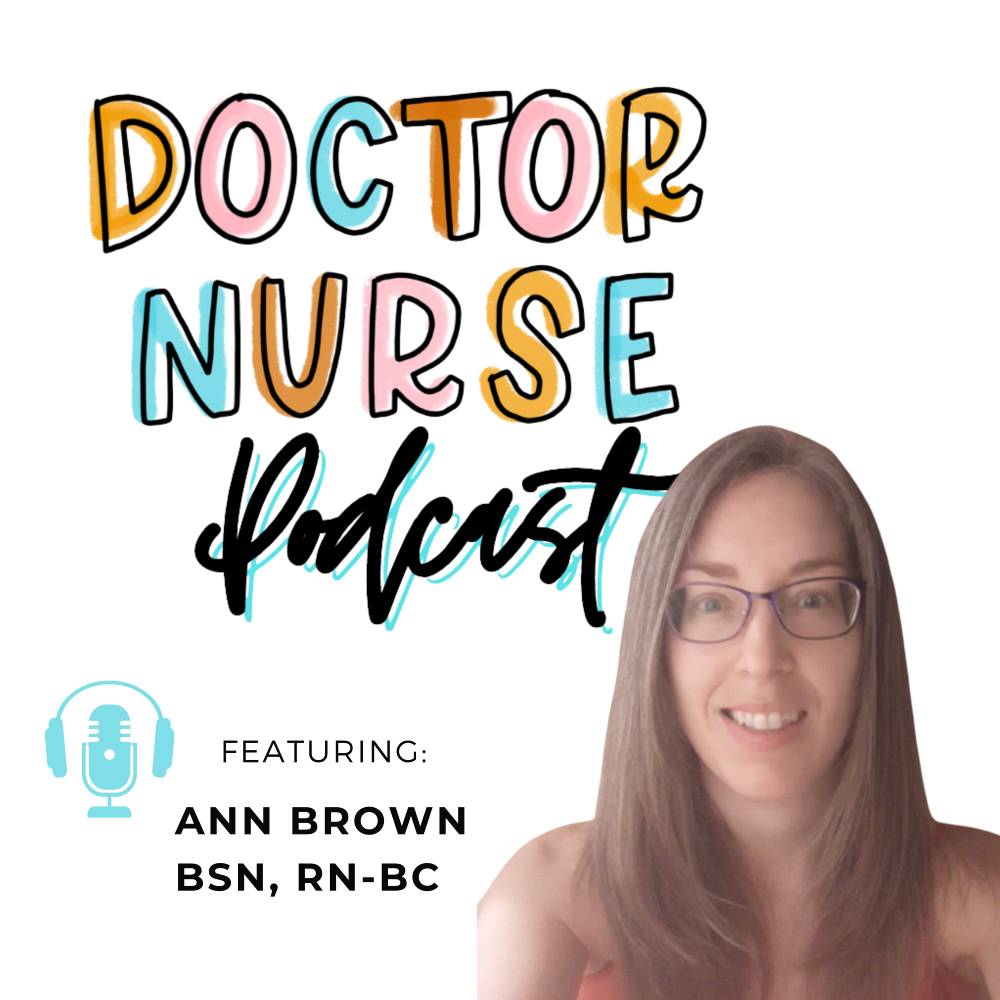
Sandra Pagenta: [00:00:00] Hi, and welcome to the doctor nurse podcast so happy to have you on today.
Ann Brown: Well, thank you. It’s glad to be here.
Sandra Pagenta: All right, so let’s dive in. So what is your current role and job title?
Ann Brown: I am a inpatient nurse. I actually am medical surgical, certified and chemo certified as well.
I’ve been at the job I’m at now as almost 16 years. A couple of weeks will be 16 years, started out as a PCT and then moved right into the nurse role.
Sandra Pagenta: What does PCT
Ann Brown: mean? Patient care technician. . Gotcha. Every facility. Yeah. I guess every facility probably has different Verbiage for that. .
Sandra Pagenta: Gotcha. So that’s what you do currently you’re a certified medical surgical nurse and oncology nurse. . That’s pretty cool. So tell me a little bit about what your side hustle
Ann Brown: is. Yes, my, my new and improving myself side hustle. I’m newly certified as a health and life coach.
To, to hopefully help people along their health journey, specifically [00:01:00] nurses that are dealing with stress and burnout, help them, heal their own bodies and their own selves so they can help heal others.
Sandra Pagenta: Gotcha. So tell me a little bit more about your journey to where you are now.
Ann Brown: I kind of started all through elementary school and high school. I actually wanted to be a veterinarian and I’m like, yes, I want to work with animals. Let’s do this job. Shadowed went, oh, maybe I don’t want to do that. So, I went to college, got a biology degree thinking I actually would go on to medical school or do pediatrics did not do well on the M cats.
So I’ve. Kind of transitioned into nursing, which I’m glad I did. I don’t know why I really thought I wanted to be a doctor now that I see what they do. Not, not really for me, but yeah, transitions into the nursing program Edinburgh, which is a local college actually has a innovative program. So it is a 15 month intense program where.
You just do strictly nursing it’s for those who already have a degree. And that is intense. So you think [00:02:00] of a normal four year program. You have a whole semester in med surgery, we had 10 days in each element. So 10 days in med surge, 10 days you know, and mental health.
So pretty intense. And then, as I said, it’s just strictly nursing, but I graduated in 15 months with the, you know, my BSN with a bachelor of science in nursing. and then from there, then from there, you know, I’ve been working on the same floor medical surgical oncology floor for the last six, 16 years as a nurse.
And then realizing that I’ve been having stress issues at work. You know, nursing is not stressful, right. But acute on chronic stress there, and there’s a couple things that happened and added to my stress levels, ended up having some health issues, getting, newer diagnosis of an autoimmune disorder.
And then some other things that go with that. But realizing that I had to make a change for myself, like I had to get the stress under control. I had to start eating healthier, taking time for myself, [00:03:00] getting the sleep that I needed. And through that journey, kind of have discovered more of that holistic side of, health and wellness.
And then that led to kind of stumbling across the health and life coach program and perfect fit for
Sandra Pagenta: me now. Awesome. So tell me, what does this transformational health coaching. What exactly would that serve?
What would be the service that you would be offering to anyone coming to talk to you?
Ann Brown: So it would start out with us kind of just having a conversation of what’s what’s your outcome. The health side of, of it would potentially be, you know, helping to decrease their stress with weight loss.
Specifically for me, I am trying to work with nurses that are dealing with burnout and stress, or there’s the life coach side of it, which is more relationships, or it could be money or finances, but I help you figure out what that outcome is. And then I hold a space for you so that you can get to that specific outcome.
I allow you to stretch and we do some habit changes and belief changes, kind of [00:04:00] see what’s keeping you where you are, why are you stuck? Most of us know what we need to do. Like, you know how to get healthy, you know, you should eat healthier or, do this and exercise, but sometimes you need someone to keep you accountable.
And that’s where the health coach kind of comes in. We kind of hold that space for you and allow you to see yourself already with that outcome that you desire. And then we help you do those small little steps so we can get you there.
Sandra Pagenta: And in your journey to the current role that you have now, what has been one of the biggest successes that you’ve had?
Ann Brown: So I think the biggest you know, success has been me transforming myself. I started out, kind of 180 from where I am right now, eating, you know, all the processed foods, not sleeping well.
Letting stress get the better of me. So trance forming my own life so that I have actual sleep habits. I have a set schedule. I am an adult with a bedtime and it works. It actually works. But whole food, nutrient dense whole foods. Actually with my autoimmune disease, I do follow a bit of an elimination diet, but I [00:05:00] figured out what works well for me.
And then actually doing meditation and finding ways to decrease my stress and moving kind of forward with that. So transforming and realizing what was underlying some of my issues and I I’m a recovering perfectionist and I’m okay with that. So learning. To kind of let some things go and, and why do I, keep a hold of some of the things that were stressing me out so much.
Sandra Pagenta: I think one of the things, whenever you think about perfectionism that’s just really damaging is that it’s impossible to do right. We’re human and we’re fallible and we’re all going to make mistakes. I think a different shift perspective would just thinking of I’m going to just do an excellent job.
And so when you look at it from that lens, it feels less like a task master than when you feel like I have to be perfect if I have to be excellent. That just means I’m doing the best that I can. And that shift in your perspective, really takes the [00:06:00] load off your back and you’re like, oh, I can breathe.
I can, I have a room. I can just do the best that I can and know that I’m doing an excellent job, but I don’t have to be perfect. And I think that’s true in nursing. I think that goes back to another episode I had talked about The culture of nursing is so hellbent on perfectionism that whenever you make a mistake, it is like the end all be all a whole report gets written about it.
You have to explain yourself and there should be a lot more wiggle room in nursing for. People to go. I made a mistake and own up to it. If you’re owning up to your mistakes and you’re saying, Hey, listen, I need help here. Like, this is what happened. Or there was a systems failure, meaning that there aren’t systems in place to protect nurses from error, then putting us under the yoke of.
Perfectionism is unfair. And it’s just not, it’s not something that a human can bear. I remember it in my nursing career, but I also can just [00:07:00] hear it in your voice of just like, this is just so heavy. I can’t carry this anymore. Like and it’s amazing that nurses are so close to being perfect.
Because it literally is just one decimal error away from a mistake, you know? And you could hurt someone.
Ann Brown: It’s a lot of pressure. Yeah. For sure. I hate to say a normal job, but if you work like a, an another service job or, you know, you’re a waiter, you mess up an order. The customer’s mad.
I messed up. Someone could die. It’s a lot of pressure. .
Sandra Pagenta: Yeah. And it’s a different stressor, right? Like people sit on the phone and they do customer service and they might direct you to the page or they might direct you to this link and like, our job it’s life or death. That’s kind of the decisions that we’re making some times. And so and also I’d like to speak to a little bit about burnout that you’ve described and you just in your own career and with working on the floor and how have you found that these, these things that you’ve done, the meditation, the eating, the sleeping,
Ann Brown: I think for awhile, I don’t think I [00:08:00] realized I was headed in that direction. It kind of snuck up on me until I had like my, my health issue where I pretty much almost passed out at work because I wasn’t sleeping.
I wasn’t drinking enough fluids. So the health issues was this, the slap in the face to realize that I needed to change a lot. And, and the fact that the culture says, Hey, this keep going like, oh, you didn’t get a lunch break. Oh, you hadn’t went to the bathroom all day. That’s okay. Just keep going.
That’s the nursing culture. And it’s hard. That’s a hard thing to kind of live up to and the last year with we’re all superheroes and the superheroes are Burlington nurses. Yes. I’m proud to be a nurse, but I don’t want to be a superhero. I want to be a human that has the ability to, to, to step back and to realize that it’s okay for me to not be okay.
And that I can take the time for me and actually do some self-care. So the fact that I would come home and stressy half a jar of almond butter every day, or come home and eat half a thing at m&ms realized that that’s not obviously healthy [00:09:00] and that I need to deal with the stressors that I was coming home with.
So I come home, I take deep breaths. As soon as I walk out of the hospital, I take deep breaths. As I’m walking in. If I’m getting a patient’s vitals, I use the power of the breath to kind of help relax me. Make sure I get real meals. I take a real lunch and I actually take a snack break at separate time.
When I worked 12 hours, I make sure that I take care of me and that’s a non-negotiable. I can’t do well to my, for my patients, if I’m not taking care of myself as well. And then the sleep I said early I’ve adult with the bedtime. If I can get myself. Set up to potentially get the eight hours of sleep than I, that I’m actually healthier and doing better that way.
Sandra Pagenta: I think that what you just said is so poignant and fantastically to the point of, we can’t. Keep missing lunches and not going to the bathroom and that you don’t want to be a superhero because you’re human. And I’ve never [00:10:00] really thought of that feeling. And that perspective, because this year has been quote unquote, the year of the nurse, right.
But are we taking a look in and just looking at how the culture and the work is affecting the nurses. And I really appreciate , your boldness and your courage to just. Be honest about where you are and how you want to see this whole thing change. And how hopefully this heal thyself Health coaching business that you’re starting is going to start to change that for nurses.
Because I think you need those reminders. And like you said, the accountability that you can provide to other nurses is going to be. Huge for our own mental wellbeing and our health. Cause you know, that stress is definitely linked to cancer, obesity and a slew of other health issues that, we are bringing on ourselves, caring for [00:11:00] others and Sometimes you have to put the oxygen mask on yourself first, before you can put the oxygen mask on others.
Right. They tell you that when you’re on an airplane. So could you tell me one of your biggest challenges that you’ve had to overcome in your career?
Ann Brown: One of the biggest challenges has been for me to realize that I don’t have to, to be the perfect person every day for every person.
Like it’s hard sometimes when you feel like. You’re not doing the best you can. Like, you’re just, here’s your pills by and run away from the patients. That I just need to focus on what’s in front of me and give my full attention to the patients that have that I’m with. Live work on a floor where I could have four to seven patients depending on if it’s. You know, they shift night
Sandra Pagenta: shift four to seven.
Ann Brown: Yes. Yes. Wow. Andy, I, you the step-down units we are for only for ICU patients, if the other half of my floor is a regular med surge floor and we have day shifts.
Obviously staffing is an issue. So day shift, most days we have six patients, night shifts almost [00:12:00] consistently. We have seven sometimes. There’s been eight patients, so that’s a lot, so it’s hard to.
Sandra Pagenta: That’s insane. I’ve never, when I worked as a nurse, the most I ever had was five. Like, and I remember you run all night.
My dogs would be barking when I would come.
Ann Brown: Yes. And that’s, on-call a few sites for nurses. That’s been, unfortunately, that’s the new norm. Like that’s what is expected of us. And we’re short, we’re short staffed. We’re going to probably always be short-staffed and it’s not really fair to me. It’s not really afraid of the patients, you know, me as in, it’s not fair to us, the staff, but it’s a reality and that’s contributing to burnout.
That’s contributing to all of our struggles, I tried to stay focused, be mindful part of my practice being mindful of what’s right in front of me. So try not to get distracted by the fact that I have six other patients. I need to pass meds on. If you need me, let me focus on you, the patient, whatever you need, kind of complete my task with you so I can feel okay to move on to [00:13:00] the next.
Person, but it’s hard when someone comes and gets you so-and-so needs their pain meds. This one needs that I have. And it’s like, okay, prioritize.
Sandra Pagenta: Yeah. Which is what we learned in nursing school. Right? Like ABC star is anybody not breathing. Cool. They’re not breathing. Or airway is blocked.
Ann Brown: Yes. Who do I need to start with the ground running in regards
Sandra Pagenta: to our incredible thank you.
And for sharing that. And I remember those same challenges when I was a nurse. So you are not abnormal. You are not alone. It can be really hard. And then you put on top of that, like a bully culture or a non-supportive boss on top of the job. And you’re just like, I can’t do this work.
Like this is tough. So anybody, do you have any mentors, anyone that’s kind of come alongside you during your whole career? And I know you’ve been, you’ve been a med surge oncology nurse for how long now? 1616 years. And that’s, that’s been your only role this entire time. Okay. In nursing.
Ann Brown: There’s been quite a few. I have the best floor. I’m [00:14:00] sure everyone says this, but I legit have the best floor to work on for teamwork. No one ever drowns by themselves. We’re all in it together. If we work really well together.
But yeah, I could add some. I have a senior nurses that have been there, the 15 plus years I’ve actually have a nurse on my floor. That’s been there longer than I’ve been alive. Oh my gosh.
Sandra Pagenta: That’s incredible.
Ann Brown: He’s been a nurse three. Months prior to me being born. So I think that’s fine.
But so yeah, and I’m always, I actually pick their brains every once in a while. Like how do you keep up with this? How do you, you know, but of course nursing has changed. Everything has changed throughout the years and it will continue to be that way. I’ve had some really great nurses that have kind of showed me the ropes, obviously nursing skills, but also the power of needing to take care of yourself.
On top of that. Yeah.
Sandra Pagenta: Alrighty. So do you have any advice for a new nurse who’s starting off in her career? She thought the beginning of her journey, she’s just got into nursing school and she’s standing there with her [00:15:00] diploma in her hands. And she’s like, what do I do? I’m being offered a job and I’m on a med-surg floor.
I was just kidding. But like, what does she do with, her newfound degree?
Ann Brown: Yeah, so that’s the best part about nursing? You can do you can do anything you want in nursing, but I will say inpatient med surge.
Cause that’s what I know know that. It is, there’s going to be challenges. You will be able to get what you need to get done for that day. And that’s one of my huge affirmations today I can do what needs to be done for the patients and for myself, like I have enough time to do what they did and what I need.
So you gotta make sure you put and I need, so make sure you take that time. For you get your lunch, use the delegation, use the team around you so that you get a lunch, you get your drinks and you get hydrated. You get that time, but you need to walk away through this, need a break. You get that time and take that time.
Don’t think you have to keep going through and it’s okay to not be [00:16:00] okay if you are struggling, reach out to someone that was something I should have done. Ooh, probably 16 years ago, but at least probably 10 years ago when looking back hindsight. Yeah, I struggled a little bit here with this.
I used to take a sandwich to lunch for lunch every day, because I did not get a lunch for the first year I worked and I’d eat it on the way home I left. I honestly left for the first six months. By the time I got to the parking lot, I was crying. I was that stressed out from everything. So. You’re not alone with that, but make sure you reach out.
If you do need help, if you’re struggling more than you think you should be and do stuff for yourself when you’re not at work, that’s the biggest day. Like don’t take work home with you, find ways to actually complete your day. A great one is coming home. And when I take off my uniform, I honestly visualize like the whole day coming off with me, like if you get home and you shower, like wash your day away, there, it goes down the drain. They went and you completed it. You need the, if [00:17:00] you have stressors in your life, you need to actually like complete the stress, like go through the process. Another big one too, is to take the time to grieve.
We lose patients. We have patients that code and they move on and you don’t really know what happens. Take that time. I’ve realized going through my coaching program, that I have never grieved any of the patients I’ve lost throughout the years. Like I’ve never, I just, you know what I’m saying? I shoved it down.
And that’s something as a nursing culture, we’re kind of taught to shove it down and it sits in there and eventually it comes out and it comes out and it’s ugly. When you have health issues, it comes out in different ways, I guess I should say. But that’s a huge thing with our culture is. And you kind of have to, if you have a patient that, you know, codes and dies, you have how many other patients that need you.
You have like 30 seconds to get your stuff together and move on to the next patient. Sometimes you don’t have that time to debrief. And so kind of worked through it in that moment, but make sure you take that time at some points to [00:18:00] kind of debrief and go through all that.
Sandra Pagenta: Yeah. Thank you for saying that because I don’t think.
That I ever got any form of grief counseling as a nurse, especially I was, I shared earlier on the, on an earlier podcast that I was an oncology nurse as well for about three years. And I remember being 21 years old and a new nurse and experiencing death and dying and sickness. And feeling very overwhelmed emotionally.
And what you just said is so true, like spending that time to grieve. I mean, I would have patients that were my same age that were coming in and they were sick and. We would just be hanging out like friends. I mean, we were just, we were the same age. And you get connected to these people. You get invited into their families.
That was a big thing that I would be with a family for three days or seven days. Cause I worked seven on seven off and I would be working and I would spend seven days with a patient. I mean, a [00:19:00] week. With one patient that’s in the hospital and I would get close to their family. They would request me back.
I want Sandra is our nurse. And as much as you would like, you want to go and like be there for them. You’re also like I’m getting attached to your family, to what you’re going through. And then if you know, As the process goes on. There’s this grieving that you have to do if they leave and they’re okay.
Are they leaving? They’re not okay. Like, there’s just, this, it’s an incredibly difficult floor to work on emotionally. I felt like Especially if you’re just shoving the emotions down, which is your right. You have in your case, six other patients that are relying on you to care for them. When the patient that you’ve cared for for a month, isn’t doing so well anymore.
And. Yeah, that is just, I was incredibly weighty, but thank you for, for sharing that. And I think it’s so true. What you’ve said, these are all amazing and good points for a new nurse to be thinking about [00:20:00] when they are going into their careers and just having the, finding the space to feel like you can do that in is really important.
Alrighty. So for the rapid fire portion of our podcast today, the first question is, tell me about a book you’re reading right now.
Ann Brown: I love that I’m in the middle of like four.
Sandra Pagenta: Give me your favorite.
Ann Brown: It is called simple graces it’s little mini stories, I guess you could say about finding the gratitude in the simple things is kind of what the theme of that is. Gotcha.
Sandra Pagenta: Do you go to nursing conferences every
Ann Brown: year? I do not.
Sandra Pagenta: Like prior to COVID is
Ann Brown: probably the, I’ve been to maybe two in my career.
Sandra Pagenta: Okay. I’ve actually been to one.
Ann Brown: What was that as early on? Because it was early.
Sandra Pagenta: What are you watching on Netflix?
Ann Brown: Not a TV watcher. I actually do not have cable. I do not. I have Disney plus I got, I had COVID in December and I got Disney. Plus I haven’t watched it in a month.
Sandra Pagenta: I like totally binge every once in
Ann Brown: a while. The only series I’ve ever watched [00:21:00] every episode was, bones.
Sandra Pagenta: That’s throwback. Yeah. That’s like what, two thousands. I don’t remember when that show was.
Ann Brown: Yeah, like throughout my whole lifetime, I get into a show and then I’m like, nah, I don’t like this. Oh
Sandra Pagenta: man. You’re better than me. I’m such a bender. Well, thank you for coming on the podcast today and sharing about your journey and Your current new side hustle towards health coaching. And do you want to do a shameless plug like what your business is going to be and
Ann Brown: yeah. My business name is healed by self transformational coaching. I have a Facebook business page and, and there is an actual Facebook group page that says, save Dame, heal, thyself, transformational coaching, where I give food for thought Fridays, where there’s tips on how to kind of live a healthier life.
And then the sister page is for nurses versus stress RX. And that’s where I do strategy Saturdays. And those are Saturday sessions where I give. Tips on how to kind of navigate the challenges of nursing.
Sandra Pagenta: That’s great. So [00:22:00] check those out for those of you listening, and find some resources and depending on what your needs are, those are going to be great resources for the nursing community.
So thank you and for coming on today and everybody. Thanks for listening.
Podcast Description
Ann Brown is a medical oncology nurse for over 15 years. She received her BS in Biology first from Penn State Behrend in 2003 and then did an Innovative Program for Nursing, it was 15 months and intense at times. She graduated from Edinboro University in 2005. She started on the floor as a student intern, then moved to PCT and then to the nurse role. She has a great floor to work on, but the chronic stressors of life and nursing have taken their toll.
She has been diagnosed with her own health problems, mostly related to acute chronic stress. Through her own health journey, she realized that she enjoys the holistic, more natural approach to medicine. She enjoys bringing this to my patient and fellow healthcare workers. She has transitioned into a Transformational Health Coach and is working with exhausted healthcare professionals struggling with overwhelming challenges and burn out helping them build resilience by taking ownership of their wellbeing through the balance of work/life, stress, and self-care.
She lives in a small rural community and enjoys sharing her new knowledge of food as medicine and the benefits of good nutrition, eliminating exposures to toxins in our lives, and the need for self-care with those who are struggling with their own health.
Latest Episodes
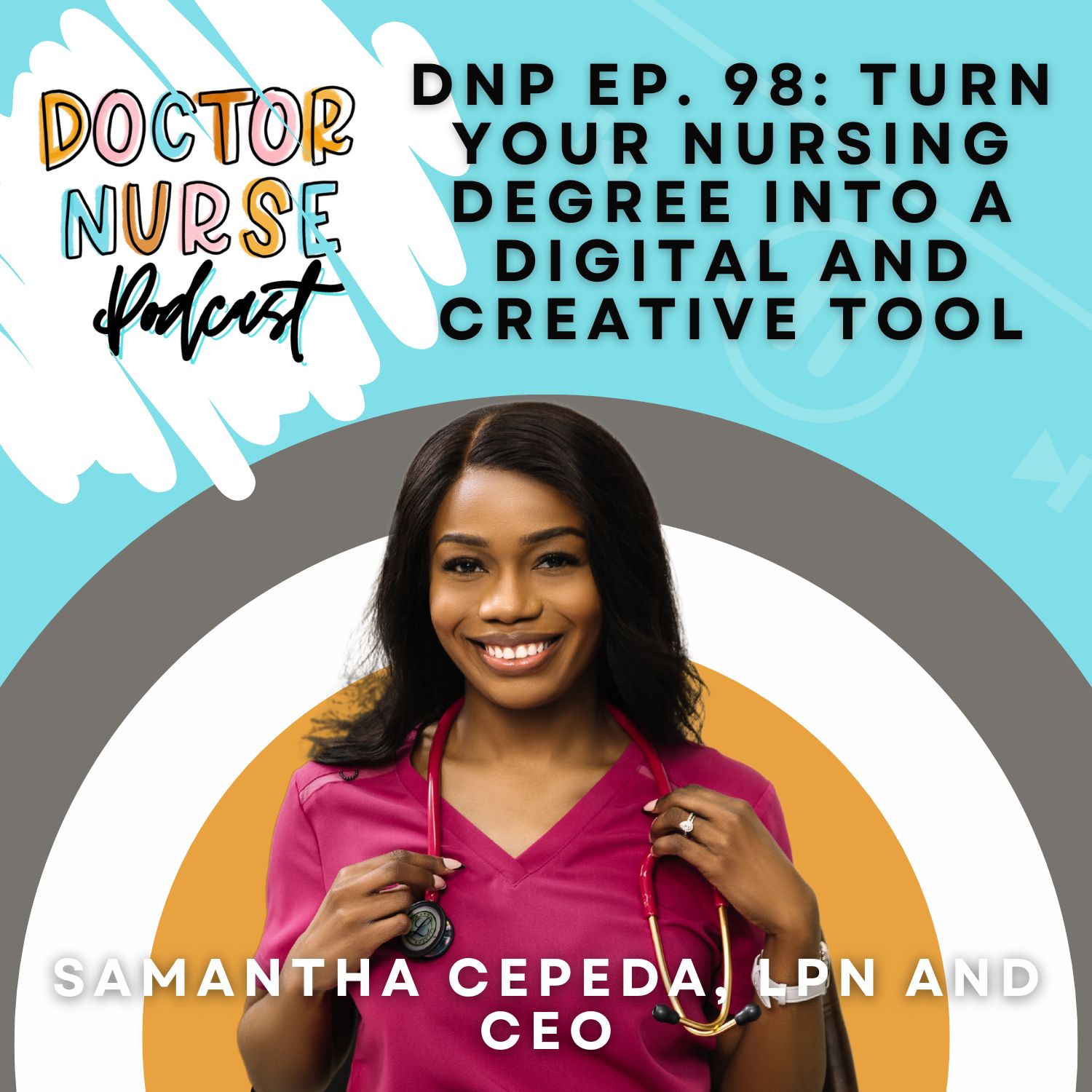
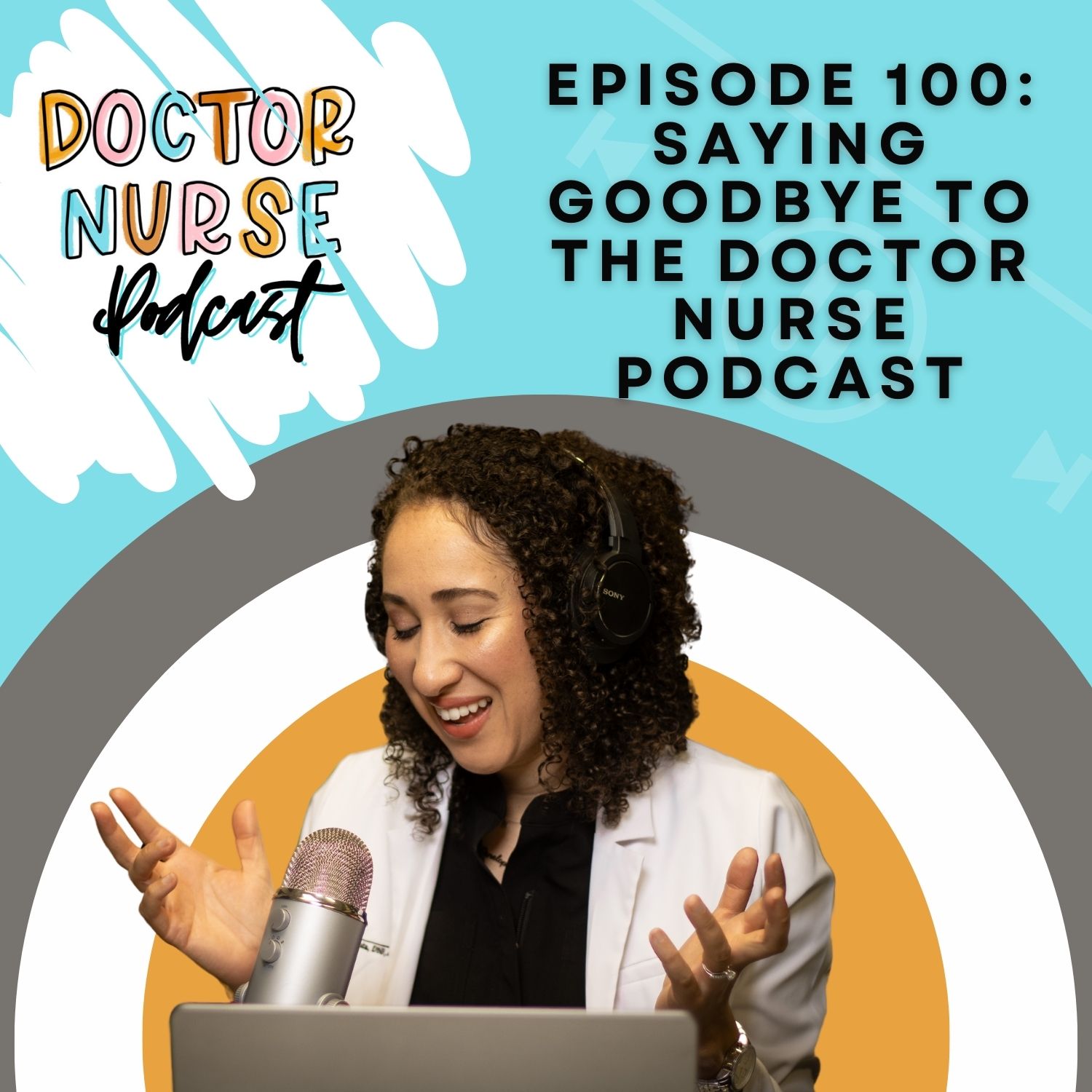
Doctor Nurse podcast brings you weekly shows to help INSPIRE, EDUCATE AND EMPOWER nurses with true stories of initiative and impact.
Doctor Nurse podcast brings you weekly shows to help INSPIRE, EDUCATE AND EMPOWER nurses with true stories of initiative and impact.
Latest Episodes
Doctor Nurse podcast brings you weekly shows to help INSPIRE, EDUCATE AND EMPOWER nurses with true stories of initiative and impact.