Also Available On






Sandra Pagenta: [00:00:00] Hi Pam. Welcome to the doctor nurse podcast. I’m so glad to have you on today.
Pam Taylor: Thank you, Sandra. So great to, to be part of your awesome program.
Sandra Pagenta: Thank you. Thank you. Let’s dive right in. What is your current role? Your job?
Pam Taylor: So I am a home health and private duty and hospice consultant.
I work from home and help. People nurses specifically start their own agencies to hang their own shingles. So I live on the central coast of California Pismo beach with my husband. Who’s also a registered nurse and. Home-health efficient auto. I live here with my two dogs, my poodle and my doodle, Sonny and Cher. I work with nurses all over the country to start up their own agencies. And I have to tell you, Sandra, I love my career. I love where I am in life. But it was a.
Sandra Pagenta: All right. Tell me a little bit about that climb. How did you get
[00:01:00] here?
Pam Taylor: Well everything I did in nursing was applicable to where I am right now.
And that climb started my gosh, As a child. I knew I was just born to be a nurse. I was the family nurse and it was just a family role that I had inherited almost at birth. I was one of two girls, we were born into a pretty dysfunctional family. It was sex, drugs and rock and roll. So our parents were pretty young and immature. And so there were a lot of fights and injuries, hangovers, broken phones to forces. And you know, it was a childhood where I loved first aid and I kind of had this hero fantasy growing up. I became a very kind of a codependent.
I was a family candystriper and helping others just where is where I have found significance or some [00:02:00] kind of self-worth. So nursing was just an easy step for me. I was already doing it and I wanted to be paid. So. That’s pretty traumatic. Yeah. That is where my journey as a nurse began actually.
Sandra Pagenta: Walk us through, as you decide. Okay. Really young I’ve always wanted to be a nurse. When did you enroll in nursing school and then take us through your journey through different careers that you had, that you said all accumulated to this one.
Pam Taylor: Okay, well I began my actual journey in nursing school at the age of 30.
I was a single mom and I had married an alcoholic and had these three children was making lots of mistakes in my twenties. The family, I said, I would never be like. I had inherited some of their dysfunction for sure. But at the age of 30, it was just life-changing for me. At that point I was a hairdresser and[00:03:00] doing that was somewhat satisfying, but I just looked at my alcoholic husband and my three beautiful children and I said, we can’t live this way. And at 30 I started nursing school.
Sandra Pagenta: That’s incredibly inspiring because I know that there are other people out there that are thinking I’m at this position in my life where I can’t do it.
And here you are with three children, no support system. And you just make the decision to go back to be a nurse that’s pretty inspiring.
Pam Taylor: You know, Senator it felt like there was no other way it felt like falling off a log. It felt like it was the right thing to do.
It was difficult for sure it was difficult, but I knew how important it was and my children were two foreign eight at this point and I knew. They needed to see something from their parents. It’s not what we say to our children, but how we behave, what we do.
And what do they
Sandra Pagenta: say? It’s caught not taught or
Pam Taylor: right. Yeah, for sure. And two of my [00:04:00] children are actually nurses now, so they followed me into the field. It was a super tough time in my life. I was down on myself and felt like a failure in nursing school was just a place where I could thrive.
I got great grades and I just loved the science of nursing , I loved nursing school. I know that I sound like a weirdo, but coming from where I came from. That was like a breath of fresh air for me. I’ve always loved learning. I’m the weirdo that like nursing school and
Sandra Pagenta: it sounds like it, might’ve given you an opportunity to get a little bit of control, like your whole life has kind of been like with your parents and your husband has been kind of out of control.
In nursing school, like you could get what you put into it, right. Right. I don’t know. Maybe that’s is that enough? That’s if that’s something that you identify with?
Pam Taylor: Absolutely. I felt obsessive during nursing school, United these index cards and, every minute I had, I was studying and there was tremendous control over [00:05:00] my grades and how I would succeed as a nursing student.
Sandra Pagenta: You finish your bachelor’s. And
Pam Taylor: what year was that? So my bachelor’s, I went back and finished probably 20 years later. Oh, wow. You finished
Sandra Pagenta: your associates.
Pam Taylor: I
Sandra Pagenta: go to work. Yeah, no, that’s awesome. However you get there, you get there. I got
Pam Taylor: there. I enjoyed nursing school did great at nursing school was so happy to have my career. We were talking about earlier intentionality on jobs and I was very intentional. Course I had to be with these three kids.
No support. And so I was working typically 60 hour work weeks., my nursing career really had to fit my lifestyle. What was the first job you took out of school? I did my rounds and nursing at a county hospital. We did all the hospitals in our area, but there was a county hospital and it was super busy.
It was a [00:06:00] teaching hospital through UCLA. It wasn’t the typical, crappy nurse doctor, you were dealing with interns that were learning and it was just a huge growth experience. And I said, oh, this is where I want to be. I came out and got the job position.
On the telemetry unit. My intentionality at that point was do three years of bootcamp, no matter what it takes, get safe. That’s what I did and I loved it. It was exhausting, but I was happy. Yeah, I was really happy and I remember how broke I was.
I actually, my first shifts I was taking my car broke down at this craziness Reno. It was awful. And it finally burned to the ground. And I was going to my first shifts on a, on a bus, and I was in my first paycheck. First thing I did is went down and bought that, grand Voyager minivan.
I was just like on top of the moon. I bought a home. My kids stayed in the same school [00:07:00] district. You were hustling. I was hustling and I was happy. Yeah.
Sandra Pagenta: That’s awesome. how did you get involved in home health?
What took you through that journey from taking your first job as a telemetry nurse to now home health care?
Pam Taylor: There was a lot of steps. I never would have seen myself as that home health nurse actually, initially, when I went into nursing, I thought I was going to be paeds. I could not do pizza or anything related to children on our mom, baby, or anything like that.
And I thought my first day of nursing school, when you go into the skilled nursing facility, I took one whiff and I said, I don’t think I can do that.
I love the academic part, the science part of nursing, but oh my God, where am I going to end up? But I have a huge gag reflex, but we made it. I went, when I was working in telemetry. I You know, always had to pick up extra shifts and I just started snooping around the hospital and I tried all the different floors out, you know, I tried L and D I tried psych for a [00:08:00] second.
I tried Did step down unit. I love stepped down in ICU, but you know, once I felt safe, like my curiosity was really the ER and trauma. So I applied for a position there. I got it. And I’m telling you that was like, I felt like I had scaled Kilimanjaro, and so there, you know, I.
I became trauma certified taught other nurses. I was the charge nurse. I became very obsessive about having the trauma-based stocked and that became kind of my new love and obsession in life. That was like a career high for me. And I did that for about four years. And then 2000 rolled around and my father was diagnosed with and died with pancreatic cancer and my best friend died of ovarian cancer.
And, you know, it’s just a super, super tough year for me. And I hit a wall. I just couldn’t be around [00:09:00] the trauma, the drama, the death, it was just, it became all too much for me. So I knew it was time to slow her down and I went in, actually took took a job in qui. And qui is quality improvement.
Everybody that knows me is like, Pam, are you kidding? You’re gonna just be bored. Like, are you kidding? Because you spend so much time inside your head there’s not other people around I love learning about Q. And, you know, the structure, I mean, without qui our value and our art in it would be so poor as providing in any kind of care. So I love root cause analysis, and I love doing surveys and I, I just I’ve loved qui and because I was going through this huge grief period, I could go to the bathroom and cry and, Drop my kid off at in high school and get in my car.
I was able to cry all the way to my cubicle and, just [00:10:00] focus on the task at hand, you didn’t take anything home with you. There was, weekends off, it was a eight to five super autonomous and in my head and I really needed.
Sandra Pagenta: Yeah. One of the things I like about nursing compared to other areas in medicine and healthcare is that you really can transition nursing into the season of life you’re in.
So like, if you’re a trauma doc, you’re always a trauma doc and you kind of have to make your life fit. The job, whereas nursing, you can really use it to fit the season of life you’re in. And that’s kinda what I’m hearing. It’s like, I kinda needed a little something to pick me up. I needed a little something to slow me down and you can really just go into those different areas seamlessly.
And it’s such a beautiful part of our career and what we’ve chosen as being a nurse that you can say. My life doesn’t fit this area anymore. I’ve got to go do something else. And what you’re describing is, so on point to, to that fact,
Pam Taylor: Yeah, for [00:11:00] sure. I love hearing nurses and their careers and what they’ve done with them.
I mean, it’s just exquisite or the, the artfulness of what we’ve done through our, you know, a lot of suffering at times, but just what we’ve created, you know, each nurse has an inspiration and what she brings to the table. I agree.
Sandra Pagenta: From your. Trauma job now you’re in qui and so transitioned me into home health.
How’d you get.
Pam Taylor: Okay. So I love qui until I didn’t anymore, I became very bored. I had fun going after a few doctors that were doing really bad things and, you know, it was like, okay, time for some more drama trauma,
Sandra Pagenta: but in a different way,
Pam Taylor: So I knew I didn’t want a 12 hour shift pounding pavement.
I knew I didn’t want to be in a lockdown in a hospital anymore, but I knew I wanted high acuity and there was this new program that was [00:12:00] opening priority care program for a medical group. And they, I applied for the job. And I got it. We were managing the chronic disease of a medical group.
It was a NOx king business, but we were managing those top users. The ones that are in and out of the hospital was CLPD
Sandra Pagenta: frequent flyers.
Pam Taylor: And these are the ones I saw in the ER and trauma room, like, oh my gosh, these people, need help with medication management or with, at least their code status, you know, like get them on the right track.
And, and so these were the people I it’s like. I had taken a full full turn, I was back at go and working with a population that. Really comfortable with at this point. So I was a case manager for that and we had hospitalists, we had hospital case managers as well as 10 outpatient case managers, medical, social workers.
We had a hospice and palliative care. We have. [00:13:00] An urgent care. We have wound care. We had a Coumadin clinic. I mean, it was super fabulous program. And I loved it as super happy there. And I became the supervisor of that case management there. I worked with a doctor named artist Cher, Talia, who is just a life changer for me.
And he was the chair of the tuition board certified geriatrician. he had a very mindful approach to healthcare and it was more integrative. And so working with him and these patients, I started applying this to my own life, getting, you know, more mindful and more considerate of myself, which was really great timing.
As you know, my children are starting to leave my nest and now I’m starting to lose my migrate purposes in life. I knew like times are changing new season, you know? I had a big home, I was there alone. The kids left, left her dogs. I have these three [00:14:00] dogs and I’m working, I’m still, just a blazing workaholic and, it just felt like, Ooh,
I’m running out of life, I had a hard time when my kids left. I didn’t think I would. I thought, oh, thank God and Greyhound they’re gone. But you know, they all got suitcases for their 18th birthday, but because it was uphill struggle, but they were my, they were my reason, you know, they were my purpose.
There was this place I used to visit when I was a child it’s moral rock. And we went there when I was a small child, is my best memories. And anytime I had lost or problems, I, you know, that’s where I went was to this rock. My son came out at the rock We had huge family transitions at the rock.
It was, it was just our place. And so I put more a rock on my screensaver at work, and I thought I can’t drive there, just keep this rock. My screensaver and God’s honest truth. [00:15:00] Within a year, I was offered a position and was living 30 minutes for moral. So
Sandra Pagenta: that’s weird. We know,
Pam Taylor: and that’s live now.
I got off and this is my transition into home health. I got offered a job at a home health agency as a supervisor. I thought I’ve been around home health, but I don’t really know it, but okay, here we go. And I fell in love with the industry, I believe.
We can touch patients and teach patients and affect change in patients that we never could within the hospital. There’s just so much intimacy and understanding there. Yeah.
Sandra Pagenta: I agree. Like to be in someone’s personal space and kind of see how they live. It really is just like letting somebody into your, your nest, you’re like really there you’re really doing life with them, which is why, I just had this random thought, but like whenever like doctors used to do house calls,
Pam Taylor: like
Sandra Pagenta: there’s something about [00:16:00] that.
That’s just really special that I feel like doctors don’t do that as much anymore now, but nurses are still doing that. And I really hope we never lose that. I did a rotation as. Nursing student where we went into patients’ homes. And when you’re like 20 years old, you’re like, this is so weird.
But like, now that I’ve gotten older, I’m like, no, that’s actually really special that we were journeying with these people in their own spaces. Like we took healthcare to them. I remember being in those situations and they were, so the patients were so nice to the nurses. Like I thought it was like, this is weird.
We’re in somebody’s house, but they were always like, oh, hi nurse. Like, they were just, it’s just super vulnerable, like arms open. Like thank you for caring for me. You don’t see that in the hospital setting, like you see that when you’re in their turf.
Pam Taylor: Yeah. So
Sandra Pagenta: you will, from case manager to, I need to change and you get hired as supervisor of home health.
You work in that industry and then that [00:17:00] prompts you to see. Training other nurses and nurse practitioner.
Pam Taylor: So I went from the supervisor into the director of patient care services. I had a lot of exposure to the business of home health. And, you know, I started looking at the business and the finances and I was learning policy and procedure.
I mean, this is my jam. I love to learn and I love business. And so I just happened to fall in love with the gentleman that I worked with. Who’s a registered nurse who left the agency to start his own home health and hospice agency, which has doing phenomenally well. But I stayed with my agency, did my three and a half years learned all I could and really absorbed. That business model, which I completely believe in. I think, you know, healthcare should be delivered in the home whenever possible. So I started that and I started getting calls, consulting kind of calls. And can you help me with this and that?
And what [00:18:00] about this? Can you be my Don till I get licensed? And that just kind of. Grew organically. And then I had a call of someone wanting to start an agency in Santa Barbara and my husband was doing a startup in Santa Barbara. So I moved to Santa Barbara and helped helped an agency there. And I came across An exceptional opportunity and with the right people, the right place.
And I started my own accredited home health agency from the ground up. I did everything.
Sandra Pagenta: Yeah. Is entailed in owning your own accredited home health.
Pam Taylor: Business. So for the Medicare accreditation, it’s a lot and it’s, you know, it’s gonna run. I mean, it was a couple of hundred thousand dollars to get it up and running.
It’s a lot of time. It’s a lot you will take on patients. That you will never be paid for that. You’ll be paid providing physical therapy, occupational [00:19:00] therapy, speech, social worker, nursing. You’re going to provide that care. Out of your own pocket while you’re waiting for joint commission or ACHC to come out and accredited you.
So, and it’s, it is an incredible amount of work. There’s systems, there’s policies, there’s procedures, you’re following Medicare guidelines. It’s incredibly complex. If you go for a Medicare accreditation and I’ve taken people through that and I’ve done it myself. That was the happiest day of my life is when I started that agency. And the happiest day was when I sold it. It was just, it was that in 2015, I had that my sister was. Oh, my gosh. And I was between my state accreditation and my medicare accreditation and that again with, the longest year of my life.
So oh my goodness. Yeah, it was awful. It was horrid. And
Sandra Pagenta: well she still in
Pam Taylor: California or in [00:20:00] California? Yeah, she was still in California. It was domestic violence. No. So that was, th that was another season of my career. So beautiful thing about being a nurse is you learn to turn it off and keep putting one foot in front of the other, and I I surrounded myself with therapists and the right people.
You know, the agency I learned to delegate and the, the agency, When I was ready to sell it, we did great. And I just, I came back home and here where it was. I told her I love came back home and took three years off. I still always did consulting. But it was more organic and word of mouth consulting.
Never got out of it. I mean, I was still reading and staying current and still eating it. But I just really needed that time again to recalibrate and figure out what was important. There was a lot of [00:21:00] trauma that I went through with that. There’s no, we’re still waiting for the trial.
Yeah. Yeah. Oh
Sandra Pagenta: my gosh. It’s been six years.
Pam Taylor: Yeah. It’ll be six years in October. No Pam. I’m so sorry. Well, thank you. Waiting for justice. Waiting through justice. So yeah, here we are. And COVID strikes. So you know, and I’m in this very isolated kind of state and I’m thinking what, what’s now pussycat.
I’m I I’m listening. You know, I’m still online all the time and still learning and thinking, what are you going to do? And, you know, you can’t stay like this forever. This is going to end one day. And I, there set as lady, I don’t know if you know her Katie Harris through nurse. Yes. Yeah. Yeah.
Sandra Pagenta: I’ve heard of her.
Yes. I heard she’s. She’s
Pam Taylor: like a powerhouse. She’s a phenom for sure. Yeah. Yeah. That’s the word
Sandra Pagenta: phenom.
Pam Taylor: You, you two need to know each other. You really do. I would love to chat [00:22:00] with her. She’s in Africa right now with the. With the elephants .
Sandra Pagenta: that’s amazing. Yeah, no, I definitely, this is my invitation wherever you are.
If you’re listening.
Pam Taylor: No, I was listening to her and, she’s a powerhouse and, just kind of looking at what she was doing and really helping nurses like you are too. Re-invent themselves and to hang their own shingle in to get, you know, we are powerful. Creatures. I mean, we weren’t given anything and we can do anything.
And we actually nurses make amazing business owners and entrepreneurs. We got the gut and the grit and the know-how and so I just, I listened to her a lot. Quite a few people I listened to, but definitely she had my ear. And she was starting with Jill Weber name, who you had on a few weeks ago, she was starting up with Jill Weber Dean.
They were doing this course creators. And I’m thinking, I’ve always talked about [00:23:00] putting what I know into a course. So I thought, why not? I talked to Katie in October and I just, I got signed up with Jill and I just started creating a course. It’s kind of a business coaching model.
Some one-on-one some group and really just some great insight. And I built my course and its blueprint to success. And it’s how to start your own agency. And I marketed it to nurses and I’ve helped 25 nurses remotely and get their start all over the country. Awesome. Yeah, I’m getting ready to launch my next course next month and that’s going to be a private duty course and a home infusion therapy services course.
And so that’s what I’m doing. This is this is my life.
Sandra Pagenta: So you’re an accredited public health nurse. You are a life
Pam Taylor: coach. Yes.
Sandra Pagenta: And you are a home health [00:24:00] accredited nurse,
Pam Taylor: home health and hospice. Home health hospice, private duty and home infusion therapy services, accredited consultant.
So that’s pretty cool.
Sandra Pagenta: Yeah, that’s a lot that makes you more than more than qualified to do what you’re doing and really provide a risk.
Pam Taylor: As nurses, we are always going for those certifications and qualifications. But yeah, I want this, I need this and
Sandra Pagenta: you’re just picking them up. You’re just like, yep. I’ll take that one and I’ll go get that one.
That’s awesome. So you you’ve told us a lot about your journey, which is so incredible with just trauma and loss, but also just overcoming and really. Kind of picking yourself up and redefining what nursing looks for you at different stages of your life. And you’ve talked a little bit about some of your mentors.
Did anybody else give you advice along the way that you felt like this was, it was a pivotal thing that you’ve always held on to?
Pam Taylor: I have been doing self-help since I was 16, reading the [00:25:00] books and trying to figure things out. I’ve that’s just been my journey. All the great thinkers, I’ve Eckhart, totally Wayne Dyer. All those people I really took for Nate brown all those people I’ve really listened to and try to.
Become a healthier, stronger, better person. So I guess I was self-taught. With self-help that’s I have a huge self-help library.
Sandra Pagenta: Yeah. Bernay brown is golden golden. Oh my gosh. She’s just really understands vulnerability and being brave and she just puts it in such a way that you’re just walk out. I I can climb Mount Kilimanjaro.
Pam Taylor: She really does. I would say I just, I, I believed on those kind of new philosophers and I’ve taken they’re teaching. Did it have a lot of in my upbringing anybody that I wanted to emulate or I became pretty [00:26:00] isolated from my family functions and things like that.
So I did have a aunt here on the coast that was, I thought brilliant, brave and wise. She taught me a lot about self care and putting yourself first. She was, she was hugely inspirational to me, I would say.
But she’s gone now, but you know, she’s, she’s. I would say she was, she was very inspirational to me.
Sandra Pagenta: What advice would you have for a new nurse starting off in her career? She has her certificate in hand. She’s ready to hit the road like working. And what is something that you wish somebody would have told you when
Pam Taylor: you became a nurse?
Stay open? I mean, to stay open to possibility there’s so much out there it’s insane. And it really it’s insane. Poke around. When you go into a department, pick up the literature, some through the policies and procedures, does it excite you? Is it a fit? If you’re considering a [00:27:00] position, go shadow someone. If you’re thinking about home health, go on some ride alongs see where, see where you fit in and get safe first.
Sandra Pagenta: What do you mean by get
Pam Taylor: safe? First? You get your sea legs, whether it’s on med surge floor telemetry, or get comfortable with who you are as a nurse, and then to scope, get curious, explore.
And consider yourself, like what are your needs and emotional needs, because we can thrash ourselves out as nurses, we do pretty routinely. But you can hit a wall and, I’ve seen many, many nurses hit that wall. And. It’s it’s, it could be a long recovery period.
So I, you know, just stay open and stay in touch with yourself. Don’t block your emotions. There’s things out there. You’re strong. You can create your own future. Like you are. Nurses are fun model. Like we, I, I [00:28:00] agree. Yeah. Yeah.
Sandra Pagenta: On my honeymoon, I ran into a nurse at this little resort that we were staying at and she was from the UK.
I’ll never forget her. And we were immediate friends. She was British and, she wants, she told me she was a nurse. I was like, we’re done we’re besties. And so we went to dinner with this couple. My husband was just like, what is up with you and nurses? And I’m like, we’re like, you’re just meet one of, you know, another one of your own.
You’re like, these are going to be
Pam Taylor: a tribe. Yeah, for sure. Yeah, I agree.
Sandra Pagenta: So I think that’s all great advice for a new nurse starting off is just taking that time. I think one of the things that I keep hearing also throughout your story, which is just a common theme, is that you kind of step back and you learn a little bit about yourself, either.
Like, the trauma of growing up the way that you did, like you learn about yourself through nursing and through caring for others, you start to see your. If you take the time to stop and kind of like meditate, kind of sit with yourself [00:29:00] and see what’s going on inside. I think that’s just something that I keep, I kept hearing throughout your journey of just like, and then I just realized, like I needed to take a step back from this.
And I think that listening to yourself that you were doing was just really. It was really good. It was really smart. It was super wise. It’s something that I need to incorporate more into myself and do my job. I think that’s great advice and something that I noticed was a common thing.
Throughout your journey, just assessing and reassessing. That’s what we’re told. Right. We’ll continue to assess and monitor. We do that with our patients because we don’t do it with
Pam Taylor: ourselves. Exactly.
Sandra Pagenta: Yeah. Is there anything else that you’d like to share? With our listeners about where to find you, if somebody is thinking about I wanted to open up a home health agency, or I think I want to go and be a home health nurse or whichever that they can, can maybe reach out to you
Pam Taylor: and chat with you.
I do a free discovery call. If anyone has an interest or wants to chat, I definitely can make that happen. I could be reached on email at [00:30:00] pam at Northstar medical consulting. Now you can also visit me on my website. Where my Facebook page there. Also I can be emailed at Pam at Pam, the nurse.com. And I’m on Instagram north star, H H, C, and, just feel free to reach out. I do a free 30 minute discovery call for any nurses out there who want to chat, have an interest.
Just kind of look at things we can do. That happened. It’s assumed call and I love those calls. I do have a course starting up next month and both private duty startups and home infusion therapy services. So
Sandra Pagenta: we’re reading that you are, you do provide continuing education.
Pam Taylor: Correct. I’m a continuing education provider.
This is a great opportunity to really take. Everything I’ve done as a nurse and as a human being and put it into actions. Really cool.
Sandra Pagenta: The peak of Mount Kilimanjaro[00:31:00]
Pam Taylor: what’s
Sandra Pagenta: the final part of the interview is the rapid fire questions.
Favorite soup.
Pam Taylor: Wonder woman. Oh, very
Sandra Pagenta: good. How many keys do you have on your key chain?
Pam Taylor: I have several key chains, but my main key chain only has.
Sandra Pagenta: My husband is like that he has like four keys and I have like 50.
And so I think it’s like like a Testament to like where your brain is, like you organized or are you just like a free spirit, 50 keys? You know? I don’t know. I think that’s how I think that’s why I like this question. Okay. And what is your favorite summer activity?
Pam Taylor: Kayak can bode anything in the water,
Sandra Pagenta: anything in the water.
Do you, do you reside on the water?
Pam Taylor: I live very close to the water. Oh, that’s awesome. Yeah, I do. And I love getting out there any chance I get.
Sandra Pagenta: Oh, man, it sounds like you’re living your best life, Pam. I
Pam Taylor: love it. I am pretty happy girl.
Sandra Pagenta: Well, it’s been wonderful chatting with you today and thank you for [00:32:00] talking to all of us and all the listeners and everyone.
That’s going to be listening to your story and hear just your journey and being able to, to see how you took nursing and you made it your own. You made it work for your lifestyle and yeah, you have a lot of fulfillment. So thank you for.
Pam Taylor: Thank you so much, Sandra. I appreciate the time and everything you’re doing.
Keep it.
Podcast Description
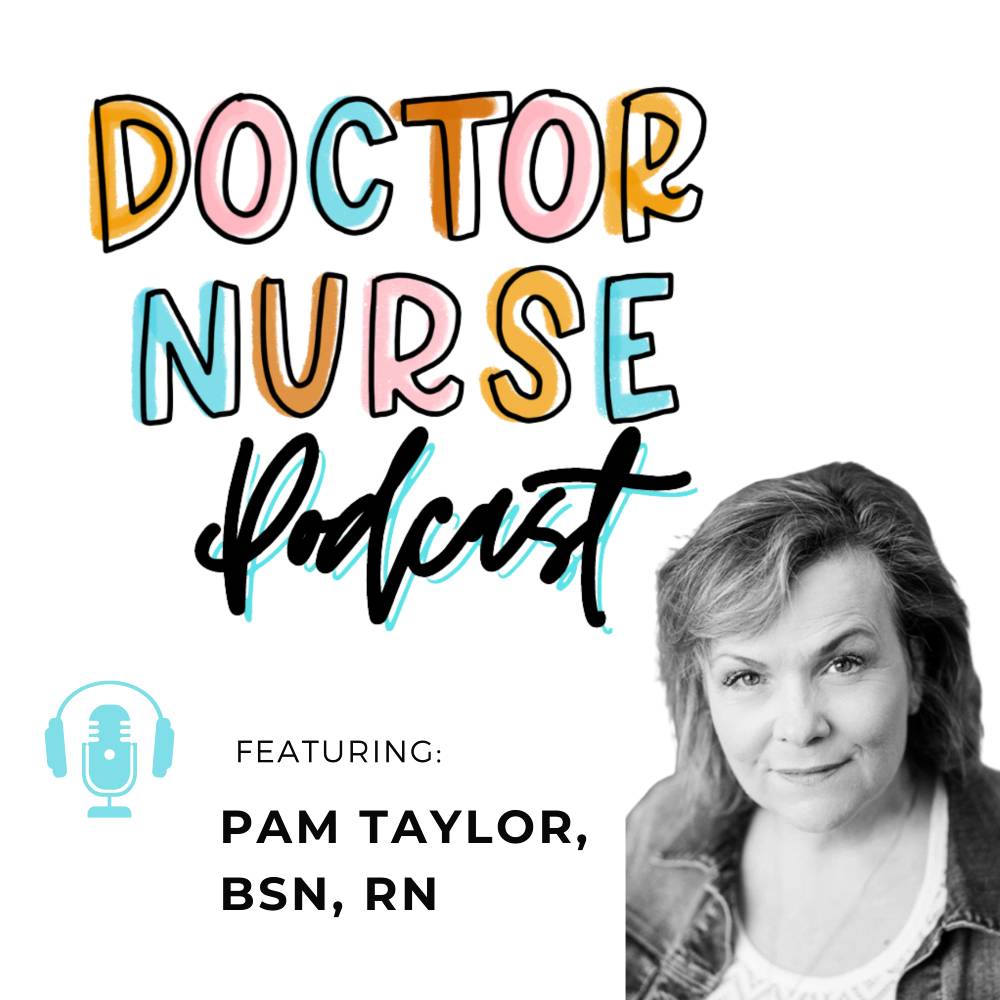
Pam is a registered nurse (RN) and CEO and Co-Founder of North Star Medical Consulting. She is a home health expert. Pam loves helping people plan, optimize and launch their own home health and private duty agencies. She has spent most of her nursing career in the Home health industry, gaining experience both clinical and administratively. Within consulting and ownership roles, she has a seasoned perspective on leading agencies to reach beyond meeting industry standards to create a successful and rewarding business. Pam holds a BSN and a Public Health nursing certificate She is accredited through the Accreditation Commission for Health Care as a Private Duty, Home Heal, and Hospice Consultant. She holds a Continuing Education Provider Certificate through the California Board of Registered Nursing. Pam is also a life coach. She is a self-proclaimed dog lover and enjoys her personal goal of remaining a work-from-home dog Mom.
Latest Episodes
Doctor Nurse podcast brings you weekly shows to help INSPIRE, EDUCATE AND EMPOWER nurses with true stories of initiative and impact.
Doctor Nurse podcast brings you weekly shows to help INSPIRE, EDUCATE AND EMPOWER nurses with true stories of initiative and impact.
Latest Episodes
Doctor Nurse podcast brings you weekly shows to help INSPIRE, EDUCATE AND EMPOWER nurses with true stories of initiative and impact.