Also Available On






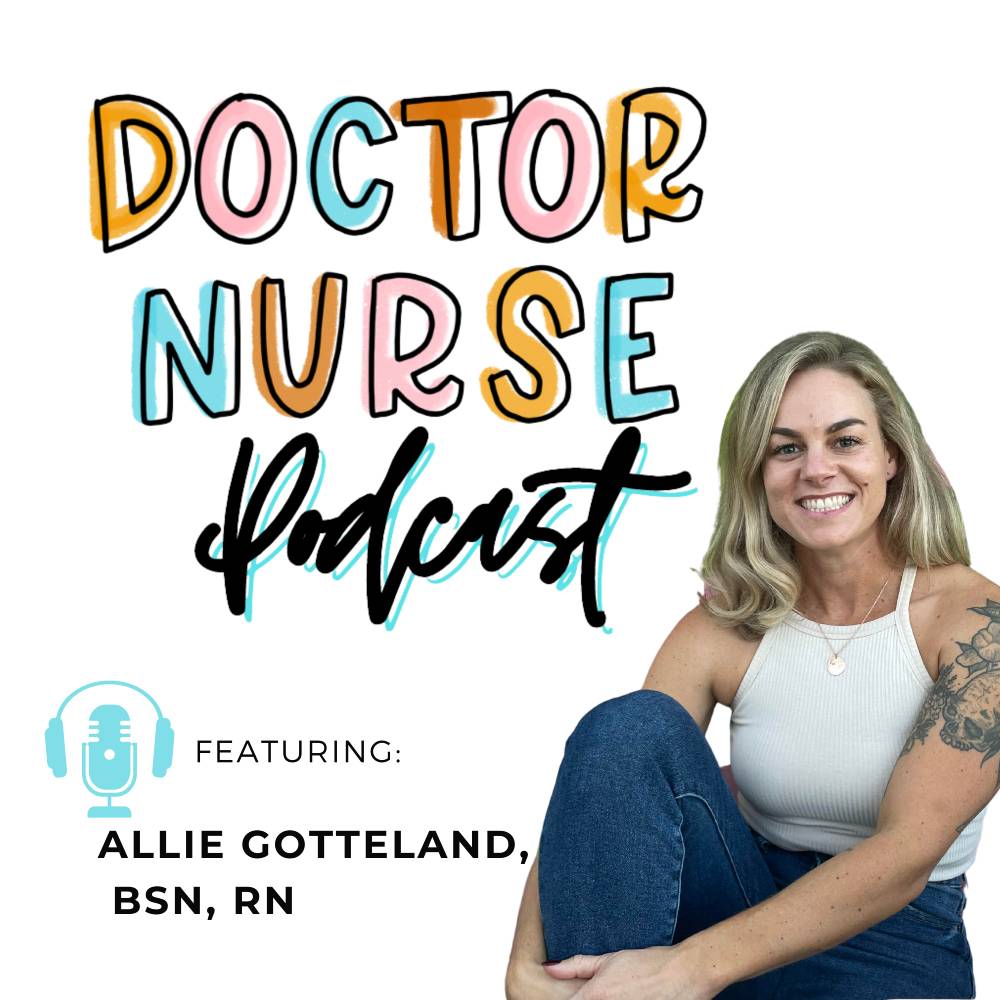
Sandra Pagenta: [00:00:00] Hey guys on today’s podcast. I have Allie. She is a P I C U nurse, who has been a nurse for over six years, almost seven. She was tired of living paycheck to paycheck and having to work overtime to pay her bills. So she finally discovered and invented a method to help her work her way out of debt. She was able to pay off $46,000 worth of student loans in 18 months while saving $10,000, she was able to get out of credit card debt and student loan debt and stay there since December of 29. She now has a passion to teach nurses how to align their spending and their values to feel confident with their finances so that they can pay off debt and save money without sacrificing what they love. She also teaches them how to become a money magnet through a money mindset mentorship and course. Allie is a [00:01:00] plethora of knowledge and wisdom when it comes to money. And she’s got a popping Instagram page where you can just go on and see a bunch of great things that she’s got for free resources that you can just check out.So, Allie, welcome.
Allie Grotteland: Thank you for having me.
Sandra Pagenta: Let’s dive right in. So kind of describe to our listeners, what is your current job title? What’s your current role and what are you kind of involved in these
Allie Grotteland: days? So I am a pediatric ICU nurse, like you said. I transitioned from adult ICU in 2019 to pediatric ICU.
I work in a moderately high acuity, medium acuity pediatric ICU. And I actually only work four shifts a month. That’s my required FTE. I think it’s like a 0.3, which is awesome. I haven’t worked full time since last July. So like middle of the pandemic, I decided I did not want to work full-time anymore.
If I didn’t have to some things kind [00:02:00] of happened and then I’ve kind of had to pick up as I needed, but that was one of the things and my goals as. I paid off my debt. I didn’t want to ever have to be stuck working full time. I work very part-time and I use money for my side business as well, and from Instagram to also pay for things, which is nice.
So what I do
Sandra Pagenta: so tell me a little bit about your side hustle, Instagram world that you’re in. I really am interested to hear about kind of what you’re offering to nurses.
Allie Grotteland: My Instagram converted from a personal Instagram, about four or five years ago. I actually didn’t include this, but before I paid off my student loans, I paid off $15,000 of credit card debt.
I didn’t really track the time period. But it was actually. A little bit after I had become a nurse. So like I think a year into nursing I read rim it’s I can teach you to be rich. And I opened my first high interest savings account, cutting my bills back and I started working a lot of overtime to pay off my credit card debt. So I actually didn’t tell anyone this. I kind of kept it a secret. [00:03:00] When I started to get more into personal finance and personal development, year and a half later me and the guy was dating at the time.
We’re talking about getting married or getting engaged. And I was like, well, I really need to pay off my student loans. , so I actually started paying them off and then. Snap screenshots of my payments and I put little gifts and all of the people maybe had a thousand followers only people that were like my friends.
And they’d be like what are you doing? That’s kind of weird. Like I’ll never pay off my student loans. And as my momentum moved I had people, , start asking me what are you doing? Like, and then I kind of got into Like a couple pockets of like the first nurse influencers four or five years ago.
And then like people were reposting my stuff and like, then I got into like the debt free community and like was looking at that stuff and so that was all what I was doing at the time. And then. Jumping into like finding a mentor. I was really, really [00:04:00] burnt out with nursing. I didn’t know if I could do any more.
I was dealing with a lot of nurse pulling at the time, but I still wanted to pay off my student loans. So I was kind of at a crossroads. I found nurses, inspire nurses, and I got really into that. I started journaling. I started doing like meditation. I followed a lot of their resources. Cat golden from nurses inspire nurses.
Who’s the founder. She watched her first group of mentorship. And I had asked my, my fiance at the time. Should I do this? Should I go to NP school? Like, what should I do? Like, I hate nursing so much. Like I can’t do it any longer.
It was a big investment and I was like, I’m trying to pay off my student loans. I don’t know if I can afford this and looking back, it really wasn’t that much money, but it felt like a lot of money at the time. And that’s kind of where my money mindset shifted. And so I decided to take the payment plan and to do the mentorship.
And I was kind of telling her. What I was doing and, , paying off my student loans. And I think this was early 2019, actually, before I got into PICU. [00:05:00] And that’s when my Instagram started growing more and she was like, I think you have something here, I think you should continue to speak about.
, your student loans and , how you paid them are paying them off. Cause I was pretty close to I ended up paying them off the end of 2019, which is crazy to me because I invested so much that year into my business. That there’s no reason why I should have paid all my gosh. That’s crazy.
And I believe that there was like a lot of universal health there. And so one of the reasons why I trust the university and also just investing in yourself and believing in yourself too. Because I made, those moves and changed my mindset, I was able to find more money to do more things.
And so she was like, you have something here. I first initially started with like 30 minute calls. And so I would be like, Hey, I can help you with your budget, or I can help you with like doing a debt payoff plan because I did debt payoff plans a little bit differently. Then say like the Dave Ramsey method or some other methods.
Cause I look at a lot of things. I look at the money and I also look at like how you feel towards the debt, because it’s really important to stick to [00:06:00] something if you have an attachment to it. So I started doing that and then I had people asking for more help. So I hired a mentor to help me create a course. And the course was actually really a mentorship. And so but people weren’t really calling a lot of things mentorships at the time. And so I was like , I don’t really want to be on money coach I want to be a mentor coming from athletics.
Coaching to me is like, I’m going to tell you what to do. And I was like, mentor. I want to stand by side by side with you and help you so that you can figure this out on your own later on. I launched my first money mentorship group program, which was just called the course. And it was called through these financial freedom.
And what was that? It was three words, three phases to find the phases. And I launched it in. I want to say August of 2019, and then it became a business in February of 2020. I’ve been around for awhile, but that’s how I kind of got started. And then I got sick talk during COVID and my Instagram blew up.
And so did my tech talk out of nowhere and the rest is I went from like, I [00:07:00] want to say 5,000 followers to like the fifth over 15 I have now, which is crazy to me. And I think I went from like no followers on Tik TOK and posting dog videos to having a couple of videos go viral. And I think I’m at like almost 40,000 tic-tac followers that much anymore.
So this is crazy.
Sandra Pagenta: I think it’s really funny that you say, I don’t know how it happened, but it’s been happening for five to six years as you’ve been kind of building it. And you read all these books about entrepreneurs and they all say that, like, it just kind of happened. And then you actually look at their story and you’re like, No, you were being intentional.
And it was through that intentionality and vulnerability that you were showing on Instagram that resonates with people. Right? And so people want real people are kind of sick of let’s just pretend we’re not struggling. And that we all have money. And that we’re all just living this great life.
They really are identifying with the I’m struggling every day. And my goals. Pushing forward towards them. [00:08:00] And I think that that’s what resonates with people. At least that’s what I saw when I looked at your Instagram page. I was like, I remember, , struggling to pay down my student loans and working and trying to pull money from here and pull money from there it’s the freedom of being debt free. That is so beautiful that you get to meet, you have options, you get to make choices, you aren’t stuck. I think. Something that every nurse needs to hear about. And I love that you are creating a platform for that space. So you told us a little bit about your journey up until this point.
When did you decide to become a nurse? Like what was it? Did you have an aha moment or was it just, you always wanted to be a nurse?
Allie Grotteland: No, I actually never wanted to be a nurse and my mom was laughing. So my mom is a nurse. She has done every type of nursing. She’s actually now retired from nursing and she’s a full-time entrepreneur.
And she mostly did emergency room nursing. And so I was the kid who would scream when I got shots. My mom was thoroughly embarrassed. I hated blood. I didn’t like any of it. I was like, I am [00:09:00] going to get as far away from nursing as possible. Like that’s not for me. I saw my mom made good money, but I don’t want to work 12 hour shifts.
Like this is not for me. And so actually swim in college. I had no idea what I wanted to do. And I was really into like sports at the time. Being an athlete, like it was really cool to be a part of like a division one athletic program on our athletic trainers were super cool. I was like, well, why don’t I just go into like pre-physical therapy?
, I can get like a either like biology degree, but actually San Diego state had a pre physical therapy degree that was like kinesiology with an emphasis and pre-physical therapy. So I did that. And then the only thing I wanted to do, which most people who get physical therapy degrees is to work with a sports team.
And I kind of talked to a lot of people and I didn’t get great grades in college. And there’s no way I’m going to get into PT school and, , maybe I’ll be a PA. And then I was like, maybe I’ll be a nurse. And then I’ll go to NP school. Like, I just had like a lot of things in my head before I graduated.
And then. I had a [00:10:00] lot of friends go through nursing school. And I was like, if they can do it, like I can do it. My mom’s like, you need to go get your CNA because you’re not applying to nursing school unless you’ve gone through a CNA program.
So I went through a CNA program. What really actually made me want to be a nurse is and San Diego, there is a long-term care facilities for kids. And I did a rotation there. When I finished, I was like, I want to be a pediatric nurse.
This is what I want to do. I wanted to do pizza pig, paeds, pick your NICU.
Sandra Pagenta: Long-term care facility, of like disabled children
Allie Grotteland: or vents. Oh, wow. I love that
Sandra Pagenta: you went there and you were like calling
Allie Grotteland: to this day. I remember one of the kids. I took care of as a CNA student and I, I loved it.
I had always taught swimming lessons, so like I’ve always worked with kids. It is really interesting that I followed a path of like listening to everyone else coming out of nursing school. , I applied to children’s hospital all the way I missed the, I missed the deadline.
I applied to some other, I think I applied to like children’s hospital, Colorado children’s hospital in Texas. Like I applied to all of their new [00:11:00] grad programs. The only place I could do my residency or preceptorship was in It was like a DIU, which was like, what PCU is.
What does that progressive care unit? So D O U is like direct observation unit. So it’s like a similar but it was very cardiac related and I liked cardiac at the time. But I just had very not wonderful preceptors. In school, I actually told a nurse recently that I’m like trying to practice IVs right now.
It’s something that I’m not super great at because I’ve only done ICU and I have not had to practice very much. And I was told all throughout nursing school, how terrible I was at like doing IVs and like, just let me do it. So I’m actually surprised I ever graduated from nursing school because it was a terrible experience.
I was bullied in almost every unit that I was in up until I was in pediatric ICU. So the fact that I’m still a nurse seven years later is like very shocking. Because I tried very hard to get out. But the transition from adult ICU to pediatric ICU was literally what saved my career in addition [00:12:00] to paying off my debt, because if I would have had to continue to work full time there’s an attachment that you still have to, that, that I now don’t have, which is really nice.
And I think that really helped save my nursing career. But basically I got into nursing school six months after I graduated with my first bachelor’s. So I have two bachelor’s degrees. With all intentions of going back to CNA school or NP school and actually dropped out of NP school about a year ago.
Sandra Pagenta: Are you thinking you’re going to go back for the MP or you think that’s not something that you’re wanting? I mean, cause you’ve got, you’ve found a level of success in other areas,
Allie Grotteland: that was probably the hardest decision I’ve ever had to make. I’m recently separated. And that really just threw through my life for a loop because I was doing a lot of things before. Like I said, that I was supposed to do. Basically my career for nursing was I was in like a progressive care unit, which was really like a tele unit.
I transferred to an adult ICU very quickly, like six months in then I moved. And I got a job in the coronary care unit, which is adult cardiac ICU. I became friends with a [00:13:00] manager for the CV ICU, and we got cross-trained for the cardiovascular ICU. There was ECMO. I was really fascinated with ECMO.
I thought it was so cool. But it was probably the worst unit I have been in. And it just was not a great experience. I loved what I did, but we were very understaffed. The ratios were really tough.
Sandra Pagenta: No,
Allie Grotteland: this was pre 18 to 2019. It was pre COVID, pre COVID. So I can’t imagine it what it is now. I liked doing ECMO but I just felt like I was going to lose my license almost every day.
I walked into work. I had the worst pre-shift anxiety. I was dealing with bullying and that’s around the time where I was like, I am either going to quit or I need to find a job in pediatrics. And so I spent probably the first four years of my nursing career. Not doing what I wanted to do and listening to everyone else.
And then that’s when I finally got the job in PICU and I’m like, this is like where I’m supposed to be, which was really cool. And then that’s when I applied to NP school, which was around the time that, I was so desperate to get out of bedside because I hadn’t yet found pediatric ICU.
And[00:14:00] I feel like a lot of nurses can relate to that. They’re so desperate to get out of bedside and they don’t realize there are so many other ways to make money that you, you don’t have to go to NP school. You don’t have to. Unless you really want to. And I think I fought with it for about three months.
Like probably January to March of this year. And then I decided in March that I was not going to go back. There’s a lot of things that I think I could possibly do. Cause when I look at, I think Instagram is going to stay around. I think social media is going to stay around. I think the financial education is really important.
But obviously being someone who always wants to be financially independent, I want to look at other things too. I’ve been on a couple of podcasts recently and they asked me like what my financial goals are now that like, I don’t really have a lot of debt, but I’m hitting a hundred K net worth, which is hopefully going to happen at the end of the year.
Which I’ve kind of kept on the DL because. Of my divorce was really, really important to me. And then hopefully owning a couple houses for travel nurses because where I live in the triangle area we have about four or five major hospitals and the, travel nurses won’t come [00:15:00] because they’re price gouging., If I wanted to go back to school, because part of me does still want to get my master’s just to get it. I think I would do education and then just teach because I’ve had such a bad experience with instructors and preceptors, and nurse bullying that I think I would want to make a change in that because I think nursing needs a big revamp and I think we need to treat each other.
Sandra Pagenta: I just dropped the episode with Dr. Joanie all, and , she’s gotten a PhD in leadership and is , attacking nurse bullying from just an incredible angle of arming nurses, how to do. Bullying and her conversation is just so great because she gives you tools to like how to fight back.
And like, I I’ve experienced it. I remember one time I was in, I was having a conversation with the nurse and she goes, I just don’t like you, I don’t know. Where else in a job, can you just tell them that? Yeah, like a corporate job would just be like, okay, you’re like fired. Like, I don’t know, like you’re going to be undisciplined.
Like you just don’t say [00:16:00] that to people. And I just remember, I remember her face to this day. I was 21 when I became a nurse and I’m still a kid, right? Like I’m, I’m a kid. When you look back at like who you are at that age and to have her say something like that to me was just incredibly unkind and.
I think a lot of nurses carry these wounds from at least for me, my younger years as being a nurse now, I just, I wouldn’t put up with that. I would just be like, you’ve gotta be all right, cool. You want to call me that? Let’s go talk to somebody cause we’re not going to be having this kind of conversation.
But at the time I was so young and. If you don’t like me, I was miss congeniality of my high school. How do you not like me? It was a rude awakening and I don’t think it has to be like that. , I don’t think it needs to be this thing where you come to work and you’re afraid of the people that you’re working with and you’re nervous.
And again, I also resonated what you said about the desperation to get out of bedside. I would work a 12 hours. And come home and study to get my master’s degree. I’d be sitting there like barely keeping my eyes [00:17:00] open, flipping the page and just being like, I cannot do this job more. I need to study.
This is my ticket out of but also bedside doesn’t have to be that way. We need to make it better. And. I think it’s a great idea to go back and get education so you can change that whole system. So give me an example of one of the biggest successes of your career so far.
Allie Grotteland: Honestly, I think just doing what I said I would do. So. Creating a course and actually sitting down and saying, I’m going to create this thing and put it out there and invest in myself. And if it works, it works. And if it doesn’t then whatever. I think that was the biggest, biggest thing for me is like, I think so many people want to be an entrepreneur or want to create change, or want to, or are passionate about something.
And they have this idea and they never. Watch their idea come out into the world. And I think that if nothing else happens, I think that just the amount of women that have [00:18:00] changed their mindset and even just their finances just from finding me has been really cool.
Sandra Pagenta: There’s this quote that says. Salary is the money that you take to let go of your dreams. And I love that quote, because it’s true, you take the money from your job and it just quiet.
The things that maybe you would be excited about if you were actually doing something for yourself. That journey that you describe of listening to everyone else and taking these jobs and doing these careers, because it’ll be good for you and it’ll provide you opportunities to go and do the next thing.
It was like, oh, that isn’t what was inside of my heart and inside of my soul. Until you spend that time, like you were saying in journaling and manifesting and meditation and listening to what’s inside of you. Then you will do stuff for everyone else because you don’t know what’s inside of you. And so that, that mentorship program where she encouraged you to do that is also why I’ve started this podcast.
It’s that same thing of like, get quiet and then listen to that little tiny voice, that little thing that’s like she was supposed to be a pizza.
Allie Grotteland: Yeah, [00:19:00] it took me a very long time and I still have a very hard time figuring it out. And I went on a retreat earlier this year to learn how to do that. So that was one of the things this year is like really learning how to trust my intuition, because I think for a long time, as, as women specifically too, we’re taught to not trust that intuition and, we are supposed to listen to everyone else.
And that’s from childhood. Sometimes we know better. We just have to listen to it. And so I think the times where I have listened, and even though it’s been a struggle it has it’s really been good. The apartment that I’m in now I thought I would never be able to afford it.
And there was no way that I was going to be able to, , live by myself. And here I am, five months later
Sandra Pagenta: Tell me about a time that’s been really challenging. You had some things you had to overcome anything recent that has been really hard in your career or just throughout your career that you felt like that was a mountain.
I had to climb it.
Allie Grotteland: So I think really just my separation on my divorce. I was stagnant [00:20:00] or comfortable where I was at. Even throughout COVID , I was saving money. I was working part time. I was in NP school, , I was just kinda like going through the motions.
Yes. I had done a ton of work on myself. When everything happened. The first thing that I thought in my head was like, where am I going to live? How am I going to do this by myself with two dogs? Where would be the best place for me to move? Like, do I go travel nurse?
Do I go move back with my family? There were just so many things going through my head that I was like, I have no idea where to start. And I am not good at asking for signs. One of the things there’s a couple of books that I’ve read and they tell you to ask for signs from the universe and I’m like, that’s stupid.
Like I’m never gonna find a sign. what I think is hilarious is this job was not posted that the job that I got I had no idea that my old manager, it was her mom who is now my manager yes, it’s very weird. That was all related. My two friends worked at this children’s hospital and they text their manager and [00:21:00] they said, Hey, we have a friend who’s going through some stuff.
She wants to work day shift. What do you have open? And she was like, I’m going to open an every other weekend day shift position. And I’m like, I mean, It’s not enough for me to make the money, but, , I could always pick up extra, like, I’ll, I’ll work more on my business. I’ll figure it out. There were back and then the vaccine clinics kind of fell in my lap.
And so during this time I was so freaked out and, , I had no idea how it was going to do everything. I started picking up some extra at my old job. And I also ended up staying PRN at my old job. And so I think I finally. In may of this year had to let it go. I said, I got assigned that I was supposed to be here, but I’m still kind of doing this other thing holding on for not very much money either.
So I was still doing night shift down at my old hospital and I went to my manager and I said, I can’t do this anymore. I said, this is still, the wound is still open. Actually, I think it was in March, March or April. Like the wound is still open. I can’t keep driving. Cause I was driving down there.
I was having someone [00:22:00] watch the dogs. I would work two night shifts in a row and then they come back and it just, it was not good for my mental health at all either. I think going through all that and processing step a, B, C when my whole life was kind of turned upside down was hard, but I think now I’m kind of on the other side of it, which is nice.
And I can kind of see why I was supposed to be. Yeah.
Sandra Pagenta: So, yeah. And you got into a better situation that you would have even, I mean, you’re working part time and , you’re able to work on your business and then you’re making whatever you’re telling me before you’re even making more. You’re just like, yeah,
Allie Grotteland: it was just for the hospital.
So like our weekend differential is more, there’s more opportunity to pick up. They offer like crazy bonuses right now. And then I actually am doing like a travel at the hospital, which lets me go back to full-time for eight weeks. But then after that I’m like going to take a break.
It’ll be good. So it’s definitely opened a lot more doors, which is nice because, and it’s why I tell so many people, if they can afford it, go part-time and then do the extra thing. So you [00:23:00] can make extra money because you’re never you’re set in a salary or a. Certain amount if you work full time and then the only way to make more than that is if you work extra over the full time and no one wants to do that, they’re just going to get burnt out.
Sandra Pagenta: Yep. That’s amazing. There’s this really good book that I read before I requested part-time. And it’s called mom and Powerment and it’s by this I can’t remember the author’s name, but she pretty much teaches you how to, approach your manager or your boss, and then she tells you kind of like how to manage, like what to expect, how to keep asking for opportunities despite being part time because they should exist just because you’re a part-time employee doesn’t mean that now you don’t get opportunities.
That’s just a really archaic and silly way to look at part-time employees. Because again, if you are working on your own thing, the part-time thing. Is it a joy you get, I love what I do. Part-time if I didn’t like what I did, part-time I wouldn’t be doing it. And that’s how I truly feel about it. It is out of my overflow [00:24:00] that I get to go and do those things, not out of a dread, ? I think that’s all great advice. You did describe the mentorship that you went into, are you still in that mentorship or did you have anyone else along the way that mentored you, that kind of helped you through.
Allie Grotteland: So I did on and off mentorship with her multiple times.
And I still talked to her to this day. We messaged back and forth, which is nice. I’ve hired a couple of business coaches. So I do definitely invest in myself a lot. Right now I’m doing therapy, which is my way of investing in myself. Yeah, I would say anyone. Yeah., should go to.
Definitely
Sandra Pagenta: helpful. That’s great. Our last question of the interview, what advice do you have for a new nurse starting off in her career, she’s got a diploma in her hand. She doesn’t know where to go, what to do. She’s got a lot of people giving her a lot of advice.
And maybe it’s something that you wish somebody would’ve told you when you first got started as a nurse.
Allie Grotteland: If you like a specialty. Go into that specialty. Don’t wait and listen to everyone else and think that you’re eventually going to get into [00:25:00] that specialty because you can start anywhere and it doesn’t really matter.
You don’t need a foundation and also sign up for your benefits. Start automating savings right away. And start living off of the paychecks that you’re making then, because that’s the lowest that you will ever make. And if you can learn to live off of that, you’re going to be fine for the rest of your life.
Sandra Pagenta: Was 2008 when I became a nurse and it was my first year on the job. And I had graduated nursing school with no. And I remember I went to my dad cause I didn’t know what to do. This is the most money I’d ever seen in my entire life. Now nurses would laugh at what I was making, but for me it was a lot of money. So I said, I don’t know what to do with all this money. I have like a paid for card. I don’t have any student loans. And so my dad said, put it in the stock market. So I did that and I invested in 2008 and I did that until I went into get my master’s degree, which then I had to back away.
Cause I was doing part-time and stuff like that. But. Yeah, that money just sat there and I left it there and now that money is 10 years old and it doesn’t make [00:26:00] sense how much money is in that account. But it does because it’s been sitting there for 10 years compounding. And so it does give you freedom when you stick your money somewhere and you forget about it and you just let it grow because you can walk away and you look back.
Well, I never touched this money and it grew, and it is something that if you can just live off a little and save the rest, it gives you options. The last part of the interview is the rapid fire questions. Questions, questions. Are you ready? Yes. All right. Are you a sunrise or sunset kind of gal? Sunrise. Sunrise. Okay. And chocolate.
Chocolate chocolate. What would you say is your favorite dessert
Allie Grotteland: donuts,
Sandra Pagenta: donuts
Allie Grotteland: or red velvet
Sandra Pagenta: cake? Red velvet cake. Thank you for sharing. Thanks for coming onto the podcast today and chatting with me. I had a really good time hearing about your journey and how you got to where you are today.
It’s incredible. All right. [00:27:00] Thanks, Allie.
Hey guys. I wanted to add to this episode a little bit about Ali’s money mentorship program. As I was listening to the podcast episode, I really felt like I didn’t touch enough on what she’s offering to my listeners. I wanted to just add that. Onto the end of the podcast episode. she’s got an eight week program where she starts off sharing the methods that she used to pay off almost $50,000 in student loan debt in 18 months. The course is actually broken up into separate modules, which are titled tracking. Organize automate and increase. In each of the phases of the modules she starts off with understanding why is it that I’m spending the way I’m spending,
getting into the nitty-gritty about tracking your finances, where is your money going? And then through understanding that, She able to kind of identify what your goals are and what your priorities [00:28:00] are is the money that you’re spending, aligning with the goals and the priorities. That you have for yourself.
In phase, two of her program. She gives you the tools to create a budget that you can stick to pay off debt, and that you can start to feel good about what you’re doing. it’s really about getting the action steps so that you can get organized and you stop feeling like you’re spinning out of control. And then lastly, her phase three is the automate and increase.
In this part of her phases, she describes how to get the money going where you. You want it to go without you having to think about it? So again, that is after you’ve done all the hard work of setting everything up, organizing, understanding where your goals are. at that point, you’re really able to hone in on getting stuff on a schedule and.
Automating it, so that it’s just happening without you having to directly supervise. Anything that you have to supervise in life requires energy [00:29:00] more time and more work. And so the more things that you can automate and the more things that you can put outside of your Thinkspace the better and more quickly you are to reach them.
Her website is called saving without sacrifice. She’s got free resources, where you can get your financial checkup, and you can actually sign up for the course. Sign up for the mentorship. There’s a lot of things on here. So again, I thought the podcast episode was really great to describe who she is so that you can see she’s just like us. She’s someone that you can relate to. But I thought more time and energy needed to be poured onto really what she’s created here. I wanted to spend a little bit of time to highlight that at the end of the episode today. Thanks for listening and I hope you guys have a wonderful week.
Podcast Description
Latest Episodes
Doctor Nurse podcast brings you weekly shows to help INSPIRE, EDUCATE AND EMPOWER nurses with true stories of initiative and impact.
Doctor Nurse podcast brings you weekly shows to help INSPIRE, EDUCATE AND EMPOWER nurses with true stories of initiative and impact.
Latest Episodes
Doctor Nurse podcast brings you weekly shows to help INSPIRE, EDUCATE AND EMPOWER nurses with true stories of initiative and impact.