Also Available On






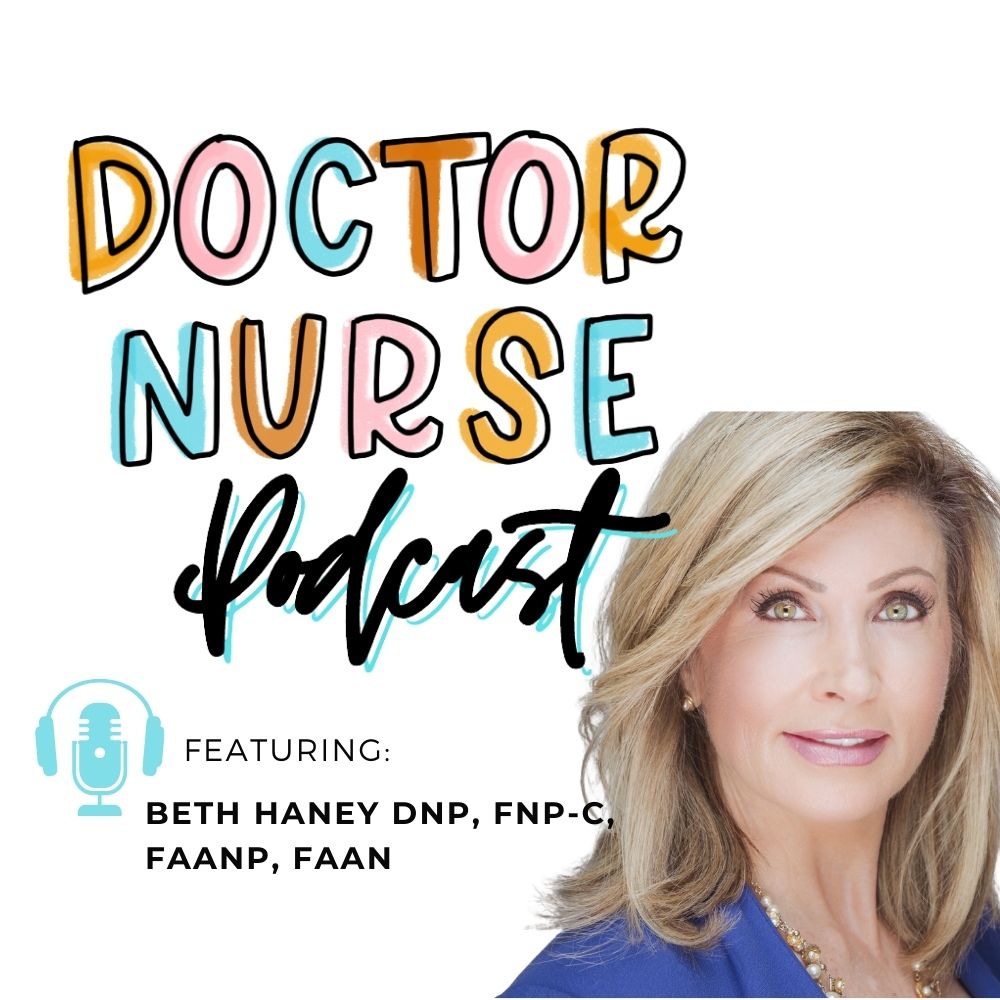
Sandra Pagenta: [00:00:00] Hi guys, and welcome to the doctor nurse podcast. On today’s episode, I have Dr. Beth Haney. She is a DNP family, nurse practitioner, and she’s board certified. She is a councilwoman and the former mayor of the city of your Belinda in 2020. read your Belinda is located in the Northeastern area of orange county, California.
Beth
Is also the owner of a cosmetic company called Lux aesthetic center, which is located in Europa, Linda, California, that she founded in 2006. Her aesthetic business offers a discreet and professional atmosphere that caters to private individuals and celebrity clients.
She’s also helped developed a high-speed laser removal device for a company called luminous. And she is also the author of a book titled B. T4 [00:01:00] looking your best with Botox lasers and other magical treatments. She’s also the current co-chair for the California mayors coalition. She is the former assistant clinical professor at UCI and currently precepts, UCI NP students.
She offers the first ever university. California aesthetic courses for nurses and medical professionals through I’m assuming the college and extension of the college. She is served also on the California association for nurse practitioners as past president. She’s held leadership positions since 2007.
And she’s the former member of the American association for nurse practitioners state advisory committee. You’ve been married since 2003 to your husband, Mike, and that you have two dog babies that are carrying terriers, which that is such a key.
Dog breed all live in Jensen and you like to do [00:02:00] fun stuff, like go outside and run marathons and scuba dive and travel. So you’re well-rounded is what I wanted to say. Welcome. Welcome.
Welcome.
Beth Haney: Thank you. It’s so nice to be here. Thank you for inviting me.
Sandra Pagenta: I wanted to go ahead and dive right in. Let me explain to my listeners what your current job is as counsel, woman, and owner of a business explained really what you do on a day-to-day basis for work.
Beth Haney: Sure. So I’m a current city council woman for your Belinda. And I was elected in 2016. And
just got reelected. I ran unopposed and just got reelected in 2020 for another four year term. And the way that your Belinda is set up and cause some of your listeners might not know this is that some, bigger cities, they have an elected mayor where the, the public directly elects the mayor.
Other cities like your Belinda and many others. We have a system where the public [00:03:00] elects, the five council members, and then the council members elect the mayor for a one-year term. So it kind of rotates. A lot of people don’t realize that because they’re like, well, I don’t know, even know who my mayor is because by the time you figure out the name it’s the next year and someone else is on.
Sandra Pagenta: The council individuals hold their position for four years, mayors are rotated every year. And are the mayors picked from the council members, like from one of them or is it somebody else? Okay.
Beth Haney: know the whole council selects. Like the five, if there’s five members, then the F you know, the five of you would, would select the mayor. So it kind of rotates. It goes around. Yeah.
So that’s, that’s really fun. I serve on the city finance committee, so that’s fun. And then Yeah, our city is just so it’s beautiful.
It’s well run. You don’t have to say so. It’s, it’s great.
And
then my aesthetic business, I’ve had that since 2006 and I have [00:04:00] two nurse practitioners that work with me and one RN and one esthetician and then three office office staff. so it’s, it’s that’s really fun.
And so we do like the lasers and the, the Neurotoxins and fillers and all that.
And in 2020, I actually authored a textbook. For nurse practitioners it’s really.
for anyone, but for nurse practitioners geared to nurse practitioners that go through all of the the treatments and how to do them and the danger zones and things like that. So that’s been exciting too.
Sandra Pagenta: Do you go to speaking events and other things related to the textbook? Or is that just something you just recently completed?
Beth Haney: I finished the textbook in 2020. And so that That’s basically gone through the medical publishing house, which is Springer. They’ve they invited me to write. For them. So That was, that was nice.
Sandra Pagenta: That’s incredible. As I was listening to your, what you do for a living, is there anything [00:05:00] else that you’re involved in currently? Are you also, you’re also teaching.
Beth Haney: No
So that’s what I was going to mention is that I. taught. in the graduate nursing program at UCI from 2010 to 2017. And then there was a little bit of an overlap. I got hired at the UCI student health center in 2015 or so. And so I’ve been doing primary care they’re just one day a week. I also serve as the. The health policy chair for the American association for nurse or nurse practitioners. And then I’m the health policy conference chair for a and P Yeah. there’s all kinds of little things going on.
Sandra Pagenta: So I was going to say, how do you find time for all these things? Do you divide your workup? Like X amount of days I spend on this and how do you divvy it up? How do you multiply yourself to do all this?
Beth Haney: I know it sounds like a lot and it is a lot, but it’s like for example, with the city, there’s we have such a great city staff and [00:06:00] support that. They really help out. And so they,
organized. Basically everything for me. and but they they’re fantastic. And then
like my team here at Lux, they are just as fantastic. I wouldn’t be able to do the work that I can do without them. You can never do anything alone. And but it’s, I’m just so thankful that I have such a great team. Yeah.
Sandra Pagenta: So that’s what, it sounds like a really great team. Explain to my listeners how you got to this specific spot in your career. I know you didn’t wake up one day and become the city council woman and have a great business and everything that you’ve got going for you. That it’s been a journey. And that’s really what we like to feel.
On is especially here at the doctor and his podcast is that, nursing is a journey and to enjoy it. So how did you kind of start? When did you decide to become a nurse and then walk us through the steps as you, have moved into these, these incredible roles later?
Beth Haney: Sure. Sure. It’s kind of, it’s a little bit of a long story, but
[00:07:00] so I was in nursing school at Loma Linda and one of my favorite professors. She was like, Beth, you really should be a nurse practitioner because I was taking nursing to get my bachelor’s in nursing to go to medical school. And she’s like, you really should be a nurse practitioner.
You would be great at it and all this. And I’m like, oh, so I looked into it and I loved it. So I thought, okay, that’s what I’m gonna do. So I became a nurse practitioner and. Then at that point.
I was living in Arizona cause I had moved to Arizona when I was during college. In Arizona, Nurse practitioners have something that’s called full practice authority.
I’m sure you’ve heard of it. It was a no brainer over there. I thought, well, gosh, I’m just going to open up my own little family practice office and start working there. But then of course, as life is, and luck would have it. Good luck on my dad. My husband asked me to marry him. He lives in California, so I moved back to California and.
When I moved back, I’m like, okay, well, I’m just gonna go ahead and open up my own little practice here and, [00:08:00] and start again. And so I called the nursing board, like any responsible nurse practitioner would. They basically scolded me for even asking to open my own place because. Nurse practitioners in California do not have full practice. authority. You must be supervised by a physician. I. Was taken aback. I was like, wait, I can’t why can’t why can’t I open up my own practice in Arizona, but not in California. I better get involved. So I became involved with the California association for nurse practitioners in my local chapter, which was orange county.
So. Orange county chapter. I joined them immediate, just got made immediate friendships. And it wasn’t long before I was president of the orange county chapter of the California nurse practitioners. So I’m going to just say CA and P for on cause it’s such a long title. And so then as I. Worked my way through orange [00:09:00] county.
And I decided, gosh, I’m going to run for a state board position. You know, the CINP state. So long story short, I ended up serving as president there and I was on that board of directors for about eight years. So. During that eight years, I got lots of experience with lobbying and talking to legislators and reading through laws and bill language and learning the regulation phase and all of that.
It was very interesting. So then my time on the CINP board was coming to an end and I was going to transition off. And so I thought, Oh, gosh, well now I have all of these. The legislative experience and made friends in Sacramento, and I’ve got all these connections, what am I going to do now?
Of course, I was still involved with the American association for nurse nurse practitioner. So I was still there and. Participating and engaged with our national organization, but I was just kind of [00:10:00] perusing around and I found out that there were three city council seats that were coming up for election in my city.
And so I thought, well, gosh. That’ll be kind of exciting and interesting. I mean, I have this experience, and I’m a nurse and a nurse practitioner. So I think critically and I based decisions on research and how, what the best outcome is going to be and all that. And we are the most trusted profession in the country.
So I thought, gosh, you know what I think I have the broader picture of humanity in mind whenever I make a decision. So I’m like, okay. The three city council seats were open or available to incumbents were running. There was one open seat. Well, there were seven of us running and I accidentally unseated an incumbent, which was pretty unheard of.
And also I, Yeah.
I did that with a three month campaign because I decided to run. [00:11:00] I decided to run and then it was like, oh, I have to file papers now. Oh, the election is in three months. I better get on it. Well, I had an advantage and I hope some of your listeners can can kind of hear this lesson.
And that is name recognition. Because name recognition really helps you in political elections because people know the name. They don’t know why they know the name they just do. And So, when they see it on a ballot, they go, Ooh, I know that name and most,
Sandra Pagenta: how did people know your name
Beth Haney: because I
have my business? Yes. So I had my business. Yes. I’ve had it for 15 years. So I’ve been advertising in the local magazines and I’ve been featured in the orange county journals and things like that. So it was like, okay. so I had a headstart, so that was, I don’t want to say it’s unfair, but that was definitely a huge advantage.
So if anyone of your listeners wants to run for office, a big thing to do is [00:12:00] just get out into the community. Somehow, you probably already are known through your friends, through your book club, through the women’s clubs, through whatever political organization you might belong to through the dog park, you know, whatever th through the library you can, you know, just get your name and, and your workout there.
And so the app, so that’s what happened with me. And so that’s how I got elected. One of the reasons that I wanted to be elected was because for full practice authority and I’ve been working with a and P for many years
full practice authority in California.
Sandra Pagenta: would you tell our listeners what the AANP is? Because I know because I’m a nurse practitioner, but maybe one of our listeners doesn’t know, like what
Beth Haney: sure,
Sandra Pagenta: is
Beth Haney: sure, sure. So,
Sandra Pagenta: P yeah.
Beth Haney: Yeah.
If you’re a nurse practitioner, you should join a and P if you’re a nurse practitioner in California, you should also join the California association for nurse practitioners, but a and P is. [00:13:00] The American association of nurse practitioners. And so it’s a national organization.
It’s the only national organization for nurse practitioners, that protects our practice and makes sure that we can practice at the top of our license in every state. Of course, we can’t do that because of different state laws. Like for example, in California, we have to work under the quote unquote Superman.
The reason I say, quote, unquote supervision is because most people think that supervision is where someone is in the room and they’re actually supervising your work. But in reality, most nurse practitioners in California, the supervision aspect is on paper and. They may never see their physician. And so the supervisory language is archaic and it’s ineffective.
It does nothing for patient protection or anything. If, if anything, it limits access to, to care because patients. Find a nurse practitioner, unless they’re with [00:14:00] a physician. And if the physician of the practice retires, then they have to close the practice. It’s too convoluted. And it doesn’t allow access.
There’s too many barriers to nurse practitioner practice, which means there’s various barriers to. For for patients. And so a and P is the organization that fights for that. And so what happened was the reason, one of the main reasons that I was running for a public office is because I realized over the years that even nurse practitioners didn’t understand what full practice authority is.
All it is, is basically we are practicing to the top of our license, not wanting to do surgery, not wanting to go beyond what our scope is or beyond what we’re trained to do. We just want to practice and where we’re trained and educated. And so practicing at that level with no barriers, that’s it basically like prescription authority and, and that, so
Sandra Pagenta: in the state of Florida, we have autonomous practice, which is pretty cool. We’re able to. Once you do [00:15:00] pharmacology hours. Once you do a level of, differential diagnoses, you have to take these classes or show a certain amount of hours and proficiency in these, in this timeframe, as well as a certain amount of clinical experience, you can actually, apply for an autonomous practice license and open your own business with no supervising physician.
Which is a pretty incredible feat. Yes, it is a very, yeah, so. Yeah, my brother’s a lobbyists. And so he is a little involved in it and he was explaining it to me cause I was like, what is going on? And, the powers here in Florida, especially our representative Pigman he was pushing he’s an MD and he was pushing for nurse practitioners to get autonomous practice here in Florida.
And the reason that they were pushing for it was because of what exactly you said that access to care opens up. So many doors where nurse practitioners are really able to step in to the full scope of their license and work in that space with no hindrances. And so, yeah, I’ve actually started the process of getting my autonomous practice license because it’s just a matter of work.
You [00:16:00] just have to put in work and now you have this option that if you want to do something like this, you can. And so I think it’s incredible. And, and I’m, I’m interested to hear that during your time as Councilwoman. And, you know, working so closely with legislation in the state of California, have you seen the needle move at all throughout your time?
Have you seen a little less regulation or have, or you’re like, it’s what it was. It’s what it was 15 years ago when I started.
Beth Haney: Oh, no, it’s definitely changed. There’s been incremental steps, different things different laws that have passed, like you know, we can sign off DMV, we can sign off the life sustaining treatments, things like that. But last year we did have AB eight 90 that passed, which is offering.
And I say offering, cause it’s not there yet, but it’s a full practice authority for certain categories of nurse practitioners, depending on how long you’ve been practicing in that. And so now that passed, but it’s now in the regulatory [00:17:00] phase. So they have. The board of nursing has until January 1st, 20, 23, to figure it out.
Like, what is the transition to practice mean? How many hours and just other small details. Because right now it’s not clear. I’ve been a nurse practitioner practicing for 20 years, no, 22 years. And there’s nothing that says, okay, well, all of that experience counts for autonomous practice. There’s no cut and dried.
Sandra Pagenta: Yeah.
Beth Haney: Clear regulation or clear law there. So that’s what they’re working out right now. So it’s definitely made in roads for Sure.
But that reason, for P that we’ve all been working on full practice authority for every nurse practitioner in every state to benefit our patients. But I realized that.
All nurse practitioners, even new at full practice authority was, and some in leadership positions and various organizations were like, well, we don’t even want full practice authority. If we get full practice authority, our physician colleagues won’t talk to us, there’ll be mad at us. And we won’t be able to consult with them and all this it’s like, wait, what?
No, [00:18:00] that is not how it goes. I wrote an article that was published in their national journal on full practice authority, and I wrote it. More of a fun way, not a policy wonky way. It was it’s called I’ll take full practice authority for 500 Alex because it was written in way in an entertaining way instead of, kind of dry policy way.
And so that was, that was good. But then I ran for political office or for public service because I wanted to stop talking to the nurse practitioners because we all know how wonderful we are. I wanted to start talking to our, our patients and our public and our other elected officials at the local level.
And maybe eventually the state level in an official capacity so that they realize what nurse practitioners do. And so, Yeah.
that’s been, it’s been really good. Some of the former mayors had no idea, what nurse practitioners were. So I’m really glad that they’ve, that I’ve gotten to make those [00:19:00] connections
Sandra Pagenta: Yeah. And what I think is really important for my, my audience to hear is that she’s working as a liaison for us, like by going and putting yourself in these positions, you are creating. Bridges, you are creating relationships with people directly where they can understand what we can do and what we can bring to the table so that it makes it easier for the next nurse practitioner to come back behind and, apply for that position or go for that role.
And that is incredible. You are paving the way and you are making it easier for us. And that’s the thing that I find that is why we need to encourage one another because. But encouraging you, we make it easier for others to come behind you. And so we’ve got to rally, we’ve got to just go, keep going because you provide opportunities for us.
And so thank you for paving the way. Just how inspirational, how incredible to hear your journey [00:20:00] and to know that it’s possible. And what’s so cool about when I’m listening to you is just, you think I keep hearing this? Why not me? Why not me? Why can’t I open this business? Why can’t I go into those rooms and have those discussions?
And, and then you do when you get there and you realize that your nursing background actually gives you tools to be good at. Even politics. And so I just think that’s just really cool. Thank you for sharing all that. So one of the questions that I typically ask as well is describing a moment that was a high in your career, a success.
What would you, what would you describe a Zenith and then tell us about a time. That was pretty hard and tough, and sometimes they might actually parlay into one another. But if you could just give us an example of a success and then something that was hard that you had to overcome.
Beth Haney: Boy, you know, I’m thinking you might ask those questions. And so a success, like [00:21:00] a really big moment for me was when I won the election for city council, that was really good because I thought I’m going to be able to promote nurse practitioners in a different arena. And so that was, that was definitely.
Great moment. And then since then, so serving on council has been phenomenal as well because you get typically like we would have to make appointments with our senators and assembly members and. Then go meet with them to lobby about nurse practitioner practice. But now what’s so great is they come to councils.
They want to know how their cities are doing. So they ask us for appointments and then we get to tell them what we want. And every time I say, oh, by the way, you know, I’m a nurse practitioner. Right. And so we lead, you know, I hope you’re voting this way in this. And so it’s, it’s been, it’s been great. But Yeah.
some of the, or one of the lows that just popped into my mind was when I was president of the California association for nurse practitioners.
And we were really fighting hard for [00:22:00] SB 3, 2, 3, which was another full practice authority bill, that one failed. But
it, it was a great learning learning time for, for all of us really, but it, it. Was so weird because the opposition was printing out pictures, my picture and putting it on legislators desks and saying, see, all nurse practitioners want to do is open up meds.
And so I was like, what? I mean? Yeah, it was really crazy. And then I flipped it around. I thought, well, that’s great because now all these legislators know who I am. This is perfect because that wasn’t true. That nurse practitioners just want to open med spas because those people were like, it was So ridiculous.
Cause I was teaching, I was in primary care and it was like, that was, it’s such a lie. So it was awesome actually. So it turned into a good thing actually.
Sandra Pagenta: So it’s like all press all. Press is good. Press.
Beth Haney: Yeah, you can make it [00:23:00] good. I suppose
Sandra Pagenta: Exactly. Oh my goodness. It makes me feel like it’s like very house of cards. I mean, I don’t really have much experience in the political arena, but it sounds very like, just like back alley type stuff, like to have my picture printed on stuff. I don’t know.
Beth Haney: oh, it was, it was so sneaky and weird, but.
Sandra Pagenta: So those are good ones. Thank you for sharing those. And along your path, one of the big things that I’ve been noticing in nursing, that’s missing. Is mentorship. I just feel like nurses are really kind of disconnected and I think it has a couple reasons. I think women in particular, don’t do a really good job of mentoring one another in general, just in life.
But then I feel like also there’s the element of everyone kind of goes into different specialties. And so I don’t, I think people are also just super busy and there’s that aspect of the role of a woman. And there’s just so much you have to do, but, but then also. The different specialties and everyone’s [00:24:00] doing something different.
So it’s hard to kind of find people that are doing certain things, which is why, again, I want to highlight these careers that people can see them. Cause we just don’t know what the other hand is doing. Like the left hand doesn’t know what the right hand is doing. So I want to show them like, this is what they’re doing, you know?
But did you have anyone that came along the way and mentored you at all?
Beth Haney: Professors, of course in my earlier career, I had a my first job as a nurse practitioner, the physician Dr. Douglas hade he’s family practice, he was, he was awesome. And he was just he was someone that I could look up to. He was so smart and friendly and he loved his job and he loved people and he loved, his practice.
And so he was. He was a great mentor. Unfortunately he passed away a few months ago. But he was fantastic. And then when you say that about women mentoring, I agree with you, because we’re all so busy. We have like, not only our careers, but we’ve got, you know, a lot of people have kids or they [00:25:00] have other things that they’re doing.
But I’ll tell you two of my greatest mentors. One is Suzanne Phillips, Dr. Suzanne Phillips. She is An associate Dean at UCI and her, and I have known each other for over a decade. She’s a really good friend of mine. She mentored me for the policy stuff, like kind of got me in with CA and P towards the more policy and legislative things.
And then Dr. Susan T-cell, who’s also a DNP. She’s a professor at UCI and she’s the one who got me hired at UCI. And we’ve been friends for over a decade. And so the two of them really, really helped out. Th there’s so many to name, but Jill Olmsted was a mentor through CA and P and I just have so many great friends that, that I’ve made.
And so that’s another plug I wanted to say is join your professional organizations. If you haven’t already, they provide friendships, networking, information, [00:26:00] education, and experiences that you won’t find anywhere else. And because of those organizations that, they help lift.
Along the way to wherever it is, you want to go?
Sandra Pagenta: Yeah, that’s really good that networking. And I think that what you’re, what you’re describing is being very intentional and I’ll just put a little caveat that like, if you want certain things in life and there’s certain places you want to go, you need relationships.
And so being really intentional about building those relationships. Is paramount in order for you to get to where you want to be. And again, I hear time and time again, as you’ve been talking, this person introduced you to that person, which got you to this person. And then you, not all of a sudden, you’re talking with people in Sacramento and, and so you’re creating these relationships and that doesn’t happen by staying at home and not talking to people that happens through being intentional and getting out there and making friends.
Beth Haney: One other thing I just wanted to point out really quick is that I am so proud of the students that I’ve taught through the years because they’ve [00:27:00] gone on and. They’ve told me I’ve motivated them to get involved in their organizations. And so a lot of them are on state leadership and orange county leadership, which is great.
And that’s the biggest gift for me is to give back and watch people grow that that maybe I’ve talked to or whatever I don’t even need to. I mean, if anyone wants help, I want to help them get to wherever they want to be. And I just super quick. My husband, I just watched a documentary That’s called 14 peaks, and it was about a Nepali team who went and climbed 14 14 of the tallest peaks in the world.
They’re all over 8,000 meters high. And the thing is, is that he, the leader NIMS, he went to the top of, and summited these places where nobody has gone before or not for many years. And he actually laid the ladders or created the trail that others behind him can go up easier. And that was, that was one of his.
[00:28:00] Glorious moments as he realized he’s like, because I did that, people were able to climb this mountain after me. And so that’s, that’s the other thing is that yes, you can get to the top of the mountain, but you’re going to have to do the work. Someone might help you, but you’re the one who’s going to have to do the work and it’s definitely worth it.
And it’s very fun.
Sandra Pagenta: Beautifully said beautifully said. So two more questions and then I promise we’ll be done. I just wanted to know what’s one of the most worthwhile investments you have ever made.
Beth Haney: Besides in my education.
Sandra Pagenta: Yes. Besides in your education. So after you finished your doctorate, which I wrote it down, you finished your master’s in 2000 and then your doctorate in 2010. So since then, what has been one of the things in your career has been the best of your best investment?
Yes, ma’am.
Beth Haney: The best investment is in my students, my former students I’m seriously so proud of them. They’re they’re just fantastic. It’s so that my investment in them, just to be in standing in [00:29:00] front of the classroom and teaching them the subjects it was yeah. And for what they’ve done, I’m just so proud and so proud of that.
So, and then also again, my organizational investments, the time, and contributions to them, it’s been, yeah. Great.
Sandra Pagenta: Awesome. So last question. What advice do you have for a new nurse starting off in her career? She’s just finished her bachelor’s degree. Maybe she just finished her master’s degree is thinking about opening a business who knows the world is her oyster. What would you say is a piece of advice?
You wish you would’ve known sooner and a piece of advice you tell her to toss sooner toss
Beth Haney: so sooner So the toss.
one is don’t listen to others that are discouraging. You just, if you want to do it, just do it just, but the thing is you want to take the steps to get to your path. First off, most important is you want to. And understand for yourself, maybe write it down or say it in a mirror or whatever it is you need to [00:30:00] do.
Why do you want to do this and what exactly it is you want to do and what are the outcomes you want to happen? And so once you get that figured out, you can do anything. If you want it to open a business. Like what I did was I went straight to the small business association. I’m like, okay. Or administration.
It’s like, okay, What forms do I need in California or Arizona or wherever you are, what forms do I need to figure out or fill out and then kind of create your path that way and get a good team like your attorney or accountant or friends. You know, there’s lots of NPS that are also accountants or attorneys.
And, and so you can find another colleague that maybe has a dual profession
Sandra Pagenta: Yup.
Beth Haney: that going yet. So just
Sandra Pagenta: So
Beth Haney: know what you want to do and take the steps.
Sandra Pagenta: got it. And don’t let anybody tell you that you can’t do something.
Beth Haney: Yeah, no.
Sandra Pagenta: I love it. That’s a good place to stop. So for the last [00:31:00] part of the interview, it’s the rapid fire questions, questions, questions. And so what I do is I ask you really quick questions and I get kind of the nitty-gritty of certain things that you may or may not want to share, but just got to go fast or go, here we go.
What’s your favorite cosmetic procedure?
Beth Haney: I think fillers, his fillers it’s SU it’s very artistic. It’s very artistic. Yup. Good
Sandra Pagenta: Okay. Cool.
Beth Haney: Yeah. And good hands and good hands.
Sandra Pagenta: Capable hands. So what is something you hope to be doing in 10 years?
Beth Haney: Oh, boy. Gosh, I don’t know. I have visions of keeping involved with public service and nurse practitioners. So I, I’m not exactly sure. I would love to lead a and P someday. I’d love to serve in a state legislature and
love to serve, you know? Yeah. [00:32:00] Yeah. So. But
continue to contribute to society. Yes.
Service. Yes,
Sandra Pagenta: I love that. And what is, if you had to take a vacation tomorrow, where would you go?
Beth Haney: Iceland.
Sandra Pagenta: Iceland?
Beth Haney: Yeah. That’s awesome. There we’ve been there one time and it’s beautiful. We went diving Scuba diving. there. Oh my gosh. It was phenomenal.
Sandra Pagenta: diving. Oh my God. I’ve been scared. I’ve went stupid. I went scuba diving once. And if you feel like an astronaut, like, like walking or your flow, right.
Beth Haney: Yes,
Sandra Pagenta: Yes. You really? Yeah, it’s really cool. I only did it the once. And then I started to kind of feel a level of anxiety.
I was like, I don’t know if this is free. This is, this is but it’s still pretty cool. I encourage people to try it. It’s it’s definitely something interesting. Well, thank you for coming on today. Thank you for your time and
Beth Haney: much fun.
Sandra Pagenta: I hope you had a great time. I enjoyed having you on. So I learned a lot, [00:33:00] guys.
Thank you for listening to the doctor, nurse podcast and check out Dr. Haney. She is located on, like LinkedIn. That’s where I found her. I legitimately was just looking for nurse practitioners that were involved in politics. And so I found, I stumbled upon her page and she just so graciously offered to come on and chat with us today.
So I’m so thankful. But that’s where I found her. Is there any place else where others can find you if they are wanting to reach out and maybe ask you questions or have a conversation with you?
Beth Haney: Oh, yeah. So on the city of your Belinda website, my email, everything is there. And then I’m also on Facebook. I have a personal page on Facebook with just my name, Beth Haney, and then also my Dr. Beth Haney, Councilwoman Facebook page and then Instagram. And I have to say though, I just deleted my Twitter account.
So that is normal. I
Sandra Pagenta: Oh, goodness. Okay.
Beth Haney: Yeah,
Sandra Pagenta: Yeah, I would imagine anything you [00:34:00] drop with social media. I lost my Facebook account and so it was actually really nice to be without it because I wasn’t checking it and I felt like I could actually get other stuff done. So I agree with you. It is very freeing. But guys, that’s where you can find her, check her out if you want to reach out.
And again, thank you for your service for our profession. You’re making a difference. So keep climbing mountains.
Beth Haney: Thank you.
Podcast Description
Council Member Dr. Beth Haney serves the community with the goal of promoting communication, health and safety, and homelessness awareness. She is also a strong supporter of responsible growth for Yorba Linda, meaning preserving open space, trails, and public areas while enhancing vital business opportunities for the benefit of the community. Dr. Haney was born in Anaheim and grew up in Placentia until she and her family moved to Yucaipa when she was 12 years old. She has been a Yorba Linda resident since 2005.
CAREER Dr. Haney is a board-certified family nurse practitioner. Since 2006, she has been the owner and founder of a private aesthetics and wellness practice in Yorba Linda and is well known in the industry for her expertise and regulatory acumen; consequently, serving as an expert witness in a variety of legal cases in both primary care and aesthetics. She has many years of experience working with stakeholders in Sacramento and Washington DC regarding legislation affecting health care and nurse practitioners. She is a former Assistant Clinical Professor of Nursing Science at the University of California, Irvine (UCI), where she developed the first and only UCI inter-professional aesthetic courses for health care professionals. Additionally, she lectures at state and national conferences on primary care, aesthetics, leadership, and business. EDUCATION Dr. Haney received her Doctorate in Nurse Practice (DNP) at the University of Colorado, Colorado Springs in 2010. She graduated from Loma Linda University with her undergraduate degree (1995) and Master of Science Degree in Nursing (2000).
PERSONAL Council Member Haney and her husband, Mike, have been married since 2003 and have two adorable Cairn terriers, Olive and Jenson. Beth and her husband enjoy the outdoors and spend time in high elevations of the John Muir Wilderness, run marathons, scuba dive, and travel.
REGIONAL GOVERNMENT / COMMITTEE INVOLVEMENT California Mayors Coalition, Co-Chair and Founding Member City of Yorba Linda Finance/Audit Committee. Orange County Mayors Coalition, Founding Member Orange County Waste and Recycling Commission, Member and Former Chair Trauma Intervention Program.
COMMUNITY SERVICE American Association of Nurse Practitioners, Southern California Representative California Association for Nurse Practitioners, Past President Financial Partners Credit Union Board of Directors, Associate Director Orange County YMCA, Board Member (2014 – 2018) Placentia-Linda Hospital Governing Board, Vice-Chairman Headed the National Nurse Practitioner Week proclamations in 19 of the 34 OC cities and the OC Board of Supervisors from 2017 to the present.
ACHIEVEMENTS & AWARDS Inducted as a Fellow of the American Academy of Nursing for her work in advocacy, policy, and education (2021). Recipient of the 2020 Inaugural HealthImpact Daisy Nurse Leader Award in Policy. Inducted as a Fellow of the American Association of Nurse Practitioners for her work in policy and education (2016). Authored a textbook for nurse practitioners titled Aesthetic Procedures: Nurse Practitioner’s Guide to Cosmetic Dermatology (Springer; 2020). Author of Be You-T-Full: Looking Your Best with Botox, lasers and other magical cosmetic treatments (2012), a book on aesthetic procedures. Recipient of University of California, Irvine’s Faculty of the Year (2013). Author of two chapters in Dermatology Nursing Essentials: A Core Curriculum, 3rd Edition (Wolters Kluwer, 2016). Author of several peer-reviewed articles for advanced practice journals.
Dr. Hanye’s Council Member Site: https://www.yorbalindaca.gov/193/Council-Member-Beth-Haney
Doctor Nurse Podcast Links: https://linktr.ee/DoctorNursePodcast
Latest Episodes
Doctor Nurse podcast brings you weekly shows to help INSPIRE, EDUCATE AND EMPOWER nurses with true stories of initiative and impact.
Doctor Nurse podcast brings you weekly shows to help INSPIRE, EDUCATE AND EMPOWER nurses with true stories of initiative and impact.
Latest Episodes
Doctor Nurse podcast brings you weekly shows to help INSPIRE, EDUCATE AND EMPOWER nurses with true stories of initiative and impact.