Also Available On






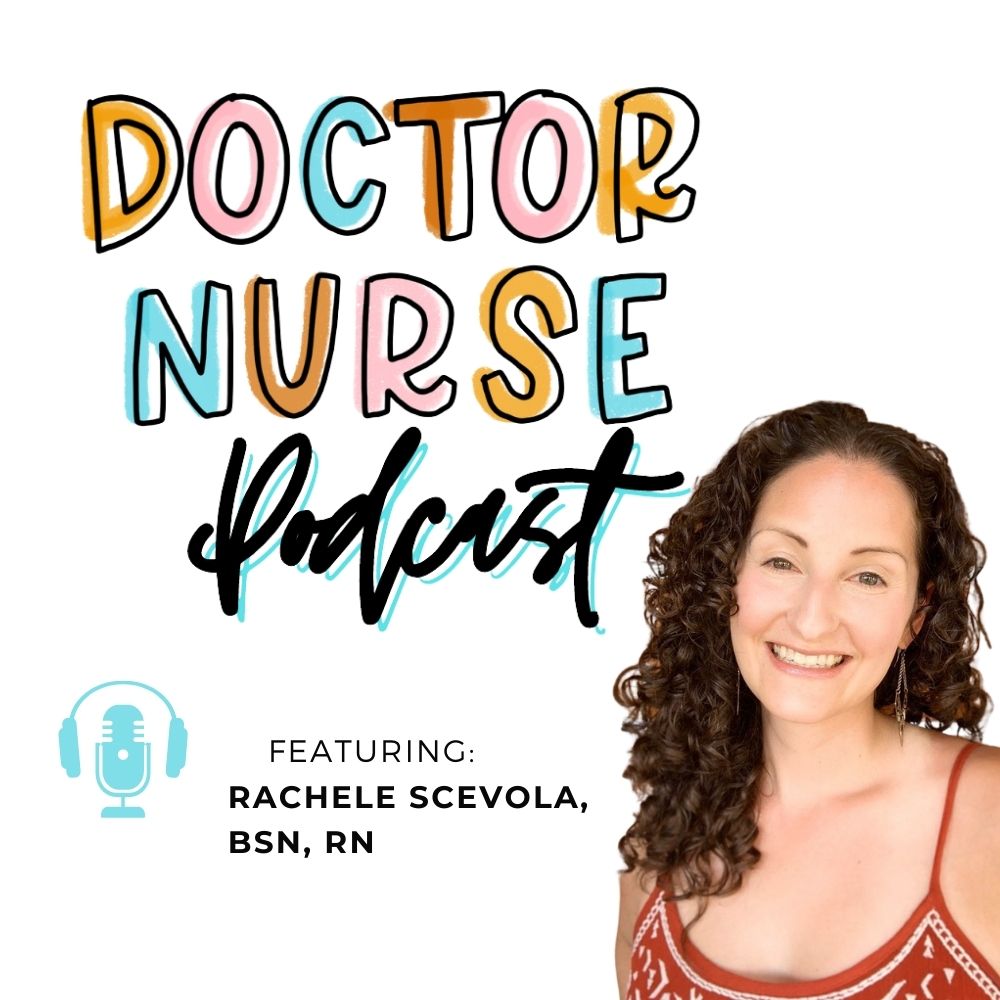
Sandra Pagenta: [00:00:00] Welcome to the doctor nurse podcast. Today. I have the breath nurse, Rachel Scevola. She is a BSN RN certified breath work facilitator whose passion and mission is to help nurses, healthcare workers, first responders, anyone desiring to change her life with the help of the breath and channeling the breath with over a decade of bedside nursing experience Rachel’s own health journey led her out of nursing and into understanding the healing power of. After graduating in 2010, she was recruited into different neurocritical care jobs at a large hospital. She went on to work in the ICU neuro surgical ICU and other high acuity step-down units. In addition to trying to not non-hospital positions until her final departure from the hospital setting in 2020, she’s lived through severe burnout, compassion, fatigue, PTSD, [00:01:00] and suicidal ideation, coupled with chronic health issues that have stemmed from a childhood that were exacerbated by her career, and now thriving by staying connected in the nursing community and helping those in a new way in a new role.
Welcome Rachel. So happy to have you on thank you for your time.
Rachele Secvoda: Thank you.
Sandra Pagenta: let’s dive right in. All right. So explain to our listeners really what your job title is these days and what you’re doing for a living.
Rachele Secvoda: I am a certified breath facilitators. I full-time guide people through breath work using the power of their breath in order to tap into their subconscious minds and really clear any stored emotions and trauma, living beliefs, stuck mindsets the works so that they can go on living their life, feeling freer and clearer, and really step away from a lot of the daily stressors that we experience as well as [00:02:00] just overwhelm anxiety, depression, the works really the benefits to breathwork are really, really endless. it’s much more than just a career change. It’s really a passion project of mine.
Sandra Pagenta: For your current job, what does that consist of working with healthcare professionals, nurses to do? What what do you do.
None: yeah,
Rachele Secvoda: it’s really hard to explain.
But I’ll do my best to explain it. So I work with nurses, other healthcare workers, first responders, really anyone who desires to transform their lives. And I work with them guiding them through breathwork sessions, which breathwork is another thing that’s kind of difficult to explain, but breath work is a really broad term for various different breathing techniques and practices that help us tap into our subconscious.
Breath work really dates back to ancient times, and most people are familiar with prawning on the breath work techniques with the popularity of yoga in our modern day society. Most people are familiar with that type of breathwork, but the [00:03:00] specific type of breath work that I typically guide is called the reset breath work method.
And that is a three-part conscious, connected breathing pattern. That also combines the use of just a, an entire journey, really unmusical journey. The use of affirmation. So declarations you know, I am freezes to tap into the subconscious mind and release trapped emotions and trauma step mindsets, limb limiting beliefs and really reset our nervous systems because it has the ability to do that and really elevate our state of beings.
That again, we can go on living, feeling freer clearer than, we typically, so there’s a lot of science behind breath work. It’s really gaining popularity right now. It’s just so incredible to watch it blowing up the way that it is, because there really is just so much behind it.
And just so many benefits and. They’re really the biggest ones, me being that we can reset our nervous systems with it. We can actually tap into our vagus nerve so we can [00:04:00] tap into our nervous system in order to reset it. We actually can really fall more into a parasympathetic state, which is our rest digest, relax phase.
Whereas most people in healthcare, living in a sympathetic state, just because of the nature of, the working environment and the job itself and everything that you’re doing within that,
Sandra Pagenta: I’ve done a little bit of research in breath work as well, because I have seen that it is taking off as this , new way of embracing your health and keeping you centered.
And one of the things that I learned, and one of the questions I have for you is so why can’t what’s wrong with being in the sympathetic and not being in the parasympathetic?
Rachele Secvoda: I don’t want to say it’s wrong because we all go through those states on a regular basis, our bodies are wired.
We are created to be able to move between these different states. And I could give out even more into it, like polyvagal theory and everything. The sympathetic state is the fight-flight [00:05:00] or freeze state. It’s that feeling wound up. It’s that feeling even sometimes frozen, we’ve probably all experienced that frozen, unable to.
To really do what we want to do, feeling super overwhelmed. And then also feeling really like wired, like always feeling like very on edge. And we tend to be in that, especially in the healthcare fields, because we are running off of stress hormones inherently because of the environment we’re working in the cases we’re dealing with, the fast paced nature of it, the life or death situations really throw us into this sympathetic state.
And that’s okay because we need that at the time. We need that in order for all of our senses to kick in for us to act appropriately and quickly. But at the end of the day, we don’t tend to fall out of that again. So when we are dealing with chronic stress and trauma, like working in a healthcare setting we really can’t get out of that necessarily.
It becomes sort of like we’re stuck in that state and that’s [00:06:00] when it starts to become an issue. And so working towards going more into the parasympathetic state allows our body to actually rest digest, relax so that we can get back to equilibrium. I think it’s a lot of people in all different industries and all different walks of life that are dealing with being stuck in that state.
And so that’s sort of the whole point of breathwork is to get you out of that state so that you can move forward
Sandra Pagenta: with, I heard it said that it’s like being chased by a tiger. We stay in that state of being chased by a tiger and we don’t ever tell our body like, okay, there’s no tiger. You’re safe. You’re okay.
And so the breath work is what really helps kind of pull you out of that. Like you said, the fight or flight and it is you’re right. It’s not wrong. We need it in order to protect ourselves from the tiger, when the tiger is there, we’re sure, glad that we’re able to kick in and take off, but it’s in those moments where we’re supposed to be resting, we’re supposed to be, calming ourselves down that we just stay in [00:07:00] that heightened state and you can’t be like that all the time.
You can’t be chased by the tiger the entire time of your life and your existence. I love that. Yes,
Rachele Secvoda: it’s not the goal. And I lived like that for years as well, because eventually you burn out and you have all these other issues that pop up all kinds of medical issues. You know, we can really link our health to our emotions.
And just like you were saying, like being chased by a tiger in the wild. If you survive being chased by a tiger, you stop at some point when you’re safe and you usually freeze in place and have almost like a seizure and you shake it out, you shake all of them off and you move on with your life. As, as humans, we don’t have a way to do that.
We really don’t have a way of doing that. And so breath work is a way for doing that. Breath work is a way to really reset the nervous system and it actually can create new neural pathways as well. So it can totally change the way we think over time. Yes. And the
Sandra Pagenta: way you process, that’s amazing. That’s, that’s incredible.
What you’re [00:08:00] offering is resetting people’s nervous systems, which we’re finding out more and more the nervous system. We don’t even know how it was reacting. Now there’s a study that just came out that said that Ms is being linked to Epstein-Barr. It’s just very interesting to me like that this is something that, we need to dive into and we don’t really understand. Tell me a little bit about your journey, Rachel T to this point in your career, what’s taking you through, I kind of alluded to it a little bit, but really walk me through the moment you decided to be a nurse.
And then as you walk through these different, you know jobs, how the experiences really shaped you into the deciding. I’m going to go do this breath work full time.
Rachele Secvoda: Yeah. So I’ll give you the abridged version because it’s so long. Essentially I’m adults who survived childhood illness.
I was chronically ill as a child with mysterious illness. It was one of those cases that no one could figure out for years and years and years. And you know, eventually I was diagnosed with chronic late-stage [00:09:00] neurological Lyme disease, got treated, et cetera, et cetera. I had mano very young, so Epstein-Barr is definitely a part of that picture as well.
But you know, just dealing with chronic fatigue and. Honestly, feeling burned out even before I became a nurse, just feeling burned out, like trying to survive as a kid and dealing with a lot of medical trauma. It wasn’t until actually I left bedside so much more recently that I realized that becoming a nurse for me was really a trauma response.
It was a response to. To try and understand my body, to wanting, to be able to advocate for myself, to wanting to have the respect of being heard, being listened to really when I went to these appointments and no one could really figure out what’s going on with me. I went into nursing, you know, not really realizing subconsciously that it was to try to really heal myself.
And so that’s how I stepped into my career. And I was recruited directly into neurocritical care, started at a large university hospital setting. And within the first year [00:10:00] was feeling really, really burned out. I was doing rotating shifts and it was really difficult on my body. I still wasn’t very healthy.
You know, I took care of myself, but I was dealing with this chronic fatigue issue really for as long as I could remember. And then that really started my quest. You know, I actually looked into working for an alternative medicine clinic at that point. And so within the first two years of my bedside nursing career, I actually walked away from bedside temporarily for a few months, worked at an alternative medicine clinic.
It just wasn’t a good fit in the end. And I ultimately went back to, to the bedside and was recruited into neurosurgical neurotrauma ICU at that time. And thought this is great. This is a change. I think with every change in my job, in my environment, I always felt a little bit better for a while.
Right. And so I started in that and, you know, don’t get me wrong. I, there are huge aspects of nursing that I love, especially connecting with [00:11:00] patients. Some of the trauma stuff is really fun and exciting, but it really did a number on my nervous system. I always felt wired. I always feel anxious.
I was really stuck in that sympathetic nervous system state. And this was only, not even four years into it. So I actually ended up leaving the ICU setting after about two years and became a travel nurse. And just by fate ended up leaving the ICU completely. I had a contract initially for a trauma ICU and that fell through because my licensure for California didn’t come in as quickly as it was OHSU.
So I lost my initial contract and then got hired into a progressive care intermediate intermediate unit settings for travel nursing and went to California, ended up staying there for over six years and really just ended up working in intermediate and progressive care settings, high, high acuity setting bill you know, but it was, it was not the ICU anymore.
During that time, my body just started to fall [00:12:00] apart even more. And I actually ended up getting diagnosed with lupus and having a cancer scare and all kinds of stuff. Everything was just my whole body was falling apart. My thyroid stopped working. I had to go on thyroid replacement and I actually tried to leave bedside again.
I left her about seven, eight months or so I worked in a corporate setting and again was not a good fit. I just kept searching. I knew that I wasn’t following my soul’s calling, but I didn’t really know what it was at that point, and I was just really moving through the motions. I was honestly just in survival mode for so long and.
Somewhere in there. So about four years ago, I discovered breath work. I actually went to a yoga festival with a friend. It was, I can remember some big bear California up in the mountains and there’s this free festival. And I signed up for a workshop that involves breath work. And I had no idea actually, initially there was even any breathwork involved.
I had no idea what breathwork even was and. Did the workshop and my mind was [00:13:00] blown. Like I was not the same person after that one session. And I proceeded to go to another seminar after that, that was also breath work, not knowing that you shouldn’t do long sessions all in a row beginner. And it really, again, just like blew my mind.
And I had all these feelings and sensations in my body that I’d never felt before. And it honestly just felt so grounded and so centered, just, so different from what I was usually feeling, being stuck in that survival mode that I really was just floored and wanted to know more. And so I pursued breathwork and I ended up doing private coaching for breathwork and then continued to do a lot of classes on breath work for over four years.
And it was really the only tool that I kept going back to, to really get through the most difficult times that I was going through it. It was the only thing that really helps me feel like I could at least get into that parasympathetic state for a little while, at least between [00:14:00] shifts. And so I continued to do it and, at some point, I mean, I fully, I guess it was probably around, within pandemic happened, I had been dealing with some depression and suicidal ideation even before the pandemic and really was doing everything possible to mitigate that again.
It’s like my whole body was falling apart. Work was stressful. I didn’t know what I wanted to do. I had no plan and I just felt very, very trapped. And so those feelings started to come up and so I was suicidal for the better part of a year and a half. More on and off. And again, doing everything I possibly could to mitigate that.
And breathwork was a huge part of that, but ultimately with the pandemic and everything that happens after all of that started, I just felt like, I didn’t have a chance really to stay in bedside. I had to walk away. It was really a life or death situation for me at that point. I was very aware of what was going on.
I was very aware of, the fact that it was just the stress, really. It [00:15:00] was the stress and the environment and the acuity and the fact that I never really had an opportunity for my body to recover between shifts fully. So I was just running on fumes constantly. And so I did eventually walk away at the end of October, 2020.
I didn’t really tell anybody what was going on. Only the people closest to me really knew how I was truly feeling and walked away without a plan, which is not something I would recommend for anyone. But for me it was, a desperate situation. And I just, I really had to trust in the universe. I knew everything was going to be okay.
I knew I would figure it out and I knew I just needed the space and the time to do that. And that wasn’t going to happen if I was, you know, going to work struggling. And then also really just hiding how I was really feeling. And I still felt very confident, competent in my position. I made sure that I went to work in a mind state that, you know, I could take care of my patients appropriately and do my best because [00:16:00] I think when you’re feeling that way, you’re your worst case scenario is like at, hurting someone or doing something, you know, messing up because you’re not in the mind state.
So I was really, really careful about, you know, my performance and self care outside of work and all that, but it didn’t really change how I felt ultimately. And when I did leave, I just. Really took care of myself. I dove right into even more intense self care and really just changing my diet around, experimenting with all kinds of things, having to do with my health and breath work was something that I was still continuing to do.
Because it’s been in my toolbox for all these years and it was during one breathwork session that I came out and was just like, why am I not doing this? This is what I belong doing. This is my passion. It has been for some time, you know, I want to share this with the world and. I can only imagine what my career would have been like if I’d actually known about breath work from the beginning, because I might have discovered it, it was, it was a [00:17:00] situation where it almost felt like it was too late to really, you know, out of the burnout.
But I know that it
Sandra Pagenta: it’s like whenever you’re treating pain, they say like, don’t let it get too far ahead. Cause then you try to chase it and you can never catch up. So like treat, preemptively to keep the pain at a like a threshold you can handle it. Cause it sounds like your pain and we’re going to use pain as kind of, and I figured two way of dealing with all the issues on the bedside.
And correct me if I’m wrong, but it sounds like the pain of what you were dealing with with childhood trauma and work, kind of bringing that back up. Now , you’re at a place where you’re, you can’t catch up. Like you can’t, you can’t catch the pain to make it stop even with the breath work. It was a bandaid on a really tough situation. And I’m so sorry that nursing has exacerbated and exacerbated. Yeah, just such with the pandemic and isolation and all these things that we were all dealing [00:18:00] with really has exacerbated that in a lot of people.
And I think a lot more people are going to connect to that than you realize, because one, it takes huge courage and huge vulnerability to even say that you were dealing with those things. And then I also think that there are a lot of people out there. Echo and know exactly how it is that you’re feeling.
They’re just waking up going and they’re in this survival mode. I think that’s amazingly brave to say what you’re saying and that you pulled yourself out of it, that you were able to get out of it with these techniques. What I was interested when I, when I saw your page on Instagram and I reached out to you, it was because I have been doing, you know, learning a lot about, like I was telling you, Wim, Hoff centered breathing, kind of getting that awareness back.
And I thought, you know, it’d be really neat for our listeners, even if they were like sitting at home right now. And they were like, so, okay, well, how does this even work? Is this, does this even work? This just sounds like a bunch of , Hocus Pocus. I really thought it would be cool [00:19:00] to do a session with you, a short mini session where if somebody wanted to listen to the episode and they said, okay, I want to try it, that we could do it together today.
And that it could be something small that we could do. I think you said five minutes worth of breath work today on the, on the podcast and that you could sit and they could see really what it is that you offer. They can see if it works. What do you say? Yeah. Okay. Let’s do it.
Breath Work on YouTube video.
Very cool. So one of the things that came to my mind when I was doing my breath work, cause that’s also, it clears your mind and then you can see other little thoughts and little things that you had in your, subconscious that might have been there.
What training did you do specifically for this.
Rachele Secvoda: Yeah. So I went through an intensive eight week breathwork facilitator training course that went over everything from the science and mechanics of breath, work to the history of breath, work to how to facilitate and hold safe space in a trauma informed way.
So I am also considered [00:20:00] trauma informed as well. You know, just all the nuances that come with breath work, because it sounds really simple, but there are some things that can happen that you should be prepared for. And also you’re dealing with people’s emotions, you’re dealing with people’s trauma, and you don’t want to not know what you’re doing.
You don’t want to not know how to, how to create a safe space and environment for people who are in a really vulnerable place doing breath work, because the longer we do this practice, we didn’t totally get your point yet in today’s practice. But it’s designed to create an emotional release it’s designed to release out of your body.
Whatever is stored in there that needs to come out and you don’t, we don’t know what it is, half the time. And sometimes we don’t even know why or you know, what the memory is. And it really doesn’t matter what matters is that you’re clearing it. You’re creating space for something new, for something better, but you can have an emotional release.
And so having someone who is trained to handle that and to hold space for that is really, really important because it’s. The most important [00:21:00] thing to me and facilitation is you feeling safe with,
Sandra Pagenta: So for my listeners, if you’re struggling with suicide ideation , both of us, Rachel, and I want you to go get professional, help a hundred percent, don’t attempt breath work and hoping that it’s going to fix anything. but on the other side, I do want to know how these things have helped heal.
What I would imagine would be one of the worst things you had to overcome in your life.
Rachele Secvoda: I just want to piggyback on what you just said. I definitely do not consider breathwork to be a cure for anything. I consider it to be an amazing tool that can really transform your life.
But, well, I was going through my suicidal ideation. I was under the care of a therapist, a physician, and doing lots of other things that my physician and therapist also knew about. So I didn’t do anything on. Breath work really just helps me move through and it’s continued to help me move through a lifetime of trauma.
None of us get through this life, life unscaved [00:22:00] we all experienced trauma. And I think a lot of times we think of trauma as it has to be some like horrific, crazy events that happen to us or that we witnessed in order for it to be considered trauma. And that’s not true. We all experienced trauma. It could be anything from being made fun of as a child, by your schoolmates to, you know, something really horrific, like a car crash or abuse or something like that.
So we all experienced trauma and we all store emotions in our body. So our thoughts are the language of our mind and our emotions are the language of the body and that’s all stored in our body and those emotions and that trauma can contribute to burnout. Number one, But also down the line, chronic illness and disease.
And I don’t think that we really pay enough attention to that, especially in the healthcare system. I really wish that emotion was something that we started to address because so many times I would have patients who’ve been dealing with these chronic illnesses or even just a new cancer [00:23:00] diagnosis. And then they have all this other stuff going on in their lives that they start to really divulge to you as their nurse.
Right. And it really just gets you thinking, how much of what you’re going through is related to emotions trapped inside your body versus just a physical element. I always think that there’s more disease and illness is multilayered multifaceted. And I really hope at some point we start to really address the emotional needs of patients beyond just what we say is support with yeah.
Chaplain services are great. It’s amazing to have someone to speak to and someone to pray with. What are we doing to help people get those emotions out of their body and breath work is a great way to do that. Nursing and breath work combined was really the catalyst for me to make a change in my life.
It’s not that I didn’t enjoy aspects of nursing. It’s not that I wasn’t good at it because I was great at it. I could have done it for the rest of my life, but it really, what breathwork really did was it woke me up to the fact that I really wasn’t living to my soul’s potential and [00:24:00] calling and that there was something bigger for me.
And breathwork is a way for me to still help people in a completely different way. Breath work really shows you what’s possible. And it really opens you up to the world of we heal ourselves, you know, in healthcare. I think we like to think of the fact that. We heal people through our interventions. And I guess that’s true in a sense, but we also are neglecting the fact that we have this power within us to really, heal ourselves.
And breathwork, isn’t the only modality to do that. But it is a huge one and it has so much potential because of the science behind it. And the fact that you can truly tap into your nervous system, which there aren’t very many ways to do that, generally, that we can. You know, really manually access that.
Sandra Pagenta: I agree with everything you said, and time and time again, I’ve been in these interviews with nurses and like you said, thyroid disease, cancer, and you hear about how stressful the career is. And we all have thought, [00:25:00] oh, it’s fine. We’re doing fine. I leave work at work.
And it’s like, no, like these things that we’re dealing with at our jobs, they’re manifesting themselves in ways that we would not have thought. I believe that is in disease. I believe that is in burnout. It’s coming out in different ways. And one of the things I love about what you’re sharing is.
You aligned your passion for helping people, which is what drove you to be a nurse and what drove you into the field. But now you’re finding another way to do that in a way that is healthy for you. That’s really the heart of what I want out of this podcast is for people to hear that you’ve got to learn how to align nursing with your passions and with the lifestyle that you want. And it’s a ticket you can get there. It will help you get there. There are things in nursing that will help you learn how to do other things.
You are a beautiful example of how, you know, and understand the body and you understand healing and you [00:26:00] understand people. And now you’re going to be able to merge that with your breath work, to really begin to change people in a way that in hue people in a way that doesn’t necessarily have to be at the bedside.
So I think that’s really cool.
Rachele Secvoda: In healthcare we kind of get trapped in this mindset of, oh, I can’t do anything else other than this, because it’s a very specific skillset and all of that. We really discredit all the other skills that we gain through that profession, through working in healthcare and through really being in a customer service oriented industry.
Right. And there’s so much more you can do beyond that. And we all get stuck in those phases. Right. I was stuck in that phase for a really long time. I had no idea again, what I wanted to do, but the important part is to keep exploring, to keep really tapping into your passions, especially outside of work and really prioritizing yourself also outside of work, prioritizing your self-care prioritizing taking care of yourself, because like you said, as much as you think you leave work at work, [00:27:00] If you’re feeling it in your body, if you’re feeling stress, tension pain, if you are dealing with chronic illness, challenges, mental health challenges, you’re not leaving at work, it’s being stored inside of you.
And again, breathwork is an amazing way to get that out. There’s other ways to do it. I really encourage any of your listeners to, to not just do nothing. Like take action, start taking action. It’ll all unfold and it’s in its own time and the divine way it’s supposed to. I really, really believe that, but it also starts with you.
If you do nothing, nothing will
happen.
Sandra Pagenta: Nothing will change. That’s really good. So tell me a little bit about one of the bigger successes you’ve had with your breath work journey.
Rachele Secvoda: Every single time I facilitate, especially in person and I love virtual zoom classes. They’re just as effective as in-person events and sessions, but in-person, you really get to you’re in that person’s energy, you’re in their experience and you’re witnessing them healing themselves.
And that’s me [00:28:00] is just the most amazing experience it’s so, so moving, watching someone heal themselves. Yeah. I’m guiding you, I’m facilitating. I, but you’re really doing all the work. You’re really doing it and you’re doing it for yourself. You’re not doing it for anyone else.
So it’s absolutely just amazing. And every single time is a huge win for me. I recently hosted an in-person workshop and was really blown away by someone share in that workshop, even before we got started, because they had been a previous clients at a, another workshop and just, the sheriff, I’ve been thinking about my whole life, you know, everything is changing and all because of breathwork and it’s just, you know, I changed my life and I shouldn’t be surprised to hear it, but every single time I hear it, I’m just so floored.
So blown away that it’s something so simple, it’s literally just our breath and it has this incredible ability. To change everything for us.
Sandra Pagenta: I had this other thought too. I [00:29:00] feel like in healthcare, we like to make maybe simple things, a lot more complicated. Right. So we like to like hypertension. It’s like, okay, it’s just high blood pressure. And it’s like, actually, no, it’s damaging your kidneys. And it can cause all these other little microvascular things.
And it’s not just this little simple concept. Right? It’s so vast people spend their whole careers breaking down hypertension. And I just thought, I just thought, and I had this thought that while in medicine and in healthcare and in nursing, we like to have these really big lofty ideas and these big lofty concepts that we have.
Make us sound really smart and maybe make us sound like we really know what we’re talking about. And then I love how something, as small as your breath can come in and blow everything else out of the water. I love that the breath work is this reverberating thought of less is more simplicity.
Rachele Secvoda: We really do. And you know, a prime example of this is that, there are people who commit to, to a regular breath work practice who are [00:30:00] on your narcotics for pain management, for various different elements.
And they’re able to ween or completely go off their narcotic pain medication just because of breathwork. The possibilities are endless for, for anyone who really starts practicing it regularly. It’s just, it’s like, I don’t want, it’s not magical because it’s not magic.
Right. It’s just that it can tap into your subconscious so deeply. And really just change everything. I often wonder too, how many people living with chronic pain are actually dealing with more emotional pain than anything just manifesting as physical pain, you know? And that’s really where the breath work taps into that and really clears a lot of that away, which is what the relief is.
Sandra Pagenta: I think there are elements of healthcare that are physical and there is an element of our beings. There’s a huge element. I think more than we realize that is emotional and the stuff that you can’t physically see, Rachel, has anyone been a mentor to you? Has anybody kind of come alongside and helped you in [00:31:00] your journey?
Rachele Secvoda: I would say my biggest mentors are really the couple that I learned to facilitate through the healing. Couple. They have been my mentors for years. I’ve actually studied breath, work underneath them before becoming facilitator. So I don’t actually have any mentors that are actually nurses, which is really funny. They taught me everything that they know, and they continue to be a huge support system for me.
And they also knew about my entire journey. They’re really like lived through it with me. Just because I worked with them throughout all of my nursing journey, really in the last four years. And then I also have another mentor. Her name is Victoria Washington. I don’t know if any of your listeners may have heard of her, but she founded the wealth embodiment flow and she has a wealth embodiment membership that I’m a part of.
And she has been really instrumental in just helping me get out of the scarcity mindset of leaving my career of having Known source of income, always coming in and really moving past that and moving beyond just a lot of, you know, we all have [00:32:00] ancestral wounding when it become, when it comes to wealth and, you know, we’ve seen how our families deal with money and all that.
So that all comes into play. And she’s been a really great mentor just with moving beyond that and really welcoming new abundance into my life in a different way that isn’t a paycheck every two weeks.
Sandra Pagenta: Yeah, that is interesting. It’s super brave what you’re doing. Like it’s easy to go do the rat race that everybody else does and go make money. And. Make sure you feel secure. You are mixing, like I said, your passion with the knowledge that you have from being a nurse and now helping in wanting to create and facilitate for people to start joining in on this and to have them slow down, you’re encouraging people to slow down and breathe.
And I think that that is something that more people need to know. They need to understand that and we need to take the time for. I think that that person is doing an amazing work because it’s true. There is something about the [00:33:00] security that drives us to that.
Rachele Secvoda: You get stuck in this negative feedback loop. I knew for a while I had to be bedside. And again, because I didn’t have a plan and because of the way I was feeling, it’s like, you get kind of frozen and it’s scary to take that leap.
I think entrepreneurship in general is very scary and it’s definitely not for everyone. It has a really high reward, to change people’s lives to, to help people heal themselves. But it’s also, yeah, it, it takes a lot of bravery. It takes a lot of courage. It’s not for the faint of heart.
You definitely have to go in it and know that everything you’re doing is a risk. You have to also know that the reward is worth it, that, your happiness, your joy you know, Everything that you love about life is really worth it. If that’s where you’re feeling called to go. There are a lot of nurses that feel that way about nursing, and I would never discourage anyone to leave bedside or to leave nursing in general, if that’s your passion, like go for it.
And that’s, you know, I want to support you on that journey so that [00:34:00] you don’t get to the point where you get so burned out that you don’t want to be there anymore, but it’s really your passion.
Sandra Pagenta: That’s exactly what I was saying. You said it better than I did because yes. I want people that are passionate about nursing, go for it, but then also realize that these things can manifest.
And if you feel like it is manifesting, then you can reach out to Rachel and say, Hey, I think I might need to do some breath work. I think our might cause I love this. It’s my passion, but I’m feeling a little stressed and burned out and maybe you could help me kind of recenter myself. Keep doing the thing that I love because we’re all designed for something else.
And again, we all can’t be doing the same thing. We, we all need to be doing different things. We all can’t be peds nurses. We all can’t be geriatric nurse practitioners. We all can’t be, we need a breath nurse. I love like , showcasing what you’re doing, because it allows for other nurses to go.
Like, I don’t feel like I fit here. And like, I feel like I fit over here. And Rachel did that. She went and found the place that she felt like she fit. I love that you have a coach that’s helping you do that [00:35:00] because I think more nurses need people in their corners, coaching them to go be around peg in a round hole and go be a square peg in a square hole.
Go find where you fit and. And pursue it with all your heart, because if you don’t, you’re going to be even quickly burned out and exhausted and tired. What would you say to a new nurse starting off in her career? She’s just getting started. What’s something that you wish you would have known at the start of your nursing career?
Rachele Secvoda: I think the one thing that we all here towards the end of nursing school around graduation, when we’ve just graduated and passed the end class is you have to get your two years of med surge experience.
None: I,
Rachele Secvoda: I just, I really encourage you if you’re a new nurse to go after what you want. Go after your passion and your desires, don’t let anybody tell you that you, you can’t have it that way because the sooner you get [00:36:00] into the specialty that you love and you desire, the more likely you are to shine.
I just think that you will learn med surge skills, no matter what setting you’re working in. And all of that comes with time. And you’re no less of a nurse for not having those two years of experience, but also really prioritize yourself care. Don’t fall into the trap of, I think it’s really common with the stress levels to just really.
Deal with it by like partying, especially as a new nurse when you’re in your twenties and, I really think that if you incorporate some self-care in there, whether that’s going to a therapist, starting meditation, yoga, breath, work, et cetera, that you can really combat a lot of that burnout.
That potential for burnout from the beginning. I wish that that was something that I really incorporated. I didn’t realize how much self care and prioritizing myself really mattered. And yeah, I mean, I think my biggest thing is just go [00:37:00] after what you want. Don’t let anyone tell you,
Sandra Pagenta: you have it that way.
I like what you described about the self care and how you described it, because I believe that self care. Is not a manicure or pedicure or a facial. I don’t think that self care. I actually think as you described self-care it sounded like to me and correct me, you were talking about sitting alone with yourself and really getting into who you are. Every eight hours, we take vitals on people. Right. And then if you’re like, really say we do it every hour, to see how you’re doing.
And that’s what I feel like is true. Self-care is checking in on yourself. And seeing how you’re doing in those moments. Move towards the things that you’re good at. And that bring you joy.
Rachele Secvoda: I completely agree. If you fill up your entire schedule, if you fill up all your time with all this stuff, all these activities, everything you don’t even know yourself, you don’t know how you’re feeling, you can’t happen to your body.
And that’s what modalities like, breathwork help you do. They help you get back into your body. They help you [00:38:00] get reacquainted with yourself and they help you really gauge how you’re really feeling. Because, yeah, when we’re busy and we’re going crazy, which is exactly what happens during shifts, right? If you do a 12 hour shift and you’re running nonstop, you don’t have time to check in with yourself.
You don’t know how you’re really feeling. And you know, your body’s just all kind of dysregulated from all the adrenaline and the stress, hormones, everything. And so you really need to take the time out of that, out of that state to really see how you’re feeling and to really gauge what you need to do for yourself in order to move forward in order to not.
Start burning out because I really do believe that burnout, is just the progression of the sympathetic state chronically, right. It’s just honestly being in that state and that’s what leads to burnout. And it’s not your fault if you get burnt out. I think we need to make that very clear too. I think a lot of nurses and people in the healthcare profession really blame themselves for being burnt out and wonder what’s wrong with them, or, maybe they’re too sensitive or whatever.
I mean, I [00:39:00] was there too. I felt that way as well for a while. It’s not true. Anyone can burn out. It’s just a matter of what your nervous system can take, especially from a baseline.
Sandra Pagenta: So
Rachele Secvoda: for example, my nervous system was already dysregulated before I walked into bedside nursing because I, again dealt with childhood illness and other trauma. I’m already at this baseline, a little dysregulated, and then I walk into an environment that’s inherently disregulated disorganized. So what, what happens? That’s just going to build on it. I think we have to be really aware and I really just want to raise the awareness on this because. The work is never over, like I think that we like to think that we can do these, these things, these healing modalities, and then we never have to do them again.
Right. We’re we’re heals. We’re good. But I think the work is continuous throughout our lives. Even when you leave bedside nursing right now, a huge focus for me is still self care is still prioritizing my [00:40:00] physical, mental health. And I’m working a lot with the nervous system in and out of breath work. I’m doing a lot of other nervous system, just regulation work in order to really move out of fully out of that sympathetic state.
Because I still, a lot of times feel like I’m in it. And even though I’m doing much, much better. I can still tell when that part of me is triggered when that part is being set off and it’s become less and less time to really regulate back into a pair of its sympathetic state. But I want to get to a point where I bounce back really quickly.
And I think Kara, it’s hard that resiliency just isn’t there so much because you’re exposed to. So much on a daily basis. So many stressors that it’s hard to really bounce back quickly and that’s where breath work. And again, other modalities really come in to help you build that resiliency over time.
Sandra Pagenta: I like what you’re describing because it is a journey. That’s again, a big concept that I really keep hearing as I have [00:41:00] these conversations is the journey. This is something that you need to learn for life. It is not something that you just do once, and it’s a quick fix.
It’s like, no, you need to get into a daily breathwork routine. Whatever that looks like for different people and whatever your nervous system might be different than someone else’s, they could do a breathwork session once a week. And they’re good. Some people need to do breath work every day, you know, so just do whatever, whatever it is you gotta do for you make sure that you’re checking in with yourself and you do, and.
That checking in. And that awareness, is something that we don’t spend a lot of time because we’re so busy, busy, busy. And I think I read somewhere where they say, whenever you’re super busy, you need to prioritize the things that fill you up even more, you’ve got to somehow manage it and it’s all about choices, right. Is that we make, so
Rachele Secvoda: yeah.
Look at prayer watching TV, or you could prioritize doing something that’s a passion for you and really fill your cup.
Sandra Pagenta: Right. You could do a Netflix and chill, which is a [00:42:00] breath work, but you feel like you’re chilling. Or you could just do 15 minutes of breath work and watch a 10 minute show and then go it’s time for bed, you know?
So it’s just when you’re making those decisions, I just want to bring awareness to, Hey, listen, you’re choosing these things and you should be making other choices because it might help you in the end to find the things that you love that
Rachele Secvoda: make your life. It’s just a matter of, you know, really tapping into yourself and figuring it out.
Sandra Pagenta: Rachel, the last part of the interview is the rapid fire questions. Questions. All right, let’s do it. What’s your favorite board game of all time?
Rachele Secvoda: I’ve always loved life. Probably. I love life. But one that I’m really into right now is talisman, which most people probably have never, ever heard of.
Talisman is like this fantasy board game. That’s very, very detailed. And like just, you never even know who’s going to win and it, it takes hours to play, but there’s all kinds of characters and spells and all kinds of things that
Sandra Pagenta: [00:43:00] happen.
Rachele Secvoda: I’m like a nerd, but I absolutely love it. It’s so
Sandra Pagenta: entertaining.
Interesting.
Rachele Secvoda: Travel girl. I
Sandra Pagenta: love stress. Okay. Okay. I know that one. So what’s your favorite store for clothing? Like if you have a clothing store that you’re just like, this is my jam. If I could wear this all the time. I shop
Rachele Secvoda: a lot of consignment
Sandra Pagenta: stores,
Rachele Secvoda: but I would say probably the brand of clothing I buy the most is probably free. People love slowly. Yes. Very like hippy, flowery stuff.
Sandra Pagenta: I love that. I know exactly like the, the mode that you’re talking about. Name a song that makes you happy whenever you hear it.
You’re just like, this is my jam.
Rachele Secvoda: This is a hard one. I have to think. Any Christmas song, honestly,
as soon as we get to, I mean, even before Thanksgiving, I want to listen to Christmas music. I’m totally like I have the [00:44:00] Christmas spirit times
Sandra Pagenta: about, I love it. Anything Christmas? Love that. Perfect answer. Perfect. Rachel, thank you for your time today. I really appreciate it. You’re
Rachele Secvoda: welcome. Thank you for having me.
It’s such an honor. I’m so grateful to be able to share breathwork and share my story. I know I’m not alone. I’ve had so many people reach out to me and say, since I really started sharing, you know, that they feel very similarly and that’s so important.
Sandra Pagenta: Your vulnerability makes you relatable. And that’s the thing that you read over and over again, that so many people are moving to protect themselves. And, oh, I don’t want people to see the true me. And it’s actually through showing who you are that people connect to you and it brings healing and others. And it’s such a beautiful thing. You don’t realize it. So thank you for coming on and sharing your journey and all the things that you’ve had to deal with. You’ve been an overcomer and it is beautiful to see. And I, I hope that yes, we can promote exactly what it is that you’re doing and that people can heal themselves and their minds. Yeah,
Rachele Secvoda: you’re so welcome. [00:45:00] I would like to offer any sinners, a complimentary spot, and one of my Sunday reset breath for classes.
So we will share the promo code register, which is just going to be doctor, nurse all in lower case together. One word mentoring session. Again, if you can move for any week that you want for any class that you want. I don’t announce the themes of the class until we’re actually in class, but there’s always a theme.
And if you can’t make it live, you can just receive the recording via email and have it for 15 days. Everyone receives the recording. Even if you come live, you can always redo the session again as
Sandra Pagenta: well. . Where can people find you do a shameless plug really quick? And thank you for offering that to my listeners, because I know that there are going to be nurses that take you up on it and nurses take her up on it because she is amazing.
That was an incredibly relaxing. Session. And I can even tell like the lines in my face or a little like chiller. Give us the shameless plug.
Rachele Secvoda: You can find me again on Instagram at the breath [00:46:00] nurse. In my bio, you can click the link to find the registration link for my Sunday reset breath class again for a low-code doctor, nurse for a complimentary session. Just follow me on social media. Love when people reach out to me and let me know more of their experience and their story. And if they’ve had any experience with breath work, I’d love to hear about it and just stay connected with,
Sandra Pagenta: Follow her on Instagram guys because she, encourages you throughout the day to breathe. And I did it while I was at work. I was a little stressed and I saw your Instagram posts and I said, put your phone down and breathe. And I literally like listened to the little music that you had and I did it.
Rachele Secvoda: I love making, I love making reels like that. Something that’s really real time value that you can have instant bodily feedback from.
So I’m going to do something to create more like that. So yeah, definitely follow me. I love doing little just quick breath, work techniques and just breathing breaks
Sandra Pagenta: and all that. Love it. Fabulous. Thank you so much. So welcome. And guys, don’t [00:47:00] forget to enjoy the journey.
Podcast Description
The Breath Nurse, Rachele Scevola, is a Registered Nurse (BSN, RN) and certified Breathwork Facilitator whose passion and mission is to help nurses, other healthcare workers & first responders, and anyone desiring change transform their life with their breath. With over a decade of bedside nursing experience, Rachele’s own health journey led her out of her nursing career and into the healing power of the breath.
After graduating nursing school in 2010, Rachele was recruited into neuro critical care at a large university hospital. She went on to work in neuro-trauma/neurosurgical ICU, intermediate neuro ICU and various other high acuity stepdown/progressive care settings throughout her career, in addition to trying on two non-hospital positions, until her final departure from bedside in 2020.
Rachele has lived through severe burnout, compassion fatigue, PTSD, and suicidal ideation coupled with chronic health issues stemming from childhood that were exacerbated by her career and now thriving by staying connected in the nursing community and helping people in a new way and role.
Rachele Scevola: linktr.ee/thebreathnurse
Use code “doctornurse” for Free Sunday BreathWork Reset Session.
Doctor Nurse Podcast Links:
https://linktr.ee/DoctorNursePodcast
Subscribe to our YouTube Channel:
Latest Episodes
Doctor Nurse podcast brings you weekly shows to help INSPIRE, EDUCATE AND EMPOWER nurses with true stories of initiative and impact.
Doctor Nurse podcast brings you weekly shows to help INSPIRE, EDUCATE AND EMPOWER nurses with true stories of initiative and impact.
Latest Episodes
Doctor Nurse podcast brings you weekly shows to help INSPIRE, EDUCATE AND EMPOWER nurses with true stories of initiative and impact.