Also Available On






Sandra Pagenta: Hi, welcome Sandra.
Sandra Payne: Hi, thank you so much for having me. Yeah, it’s great to be here.
Sandra Pagenta: Tell my listeners exactly how you see your job role. I briefly described it. Are you working as a nurse and really what, what it is you do for a living.
Sandra Payne: Yeah, thanks. And so first I’ll just, make a correction there that I’m not a registered nurse.
I, I am no longer registered with the college here. I live in British Columbia, Canada, and this year I decided not to renew my license and for a whole lot of reasons, but it just, it was time. There was time for me to fully break the chains and step into, into my practice in, in just a much more free way without the confines of what sometimes nursing can create for us. I let go of my license, but I’ve been working as a coach now for about three years. And I took my training through the international association of wellness professionals, which I’m working with them now as a master coach trainer. So I, I helped to I helped to train coach who are.
Coming into the wellness field. I talk about it all the time because I think it’s a really beautiful transition for a [00:01:00] lot of nurses who are looking to shift out of traditional practice and, and create something of their own. I think holistic wellness is really what we all thought nursing was going to be.
And so if, if that’s something that sparks for people, it’s the, I w P is a really great place to explore that and to, just to really expand on their, their knowledge and, their skills with coaching and to helping people to really get to the root cause to create lasting change in their life and not just treat their illness but actually create.
And wellness for them. So when I became a coach, I was just working with women and, and then when 2020 hit, I was, , I kind of felt like I was in a backseat and I was just watching things unfold and, and feeling like I like there’s, something’s gonna happen here.
Like, it, it, it just, I knew that there was something unfolding for me personally, too. And so I started working with a amazing, brilliant coach, her name’s Megan, Joe Wilson. And she, she had turned her, her program online because of everything that was going on. And so I had [00:02:00] access to it cuz she’s in the United States.
And and through that program, I, I, I really, I, I took the dive and I started to work with nurses because to be very honest, I was not super keen on working with nurses. I felt , I’ve experienced my own bullying in the profession. I’ve experienced some of the toxic, toxic relationship and the toxic sort of like cutthroat competitive type of behavior in nursing.
And I was like, I don’t know if I really wanna. Work with those people dive back. yeah. If I really wanna go back, but but I made the decision to, to just give it a go. And the first workshop I did online, there was something like, I don’t even remember, I think a thousand people roughly registered. And so I was like, holy crap, this is a need.
And what’s evolved from that really is like, , anybody that ever comes and attends things that I do, they, they usually say one of two things or both things. And one is that it feels so good to know that I’m a nurse. And I get it right, because how many times do we talk to counselors or we talk to.
Other people in our family or friends, people just [00:03:00] don’t get it. If they’re not a nurse, it’s really hard to understand what it is to be a nurse. It’s not just, passing out pills of course, and like hanging, , medications and doing it’s, there’s so much more to nursing and I don’t think you can really get it until you’ve done it.
And the other thing people say too, is like, it’s just so good to know that they’re not alone because if there’s another piece that is really prevalent in, in the nursing culture, it’s a lot of fear and shame. And so when people are struggling, we don’t talk about it. We don’t seek help. We don’t talk to our colleagues.
We, we tend to, and I’m not, it’s not everyone, of course nothing ever is, but we tend to bottle things up. We wanna be the strong nurse. We wanna be the one that can handle it. We wanna feel like we’re cut out for this job. And if we. Are struggling then. Yeah. Something inside of us, we take it on and we’re like, I’m weak.
I’m not good enough. I’m I’m not cut out for this. And so I experienced that myself and so I’m, I’m really grateful that that comes back as a reflection that it just feels so good to know that. They’re not alone in their struggles. And, and as things have [00:04:00] evolved with my work with nurses, I’ve created the program, like you talked about called nurse RX.
And so it’s an online program. And then there’s also the coaching community. So people can attend live sessions with me and the rest of the group. And there’s just a real beautiful connection that happens with nurses that come into that space. And the foundation of it really is for me to create a safe container for these nurses, because there isn’t a lot of safe containers in nursing to, to be able to actually talk about the realities and talk about our truth and how much we’re struggling with different things.
And and then of course just through my own practice and, and everything that I have learned and explored in my personal journey and, and , just my education that I have taken just to help people on a really deep level to. Deal with some of that shame. And some of the trauma as well as , how however many other symptoms and, and things that people might be going through.
Sandra Pagenta: I like what you’re saying about having a safe space for nurses to come and talk about that stuff. Because one of the things I remember hearing in your podcast is that [00:05:00] when nurses have this expectation that a patient dies, or somebody has a traumatic van in a room and you’re expected to pick right up and walk right back into the next room and just act like nothing ever happened.
Hi, how are you, how the food, , whatever. And so there’s this unrealistic expectations based on nurses, not only to just be perfect, but also to perform perfectly right. Mm-hmm . So I think there’s two elements of nursing, which is kind of hard. It’s the customer satisfaction. How likable are you? You have to be likable, but then on top of all that you then have to perform perfectly as the storms of the job are all around you.
Mm-hmm . And the expectations that we place on nurses and nursing professionals and nurse practitioners and physicians is to. Be okay. And to move on and to don’t process and just move and what I’m finding. And a lot of the research I’ve been doing about meditation, mindfulness, understanding the mind and the body connection is that what’s going on up here.
Is manifesting itself in the body. And a lot of nurses, [00:06:00] especially the ones that I talk to on my podcast have medical issues and thyroid and all these things that are happening to them. That they’re like, I had no idea that I was this sick or I had these problems. And I truly believe that what we end up experiencing on the job ends up manifesting itself through disease.
If it’s not processed appropriately, if it’s not processed with consideration to really what’s going on inside of you and letting that release, it has to release. I have a toddler, my toddler. Has to release. It has a, he has a little like top that he needs to let his energy out. I think adults are really no different than children, even though we like to think we’re so much more sophisticated than toddlers.
I actually think toddlers are the true manifestation of what adults wish they could be. Right. Which is undomesticated humans that you just act and feel, however you feel because it’s how you feel and why would I suppress that? And so I think that if we did more of the crying, if we did more [00:07:00] of the, again, releasing that pressure valve on the Instapot, that just lets that pressure kind of move.
I think, I think nurses need a safe space for that. And I don’t necessarily know what the job does for nurses, which I remember. Zero. It did nothing for us as far as processing what the trauma was. What, what do you offer nurses as far as the trauma is concerned to help them process and to be that release?
Sandra Payne: Yeah. That’s, , next to giving myself whiplash here, like nodding with you as you were talking, cuz it’s just all those things that you were saying. And, and I think of, I, I often talk about my own kids when I’m, when I’m. Talking about self love and self trust and those, and yeah, emotional processing, cuz they, they just, they don’t have those filters.
They don’t have those conditions that we create that are created in us. And that we create over time. And so they they just are free. They’re free and who doesn’t wanna be free I mean, every single one of us wants to be free. And so within this [00:08:00] container, so it’s, it’s absolutely essential. Like it, it’s not a it’s non-negotiable if you wanna heal deep, deep healing and, and particularly, , these deep rooted.
Traumas. And I, and I’m not necessarily always talking about big trauma. When they say big T trauma, like the big situations that, or events that would happen, but I’m talking about like this, these smaller events that, that happen over time and that we, we often will dismiss and not really give the attention that such as well, like like rejection or abandonment or feeling, , when something happens, , when you’re in school as a, as a teenager and, and you wanna fit in and you feel like you’re not cool enough, or you feel like you’re fat and shame is such a big part of that, that’s woven into all of those smaller, traumatic events and.
Really trauma is not about the event. It’s about what happens inside of us on a physiological level that can create stuck energy right in the body. Because of that whole, , that whole trauma response system that is on automatic. It’s nothing [00:09:00] that we necessarily are even aware of most of the time, but we are constantly scanning our environment for threat.
That’s just what our nervous system does. And if it catches anything that makes us feel a threat or makes us feel hurt too. So if somebody says something right, like, , the girls on the playground are saying like, oh, you’re a loser. We don’t wanna play with you. Like that hurts. And so it creates a wound inside of us and.
Anyways. I, I won’t tangent it too far into that, but, but in the group. So when, when I it’s absolutely essential for it to be a safe space for people to heal, because what happens with those wounds is we create guards. We create blocks because we don’t wanna have to feel that again. Right. And so that kind of self protection also blocks us from, from being vulnerable and from really healing.
And so in order to be vulnerable, you have to, you have to feel safe right. In order. So once we feel safe, then we can start sharing what’s deep and what’s true inside of us. And we can, , we can cry or we can scream or we can. Just talk about ugly, dark things [00:10:00] that are, , that sometimes percolate inside of all of us and sure.
And then not be judged and not be criticized and not be, , told that there’s something wrong with you. And like, you need to be fixed, but instead have somebody, , like myself who facilitates a process through questioning, but really the bigger part of what I do is like holding space and not just empty space.
That’s uncomfortable. It’s this deep, compassionate space where, and everyone in the group is doing the same thing. Like they’re all tuned in like nervous systems locked on and as someone else is sharing and the others are showing up and they’re just witnessing and they’re holding and. , in the chat they’re offering things or they’re, you can tell like, , one is they’ll be holding their heart or something.
There is something. Absolutely. I get shivers because it’s, it’s magical. What happens when we can come together and support each other and just be for each other. And I’m talking about a group of nurses who are not not, they don’t, [00:11:00] we not all believing the same thing, not all on the same page, as , of everything in life.
They, they come from different walks of life, different belief systems, and it doesn’t matter. It’s like that shit gets dropped at the door and they can just show up. Yeah. And hold that space for each other. And that’s what, it’s why I almost exclusively do group work because there is, , I, I facilitate it, but really it’s the group that does the magic.
And it’s, it’s Absolut. Amazing. Wow. Yeah. It’s, it’s so good.
Sandra Pagenta: That’s incredible. So you, do you have the course material available, you have the community available and then you have your podcast. And you’re, again, one of the things I like to focus in here at the pod at the doct nurse podcast is creating multiple streams, creating multiple things that we’re involved in.
And I love that you also have the podcast, which is this platform for nurses to come and talk about their raw touching stories and kind of heal through sharing mm-hmm, their stories of working at the bedside or , different events that have [00:12:00] happened in their career. What have you been seeing on the podcast?
That’s kind of a different element to what you’re doing in the coaching space?
Sandra Payne: Well, what’s really interesting. Like if you think. years and years and years ago, there, there was always this like community of storytelling, right? Like there would be like these tribal kind of gatherings where people would sit around and they would share their stories.
And there is something really mm-hmm, , there’s something cathartic about sharing our stories. So there’s a release that happens. There is healing that happens in sharing our stories and, and being witnessed and heard, like I said, not judged or criticized, but just really having that space be held for them.
But then there is also healing from the listener because of the isolation that comes with shame and that comes with trauma often. So the person that’s listening is like, oh my God, they’re, , the words are like coming right outta their mouth that I could be speaking. And when we hear that, it changes a chemistry inside of us where we can feel like I’m not alone in this.
And the podcast really stemmed from. Being with these nurses and recognizing how much how much fear they [00:13:00] had around speaking the truth and how much and how much shame really was held. And so I wanted to create a space where nurses could come to share. I’ve had lots of nurses on the show, but what, what is still really common as nurses not comfortable sharing the truth?
Because there is fear around being disciplined or, , being, I mean, we’ve had nurses here in our province who have been fined for sharing on social media that their unit is short staffed. I mean, this is, it’s a fact it’s short staffed everywhere and they shared about it and we’re fine.
There is legitimate fear in nurses speaking out because they have been shut down and they have been told that, , you’re supposed to. Act and speak according to what we say, and if you don’t then yeah. , then you’re going outside of that, that box that we want you to fit into and, and you’ll be disciplined.
As much as I wanna create the safe space, I there’s also this recognition, that a lot of people won’t speak out because of that fear. And so what seems to be kind of evolving this year is [00:14:00] there’s a whole new kind of stream of nurses that I’ve been interviewing of ones who have, , stepped into a much more empowered space in their own personal journeys and are saying like, , they can tell me what they wanna tell me, like, as far as what I’m supposed to say or what I’m supposed to do, but they’ve branched off.
And they’ve, most of them created their own kind of, , little, either side practices or completely full yeah. Practices and they’re, and they’re distancing themselves from. From this system that wants to control. And recognizing that that’s not, that’s not aligned with who I am. the devastation that is, , that is happening in this profession and in healthcare, or, , if we could even call it healthcare, but we’ll just call it that the devastation that’s happening is it’s profound and we need to talk about it.
We can’t just pretend it’s not happening because it’s happening. And if we don’t talk about it, then people won’t feel safe to find help and support when they need it. , I’ve, I’ve said like the ship is going down, like the, our healthcare system, like the ship is going down and we all feel it.
Yeah. So I’m [00:15:00] not saying something that isn’t, that’s like news to people. If you’re working in this or you’re witnessing it at any level, it’s going down. And so there’s people that are like abandoned ship, right? They’re saying, I’m, I’m done. I’m not doing this anymore. I’m gonna step off. I’m gonna go do my own thing.
And I support those nurses and I also support the ones who are staying on the ship, who are like, this is, this is what I wanna do. I wanna create change. And I think there is a lot of potential for change. But it starts with ourselves. We can’t be agents of systemic change if we are, , struggling in our own personal ways.
I, I don’t see how that’s really realistic.
Sandra Pagenta: Sandra, how did you get to this specific spot in your career? Because you didn’t wake up one day and become this advocate for nurses to share their stories. Right? You weren’t, you didn’t start your career here. It started in one spot and you ended up here. So can you walk me through kind of where, how you started your career and kind of from the, the moment that you were like, all right, I’m a nurse, I’m doing my thing.
And then how you’ve kind of evolved into this position that [00:16:00] you’re in now and doing what you’re doing today.
Sandra Payne: I’ve been a, a nurse. I apparently technically can’t even call myself a nurse anymore. So the, for 15 years
like that yeah. I don’t even understand that. How do you, well, apparently the college has like owns the word. And so if I’m not registered with them, then I can’t call myself a nurse. So I mean, I’m a , I have my degree in nursing and I have 15, so I call myself an XRN. And so, or
Sandra Pagenta: that’s why you wrote that.
Yeah, I thought that was a typo. When you wrote that, I was like, nobody calls himself an XRN like once a nurse, always a nurse, like that’s, I that’s why over,
Sandra Payne: what, at heart? Yes. At heart, we are all nurses. They, nursing is a part of who we are. I’ve come to this place and I’m like, they can tell me whatever they wanna tell me and they can say whatever, but I it’s a part of who I am.
And, and it’s not every piece of my identity either. So when I started nursing, it was like this was not like my, , end all be all goal in life. I was not like, oh, I can’t wait to be a nurse. I, , I was coming outta uni university and my mom said, you better Chi pick something like you have to get a job.
And so I was like, [00:17:00] I don’t know what I wanna do. And she said, well, why don’t you become a nurse? And I was like, okay. So , I became a nurse and, and I excelled at it. I won’t lie. , I did really well during school, aside from like the heavy bullying and like, I, I didn’t fit the mold though.
That that is something that was really clear early on. And then when I went into nursing I, I went. Worked with babies. I worked in the NICU. And then I worked in the community and I, I absolutely loved working in both. But the social aspects of the hospital and the, the, the moral conflict that I I faced in the hospital was really a lot on my heart.
And then , just witnessing death and it’s just significant despair and devastation. It really affected me on a deep, emotional level. And I did not have the tools and the resources to process it. And I didn’t. So I didn’t know how. So I didn’t do anything with it. Yeah. And then, so it just built up and built up and built up until I eventually left and I went into the community and it was like, it was better because the hours were better.
The job wasn’t as, , [00:18:00] devastating. But again, that moral distress kept showing up for me of like, , I wanna do something. I would I’m I’m like, , you, you have a toddler. So if you ever watch the robots movie, it’s like, see a need, fill a need. That’s me. I’m like, see a need, fill a need.
Yeah. Like this, I think we should be doing this because this is what I see happening. And I think we should do this about it. And it was like, no, no, no budget. Right. All the, all the reasons why we couldn’t do things. And so it was like this internal struggle of everything that I wanted to do for people was.
Like there was a lid put on it. And then after I came back from my last mat leave, like, he’s gonna be five this year. And I, oh my gosh. I was, I, I had this really difficult time and like everything. Wait, how long
Sandra Pagenta: do you guys have in Canada for maternity leave?
Sandra Payne: Oh, we get just like a year. Yeah. A year.
So, yeah, I know, I know.
Sandra Pagenta: I’m so sorry. I wanted to bring that up.
Sandra Payne: I have my own beef on that. So that is a personal, you should, as you should have your own beef with that. And actually they changed it. We can, we can take 18 months now. You don’t get it fully paid, but you can take 18 months and come [00:19:00] back to your job.
So just gonna put that out there. But yes, . Wow. So when I was coming back, though, I, I was like, this internal struggle was like really, really at the forefront because it was very clear to me that this was not where I should be going because I had already been doing my own work. I had struggled with depression for most of my life.
And I had really started to dig into this, , as you were mentioning before, like the mind body connection, doing a lot of like different somatic therapies and, and allowing myself to feel for like the first time in my life. And and I was at such a better space and then go, so I did go back, but , it was one of my first shifts in the clinic.
And I was in a room with a doctor and the doctor was just like, just being awful to this patient who just wanted to ask questions who just, , wanted to understand. And I had a panic attack because I was like, this is with the patient there. Yeah, this is, and I was just like, this is not where I need to be.
And I, and I never went back after that. I never saw another patient with a physician after that day. I did my own stuff. They sort of like had me [00:20:00] do side work on like on our cardiac rehab program, but I never went back to Like clinical nursing after that, what you were doing? Yeah. It just, wow.
It, it was, it was so obvious before, and then I dismissed it. I was like, no, I should go back. And I went back and my body was like, no, this is not for you. And, and so that was a really turn, that was a big turning point for me because I realized I can’t go back. So I gotta do something different. And I had already been starting into my coaching.
So it was like divine timing, the way everything evolved as it always is. And I started really sinking myself into my, my coaching practice. And what I realized is like, this is, this is a way that I can, I, I can dissolve that moral distress because if I see a need, I feel the need. So I don’t have anything in my way anymore, except for me.
And so if I can do the work to get, that’s good to get out of my own way, I can do whatever I want and I can help people in really. Really profound ways that I think we all need to be helped. And I’m saying that like, from my own[00:21:00] perspective, too, like I needed that kind of help too. I needed someone to really be there for me and to facilitate me through like deep, experiences or, or practices that helped me to access my body and helped me to feel and to move through these different painful experiences.
And, , I didn’t even have any idea about like inner child or inner critic type of work, what, before I became a coach. And, and now those are big things that I deal with or like trauma triggers. Yeah. And navigating stress and feeling, dealing with our emotions. And so it’s, it’s just been, it’s really fascinating and exciting.
And I mean, I, I love my life. My life is amazing. I. I have flexibility. I don’t start my day till 10. Like I, , I can take off when I wanna be off. And I don’t have anybody telling me how to do my job. And I can really help people. And that’s why I was in the beginning talking about the I E w P because I think if nurses are really struggling with that moral distress, which I think so many art quite likely, it’s like the, the, the biggest contributing factor to, [00:22:00] to burnout.
And that if they’re thinking about how could I, how could I change? How could I shift into something new and, and show up and serve people in the, in the ways that I want to that coaching is a really amazing avenue for that. So,
Sandra Pagenta: so what I love about what you’re describing is you are talking about.
Making lasting change. And I think what a lot of nurses are starting to feel, at least I’m starting to feel this in my career is how are we really helping people? Because we have certain guidelines that we have to follow. And if we don’t follow the certain guidelines and you’re considered malpractice.
And so you’re not able to really do certain things, if you actually believe that maybe some of the problems and some of the issues that somebody might have might be not so cut and dry, it could be something deeper. It could be the soul screaming out from, , a physical manifestation. And so. I really like that.
What you’re able to do with your business is you’re able to have a level of autonomy and what you [00:23:00] believe can truly help create change for people and lasting change. And I know that it hasn’t just been this easy moment of like, well, I just stepped into it. And , here I am, there’s been highs.
There’s been lows. Has there been a moment, a challenge that you really had to overcome something to say, Sandra, this is it. This is where the rubber meets the road. Where you can really say this is when you had to believe in yourself to take that dive and to really. Commit all in to your business because that’s what I really want nurses to hear is that your side hustle can be this space where you can be free and you can really let yourself create and do whatever it is that you’re wanting that you feel like helps the world best.
You don’t have to be just confined to the protocols at your job or the standing operating practice at your job, or just the guidelines that you’ve been taught that the, , the American urologic society says that you’ve got to follow, no, this [00:24:00] is my space. This is my lane. And when you’re able to grow that and cultivate these things, that’s really, when you start operating out of your passions and your strengths and you.
You can sometimes end up turning that into a business. And that can be the thing that actually fuels what ends up becoming your nursing side hustle job. You can turn your nursing job and do your side hustle job and be doing the thing that you really love. Describe to me in a, a challenge you had to overcome in this process.
Cause I know it hasn’t always been easy.
Sandra Payne: It has not been easy. Lots of stuff was coming into my head as I was listening to talk there. And I I think actually just in addition to that, we are in a time in history where we have an opportunity to step into our lives in the fullest capacity.
And as nurses, I think we are, we are primed to be the leaders of the kind of healthcare system we want. it makes me emotional, the kind of healthcare system we wanna see and. We cannot continue giving away our power [00:25:00] and just putting our heads down and pretending that things aren’t as bad as they are. I mean, there’s, I’m not saying there’s so many people fighting, fighting, fighting, but I came to this place just in the last couple weeks actually of being like I’m done fighting.
I’m done. It’s not changing anything. It’s time to say. If this is what you want, then you can have it, but I’m done. Creating the kind of healthcare system that we wanna see, that we would wanna experience, that we would want our family members to experience and our friends mm-hmm and allowing us to really step into our, , our DMA, if you will, or like our what’s DMA.
Hey guys. Thanks for listening to the podcast. I hope you’re enjoying the conversation. I want to take a second to remind you guys to join the doctrinaires podcast email list. Weekly. I send out emails about podcasts episodes. Blogs on creating with information about nursing motherhood, finance. Health and wellness.
How to build [00:26:00] side hustles. It’s all there. I want to provide nurses with information that I’m gleaning as I grow my business and my podcast. And now I have to tell you guys about today’s sponsor. The Dr. News podcast is sponsored by the network nurse. You guys know that I love Savannah a Royal and her whole team at the net worth nurse. I’ve actually had her on my podcast. So check out her episode. If you’re wanting to know more about her and what she does, her net worth nurse team is on a mission to empower nurses, to take control of their net worth. The net worth nurse is an educational site where nurses come together to learn about wealth building strategies. Their website has blogs, instructional downloads. Video courses on real estate and investing. Personalized coaching and an interactive and growing community of like-minded individuals. The net worth nurse has everything you need to grow wealth be sure to check them out in the links in my show notes and let’s get back to the conversation
Sandra Payne: [00:27:00] Dharma essentially is the understanding that each of us here on. It’s put here for a reason. And we each have unique needs and unique gifts and expression of those gifts. We each have unique gifts and an expression of those gifts.
And when we match those, when we match expressing our gifts to meet our own unique needs, that creates the spark of affluence, abundance, living in passion, feeling excitement for your life, alignment flow, like all the things that freedom. And so, I mean, it’s a concept it’s like, it’s a, it’s a concept to strive for, but it doesn’t mean it’s like the easy path.
Otherwise we’d all already be freaking on the path, but it’s hard. Sure. Because what, what it makes us face is everything I faced in my own journey of be of doing this business. And, and even before. Of like our own personal stuff. So if I wanna put myself out there, right, I have to face all of my internal beliefs about , being an [00:28:00] imposter or not being good enough or being, , not pretty enough or not smart enough or all the ways that I live with my own shame.
I have to face that. Yeah. And I have to face my own trauma in order to create, and in order to live in alignment with where it is that I wanna go. And it’s not that I, that I think we can even have a pre like a a really clear pin in the map of where we’re all going. Like we can have ideas and we can have , like strengths and we can have sort of somewhat goals.
Right? Of course, those are important. We need to know where we’re going, but it might not be completely clear. Like you might not know exactly what it is that you wanna create, but as you start, and this is what I do in my program, like, this is such a huge part of what I coach through is a, is helping people to tap in to what feels right.
Like understanding what yes feels like for you in your life. So that when you have a decision in front of you, like does going to work every single morning, make you feel yes. Does it make you feel excited and expanded and like, , you’re in the flow, you feel like you’re just [00:29:00] on, does that, what it makes you feel like, then that’s your body saying?
This is awesome. This is for. If you’re waking up every morning, like dread contraction, heaviness, low mood , just feeling all that negativity. Mm that’s your body saying? No, no, this is not for you. Yeah. So the more we continue to put ourselves in, no, the more our body is gonna respond in a way to try to get our attention, which is where you’ll find, , what, like you were saying, like the physical manifestations of our stress and our pain and our emotional repression and all of that.
So we, we. I don’t know where I was going with that, but we
Sandra Pagenta: just, we were talking about these things that you had to deal with on your own, your own issues are the things that you had to overcome in order to start your business and to do the things that you’re doing.
I don’t know if I’m careful. Yeah, no, you’re right. I’m wrong, but that’s
Sandra Payne: kinda totally, that’s what I’m hearing. Yeah. And in order to continue it too, because every time, oh, well, honestly, every time it feels easy, I’m like, okay, I’m gonna go with this flow because I know that something is gonna come and it’s not like a doomsday type of [00:30:00] perspective.
It’s that? I know that there is lots within me still, that needs to be healed. And so when stuff is triggering or stuff is showing up, it’s not like, oh, here we go again. I mean, sometimes I might feel like that in the moment, but really it’s an opportunity anytime. So like, if we’re hating our jobs, To start to look at it as like, what is being reflected to me here?
Like what is trying to be revealed that is not in alignment with my highest purpose or my passion, or like why I am here on this earth? Like, do I want to, this is an exercise I love doing with my clients. It’s the very last one, but it’s like reflecting on our life and being like, , do what kind of do you wanna have regrets on your last day?
Do you wanna be laying in that bed or wherever you are thinking, oh, I should have, I should have done this. Like, oh, I had that idea. It would’ve been so fun. I should have gone with it. Like this is, this is it? Yeah. Like this, the time is now the time is not 10 years from now. One shot. Yeah. Yes. And and I really feel like I love that Sandra in the energy right now in our world, [00:31:00] this is the time like, this is the time.
If you’re feeling a spark for anything different, this is the time. And there are people like you and I. Yes. And so many others who are out there helping to support and to guide and to help people to navigate what that looks like and how to make it through all those hurdles. So.
Sandra Pagenta: Yeah. Yeah, that is so good, man.
I love that. And again, everything you just said, just really aligns with finding what you’re passionate about. Quieting the soul. Something that I talk about all the time that like a lot of nurses describe when they got away from the job, they took a hiatus or a leave of absence and they got alone with themselves.
Then all of a sudden. Something like came to the surface, like, oh, this would be kind of cool. I’m gonna start this project. And then the project like goes viral and they’re like, what? Like, and so it’s through creating margins, through creating space, through allowing yourself to actually hear what your heart and your soul is wanting, that you’re able to find.
Maybe, what you’re [00:32:00] describing as Dharma. I, I believe it’s your calling in life. I believe it’s the thing that God’s put in your heart that you’re supposed to be doing. I just think that in general, we can plan our steps and that. The Lord directs our paths. And so we don’t know what that path is, but if we aren’t in tuned, if we’re not in sync with whatever it is that you call your higher power, then you don’t figure out what you place on this earth here to do.
I have very specific things that I’m called to do that I’m good at. And by being afraid, working on the floor, trying to fit in trying to be a, a square peg and a round hole or a brown peg and a square hole, whatever, whatever your issue is by you not doing the thing that you were meant to do, you are stopping yourself from living your life at the fullest.
And that might be scary. That might be you having to sit alone with yourself, like you said, and look and say, I don’t think I’m pretty enough. I don’t think I’m smart enough. I don’t think I all the different things you have to process through, do that work and then move. With intention and move with passion towards the thing that you [00:33:00] feel you’re being called to do.
Because if you look back on your life, you’re gonna regret a thousand things more that you didn’t do than the things that you gave it a shot and you failed mm-hmm it’s like, oh, I gave it a shot, started a podcast. It was garbage. Nobody listened to it. Yeah. Whoa. It’s what it’s, ? Oh, well at least you can look back and not go.
I wish I would’ve had a podcast and talks. Yeah, no, give it a shot. Get outta here. Get talking. So I love that. I love that. That’s your, your, your thing that you had to overcome and anybody help you along the way, have you had any mentors? It’s one of the things that I found in nursing that’s lacking mm-hmm is really nurses really reaching out to one another and encouraging one another.
I’m hope to create more of that conversation of go, do you boo, boo. But if you don’t have somebody that’s there in your corner, did you, did you, did anybody come alongside you in
Sandra Payne: your career or most people as, as a nurse? Like, no. Like there were people that I, , that were helpful. But someone that I, that I would call like a mentor as a nurse, no.
Or even like, would I have had someone and I didn’t, I didn’t have someone I could turn [00:34:00] to when I was really in the weeds. And really struggling, , there was like a, a year period in the NICU. Where we had a lot of losses and some really tragic stuff. And, and, and that’s that, I mean, it still is on my heart.
I’ve done a lot of work with it, but it still is on my heart. Mm-hmm , I don’t think it’ll ever leave, but but I didn’t really have people I could turn to. And so, I mean, it’s a part of what I say now, too, when I’m talking to nurses is like, I didn’t know where to go. I didn’t know where to turn or who to talk to.
And so I don’t, I don’t want anyone else to ever feel that way. So, , if you are in that place, like there, I’m like, I’m right here. I’m right here. I’m, I’m, I’m taking the guesswork out for you. I’m standing right in front of you. You ask for help and here I’m standing right here. And so it’s the same thing with you.
Like, , doing, doing this work and doing the podcast, it’s like it’s. Yeah, I think about mentors now. As a coach, I’ve had a lot of people come into my life that have been really amazing teachers and people that I can turn to. And, and actually maybe what I would consider a mentor now is like some of my [00:35:00] peer colleagues who are doing similar work and who we turn, we turn to each other.
And because we know what we came from, we know what we’re moving toward. We’re all somewhat moving in a very similar direction essentially to align our lives. Live our passion and live our Dharma, whatever you want, whatever you wanna call it. And those people it’s, it’s, it’s really fun to connect with those people.
And like we mentor each other because we get it and on so many levels and can really inspire each other. So I, I know that I did a whole episode. Well, it wasn’t the whole episode on mentorship, but a big part of it was, and it’s, it’s something that’s needed. We need to, we all need to have a safe place to, to turn when we’re feeling.
Ugh, all the things, all the things, the sadness. Yes. The fear, everything. Yeah.
Sandra Pagenta: So Sandra, I have two questions that I typically do not ask, but I wanted to ask specifically because of your trauma experience and. What I believe has been probably the most traumatic year for nurses. This has been [00:36:00] traumatic two years just been trauma. Like it’s like, can’t even, I can’t even, I don’t even watch the news.
It’s too much trauma. And I can’t, I can’t. So what is one thing that you would tell a nurse that she can do today to start the healing process? For herself and it could be anything, I mean, it can, trauma literally comes from anywhere. It could just be a bad job. Right? You have a mean boss you’re getting bullied.
It could be, I don’t like what I’m doing. I don’t feel like I’m in my, in my calling. It could just be like, I can’t handle what’s going on with people shooting children. Right? Like it’s literally coming at us from every angle. And it’s one of those things that I felt like hearing from someone who is trauma trained in is in wellness.
And, and for nurses, what is something that a nurse can do. Today, right now, letting go of unrealistic expectations. Is it something that you is there? Is there like a, , I know there’s no quick hack, but if there is one thing that you can just do a fly by drive by, this is one thing I say, [00:37:00] do, what would you say
Sandra Payne: that is?
It’s a huge question. And cuz you’re right. It’s not just a quick, it’s not a quick fix. And that’s a reality that I think we have to face is that if we want to create change, if you’re struggling, if you’re waking up in the morning and feeling like another day, like, or at the end of the day, like, well, I made it, I made it through like, if that’s what you’re celebrating, it’s like, oh, I, I made it through another day.
Like, , I, I don’t, I don’t know if there’s, I don’t know if there’s a great answer. I think what’s coming to me is like, I. Each of us, like, go look in the mirror right now and ask yourself, like, is this it like, is this how you wanna spend your life? Is, is this it? And I, it takes that bold, honest truth.
To sometimes slap us into reality of like, I gotta do something different here. Like I gotta do some, maybe it’s reaching out to, to a support person. Maybe it’s talking to somebody about what’s happening. Maybe it’s starting a meditation class. Maybe it’s going to yoga. Like it could look different [00:38:00] yoga. I like to think that, , people listening, if you’re struggling, you’re looking in the mirror and you’re saying, I don’t, this is not what I want like this.
I, I know I’m meant for more. I know that my life is meant to feel different, that you will feel comfortable reaching out to me and to you and to anybody else out there who is putting themselves out there saying it doesn’t have to be like this. You don’t have to continue. I don’t believe we were meant to come here to struggle.
I think some struggle is necessary for us to wake up and to see where we need to create change. but I don’t think we’re meant to, to suffer. Like I think the suffering yeah. Is just created out of all of the, , all of our personal trauma, our generational trauma, our collective, our cultural trauma, all of it.
And the fear that has been fed into us, like spoon fed some of us from the time we were born. And I, I just, , if, if I could have one, like practical thing would be to imagine yourself 10 years from now looking back, and you can even sit and close your eyes and imagine this, like, so for me, I mean, I’m turning 40 this summer.
[00:39:00] So in 10 years from now, I’ll be turning 50. , I can imagine myself sitting in my recliner chair upstairs, which is where I sit every single evening. I got my journal, I got my tea and asking that version of you 10 years from now. I mean, I got a, I have a 21 year old kid at that point. And just imagine what your life looks like, then mm-hmm so that you can really put a picture to that version of you and ask her or him.
, for some advice for like, what should I do differently? Is this, is this what we should be doing to tap into versions of us, even? , the exercise that I was talking about is it is actually an 80 year old version or a hundred year, year old version of us and ask her like, what is the advice that she wants to give to you at this point in your life?
Cause I tell you, she’s gonna, she’s got no . She’s not gonna dance around your feelings. And like, , not wanna say the wrong thing. She’s gonna tell you how it is cuz she’s like, okay, like life doesn’t last forever. So what do you wanna do with your life? Is this what you want? Yes. You wanna hate it?
[00:40:00] Yes. You wanna hate it?
Sandra Pagenta: Yes. I just, oh my gosh.
Sandra Payne: I think the spark has to stop, start with the truth.
Sandra Pagenta: I think it has to start with yourself because you can’t control what’s going on around you. And I think that’s the part that is getting to be a little overwhelming is that people are looking around and they’re just like, I can’t control what’s happening around me. And again, we never really could. Yeah. I think there’s this expectation that we think we can. Yeah. And I think we’re noticing more and more that the world is just spinning faster and faster. And the only person that you have absolutely. A hundred percent control over is yourself.
And so what I love, what you’re describing is looking at yourself in the mirror and saying, am I the kind of person that I wanna be? Is this the kind of life that I want, because this is all that I can control is what I choose today and how I begin to operate out of this space today and making those choices that are gonna be leading me either towards that person I wanna [00:41:00] become, or leading me away from that person that I wanna become.
And I love thinking about yourself at the end, because beginning with the end in mind is one of the only places that you can go to work back from mm-hmm right. Like working back from this is, this is who’s the kind of person I wanna. Who’s the kind of, what, what is the kind of thing I wanna be doing?
Mm-hmm and then working back from now, how do I get myself there? And and I think it, I’m sorry. Sorry, go ahead.
Sandra Payne: no, this is just like something I love talking about and it’s like, and it’s scary. So we can’t pretend like you’re, , I don’t imagine you’re gonna go look in the mirror and you’re gonna have this heart to heart and you’re probably gonna cry and you’re probably gonna be pissed off and you’re probably gonna have this, like, you’re probably gonna be upset if you’re not living in alignment.
You’re probably gonna be upset when you look at yourself and you ask for the honest truth. It’s true. And then when we look forward, it’s overwhelming. It’s like, okay, I’m in this space right now. How do I change it? Where do I go? What do I do? And [00:42:00] the fear and the over the shame and everything, it just comes this huge cloud that becomes over you.
And that’s where you need to find support. Because I can’t tell you, I, I didn’t, I didn’t do this journey on my own. I, the, the day that I spoke my truth to myself, and I admitted it out loud to somebody else who held space for me and just allowed me to speak it. And I was just like, I don’t, I don’t like my life.
Like I have everything that I thought I wanted. I have, a home. I have children. I have a husband. I have, I have a good job. I have everything that I was told. I needed to have to have a good life. And I feel like , every day I feel miserable. I wanted to run. I wanted to leave. My family is how awful I felt inside because I was desperate for something to change.
And so when I spoke that out loud, it just allowed, it allowed me to like breathe for the first time in a long time. And it opened the door. Mm-hmm because all it takes is one degree shift and you can open up to a whole [00:43:00] new world. So don’t expect that everything is gonna be laid out. Like as soon as you become honest, that it’s just gonna, , start laying out all the steps perfectly for you.
Yeah, that’s good. You, you still are gonna have to go through it, but that’s where you, you need every single one of us needs to have people in our corner. People who are maybe a step ahead or people that can link arms with us to help us along the way support is essential. We are wired, literally wired.
Our nervous systems are wired for connection. Connection is and community and community. Yes. It’s like we, we need each other. And your idea that you might think is so small and insignificant can become something that just lights your soul on fire and opens your heart and creates a life where you are living with no regrets.
And, and that’s the hard part. It’s just, the first step is being honest.
Sandra Pagenta: And I think that community aspect, I think nurses have, have liked to pretend that we could be lone islands. We like to pretend that, oh, I got my patients five patients and it’s really like, no, [00:44:00] I have hopefully a whole floor of nurses that.
All walk around and are like, Hey, do you need help? How can I help you? Where can I come? And, and I knew that I needed that stuff and that I needed somebody walking around and checking on me and that I needed to go be that person to others. And I feel like in society, especially now with so much division over vaccine, don’t get away, stay socially distanced, get close.
Nope. Gotta get far. Nope. We all quit. And everybody it’s just like, everything is being so polarized. And what it’s really causing is a lack of community for indiv, especially for nurses, but just as a country, as a, as a nation, as a global entity, we are not moving towards each other and yet we need each other and there is nothing wrong with saying, I need.
Friends. I need community. I need people in my life. There is nothing wrong with that. We are made from the time that we are [00:45:00] born to need someone. And it actually makes me a little emotional because I, I, I don’t think someone’s saying this. I don’t think people are saying we need other people, you, and like they showed like people that were in nursing homes that their family stopped visiting them and how much they aged in just a short period of time.
I’ve seen those videos and it’s like, oh my gosh, just withdrawing community. Actually ages us. It actually starts to degrade our souls and ourselves and our body. I love what you said and I, I wanna really just sit on that for a second, that you need people, you need support, you need people to get in the trenches with you because news, flash, we’re all in the trenches, just some other phase, kind of like what you said, like, okay, so I’m not getting bombed today, but the bombs come tomorrow. For the last question of the podcast, cause I could literally talk about that a but what advice do you have for a new nurse starting off in a career that you wish you would’ve heard in the beginning of your career? [00:46:00] If you could go back and give yourself Sandra Little Sandra, which by the way, what’s your middle name?
Because like, that’s kind of like give a middle name, Eileen. Eileen Eileen. Okay. I’m Yvette, Sandra Yvette. So I think it’s always interesting, like to hear someone’s middle name. Whenever they have my first name, first name. Okay. Anyway so what is something that you would go back to little Sandra she’s starting off in her career and I think you started your career at 25.
I feel like I listened to a podcast episode. You said something about that, or I watched the YouTube video yeah. That at 25, , you started your brand new career that you could go back and tell her as you’re approaching 40 you’re like, this is what’s Upta. Don’t forget it. A piece of advice to toss and a piece of advice to hold onto.
Sandra Payne: Yeah. Oh, that’s an interesting way of putting it. I was just thinking of like, if I were to say to that younger version is like, this is all happening for a reason. Because I don’t, I wouldn’t be able to do the work I do today. , I would, I don’t know what I’d be doing because nursing paved the way for that.
So a as much as it. Took from me and was hard and hurt. Me on like a [00:47:00] mental, emotional and physical level. It, it gave me the experience and it gave me the way that I am able to connect with other nurses now. And I don’t, I don’t need to continue for my own personal journey. I don’t need to continue in nursing because I think that was what was meant for me out of it.
I, I do, I, I feel so fully just so deeply. Believe that this is, this is the path for me. And I don’t know what it’s gonna look like over the years. It’ll evolve and change for sure as the world evolves and change. And as I do, but I would tell her that it’s okay. But if I were to give advice, like, , I, cuz I used to, and the reason I say that is because I think had I had someone ask me that, maybe a couple years ago I might have said like jokingly, like don’t do.
Like, like it’s brutal. Why would you put yourself, , I think of new nurses coming in and I’m like, why, why would you, why would you come into this pro profession at this time? Like, it’s, it’s so toxic. There’s like it’s falling apart and people are dropping off like mass numbers. And [00:48:00] but I look at it now and I’m like, no, I needed to do this.
This was a part of my story. And so but for new nurses coming in, I want you to hear this. So super clear, find community, find support because it is hard and it does take a lot from you and they don’t prepare us for it in school. They don’t talk about moral injury. They don’t talk about trauma. They don’t talk about what we need in order to thrive in this profession, not just survive, which is what I’ve recently.
I’m changing my Facebook group, which is called surviving nursing, but I’m changing it to thriving in nursing because I don’t want people to merely just survive. If you’re choosing this profession and you’re choosing to stay on this sinking ship, I want you to be able to thrive. And that requires us to do the inner work and to have support and community like you’re talking about it’s it’s essential and a safe community too.
Not just anybody. It, it needs to feel safe for us. So all the new nurses and, and honestly, any nurse that’s out [00:49:00] there, it’s like find your tribe. Find people that can be there for you and can, can guide you and help you heal and become the fullest version of yourself, because this is our shot. This is it.
Like, , even if you believe in reincarnation and we’re gonna come back and get another spin, this is your chance in this, in this life. Like, this is my only shot at Sandra pain. So is Sandra, I really wanna make the best of it. I don’t wanna waste it. I don’t want to yeah. To go home. Exactly. And it’s not that it’s not scary.
Like there’s risk involved. There’s facing really hard choices. It’s it is scary. I mean, I’ve made even in the last few months, like some really scary decisions that have turned in really, , really difficult ways that I’ve had to face some really awful stuff, but. Through it all like my, the work I’ve been doing on myself and, , everything that I’ve learned over the years has helped me to weather this storm that I most recently have gone through.
It was like, I know that this is happening for a reason. I know that I’m gonna [00:50:00] learn something out of this. I know it’s going to evolve into the greatest thing. So I have to just be here, sit in the mock of it because it’s mucking for a reason. So anyways, I, I could totally go on and on what I love
Sandra Pagenta: all these things
if you’re a nurse that you’re like, okay, wait, these, these ladies are talking and like, they’ve had time and they’ve done the work and they’ve processed through everything. And they’re being bold, realized that like, we didn’t start here.
Like both of us started someplace else. And it was through being in your spot, right where you are right now, today that we made a choice and we decided we were gonna do something different. When you get to that spot of it’s time to change, then you begin to start to move the rudder on a very, very big ship and that begins to change your life. And so I wanted to be encouraging like here that we were there, all of us are in that spot that you’re in right there.
And then we decided we’re gonna choose [00:51:00] different today. We’re not gonna choose to just get up and do the same thing again. We’re gonna choose different. And so. Yeah. I love that. I, I love that word picture of just pivoting and just going, Nope. I’m not choosing that today. It’s one degree. I’m move this direction.
And
Sandra Payne: just one degree, it’s one degree. That’s it? Doesn’t it, it opens. If you can imagine that ship, right. You turn that rudder just a little bit. It’s going in a whole different direction. And so it doesn’t need exactly me, everything at once I do this visualization called the, I just call it the journey through the canyon of hope.
And I am, and I envision people at the edge and this is that edge where you’re like, I you’re looking in the mirror and you’re saying like, I don’t, this is not what I want anymore. I wanna do something different. And you look out and it’s like this steep, scary canyon. And it’s overwhelming. And you’re like, I don’t know how I’m gonna get through all this.
I don’t even know where I’m going. I don’t know how to get there, or even like any of it. It’s overwhelming. And it’s scary. And I get that, cuz I’ve been there. Like I’ve been on literal edges in my life wanting to end my [00:52:00] life. Like I have been there and I’m here to say that it’s not. Like it’s about the journey.
It’s not the destination because yeah, I, I wouldn’t have been able to say six years ago where I was going when I first started, when I first decided I’m doing something different. Like, so maybe I was going this way first. It was like this degree, then this degree, and now it’s like a complete 180 where I’m not even going in the same direction of like experiencing the kind of depression and emotional overwhelm and the shame that I used to go through.
It’s like, good. Everything has shifted, but it’s taken me, multiple one degree shifts over time. So yeah. Yeah. It’s, it’s so good. Sandra, I think what like six people in is this hopelessness, right? Like, and that’s why I call it the journey through the canyon of hope, because. When you feel a spark of hope.
And that’s what I hope to, that’s what I hope to be for people is like, if, if I can do it, I’m, I’m no different than you. If I can do it, you can do [00:53:00] it. Like I’m not here and you’re not here sharing our stories to, , to say like I’m special and unique and you have to suffer. And I don’t, I’m saying if I can do it, so can you, like, that’s the hope is to inspire the, the belief that it’s possible for you.
Sandra Pagenta: This has been amazing conversation. And for the last part of the episode is the rapid fire questions answered and there’re just three really fast questions that I don’t let people prepare, prepare for to you.
What’s the best age to be
Sandra Payne: the best age is right now. I’ve never felt better. I’ve never felt better than I do right
Sandra Pagenta: now. I love it. And what’s your favorite board game? Oh,
Sandra Payne: right now I kind of dig clue. , clue. Okay. Yeah. Yes,
Sandra Pagenta: yes. And tell me what your favorite color is.
Sandra Payne: Purple mm-hmm
Sandra Pagenta: purple.
That’s right. It’s all over your website. Okay. I should know. Should know. Got it. All right. Well, that’s it for the podcast. Thanks for coming on and chatting Sandra. It was such a good time.
Sandra Payne: Mm. Thank you so much. Yeah. Thank you for just bringing this conversation to the world. I think it’s so important.
Podcast Description
This week on the podcast we talk about trauma and the nursing practice. So many nurses do not realize the extent of the trauma we endure on our jobs. Death, dying, long hours, overtime, and interpersonal stress with co-workers take a toll. Nurses are underprepared to deal with the overwhelming issues we deal with at our jobs.
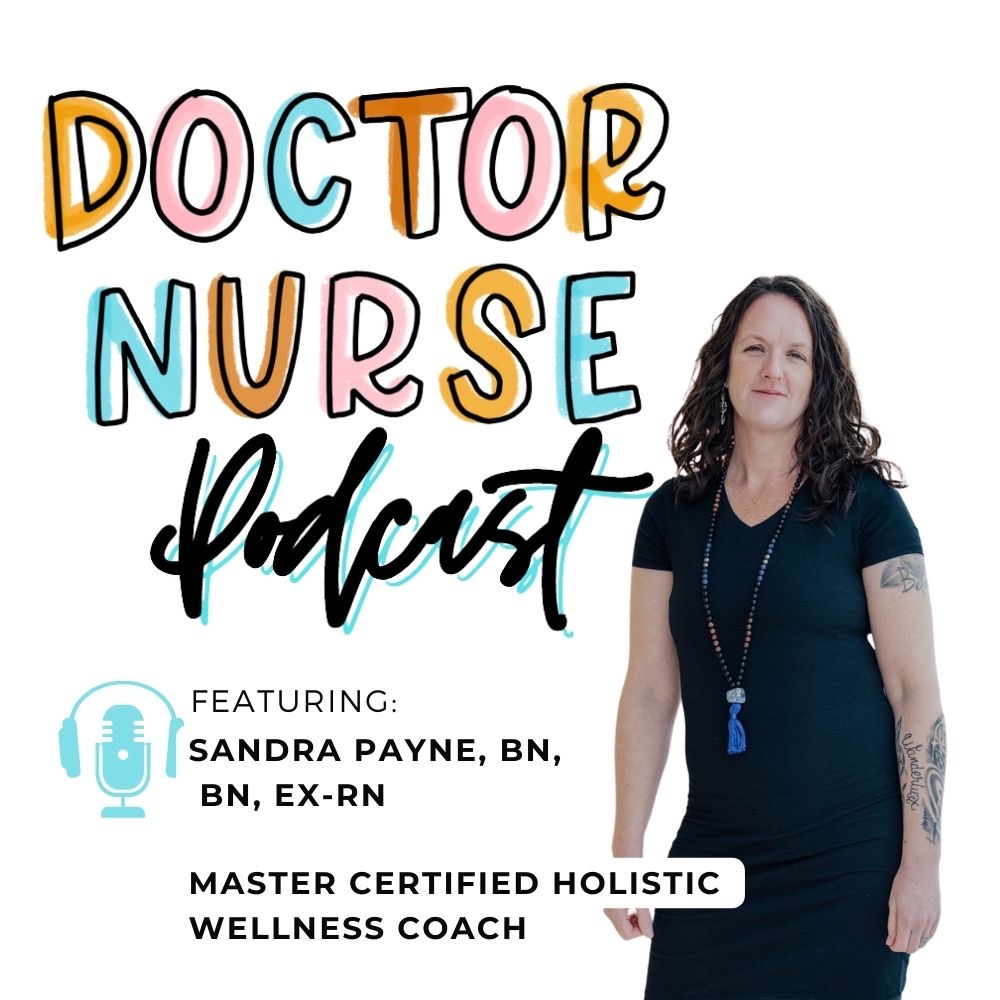
Sandra Payne is an ex-RN and Master Certified Holistic Wellness Trauma Informed Coach. After overcoming her own suffering with psychological and moral injury as a nurse she left the traditional nursing setting and explored the world of coaching. She is the founder of the Nurse Rx Coaching Program designed exclusively for other nurses who are struggling with their psychological and emotional well-being. She is also the host of the End the Silence Podcast, showcasing nurses and their raw and touching stories of the realities of living life as a nurse as well as inspiring hope & possibility for change. Nurses can join Sandra’s community of support through her private FB group Surviving Nursing and receive the free link for the Burned Out Nurse Workshop at https://www.sandrapaynecoach.com
Doctor Nurse Links: https://linktr.ee/DoctorNursePodcast
Wanna start a side hustle? Subscribe to the Doctor Nurse Podcast and I will show you how to start: https://view.flodesk.com/pages/625318…
Latest Episodes
Doctor Nurse podcast brings you weekly shows to help INSPIRE, EDUCATE AND EMPOWER nurses with true stories of initiative and impact.
Doctor Nurse podcast brings you weekly shows to help INSPIRE, EDUCATE AND EMPOWER nurses with true stories of initiative and impact.
Latest Episodes
Doctor Nurse podcast brings you weekly shows to help INSPIRE, EDUCATE AND EMPOWER nurses with true stories of initiative and impact.