Also Available On






Sandra Pagenta: Hi, welcome Diana to the podcast today. Welcome Dr. Nurse podcast listeners today. Diana is here to chat about her nursing experience and how she started her business catalyst for self care. We’ve been stalking each other on Instagram. So I’m so glad to finally met you.
Diana Page: I know, like, I love all your reels, honestly, they make you.
Sandra Pagenta: Thank you. thank you. I’ve been like, so tapped out on reels. I need to get back in. Because I was like, I’ve doing some selfcare. Okay. I think you understand. . I’m so happy to finally meet you. Thanks for having me. It’s exciting. So let’s dive right in. for my listeners that are like, wait, I’ve never heard of Diana Paige, what is she about? Tell us a little bit about what your job and you’ve got a couple job titles of which one of one of which is mom.
But of the other ones that you’ve got going on, kind of describe to my listeners what you do for a living. Sure.
Diana Page: So I, so my primary job is I’m a nurse practitioner. I work in outpatient, neuro. I predominantly treat patients who have epilepsy and headache disorders. So that’s kind of my, my niche within my [00:01:00] job.
I’ve been doing it now for almost 13 years, which is crazy. Oh, wow. Timeline. Yeah. Totally insane. And I’m also the founder of self-care catalyst. So that is my side hustle, if you will. But it’s my passion project. It’s a company that really provides resources for self-care burnout prevention, like nurse, nurse practitioner, provider wellbeing.
It’s like a one stop shop for all things. Healthcare provider wellness, and I’m a mentor to nurses and apps and a speaker, all the
Sandra Pagenta: things. Yeah. And then also mom, wife, and yeah. Just
Diana Page: taking care of cat mom,
Sandra Pagenta: you know, all the things. What we love here at the Dr. Nurse podcast is nurse practitioners that are working in their field, but then also doing the side hustle game.
Right. And I love that because it could be, as it begins to grow your side household, the thing that allows you to kind of step away more and more from what can be very draining hospital job work. So how did you get started teaching others about [00:02:00] selfcare? What was your experience with needing self care that made you.
I think I wanna go into this as my
Diana Page: side hustle game. Yeah. Great question. So I’m actually a burnout survivor myself. In my first P job, I burned out pretty, pretty hardcore. Mostly because I was in a relatively toxic work environment. Which I didn’t really recognize at the time, cuz this is stuff they don’t teach you in school.
It’s not like in NP nursing school. They’re like, oh Hey, by the way, these are the red flags. Like these are things to like do to not do like, these are ways to set boundaries. These are all things I now teach because I like feel super strongly that we should be. Talking about these things in school so that we are prepared when we go into the workplace, but I was under prepared unfortunately, I had a little bit of imposter syndrome.
I was a bit of a yes person to try to like, you know, be the team player and be a kind of valued member of the. Of the, the team. And I just, I worked a lot and my employer unfortunately took advantage of that willingness to work. So I burned out. It took me [00:03:00] about four years to see it. It kind of took me by surprise.
Sandra Pagenta: What were some of the symptoms that you were noticing?
Diana Page: So all the things I now know, and again, teach on in terms of burnout. So exhaustion that really doesn’t respond to like your usual methods of. Boosting yourself up, you know, it’s like, oh, like exercise usually works for me or hanging out with friends is, you know, usually works for me, but like, it wasn’t, I was just kind of a miserable
I was kind of miserable all the time, crying in my car a lot. Just dreading work every single day. Like you just leave yours, like, oh my God, here we go again. Like, what do I have ahead of me? This is just gonna be it. Horrible. It’s like kind of presuming the worst before you even get there. Yeah. I was like just really apathetic to be honest which is another very common symptom of, of burnout.
So just feeling like, well, what, like, what does it matter anyway? Like nothing I do really matters, , just feeling like you’re not having that impact that as nurses and nurse practitioners and healthcare providers, like what we feel we want to have, like, we go into this because we wanna. A difference and we wanna help people and, change the [00:04:00] trajectory of their healthcare.
And, I wasn’t feeling that way, which felt really terrible. And I actually almost left nursing. I’m like, maybe this is isn’t for me, cuz again, I had no frame of reference because again, we don’t learn what’s normal. What’s not like in school, which I really think is a disservice to all of us. I left that job, moved back home to where I grew up married to Mayner, which helped.
You said married to what? I’m married to Mayer, which helped cuz we live in Maine. Okay.
Sandra Pagenta: Okay. Got okay. So you like, let’s go back to Maine. He’s like.
Diana Page: So, yeah, so we moved back home and I got a great job here, which is the job I’ve been in now for nine. I love my job. But it is exhausting, right? So what hap the, the catalyst, if you will, for my self care catalyst business was that I, had kids.
And finally, my kids were old enough where I was like looking around, like reconnecting with people. And most of the people that I went to grad school with, and my friends were like, completely burned out. . I’m like, how are we letting this happen? Like, this is ridiculous. And [00:05:00] in the time from when I left that first job to when I started here and like these years had passed, like I did a lot of my own like personal work, like boundaries work, like a lot of mindset work, all of the stuff I now teach, like, you know, really a lot of.
Confidence boosting activities, building that confidence muscle working on that foster syndrome, all those things.
Sandra Pagenta: Did you do that by just your own kind of self help? Did you have like a professional therapist come in and kind of help you navigate? Yeah. Or did you just kind of do the work on your own?
Diana Page: A lot of it was work on my own. Like I’m a big, I’m a big journaler. So I would like do a lot of like journaling. I did like, you know, these yoga journaling classes. I did have a therapist for a little while which was. Highly recommend. I did a lot of reading, a lot of podcasts, a lot of like, just knowledge, like sponge type of thing.
Mm-hmm and then later on I’ve worked with mentors, I’ve had coaches which has been phenomenal. So yeah, a lot of, a lot of, all of the above check all the boxes. Yes. Yeah. Which is great because a lot of times you don’t know what you [00:06:00] don’t know until you’re really like in it. Like you get curious, right?
And then you learn things and you’re like, oh my God, this totally makes sense for me. I feel so much more empowered. I feel like I’m not alone. That’s one of my big things with my business is I always say we are not meant to do life or nursing alone because a lot of it is community. And knowing that everything you’re feeling is totally valid and it’s not permanent.
And we’re stronger together. This whole like nurses eat their young or burnout culture churn and burn culture. Like that’s bull, like I’m over that. Like we need to like empower each other, lift each other up, like come together, create change, you know, use our voices and be empowered and confident and say like, no, this isn’t working for me.
You know, set those boundaries, self advocate, say like, this is what I need. And that’s. That’s what I, yeah. So, so anyways, so the business evolved from there because I saw everyone around me and I’m like, I’m just gonna start a blog and like write on these topics because I have knowledge that I can share that might help somebody , that’s kind of where it started.[00:07:00]
That was like right before COVID this was like, End of 2019. And then obviously the world shifted and nurses needed more support. And I was like, I’m gonna rally, man. Like, so every single day I turned content out, like connecting with nurses all over the country and Canada. Other countries, just saying, you know, Hey, like how can I support you?
What resources do you need? And that I decided to create my program because then I was like, okay, well then I can bring these women together for community and learning. And so that’s kind of how it evolved and it’s fantastic. I love it.
Sandra Pagenta: One of the things I talked about just even in the podcast I launched out yesterday was the need for community.
And I love how you keep coming back to that because nurses have this scarcity mindset and I’m really into like abundance versus scarcity mindset and really shifting, because I think that because we are. Quote, unquote, an oppressive type position nurses are in an oppressive mindset where take orders from the doctors.
We kind of don’t have our own [00:08:00] autonomy. We’re just told to do what the doctors say and that’s kind of starting to change. Right. We’re just kind of like, well, You don’t know what you’re always doing. So no. And we’re starting to learn our voice and get our voice back. As nursing has been kind of, I think, turning out more educated nurses.
I think that shift of like, okay, I have something to say, I have a voice. I’m a part of the team. That mindset is starting to. But I think before, because we were kind of in this oppressive role, again, being subordinate to physicians, not seen as an equal member of the team.
We then looked to oppress the younger ones that were coming up, right. Because it’s just classic oppression wanting to oppress cuz you wanna feel a level of power as you’re in these roles. , the needle is starting to change because we’re like, no, if we wanna voice, we’ve gotta give it to all of us.
We can’t just think only a subset of us have a voice. All of us need to rally together and have a voice together. And so I love that you’re describing about community. We need to keep that [00:09:00] mindset always that if somebody next to me is winning, that just means we’re winning.
Mm-hmm, not necessarily that she’s winning and I’m losing. That’s not the mindset. And so again, scarcity versus abundance thinking, the more I help others get to places that I might not have been able to get to, the more I help all of us get to places none of us have ever been to. And so it’s just a different mindset that I don’t think we’ve had.
And again, that only comes through us helping. One another up, you know, whenever you’re like, I don’t know if you cheer or like stepping on a horse, like somebody like helps you like get up on top of the horse, the boost, like if we do that for one another and whichever way that we’re called to do, and again, yours could be self-care somebody could be helping somebody learn about EKGs.
Like I’ve had all these nurses on showing how they can help. Like, I can teach you how to do Botox. I can, and you can. Things from all of us and go and make your career special for you. And that is the beauty of what nurses can bring to one another. And we need to embrace that right there.
That’s totally like [00:10:00] something that is just near and dear to my heart.
Diana Page: True. It’s like, you know, just because their light is shining and bright doesn’t mean you aren’t shining bright too. It’s okay. I think it’s hard though, because a lot of us, you know, there’s all these limiting beliefs that come up and in, you know, comparison syndrome, right. Where we’re looking at others and there’s so many blocks that are there.
There’s a lot fear, you know, there’s a lot of things that come up. But these are workable, you know, they’re not, they’re not permanent. When we talk about self care, it’s, it’s not. Massages and bubble baths and things like that. Like for me, honestly, self care and. If you’ve been on my page for two minutes, is healthy boundaries and all these confidence building things and working through that, like all of these things that do make us better at our jobs make us better partners make us better.
Moms make us better humans and make us feel empowered. Like that’s self care. Self-compassion self trust, self forgiveness, like all of that. Yeah, don’t get me wrong. I do love a good massage, but like self-care is so much more than that. And that’s really what I. I hope on my page and in my [00:11:00] programs and all the things like that message is loud and proud.
Sandra Pagenta: I agree with you. Self care in my opinion is this kind of on the same lines of what you’re saying is checking in with yourself and seeing if this, whatever it is that you’re doing is vibing with the life that you want to.
I think that’s self care because you can get so busy with the work around you, with all the obligations, with all the things that are pulling you down, that you never check in with yourself. You never say, Hey, is what I’m doing right now, building the life that I want to lead. And if it’s not, I need to change something here because I’m not going in the trajectory of what I want.
It can be one. It can be, I’m gonna set better boundaries at work. It can be. And again, just that tiny little shift, right? Oh yeah. You’ve seen the shift. You’ve seen the big, you know, submarines that are like, alright, Mike 35 and they’re spinning all these numbers. Right. And so they put the, the submarine on a trajectory.
It’s one guy gives one number off. Just one number. We, yeah, the summary’s going in a whole different direction. Right. And so [00:12:00] that might be the only degree that you’ve gotta shift your life to go. I’m going in a whole nother direction now. Perfect. This is what I want. You know, I
Diana Page: love that you brought that up because that right there is literally the first thing we cover in mentorship is the, who you be versus what you do and talking about identity and talking about like, what do you actually like that whole, like concept of self-awareness and emotional intelligence and all of that, because it’s so true.
If you don’t give your brain a target, you’re never gonna get there. You know, like, I always say like what you focus on, you find you’ve gotta give your brand a target.
Diana Page: Yes. And that target can change. And like we can’t judge ourself or whatever that target is, but like, we have to know where we wanna. Move towards, even if it’s simple and then we just have to ask ourselves, okay, what is step one to get in that direction?
Not okay. We’re gonna plan out them. We’re gonna do this.
Sandra Pagenta: No, we don’t have to do that. Yeah. It’s just step
Diana Page: one. You know, the whole, like, you don’t need to see the whole staircase quote. Yeah. Just need to step it’s so true. And then you build momentum, then you build confidence. Like you do the scary thing.
You, you move into [00:13:00] that,, uncomfortable zone. And then you’re like, dang,
Sandra Pagenta: I’m a yeah, this was good. Like, I can do this.
Diana Page: Like I set a boundary and now my life is so much better. I didn’t burst in the flames.
I can do this. . Like where else can I set boundaries?
What can I delegate? What can I automate?
What can I eliminate outta my life? . So that
Sandra Pagenta: you can live more than you work. That’s what it’s. To go back to the thought we just talked about, and again, I, I always bring this up because it’s such truth and I always wanna bring truth to my podcast, but there’s a scripture that talks about that.
Our battle is not against flesh and blood. Our battle is against bigger things. It’s against spiritual world that we don’t even understand. And we never will truly understand, but if we are looking, thinking that Sally. Who has this life that you want is the person that you’re fighting against one mm-hmm you’re not focusing on yourself because if you’re looking internally, you ain’t got time to look at Sally.
Cause you got enough. Look looking at Sandra, trying to figure out what is the person that Sandra wants to become. What are the things that. Sandra wants for her life. Instead of looking at what Sally has on Instagram, [00:14:00] you’re way more focused in on what does Diana want today? Who do I want to be? And when you start realizing that you’ve gotta fight your demons, you have to fight your issues.
Like you’re saying imposter syndrome. I don’t feel good enough. I don’t feel pretty enough. I don’t think that I’m smart enough as you work through that for yourself. One, you ain’t got time to like a Sally cause you’ve got enough work to do, cuz God knows. We all have enough work to do on ourselves. But you aren’t gonna be so jealous of her.
And then when you hear from Sally, you know, I’m being true to myself because this is what I want and that looks good for Sally, but that look that’s different for me. Also, Sally,
Diana Page: probably full of shit. And she’s what she’s.
Sandra Pagenta: I’m sorry, might be miserable. You have no idea.
Diana Page: you’ll be like, dang, she’s got her life together.
Like that’s the thing, like we think people have like all of this stuff together. Yes. At the end of the day, like they may be looking at you saying like, wow, You have all your stuff together. I wish I was like you. So it’s like, it’s not worth your time and energy. Just focus on yourself because Sally’s probably in the gym for five [00:15:00] minutes, Snapchat, instant photo, and then pieces out.
Cause he’s exhausted.
Sandra Pagenta: I love that.
Diana Page: You know, I do wanna point out like all of these. Feelings of all the things we’re talking about are completely normal to feel like there’s nothing wrong with feeling imposter syndrome. Like it’s actually in a way kind of healthy once in a while. Right. Because we’re not like just jumping to do stuff we’re like uncomfortable with in terms of like our role within nursing.
Right. We ask questions, we look stuff up, right. Because we feel like, okay, I’m not comfortable with this procedure. Maybe I should. Just double check. That’s okay to do so you don’t, you know, hurt somebody. Yeah. But, and it also keeps you curious too, right? It keeps you like in the kind of, you know, not the,
Sandra Pagenta: I totally know, know everything.
Yeah, exactly. Cause that’s scary right when you’ve met those providers.
Diana Page: Yeah. Imposter syndrome’s. Okay. It’s just when it, when imposter syndrome leads to shame. Is when it becomes a problem.
Sandra Pagenta: See, and that’s what I’m talking about. The deeper stuff. It’s never just as simple as, oh, this other person it’s so much deeper within, inside you.
And so as you start to kind of go like, wait a minute, okay. I have imposter [00:16:00] syndrome, which is totally normal because I kind of not what I’m doing, but. What is it? I don’t think I’m smart enough. Yeah. So it’s deeper. It’s like, oh,
Diana Page: I’m such a loser. I don’t know enough. Like, oh my gosh, I shouldn’t even have been hired.
Why did they even bother hiring me such a terrible nurse? Like, it’s that mentality? The negative self talk.
Sandra Pagenta: Tell me, you did not wake up one day and have all this stuff, right? You didn’t just have this great career that you finally have great boundaries with and have this, you know, catalyst for self care business that you’re growing. So how did you get here? Kind of talk, walk me through that moment that you decided, okay, listen, I’m gonna be a nurse.
And then I guess you’ve kind of shared, I mean, through your journey, you’ve kind of shared it. So I don’t really know if we need to still this dead horse, but maybe I just wanna ask, you know, what made you decide to become a nurse? Like what was that moment for you in your career? That’s probably the question.
Yeah.
Diana Page: That’s so it’s interesting. So two things. So with the business piece, honestly, it’s about taking action and just doing it scared.
Sandra Pagenta: What do you mean? You know, taking action? What do you mean? Like.
Diana Page: Like I remember, like when I had the [00:17:00] idea for my mentorship program, which now is like the, the, the part of my business you know, I was terrified.
Like, what if people don’t wanna join? What if like, people don’t get like the results that they want? What if this, what if that, like, what if I suck at this? Like all these fears? Kind of came up for me. It took, you know, time and I hired a mentor and I did all the things and it like, you know, I did it scared, you know?
And you just do it because if you don’t no action, no changes is what I always say. Right. So it’s, it’s either you take that messy action where you’re scared and you’re like, shoot. I dunno if I can do this. Yeah. And then you just do it and then you see, you know, people do sign up and people do get the results that you’re looking for.
And they, they lo you get great testimonials and people are like happy right with what you’ve created, but it takes that action. And that take that leap of faith and self trust. So I would not say it was like an easy journey. It’s a lot of hard work, a lot of messy action, a lot of, you know, Working through those mindset blocks, just [00:18:00] like anyone has.
But that’s, I mean, that’s the real reality of it, you know? And it gets easier over time. Like as you boost your confidence and as you see that, you know, what you’re creating is, is working and, and even when it doesn’t work, right. Failure’s just feedback. So it’s kind of like, I like that, you know, there’s good weeks, bad weeks.
It’s all the things it’s definitely a roller coaster ride. But especially when you work, full-time in your mom . Yeah, exactly. So I just wanted to say that, but also, so. So I was a career changer. I worked in a lab, a research lab for a while as a lab tech, I thought I was raised by two chemists. So I thought like the biology route was like my thing, my parents would always tease me like, oh, you’re gonna be an neurologist, you know?
Sandra Pagenta: cause they’re both chemists ologist. ]
Diana Page: I worked in a cancer research research lab, like a melanoma research lab, which. Cool, but it was just all mice and I actually worked next to this amazing Swedish guy and he was my like bench mate.
You know, when you work in a, you have like a bench that you work at and he was my bench mate. He would listen to like Depeche mode and Madonna all day. He was definitely a personality. I had a really bad week, one week. [00:19:00] And I was like, I don’t know if I can do this anymore. And he was like, have you ever thought of being a nurse?
I think you’d be really good at it. And I was like, just randomly. And so then I was like, huh, he kind of planted that seed. And that was the catalyst for me, like really thinking about like, where do I want my life to go? Like, what do I see? What do I, when I think about what I wanna do in my everyday, like what do, what role do I wanna serve?
You know? And so that’s how I. Took that leap. I quit my job. I applied to a direct entry nursing program in Boston and it was, it was rough. It was a rough program, but, you know, I worked while in school and it was just a crazy time, but that was my journey and it, and it. Ended up being okay.
Sandra Pagenta: Whoever that guy is, the Swedish guy, listening to Madonna, cheer shoot out there. Thanks a lot. But if I had to guess the name I would’ve guessed. Ha so yeah. That’s that works. that’s a good probably still there. I wonder what he saw in you that made, made him think like you would be a good nurse.
Did you ever ask
Diana Page: him? I dunno. I spent a lot of time together. No, I didn’t actually. Yeah. Would’ve [00:20:00] been, which is really interesting, but I’ll try to find him on like Facebook or something. it’s interesting too. Cause it’s like, I wanna say also, like when I finish school, you know, you have to kind of find a job yeah, obviously.
When I graduated, it was the recession of 2009. So there were like zero jobs. And the ones that were there, there were like a bajillion people applying for. And so I remember being like, okay, this is what I don’t wanna do. Like, I didn’t wanna do ICU. I didn’t wanna do the ER and I didn’t wanna do neuro.
I was like, absolutely not. There’s no way it’s too depressing, too crazy. Not my jam. No way. Yeah. I’ve been
Sandra Pagenta: in neuro. I was gonna tell 13 years
Diana Page: so I wanna say to the people listening, like sometimes we think we know. But until you actually like, try, like, I, I shadowed and I definitely did my due diligence, but like, you definitely don’t know until you actually try it.
Sometimes you you’ll be surprised at what, like where you land. So being open minded is. Not a bad thing.
Sandra Pagenta: Throughout this whole process, you’ve con you’ve had ups, you’ve had downs.
Would you kind of share maybe a challenge, something that you had to overcome that you saw coming and you’re [00:21:00] like, this is, this is it I’m done for, but then you were like, Nope, I just increased my resolve for, for wanting this even more. And so you perceived it even more. Or
Diana Page: do I like at
Sandra Pagenta: work? Yeah. Just work or even in your business, in either sector, because what I really wanna showcase to people is that you haven’t just had wins all throughout your time.
No, you haven’t been just winning, you know, like people are like, oh, I do is win, win. Like, no, sometimes you lose and it hurts and it sucks. Like,
Diana Page: yeah. Yeah, no hundred. So like I shared earlier, you know, I am a burnout survivor, so a hundred percent, it has not been all rainbows and butterflies by any means, you know?
Yeah. There’s been a lot of craziness. I would say a big hurdle. So when I left that job, I, you know, it took a while actually for me to feel. A little more confident again. And I remember kind of coming into this job being like, okay, you know, you like talk yourself up. You’re like, okay, go into this job.
Like, you’re gonna set the boundaries. You’re gonna like advocate for yourself. Like all the things that like I had identified were things that I could have done better. yeah. In my prior job. And I [00:22:00] vividly remember the first time I like set a boundary at work. Ooh.
Sandra Pagenta: How that, cause
Diana Page: I was like, Scared. Yeah.
I was like, oh my God, are they gonna think I’m not a team player? Like, are they gonna judge me? Am I gonna be viewed as like lazy, like write all these things come up, which I’m sure your listeners can identify with. We’ve all felt that way. But. You know, I thought about it ahead of time, you know, like, okay, well, what’s the goal here?
Like, what is the goal of this boundary? Like, what do I actually need? What, like, who do I need to communicate with? Like, I had it all kind of like, we’re now it just, honestly, the more you set boundaries, you just do it. You don’t even think about it. Yeah. But that, that was like, okay, like totally might do my power pose.
Like I could do this.
Sandra Pagenta: You were your favorite like outfit.
Diana Page: It was about my schedule and it was just, they’re like, okay, great. Like, let’s talk about it. I’m like, okay. , we’re good. like, even now, like I had last week, there was a scheduling thing. I was very frustrated, very, very frustrated at work about something. And like, I, I keep my cool, like, it takes a lot for me to like totally like freak out. Yeah. I don’t even remember last time that happened, but like, I was really annoyed and I think they could tell [00:23:00] that I was frustrated cuz I mean, they know me well enough at this point to know that like yeah, typically I’m
Yeah. But I was very frustrated about something and I went to, you know, leadership and I was like, look, this is what’s happening. This is just like why it’s not working and blah, blah, blah, blah. And this is what I need. And like literally within like two hours. they had like an action plan and like this woman who’s in charge of the scheduling, like came to meet with me.
She’s like, okay, this is what I’m gonna do. I was like, like, what? So that was a win. But it’s also like being vulnerable and putting yourself out there, which is not easy to do. In business. I would say there’s been a lot of lows. I mean, there’s been many things that I’ve put together and put a lot of work into and put all this time into.
And it’s like crickets, right. You know where you don’t have people sign up or you like, no one wants to join you on alive or whatever it is, you know? And sometimes that can be hard. Right. It makes you feel like, oh my gosh, am I failing? Like, is this, but like now. It’s one of those things where I’m like, you know, I’m gonna show up, [00:24:00] you know, and even if it’s one person, like maybe that one person needed to hear like that thing today, and like not look at like vanity metrics and just say to yourself, like, look, I know, I believe deeply in what I’m doing.
Like there’s zero question. Like my belief. And like, I know my program works. Like there’s no doubt about that anymore. Cause I’ve been doing it now for years. But those times still come up right. Where you’re like, oh shoot, like only, you know, X amount of people liked my thing, whatever it’s like. Cool.
That’s awesome. Yeah. Like someone out there in the world thought that this was valuable. And like, if you were in a room of 10 people and they were like, yeah, girl, you’d be thrilled. Yes. But you know, on the internet you’re like, oh, 10 people. , that’s like the mindset shift that I’ve used, but like,
there’s gonna be lows. There’s gonna be highs, but like the lows you can definitely get through and just, you know, I keep, that’s why I celebrate wins every Wednesday in mentorship. Oh, do you? Because like you celebrate your wins and you, like, there’s always something to be like grateful, even if it’s tiny.
Like, oh, I ate three meals today or, Hey, I showered.
Sandra Pagenta: [00:25:00] That was sweet. Yes. That’s a true mom. You know, that’s a true mom there.
Diana Page: I get this amazing like bonus. No, it doesn’t have to be that extreme. Yeah. Like there’s always means. And like even keeping a little journal of the things, like sometimes, you know, like even testimonials or like messages I get from people that are like, oh my God, like, thank you so much.
Like you can look at those and say like, no, you know what. I’m doing alright like that. This is helping, you know.
Sandra Pagenta: Yeah. I love that. That is so good. And you’ve had some, I know you said you had some mentors and you’ve had other people on your, I believe that come onto your program and kind of helped like yeah.
You’ve had Cat golden.
Diana Page: She was the one that to actually like launch my program.
Sandra Pagenta: She’s actually launched a bunch of people. I don’t know. Like I’ve met a couple other people that are like a direct result of her influence on their lives.
Diana Page: She like definitely helped me move through the fear and the confidence stuff. She was like, girl, let’s go. So she would gimme like benchmarks to me and she’s like, okay, we’re gonna do this. I love her energy. And she. Also like, no must, no fuck. Which I absolutely love. Yeah, [00:26:00] because it’s like, there’s no like coddling, it’s like just, she’s very sweet and like, so loving and like an amazing, I could not like speak more highly of her.
Like, she’s incredible. But she was exactly like the MPH too. Like she’s got that spark right where she’s like, girl, you got this, let’s go. You can do it. So yeah, she was amazing. Yeah. I’ve worked with other mentors, like some business mentors, things like that, but yeah, cat was definitely the, like, I, you know, I would like to think that I would’ve launched it anyway, but she definitely can succeed to.
Sandra Pagenta: Yeah. And sometimes you need that, right? When you’re a mom and you’re working. And you’re starting something. Mm-hmm it is so easy to just let those other things that you’re doing just suck and drag the energy outta you.
That you’re like, it’s good. No, no, I did a lot today. It’s fine. I don’t need to get that done, but you do need to get it done, but you don’t have the energy. And so you kind of need someone that’s like, I know you’re tired. Do it tired and you’re like, ah, please leave me alone. And it’s good because then it actually gets done.
And you actually realize that your, your cup is bigger than you think it is. You have more [00:27:00] capacity than you think you do. You’re stronger than you think you are, but you, you need someone to kind of remind you of that. Cause you forget and you’re yeah. You know, You need that bench buddy, that when you put that weight on your back, they’re like, you got one more.
You’re like, I don’t got one more. They’re like dip and you’re just like, you need that.
Diana Page: Yeah. But that person also needs to say like, alright, you did the dang thing now chip. Yes,
Sandra Pagenta: true. A hundred percent because
Diana Page: I very much like, I’ve always been like in kind of like the quote energy of solutions, like an action person.
Mm-hmm like, even when I was very, very young, like my parents moved us abroad and we lived in England when I was little. And that’s cool. My mom always says, like, you were never a kid that was like dwelling in the negative. Like, she’s like, you know, you joined the theater group, like you were in plays, like you joined like the track, you know, there’s like, she’s like, you got involved, you had friends.
Like you weren’t like, she’s like, you always chose kind of joy. And like, how can I make this work for me? Yeah. You know? So I’ve, I’ve kind of always had that mentality. Like, look, if things suck things suck, but like, let’s think about how it [00:28:00] can not suck. Yeah. Like. Do and if we’re low vibe, low energy. Cool.
That’s okay. What’s like, what helps boost your energy? Like where are we at? Like, why are you low vibe? Like, we talk about energy mentorship. We have a whole, we’ve been holding on it. Like, is it that your work environment sucks? Is it a toxic colleague? Is it that your eating crapping food? Is it that your not moving your body?
Is it that you’re depressed? You know, like what is the root of the root? And like, once you identify that and have that, self-awareness like we talked about, then you can come up with, okay, well, what is step. What is step one to move in the direction towards the thing that you again, give your brain a target, right? You know, it’s like a pressure type of thing. It’s just like, okay. You know, there are little, teeny, tiny things that we can do that get our momentum going. It’s like, we’re a couch potato and we’re depressed and we’re sitting on the couch eating Cheetos.
I mean, we’ve all been there. Like, I think everybody said those weeks where they feel really low energy, but it’s like, okay, if you don’t, if that’s making you feel crappy, even more crappy and you [00:29:00] identify, okay, well I wanna feel more energized. And then step one is to maybe go for a walk. what you can do is just, you know, put your shoes where you can see ’em, you know, or put them on the couch.
So instead of sitting, you’re like, shoot, that reminds me, okay. My cue is the shoes are there. Let’s go for five minutes. I’m just gonna go outside for a walk for five minutes. Yeah. And the hard part’s getting started once you get started. You build that momentum and you can keep going, you know? Yeah.
Sandra Pagenta: So I heard the story of a guy that wanted to go to the gym all the time, but he knew that if he set this goal of like, I’m gonna go to the gym for an hour, he wouldn’t go. All he could do was go to the gym and he would not allow himself to be there more than two minutes. It was just the act of getting up and going to the gym that he was trying to. Ingrained in himself. Totally, wouldn’t go for like an hour, because then when you think about it, you’re like, oh God, I don’t wanna go.
You just, just like, just get up, you make a fix. Yeah. It was just getting over that barrier that he was working through. And so that was easier. So that was, it made it easier just to get there. And then when he got there, he stayed it a little bit longer and a little bit longer. And so now that, that [00:30:00] routine behavior, and again, like you’re saying, maybe you just put the shoes.
And you stand in the garage with the shoes on and you’re like, okay. I mean, that’s all we do today. We just stand in the garage with the shoes on and then the next day, you just start small, you eat, eat something real tiny, you know, eat elephant.
You don’t have to eat the whole thing in one bite. You just take a little bite and then eventually you’ll eat it. Yeah. But just give yourself a little bit of time and don’t feel so overwhelmed by, I have to build a huge social media following and I need to be a baller on social media and I need to have it now.
It’s like, Nope. If it takes a little bit of time, one bite at a time, I’ll get there. Totally.
Diana Page: There’s actually a great book. Atomic habits he talks about that actual thing, right? And he talks about those kind of gateway habits, these little like snippet habits, but he talks about mastering the art of showing up.
And that’s why it works. Right? It’s like, it’s like casting a vote for you and the life you desire to be living and viewing things more as like an identity versus like I have to do. It’s like, okay, well I get to do this. Like, this is because I’m a houseful person. You know, whatever. So if you guys haven’t read or listened to the audio book, it’s a [00:31:00] phenomenal phenomenal read, really great for any sort of shifts that you’re trying to do with habits.
Sandra Pagenta: It really is yep. It’s on my list of like probably top 10 books ever is atomic habits. It’s just absolutely fabulous. For the last question of the podcast, Diana. Tell me about a piece of advice that you would give to a new nurse starting off in a career, or that you would give to Diana.
If you could go back to Diana, like day one, you know, straight from the lab, she’s fresh, she’s coming to work as a nurse or a nurse practitioner, whichever job you wanna talk to yourself in what was a piece of advice that you would tell her, hold on to this SIS and a piece of advice that you would tell her don’t you dare listen to this for one second.
Diana Page: That’s a real, mother’s so many things. I think so. Hmm. I’m gonna do two cuz there’s two really good ones. So number one, I would say never doubt your capabilities and always have your eye on your capacity because the.
A lot of us feel like our capacity is tied into our capabilities and we are [00:32:00] incredibly capable human beings, but we all have limits. We all have a capacity. So, you know, tuning into what that looks like and trusting that you’re worthy of whatever boundaries or whatever rest or whatever you need, like trust that you are worthy of that.
So that would be the biggest one. The second thing I would say is just to slow down sometimes. Take pauses. Like if we don’t take that pause, we can’t assess where we’re at, you know? And like that’s where that self awareness piece comes in. It’s like, you know, when you leave your shift, take a pause, ask yourself how you’re doing.
Like, how do you feel, what do you wanna feel? What’s step one to get there. Like, there’s all these little pauses. Like when I leave my house every day, now I pause when I leave my house, like just for 30 seconds and like, think about like, oh, wow, it’s a beautiful day. You know, just like zooming out a little bit, you know, it’s easy to keep our head down and just be like, turn and burn.
So like taking that pause is super, super, super helpful.
Sandra Pagenta: Those are really good pieces of advice. I agree. I feel like we’ve touched on all those things throughout this whole conversation of just slowing [00:33:00] down, listening to yourself, doing the work within yourself. Like you said, just keeping your head down, not paying attention, just look around and see all that you have.
You have so much to be grateful for. All even the little things, again that you woke up today, mm-hmm, you have air in your lungs and your brain is working and your heart is pumping. That is something. If that is all you’ve got, you’ve got a lot. And so just start there and just start looking and just thinking, okay, I get to do this work today.
Cause I’m alive. And this is what is, you know, Gonna change my life and that’s gonna change the directory. And this is gonna put me on the path of who I want to be and how I want my life to look so beautifully said. And for the last part of the interview is the rapid fire questions. Are you ready? Sure.
what is your favorite holiday?
Diana Page: Oh Christmas for sure. Yeah. I love the Christmas tree.
Sandra Pagenta: That’s my band. July 4th is getting up there though. The older I get. I’m liking that holiday a little bit more. Just, just, just aside.
Diana Page: Yeah. And yeah, I also know the coziness, like I love to put on music and. I love looking at the ornaments that like [00:34:00] my mom gave us a bunch of like the ornaments that I had as a kid.
Sandra Pagenta: So it makes people happy what is your favorite beverage? Do you have a beverage like your go-to
Diana Page: Polar Selzer is my jam. I like the orange vanilla.
Sandra Pagenta: That’s what I was gonna say. The orange one is so good. It shouldn’t even, I dunno, what’s in it.
Diana Page: I’m a, I’m definitely a polar Selzer addict.
I tried a lot of Selzer. I know. There’s like, look, Roy fans and whatever, but, I’m a polar,
Sandra Pagenta: Do you have a favorite color?
Diana Page: Yes. I like Aqua it reminds me of the ocean.
Sandra Pagenta: Caribbean.
Like ocean feels very like islandy. Yeah. Tropical. Yes. Diana, thanks for coming on and then where can my listeners find you?
Diana Page: So at catalyst for self-care is my in to handle. That is where I live. That’s my kind of that’s where all there’s some guides there. If you need resources on specific things, but my DMS are always open.
So if you’re looking for something and can’t find it, just let me know. There’s a ton of free resources on my website, which is www dot self-care catalyst. Dot com there’s tons of free downloads there. Boundaries downloads like planners, you name it. There’s a bunch of [00:35:00] stuff there, so you can definitely check it out.
Sandra Pagenta: Fantastic guys. Check her out. I’ll have all our stuff linked in the show notes again. Thank you for your time. Diana and guys. Thanks for tuning in. Don’t forget to enjoy the journey of your nursing career of life. Enjoy it.
Podcast Description
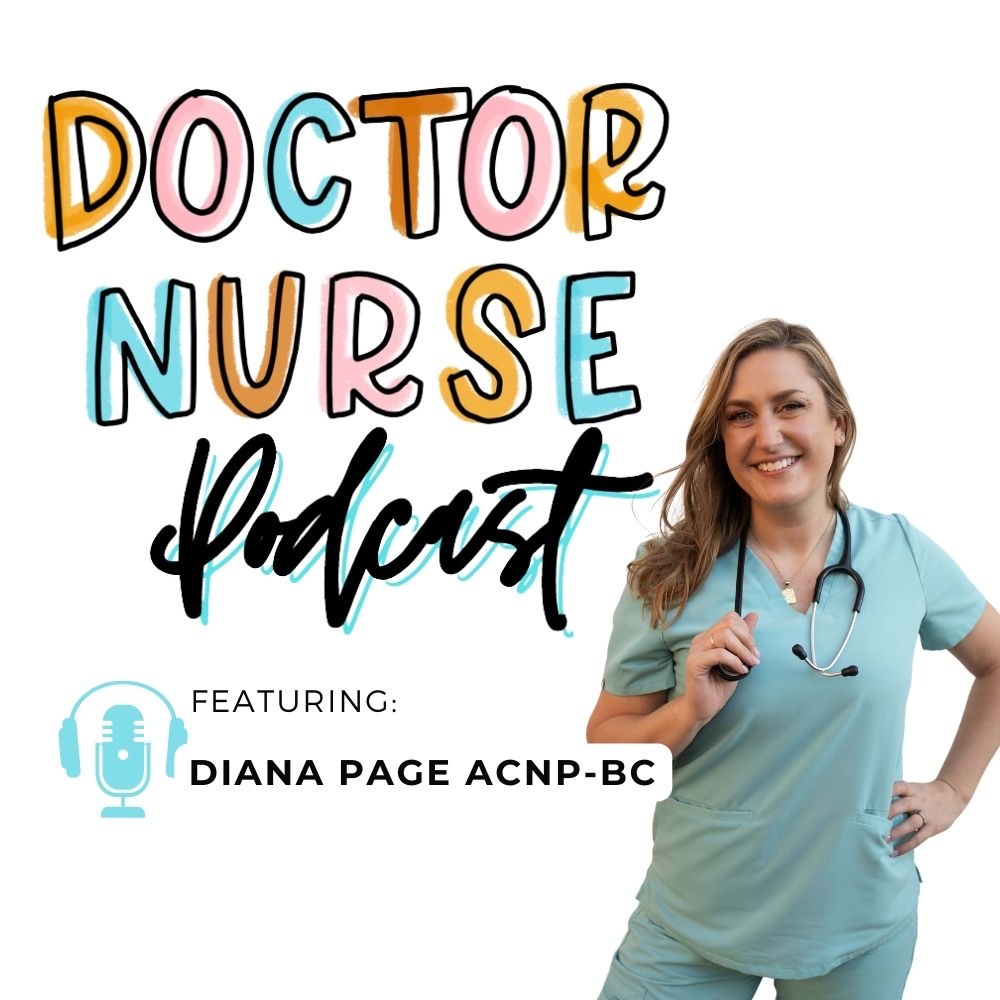
Diana Page ACNP-BC is an outpatient neurology nurse practitioner with over 13 years of experience both in the inpatient and outpatient setting with subspecialty training in epilepsy and headache disorders. She now not only continues with her clinical practice but also is a nurse/APP mentor, burnout educator, content creator, speaker, and clinician well-being advocate. She is also a social media leader on topics related to Nurse/APP wellbeing and burnout.
She is a burnout survivor and has a deep passion for teaching exhausted clinicians how to find better work-life integration as well as a stronger sense of self, greater confidence, and targeted tools to navigate leaving work at work. She is a believer that we are human beings first and foremost and that we deserve care too. Diana completed her undergraduate studies at Wheaton College in Norton, MA, and her MSN through a direct entry program at Massachusetts General Hospital Institute of Health Professions in Boston, MA.
She was a career changer, originally working at Dana Farber Cancer Institute in a Melanoma Research Lab before deciding that her passion was through connecting with her patients at the clinical level. Diana is a mother of two adorable children who keep her on her toes! She is a self-proclaimed boundaries queen, and self-care strategist and loves a good PTO day! Check out her Instagram @catalystforselfcare and her website www.selfcarecatalyst.com for resources on how to keep burnout at bay, have optimal work-life integration as well as a stronger sense of self, greater confidence, and targeted tools to navigate leaving work at work.
Diana Page Links: https://linktr.ee/catalystforselfcare
Doctor Nurse Podcast Links: Doctor Nurse Links: https://linktr.ee/DoctorNursePodcast
Wanna start a side hustle? Subscribe to the Doctor Nurse Podcast and I will show you how to start: https://view.flodesk.com/pages/625318…
Latest Episodes
Doctor Nurse podcast brings you weekly shows to help INSPIRE, EDUCATE AND EMPOWER nurses with true stories of initiative and impact.
Doctor Nurse podcast brings you weekly shows to help INSPIRE, EDUCATE AND EMPOWER nurses with true stories of initiative and impact.
Latest Episodes
Doctor Nurse podcast brings you weekly shows to help INSPIRE, EDUCATE AND EMPOWER nurses with true stories of initiative and impact.