Also Available On






Sandra Pagenta: Dr. Parnell, welcome to the Doctor Nurse podcast. I am so happy to have you on today. Thank you for coming on to the podcast.
Terri Parnell: Oh, thank you for having me. And Terry’s fine.
Sandra Pagenta: Terry. Okay, cool. So, Terry let’s dive right in. Tell me a little bit about what your current job title is these days. What do you do for a living.
Terri Parnell: Right now actually I’ve recently launched my second business and it’s called tap wellness coaching.
So I’m the founder and principal of that, and that is health and wellness coaching specifically for nurses and other healthcare professionals. And it’s a virtual coaching. And it was something I felt the need to do to give back to the nursing profession.
Sandra Pagenta: You said you have two jobs, so that was that’s one job or is there something else you’re doing?
Terri Parnell: In 2010 now, 2014. I’m sorry. I had launched my first business after leaving. The more traditional nursing role, , in a large integrated healthcare system. I was a vice [00:01:00] president over many hospitals working in the health literacy, diversity Language access services communication and meeting people where they are and providing services that meet their needs.
So that’s have been a big passion of mine since I became a nurse. Did that for years. I was in that organization for almost 35 years in many different roles and Was really doing my role. I created the position after many years of bugging and nudging. And finally we launched a office to do that myself with a position and we, it was amazing.
And then after several years of doing that and. Being successful and really changing the culture of the organization. I said, I should, I wanna do this on my own. So I took the leap and in 2014 and left and started my own health literacy consulting business. So I worked mostly. I’d say with organizations, health, hospitals, healthcare systems for profit, not for profit [00:02:00] pharmaceutical companies all, all kinds of industries that are in healthcare and work to educate.
And train healthcare professionals about health literacy and really the depth and the breadth of what health literacy truly is. So then yes, and then COVID came and and I had some medical issues and then I said, I have a lot of family that’s in healthcare. And I, even though I wasn’t at the bedside during COVID.
We have nine or 10 immediate family members that are physicians, nurses, or nurse practitioners. So I saw what everybody was going through. My husband also as a physician. And I said, I wanna give back to nurses and something I’d been toying with, but that was the push I needed to then finally watch this, this business.
Yes, it’s my second business.
Sandra Pagenta: Oh my goodness. This is incredible. So yes, I love it. Yeah. So for the layman, that’s hearing health literacy and they’re like, what does that mean? Health literacy. Yeah. Can [00:03:00] you just kind of briefly describe what it is? Cause that was a, that’s a pretty big chunk of your career and I’m sure it plays into your coaching business as well.
Terri Parnell: It does, It’s really, the ability to For somebody to be able to read or hear or understand , health information in a way that they can take action and, really get it the first time you’re speaking with them. It’s it’s not using late medical. Terms jargon. Yeah. Right. It’s using lay lay terms, but , everyone thinks it’s just verbal communication, but actually it’s written communication, and that includes things.
I, I did things like, looking at signage and buildings and, your digital, all the digital screens that are in hospitals are in the garages when people park and. How people navigate and access services. So it’s like environmental also. I mean, I’ve, I’ve put on construction hats on a construction site as a nurse and [00:04:00] walked through and we kind of talked about where sign should go and the flow and , all of that is part of it.
So it’s verbal, it’s communication, it’s written communication, but it’s also the environment and all of those things. Make it more understandable and accessible for people to really utilize the information that they’re given. We need to meet people where they’re at. Yes. It’s not about me. It’s about them.
So that’s kind of it in a nutshell and it touches on everything. That’s what I
Sandra Pagenta: love about it. That is so cool. I’m giving this picture that you’re like a translator. You translate medical jargon into, , a, a terms and into concepts that people can grasp because the average patient, I think, has like a fifth grade.
Reading like fifth grade comprehension or fifth grade reading that level. I don’t, I can’t remember the exact, stats on it, but it’s definitely yeah. Way less than you originally think that people are understanding and comprehending what we’re saying when we’re talking to them in these terms.
Terri Parnell: And if so much more everyone [00:05:00] I won’t say everyone, but the majority of people tend to feel. This only affects , people who are not as educated as others, or, but that’s, or who don’t speak English as their primary language. And that’s not the case, it really is for everybody.
And my message has always been, if. If you design written material or you speak in a way that is proper and understandable, everyone will be able. It’s good for everybody. So, I mean, I’m educated, but if I go into. I bring the car in, to the car dealer. And I always say, tell me this, tell me that.
And then I always try to feel like, I, I don’t know, it’s a control thing, I guess I’m like, oh, and I wanna see all the parts that you took out. Can you just leave them? And they go, oh, sure. But to be very honest, and I don’t know what those cards are, but it’s just like this thing. And my husband says, what are you doing?
, I’m like, I just feel like they might, you. I don’t understand what they’re saying, so it’s the [00:06:00] same thing. It’s just a different language,? And just, I could be very well educated, but I don’t understand car talk, or whatever the example may be. So it applies to everybody, not just those that are not educated.
Sandra Pagenta: Yes. Well said I was seeing, I actually had in my mind to use the car talk as well, because again, I mean, I don’t ask for my parts to come out. That’s pretty funny. I think I might start doing that, but I do, I’m like, tell me what you’re doing. I dunno what
Terri Parnell: this is. It could be some other type of car parts. I wouldn’t know, but
Sandra Pagenta: let me see my parts.
Yeah. Yeah. That’s so. That’s hilarious. Well, Terry, let’s, let’s keep going. And let’s just hear about how you got to this specific spot in your career, because it’s so really incredible that you’ve got this health literacy background, but you’re also now stepping into the lives of other healthcare professionals and you’re helping to translate this world for them, right?
Yes. This new COVID world, this post pandemic world of healthcare and learning how to balance everything in the mix. [00:07:00] And Kind of tell me how you got to this specific spot in your career. Because one of the things I found that nurses have such an array of backgrounds before they move into their, whatever phase they’re in.
Right. And we don’t really talk about it. We don’t really think that that stuff’s relevant, but it is. It’s very interesting to hear where they have come into where they are now. So, yeah. Do you mind just kinda walking us through briefly, like how you. Got going and how you, again, kind of found this niche that you’re in
Terri Parnell: from, you want me to just give a high level of overview from my, my career journey?
Sandra Pagenta: Yeah, yeah, yeah. Yeah. So like from when you decided to become a nurse, like that moment that you were like, I think I’m gonna go do this and
Terri Parnell: then kind of, yeah, it’s funny. I, I was just thinking of that the other day, actually, ironically, but I don’t know. I always felt like I always wanted to be a nurse.
I don’t know why it was the actually. Honestly, it was a nurse or an artist. Those were my two things. I’m very creative. And I remember I had family that lived in Greenwich village, New [00:08:00] York, and I love Greenwich village. And, we would go in often and I, I just love the diversity and, and I, it’s just a great environment and I’m, I’m talking years ago,?
And I. Go. And my parents would say, see all the struggling artists , in the park, Washington square park or wherever. And they would be, they I’d say, yeah, I’m gonna be an artist or a nurse. And all my art teachers were like, oh, this is great. She’s she’s yes, this is good. Good. And I think they were just like, Why don’t you be a nurse?
, I think they were afraid I would be struggling too much, but it’s, I kind of can incorporate a lot of that anyway into nursing. And then I did decide nobody really in my family was in nursing. I had an aunt who was a nurse, but we weren’t like close. So I just always wanted to do those things. So I went into nursing school.
Of course I went, I chose a school in Greenwich village. My grandparents worked honestly in St. Vincent’s hospital, in Greenwich village, which has now closed and they helped run [00:09:00] the hospital. And so we used to go visit them all the time. So I was very, at a very young age. I was always brought into the hospital to visit and, I knew a lot of the people there and I think it just made me feel comfortable.
So fast forward. that was a diploma program. I’m really aging myself. So I did the three year diploma program and came out and worked right in a surgical intensive care unit as a new grad. Cuz you could do that after a three year program where they used you, they used to wake you up at night to cover shifts and it was crazy, but I mean I had got an amazing education and I loved.
So then went, came back to out of the city to more long island and took a, another job in the health system. I said, I would stay for a year and that’s where I ended up being for almost 35 years, but in so many different roles. So just to sum all that up, I, was a bedside nurse. I was a manager, I was a nurse educator.
I was a patient educator. And then [00:10:00] I started. I had to figure out what do I wanna do now? Right. And all that time, I went back and got my bachelor’s got my master’s ultimately went back and got my doctorate. My DNP. And when I graduated nursing school, actually I graduated nursing schools. I think it’s pretty cool from St.
Patrick’s cathedral. That was where our graduation ceremony was. That’s beautiful. And yeah, it was beautiful. And I remember leaving the ceremony and I was out front and I remember telling my grandmother. That this is so, I was so excited and so proud and I said, one day I’m gonna get my doctorate.
Now as a diploma graduate, I was. 20 years old, I said, and I’m gonna write a book one day and my parents, I remember them looking at me and going, yeah, that’s nice. , like, and yeah, patting me, that’s great. You’re all excited, and I did that, that was my trajectory. So ended up along the way, keep going for my education so that I could get to that.
And I was a vice president [00:11:00] over in a health system that at the time was like 18 hospitals. And I developed almost like a service line approach to health literacy language culture. Health equity, and we rolled that out across the 18 hospitals and it was the best thing. I loved it. We really were changing how employees and healthcare workers viewed all of those things.
And we really integrated it. So it was sustainable. It wasn’t just the flavor of the month that, yeah, we’re so accustomed to and around, I guess, fast forward to. 2010. I wrote my first book. And then what did you write your first book on? Well, TW first 2010, I wrote a book with a colleague on cardiac heart.
Sandra Pagenta: So not health literacy. You weren’t on health literacy?
Terri Parnell: No, I, I was doing health literacy. But the two of us, my, my clinical subspecialty was always cardiac. So cardiac, open heart surgery, cardiology, but more the surgical side. And then [00:12:00] 2014, I wrote my first health literacy book, which one on American journal.
Book of the year award, which was pretty cool. And that was fun. And then I’ve coauthored two other books in palliative care and communication. I think they were published in 2020. Love to write many journal articles, white papers, chapters, things like that, which I don’t tell to many people cuz they look at you like really? You don’t like talking.
Sandra Pagenta: No, I think that’s amazing.
Terri Parnell: Yeah. And then 2016, I got my fan and became a fellow in the American academy of nursing, which that was like a lifelong dream. And yeah, so, and then, just recently this year I launched this business, so I think that’s the that’s the that’s beautiful journey.
It was a little long winded, but yeah, no, it’s perfect. My love for prevention and wellness Which I believe was part of that question really came from living in green village. And those early nursing school days and health literacy prevention is such a big part of health literacy. So they’re kind of all interwoven.
And that was [00:13:00] why, like I went and became an integrative therapist because of all the prevent. And combining Eastern Western medicine. And we used to bring that, into the patients and in those days in nursing school, we used to go, I can’t believe it now. Like when I think about it, myself and another nursing student, the two of us with a little bag.
We’d go into, they were called SROs. There were single room occupancy, like hotels, almost where people in the city lived. So it was like a, they all, all these gentlemen just had their own room and it was like a dorm style. And we would go in a little uniforms walking into this environ. But it was, I loved it because, I mean, you had to deal with a lot, but when you were talking about diabetes or you’re talking about heart failure, you could open the fridge or you could talk to that and see like, so what, tell me what you’re eating and tell me, did you weigh yourself?
Do they have a scale? , like, [00:14:00] so you really were able to be in the patient’s environment and really help them , better take care of themselves. Educate them in a way that meets their needs. And I really think that’s where all of the effective communication and, meeting people where they are and the prevention and wellness really started.
And then it’s just, yeah, I, I became the integrative therapist. I did a program with Donna, Karen and urban Zen. And then several years ago I became a certified. Wellness coach through Mary Glassman’s program. Yeah. So yeah, all it’s to me, it’s all.
Sandra Pagenta: Related or related. Yeah. I always find it interesting that what, and I always ask this question because people are like, oh, you want me to hear?
And, but what you don’t realize is the journey. That’s really what I want more nurses to hear is that everyone thinks that, like you knew what you were gonna do, the moment you got outta school, or, I mean, even though you did, but like,
Terri Parnell: so no, she doesn’t. No, but you don’t, like. Yeah. You don’t, but [00:15:00] I think nursing is such an agile career and that’s what I think, I mean, we know that, but I don’t know.
I didn’t know that, start honestly. Yeah. , But this, I just think it’s
Sandra Pagenta: yeah. I just think it’s very interesting that whenever you step out and you set off in your career and you might go in one trajectory, you just don’t know where you’re gonna end up. And I think that journey is super beautiful.
It needs to be. Celebrated a little bit more because I think physicians, when they pick a specialty, they have, they have to stay there. Right? Mm-hmm whereas nurses really don’t. We have that ability to move into different areas. And so, as you hear, I think that provides a little bit of confusion when you first come out.
But I think that as you start to learn about who you are and what triggers you, what. Pulls you, what makes you feel like you’re making a difference? You begin to shape and cultivate your career. And that’s what I think is kind of that art in nursing. And kind of like when you’re describing that creative side, that we have such creative license in our [00:16:00] field that we needs to be celebrated because as we see, like, wow, like, yes, she thought, she knew she was gonna become a doctor.
She knew she was gonna write books. Well, yeah, she knew that, but you didn’t know that
Terri Parnell: that is. What does a young kid know, but like, I was just so in love with the nursing profession, I wanted to, contribute back. I wanted to give back to the profession. I wanted to reach the highest level.
, if I could in the profession. Yes. It was a big dream, but that was beautiful. Along the way I think what’s important for nurses is that, honestly, every year I still do it to this day. Every year I, have personal goals that I set and it doesn’t have to be January.
Actually. It could be September. It could be the birth your birthday month. Yeah. , but it could be sick.
Sandra Pagenta: Just pick, yeah. Pick
Terri Parnell: a day. But then every year, that time just do it. And I sit down and I pick, two or three personal goals and two or three professional goals, and often they help each other, it could be.
And I mean, it started with, I’d like [00:17:00] to try to write a journal article, like, oh, I don’t know how to do that. ? And I mean, it, you just say, okay, and I, each year you just push yourself a little outta your comfort zone or something new. Here, here you are, years later. ,
Sandra Pagenta: I love that.
I think it’s a, again, it’s that, that forward thinking, one of the things that I’ve noticed in kind of a theme throughout per like nurse nurses that have really accomplished a lot with their careers is they have this forward. Thinking they’re setting goals. They’re thinking about the future. And again, when you read books about, people that have had high levels of achievement in their careers they aren’t people that are setting goals, attainable goals, and they are keeping themselves accountable to those goals and looking at them and understanding what is it that I need to do to get to these, mm-hmm, these realistic attainable goals.
And then again, starting small, like you said, it doesn’t need to be, I’m gonna write a book today. It’s I’m gonna write a journal article and I. See how, and it’s like find
Terri Parnell: somebody, those steps, find someone who’s published and say, can I co-write it with you? And , and you learn then, it’s baby steps.
And [00:18:00] the same thing in health and wellness honestly, is picking small, achievable goals. , one at a time and building on that, you’re not gonna go out and walk three miles. If you’re not walking, you. 2000. Yeah, exactly
Sandra Pagenta: one . So it’s the
Terri Parnell: same, it’s the same mentality. It’s the same principle, holding yourself accountable is so important, you
Sandra Pagenta: know, and I think it’s interesting too, because you’ve done that in your career and through doing that in your career, now you can go back and help other people that might be struggling.
That might be like, I don’t know how to get started. Like where do I start? And that’s how your health coaching has now in, That’s the word integrated. Yes. Integrated. Yes, these last 35, 40 years of nursing. Mm-hmm that now you can pivot into another role and now go, listen, I got really good at setting goals and accomplishing them.
I wanna help others in that same facet in that same vein. And I think that’s, that’s wonderful like that you are able to, again, Learn certain skills and then take those skills and figure out how to help others with [00:19:00] it and, and provide a service. I just think that’s incredible. And I want more nurses to open up their eyes to what are the things that you are naturally good at?
The things that you are naturally passionate about and then move into that. And eventually you might find that that might be the thing that calls to you more so than. Anything else that you’re doing in your career. Yeah. , see if you’re burned out
Terri Parnell: exactly what makes your heart sing, what part, you may not like the, the role that you’re in at the moment in nursing, but what parts of it do you like, or, I always think back to remember when, you had a good feeling, what did that feel like?
Right. Mm-hmm . And so what was it about that that made you feel that way? And how can we get that feeling back again? Sometimes we’re so , trapped or we have blinders because we’re, so we’re feeling so intensely what we’re feeling at the moment that we can’t, we have to kind of step back and, and that’s really hard to do because everyone’s busy.
So they can’t step back and find time just to kind of decompress and reboot and, refresh and think, okay,[00:20:00], what, what can I do? There’s a lot of pressure on, on many people, not just nurses right now. , so it does take takes courage and it takes, you have to prioritize it, which is yeah, sometimes hard to do.
Sandra Pagenta: So this book I’ve been reading by Brian, Tracy, it’s called something achievement most what to learn from the most successful people in the world. How to, something. I can’t remember the title. I’ve literally got it in my car right now. Anyway. So I’m reading this book by Brian, Tracy on achievement.
He talks about getting away. He’s so fabulous. He talks about getting away for an hour and spending an hour. And silence. And I was like an hour. This guy’s crazy. Who has time for that? Like, is he a mother? Does he have a job? Like I was thinking about it and he goes, and if you’re saying right now, who has time for that?
And I was like, yes, we are Brian, Teresa . He’s like, you need to be doing it even more. And I was like, Oh, my goodness. So again, like what you’re describing that, getting away that processing, even if you can’t do an hour, try 30 minutes, I was
Terri Parnell: just gonna say an hour can be overwhelming. I would even [00:21:00] say start with 10 minutes, every morning my.
Kids kind of teasing, but my husband, but every morning he’ll say, , oh, we get off, I have my routine and I, I’m a big believer in setting yourself up for success. Right. I’m always like, that’s just how I do everything, which is bitter. It’s a plus cent minus for some people who are li , but I’m like, he’ll say I’ll make the bed and I’ll be like, no, don’t make the bed.
I make the. And he’s like, I can make the bed and I’m like, no, that’s I do my 10 minutes of meditation when I’m making the bed to me, it’s very , therapeutic, it’s meditative, it’s you pull this up, you walk, you walk around. It’s like you walk, you walk. It’s almost like when you walking in a Labyrinth,?
Yeah. So I said, that’s my 10 minutes of meditation. Please do not take that away from me. ? And that’s how I, I start the day. He thinks that, he wants to help, he wants to I’ll make the bed and I’m like, no, but like, that’s how I set myself up. There are certain things that I do for me.
I’m not, everyone has to we’ll find it, [00:22:00] but just just 10 minutes, but I’ll do 10 minutes of that. Every. You told me how to sit for an hour? I would, I would, I would struggle with that. Yeah.
Sandra Pagenta: So yeah. Yeah, no, for sure. And again, I don’t think that I don’t think that he’s wrong, cuz it is the theme in every single, highly successful person that I’ve read Tony, Rob, Dale, Carnegie, all these huge powerhouses and they all talk about like getting a loan.
Spending time alone. And another book that I like is deep work which is, I can’t remember the name, the title of that book, but deep work is another book that I love. It talks about, the most successful people are the people that get away from everyone and they go do deep work. And the only way you can do deep work is in silence.
And so right, again, it’s just this common theme of just being alone. And yet we are now more. Wired and tuned in and tucked in. And so it detracts from what you can do for yourself. And so that’s something that I always talk about on my podcast. Like get away from everything, leave your phone, [00:23:00] get up an hour early.
And that’s when he talks about getting up an hour early, if that’s what you need to do, but go into bed early. So you just it’s discipline. It’s a discipline. It’s the routine. It’s the commitment to your goals. And also I found. Putting your goals in places where you can see them. Mm-hmm and you walk past them.
I have a vision board that I walk past all the time and I’m like, yes, I love vision boards.
Terri Parnell: vision boards.
Sandra Pagenta: Yes. Yeah. Like they just provide that for you.
Terri Parnell: It’s amazing how that can come to fruition. It’s, it’s all mindset, not all, but a lot of it is mindset and your expectations of yourself. And , it’s, it’s not easy, but it’s small steps, along the way can certainly get you there.
? I agree.
Sandra Pagenta: Yeah. So along your way, and one of the questions I like to ask is about a challenge in your career or a time that you felt like, what I. I don’t know if I’m gonna be able to accomplish this or I don’t. Cause I, I don’t want people to think you’ve been handed everything you’ve had to work for everything you’ve had.
And so that’s one of the things that I, I just resist. I resist feeling like we’re [00:24:00] victims and we can’t have things or that things have been handed to us and we haven’t had to work for them. Right. So I like to, to touch on a time and we’ve all had them of challenges that we. Okay. I don’t think I’m gonna be able to do this.
And then you were able to overcome and how you overcame. Because I think that’s all that life is, is just challenges and overcoming them. And, that makes you strong and resilient. Exactly. And we talked a little bit about resiliency earlier, before the podcast, so yes. Yeah. Anything that you remember along your career, your
Terri Parnell: long career?
, I don’t look at I don’t look at, writing a book or achieving a degree necessarily as a challenge, cuz in my thinking, I, I chose to do that and on my, journey, but I did have, I mean, there were many other challenges. And I, I think sometimes people think those are the challenges, it, it it’s, it’s getting that other degree or it’s, choosing to step out of the comfort zone.
But for me Honesty, I guess it was when I became a single parent. When my kids were young, I they were[00:25:00]
10 and six, I think it was. And I was in school going from my degree. My dad was nearly diagnosed with a difficult illness. I was writing a book. I was, it was just like a lot of balls in the air. So I think for me at that point that was being, I had per personal changes going on in my life at the same time I had professional changes going on and at the TA same time, I was trying to continue on those goals that I had set for the, that year, to, to get to the next step.
So I think that was challenging for. But wow, that’s incredible. Yeah, but , it’s like one day at a time and like you said, it just helps to make you stronger. Ironic, maybe not ironically. My, my together, my husband and I have six children together. My two children are both nurses. My son and my daughter are both nurses.
So how is that? , it’s just like, and I, that was [00:26:00] not my I, my plan, but. And I don’t know, after they saw, they used to tease me, with how hard we work and what we do. They were like, no, we’re not. And they’re both nurses, so, and love and, love it. And I have a, gosh, I have a son-in-law who’s son-in-law, who’s a nurse.
I have a daughter-in-law who’s a nurse, another, daughter-in-law’s an NP NP. I have two sister-in-laws that are nurses. My husband’s a physician. We have a son, that’s a physician. I mean, it’s just like, it’s a, our dinner conversation are quite interesting. but I guess, to answer that question, it was the, that challenge of wow.
Sandra Pagenta:
doing, being on your own. Yeah. Yeah. But, and that, and, and one of the things you and I, I, again, I like to point this out because I think women take the lion’s share of childcare. And it’s just something about our role, right? It’s, it’s just the way that life is. And I know there’s a lot of people try to push back and say, oh, it’s equal, but it’s not, it’s not equal and it’s never gonna be equal.
And to be in the role of now primary [00:27:00] caregiver, and now you’re solo primary caregiver. And to hold the family together, knowing that you’ve gotta be strong and you have two little babies that clearly looked up to you and were looking at what you were doing and, and admiring your career and what you were providing for them.
, it is very inspiring to hear that even as you are facing, Having to provide for yourself completely and two little babies, and then also provide a home that they felt safe and all the different things that you had to do onto that. Right? Yeah. There’s so much, it’s not just, the work or the keeping going, going,
Terri Parnell: I had a supportive family, but , it, it is.
I remember, you drive home, you circle the call, you pull up into the driveway and it, it is, it’s all you, it’s like, there you are. Sure. But I, my kids tease me. They’re both excellent cooks also. And they say it’s because I was always a little too busy, to cook when they wanted to eat.
So it has a lot of pluses to it. yes.
Sandra Pagenta: Well, that’s very sweet. Thank you for sharing that. And one of the other questions I like to [00:28:00] ask is any mentorship. And so one of the things that I like to, to hear, and I feel a lot of nurses in their careers, lack of mentors that there’s kind of not this like system of support.
And I think being in the position that you were in the vice president position, it’s, it’s tough being at the top. Right. And so did you have any mentors as you got there or did you find that mentorship was something that you noticed was lacking? So
Terri Parnell: that’s interesting because I always and as I’ve mentored.
Nurses along my career path. I’ve always feel that we have mentors two different kinds. I think there’s mentors where we admire, or we can take pieces of, what we feel are wonderful things that they encompass in their career or in their leadership style, or, depending on the role and that, that’s wonderful.
And I think though, for me, I’ve learned even more. From the mentors that I said, I [00:29:00] definitely do not wanna be a leader in that way, or I, or, I don’t. , there were things that would, might occur that I would say that’s not for me. That’s not how I wanna do that for sure. Not necessarily right or wrong, just didn’t fit for, for me in my personality and my leadership style, I guess.
So I think that’s really valuable. It’s like, that’s saying, sometimes we learn more from our mistakes than we do from our successes and. Not that any of that is, a mistake. But sometimes I, I learned more from the people that I watched from afar or that I, collaborated with that I could say, wow, that’s, doesn’t fit for me.
Works for them. They’re very successful doing great. But I, I learned a lot, on both sides. So I think you could. Two, at least two different kinds of mentors, probably more good, you know?
Sandra Pagenta: Yeah. I like that. That’s a good answer to that question. I don’t think anyone’s ever given it. I like that. Oh, and what advice would you have?
What, what advice do you [00:30:00] have for If you could go back to Terry that day graduating, when she’s talking to her grandmother about all the things she wants to do what would you tell her? If you could go back knowing what today, what would you go back and tell her is a piece of advice that you would tell her to keep?
So, Terry don’t you forget this and then a piece of advice that you would tell her, don’t you listen to this, this is garbage and you would tell her to toss. Oh gosh, that’s tough.
Terri Parnell: I think, a piece of advice for nurses.
Sandra Pagenta: Yeah. Or if you, you can extrapolate it out to nurses. I just like to make it like personal to where you can remember.
Like I could go back to that girl and tell
Terri Parnell: her personally I have a little motto in my head often it’s find a way. Find a way. Okay. I heard, I wish I remember where I heard that. Prob it’s probably within the last couple of years, I, I heard that. So my, my thing, I, I say it, I think it find a way, so there, there’s a way, if there’s something that’s important to you, it’s calling you.
Something you’ve, [00:31:00] always wanted to do and you haven’t done it. Find a way,? I think so. That’s my general advice. If it’s something that, somebody’s looking to achieve something or, or looking at their career or where, where to, or in life in general. Do that thing, do it.
Sandra Pagenta: It’s good.
Yeah. Yeah. Find a way, figure it out
Terri Parnell: and for, okay, go ahead. No, no, no, go ahead. There’s this? I think what, I didn’t know when I was younger that I wish I knew is that there’s so many, I didn’t know of all the opportunities that there were in nursing, I had no clue, honestly. I thought I was just gonna be a bedside, not just, but.
I would start as a bedside nurse and then just stay in that role. And many people do, I have colleagues, that are still doing that. And it’s such a valuable role and so needed and so important. I think that for me, every few years, I, I found that I like to change and, either grow and do something or just, Zig and zag a [00:32:00] little bit just to learn new things.
Yeah. Some of it was foster upon me. , And some of it, I chose so but I always looked at it as an opportunity to learn, even if I went kicking and screaming a little bit,
Sandra Pagenta: yeah. Yeah. I, I absolutely am obsessed with what you just said because of the fact that. That’s the premise of my podcast is that I want people to see what’s out there, which is another reason why I love when people share what they did along their career, because I know they think it’s this humdrum, question.
But when you hear all the things that you did to get to where you are, you realize like, whoa, she did nurse manager. So like, what if I became a nurse manager for like just a year? And I did that. And then like, I got exposed to this. And then I like learned how to do that. And so amazing. That’s the point?
Terri Parnell: Yeah. Like say to, family, my kids, whatever, take the, do it, take that it’s not a lifelong, if it’s something you think you wanna do now, because they’ll think, oh, I don’t know if [00:33:00] this will be good if in few years, this or that, I’m like, it’s not forever. , you could make your commitment.
You do do it well, learn as much as you can. And then take it from there. Take that first step, and, and take it from there. Yeah.
Sandra Pagenta: Yeah. And I think it’s so much more easier for nurses to do that than physicians. Yes. And I really think that nurses need to take advantage of that fact, if you are unhappy, miserable, you don’t like what you’re doing, it’s time to do something else because we have exactly way too many options to be miserable.
And you’ve got way too many things that you can explore and figure out what you can do. And again, the premise of my podcast, Come see what you can do. Like come meet people that are doing really cool stuff so that you can carve out your own career. It doesn’t have to look like Terry’s career. It just needs to look like yours.
But if you don’t know what’s out there, kind of like what you’re saying, I would go back and tell her like, Like there’s so much you can do just like open your eyes and be looking everywhere. And so if somebody shows you these different windows, you [00:34:00] can look in and peer and go, oh, I didn’t even know that was a window.
I didn’t even know that was there. Right. So you never are desperate. You never are concerned. I mean, that’s how I feel about my job now. I’m like, if I don’t wanna do this, I’ve got options to do anything else at any point. And when you have that in your mindset, again, mindset, going back to that mindset.
Unlimited opportunities, unlimited options, as long as I’m not like a problem at my job. Okay. Like if you’re a problem, you’re a problem. but like, as long as you’re not a problem, right? You’ll more than likely be able to move into any area and set up your life for what you want it to be. It’s
Terri Parnell: true. I do think, I don’t wanna gloss over how challenging that can be for people who are.
Situation where, they don’t, I mean, I, I’m all a, a big proponent of, like doing what we can individually, right? So that we have a good mindset so that we show up our best selves so that we are well, we slack, well, we are taking care of ourselves nutritionally. , and that’s why part of the coaching, this coaching wellness coaching program that I [00:35:00] have incorporates building resilience and practicing self care.
Cause that’s such an important part for nursing in particular. But I, I realize that, if you even do all that and you show up at work and they’re not, they don’t feel like they’re being compensated well enough, or you’re not being treated with respect or you don’t have safe patient. Nurse ratios.
It’s challenging for them to step back, but, maybe that’s not the place for them. And I know it’s hard. I’m not saying it’s easy. It’s not, but do everything that you can can individually, , coaching is not a magic wand. Okay. It’s not gonna fix everything, but you. Improve and better yourself and try to establish, I don’t like work life balance, but that term so much, but I, I call it harmony, work life harmony.
So how can we live in that harmonious place where we’re not like all in, nursing 150%, then we come home or [00:36:00] 150% in, whether, whatever our responsibilities may be at home, but how can we find. Harmonious way that we could live so that then we could step back and think what’s my next step, right?
Or is this the best place or, things like that because when you’re in it knee deep, it’s, it’s hard. It is hard. It’s really hard. So
Sandra Pagenta: To have a coach help you create a game plan. Right? Cause that’s what coaches do on the sidelines. Right? Mm-hmm on the football team and yeah, that’s what they, they come up with a game plan, they show you, okay.
So if he’s gonna go left, you’re gonna go right. Then they’re gonna take the ball. You’re gonna throw it down. And so this kind of helps you kind of go like, okay, so we’re gonna start first with nutrition. We’re gonna make sure you’re eating the right things. Cuz your brain doesn’t work. Right. Your blood sugars are gonna be all over the place.
We know that blood sugars directly affect your mood. They’re gonna affect. So if they clean up your diet and then all of a sudden you go to work, you. I’m not that depressed anymore. Cause I cleaned up my diet. It’s like, okay, that was the move. It was a hail Mary pass. And it worked, and
Terri Parnell: everyone’s different, right?
Some people, it is food. Some people, they, we start with sleep. , some people, [00:37:00] everyone has a different place where they need to start. So that, and it is, you’re correct. Then it’s contagious because then you invest it in that and you start feeling the benefits of it. And then you look at other things around you that you can start, Then you have an interest to want to do that and it becomes contagious.
Sandra Pagenta: Yeah. Yes. So one of the things I wanna touch on before we get out and we go onto the rapid fire questions, which is the last part is that you have an app you’ve developed an app. Yes. That for your, for your coaching, that I want people to check out and download and stuff like that. So tell us a little bit about your app and then we’ll go into the last part of the interview.
Yeah. So
Terri Parnell: it’s, it’s I call it the tap app. It’s tap wellness coaching it’s on Google play and apple. And I worked with a, a app developer. Obviously I, I am not that tech technology techno technologically savvy. Yeah. At all. So I felt it was important. I know there’s many apps out there where you can get inspirational messages or nutrition or nudging and different things every day.
My app is similar to that, but the [00:38:00] difference is the daily messages that you. Are geared specifically to nurses and healthcare professionals. So, it’s not, I mean, there’s a few, you’ll, you’ll get some general messages, but it talks about things that nurses and healthcare professionals are dealing with.
So when we talk about sleep, we talk about, are you on the night shift, are you on the day shift? When we talk about, building resilience, we talk about, did you work three twelves in a row this week? Or, practicing self care? Like what can you find to do on your way to work? Oh, when we talk about bringing meals and snacks, we try to talk about things that are quick and easy and portable, and, it’s, it’s geared specifically around.
How nurses and healthcare professionals, work and, , there’s not many professions. There are some where you go to work for 12 or 13 hours. And I mean, you are immersed in that. You can’t do anything else. So, what can you bring to such yourself up for success? , I, [00:39:00] oftentimes say little things like when you gotta get report.
Take two minutes and both of you, do a little deep breathing two minutes, it’ll help the person going off. It’ll help the person coming on, ? What can you put in the break room? , Put a gratitude jar in there, put, little things have a vision board in the brain, it’s things that are pertinent to nursing.
So I think that’s the difference. And most importantly, it’s a way for my clients to directly communicate with me. It’s their quick way to send me a message and I could see it and get back to them. So that’s how we really communicate throughout the program. Yeah. I love it.
Sandra Pagenta: I have two thoughts. My first being my son tells me to deep breathe when he sees me anxious or moving, or like, we gotta do this, we gotta do that.
And he goes, mama, he’s three. He goes, mama, deep breath. And so convicting. Do you have a three year old tell you to take a deep breath? Yes.
Terri Parnell: You better take a deep breath. I take
Sandra Pagenta: a deep breath. What a wonderful
Terri Parnell: example. You’re setting for him.
Sandra Pagenta: Oh, [00:40:00] so he’s take a breath. I might not be, but. Aww, but that is so funny.
And then the second thing I thought is I so admire your career, that you’re always looking for ways to help. You’re always looking for ways to step in and bridge the gaps for, for people that are suffering either. I don’t understand what’s going on around me and this is my healthcare and I can’t understand.
And, and I need someone to translate what is being said to me about my body and what’s gonna happen to. And now pivoting again into this space where you’re helping where you’re helping serve healthcare providers who have been a little beat up in the last couple years and have really felt like they’ve been kind of used and abused.
And so to kind of step into that space, I think is very admirable. Well,
Terri Parnell: thank you. I feel like I’m, I’ve come full circle because with the, my health literacy and the communication component of that. , I really worked with organizations and, facilities [00:41:00] and the leadership and to make it better for the patients , all the clients that were that, that they were caring for.
And now I’m, I’m caring for the. Healthcare workers and the nurses that are caring for the, the patients. So I feel like I I’ve kind of come full
Sandra Pagenta: circle, so yeah, that’s so neat. That’s a good place to end it. Come in full circle. I feel like an Oprah moment. So so for the last part of the interview, it’s the rapid fire questions.
Questions. Okay. Are you ready? I’m ready. What are you most grateful for in the whole world?
Terri Parnell: My family.
Sandra Pagenta: And to you, what is the best
age
Terri Parnell: to be right now? whatever age I am right now, honestly is the best age.
Sandra Pagenta: And last question. Is I the right answer? yeah, I didn’t like it. It was like glitching. Okay. So and what is your favorite board game of all time? Do you play [00:42:00] board games? I like
Terri Parnell: board games.
I don’t, I mean, I’m not a board game person. Oh,
Sandra Pagenta: do you play like any type of games, like gestures or like Apple to apples or no, you’re not. Okay. I
Terri Parnell: am. I am not,
Sandra Pagenta: not at all. Okay. I’ll switch
Terri Parnell: it up. Let’s my family continually, every time we are all together on vacation, I’m like, that’s okay. I’ll go read my book.
Sandra Pagenta: That’s my question. I was gonna ask you, what, what are you reading
Terri Parnell: right now? Oh
Right now, what am I reading? I have it down says
Sandra Pagenta: bittersweet. Bittersweet. I’ve seen that. What is
Terri Parnell: that about? It’s the author and her name is escaping me right now. She’s the author of quiet.
Sandra Pagenta: Oh, the book about introverts introverts. yeah. Are you an introverts
Terri Parnell: conversation? Yes. Yeah. So she came out with this book, I guess, a couple months ago, and I’ve just gotten around to starting that.
So
Sandra Pagenta: I’ll have to check it out. I love to, I loved quiet. My husband is an introvert, so it gave me a lot of insight into like his world and yes, giving him this is great. This is yeah. [00:43:00] So, yep. That’s cool. I’ll check it out. Well, that’s really neat to hear well again, Terry, thank you for your time today.
Thank you for coming onto the podcast and sharing your knowledge and your experience and your view. Thank
Terri Parnell: you. Thank you so much for what you do and you’re giving back and, and sharing all the, these great guests that you always have. I’ve been following along. So thanks so much. I really appreciate
Sandra Pagenta: it.
Thank you so much. I appreciate it as well. And guys check her out. If you’re looking for coaching, I’ll have all her links in my show notes. If you’re looking for group coaching do you do any individually coaching as well? I
Terri Parnell: do individual
Sandra Pagenta: and small group. Yep. Yeah. Saw that. So guys, yeah, have a wonderful day and don’t forget to enjoy the journey of your career.
Thanks for hanging out. Take care. Bye-bye.
Podcast Description
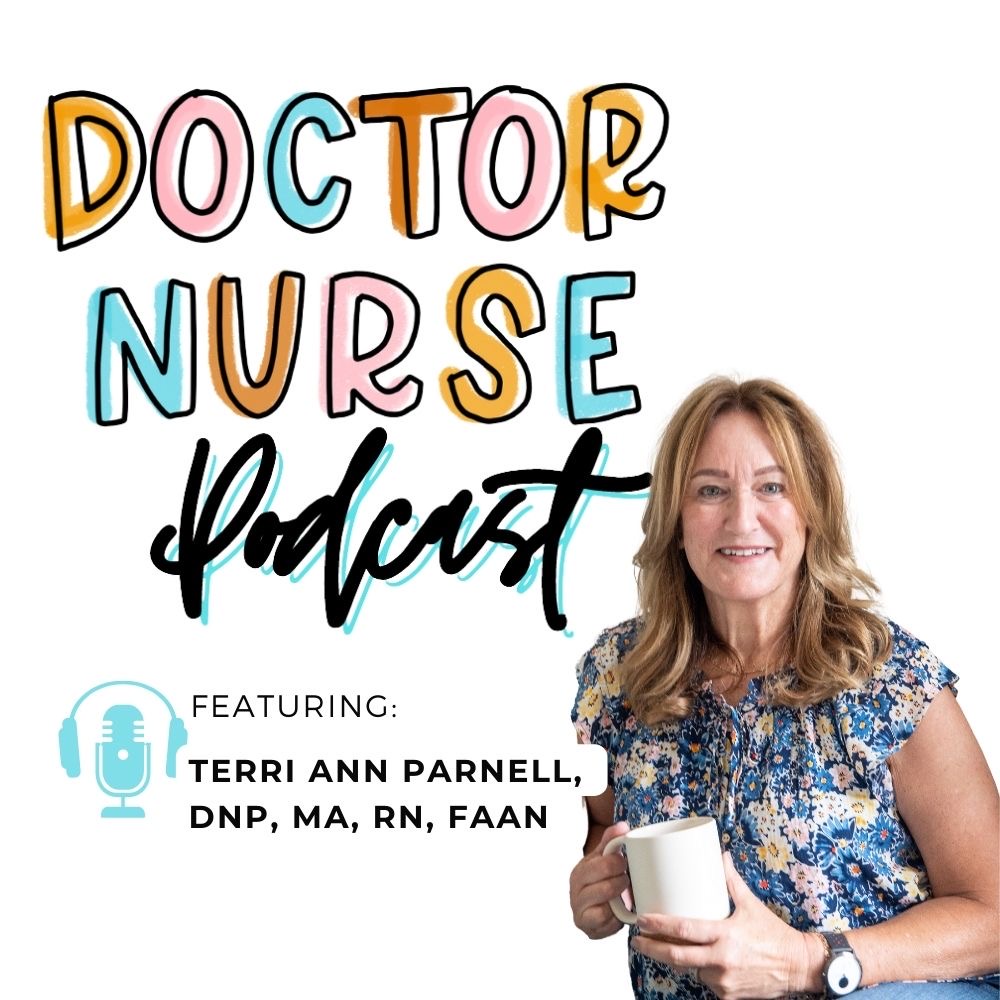
Terri Ann Parnell, DNP, MA, RN, FAAN, is a nurse, a recognized health literacy expert, and an award-winning author. She is principal and founder of TAP Wellness Coaching and Health Literacy Partners.
Her extensive nursing career incorporates hospital and health system management, administrative, and leadership roles as well as faculty roles in schools of nursing, and health care administration. Dr. Parnell is a Fellow in the New York Academy of Medicine and American Academy of Nursing.
Dr. Parnell’s latest venture, TAP Wellness Coaching, combines her decades of experience in nursing with her integrative therapist and wellness coaching credentials to deliver holistic wellness programs specifically for nurses and other healthcare professionals.
Terri’s Links:
https://linktr.ee/tapwellnesscoaching
https://tapwellnesscoaching.com/
Doctor Nurse Podcast Links: https://linktr.ee/DoctorNursePodcast
Picmonic covers thousands of hard-to-learn facts and topics, to help you master the material that healthcare students often struggle to learn. This study system helps boosts nursing and nurse practitioner student’s confidence and grades. Picmonic learning system students increase retention and test scores. Why does Picmonic work? Years ago, psychologists and education researchers found mnemonics to be an effective tool in increasing retention and memory recall. Today, lots of different strategies for learning and memorization using mnemonics exist including keyword, phrase, music and image mnemonics. Using the idea of image mnemonics and applying clever pictures and humorous characters tied together with story and audio — and put it online to create the ultimate studying system for retention and memory recall.
Use code DOCTORNURSE for 20% off your subscription.
Thanks for hanging out with me!
Latest Episodes
Doctor Nurse podcast brings you weekly shows to help INSPIRE, EDUCATE AND EMPOWER nurses with true stories of initiative and impact.
Doctor Nurse podcast brings you weekly shows to help INSPIRE, EDUCATE AND EMPOWER nurses with true stories of initiative and impact.
Latest Episodes
Doctor Nurse podcast brings you weekly shows to help INSPIRE, EDUCATE AND EMPOWER nurses with true stories of initiative and impact.