Also Available On






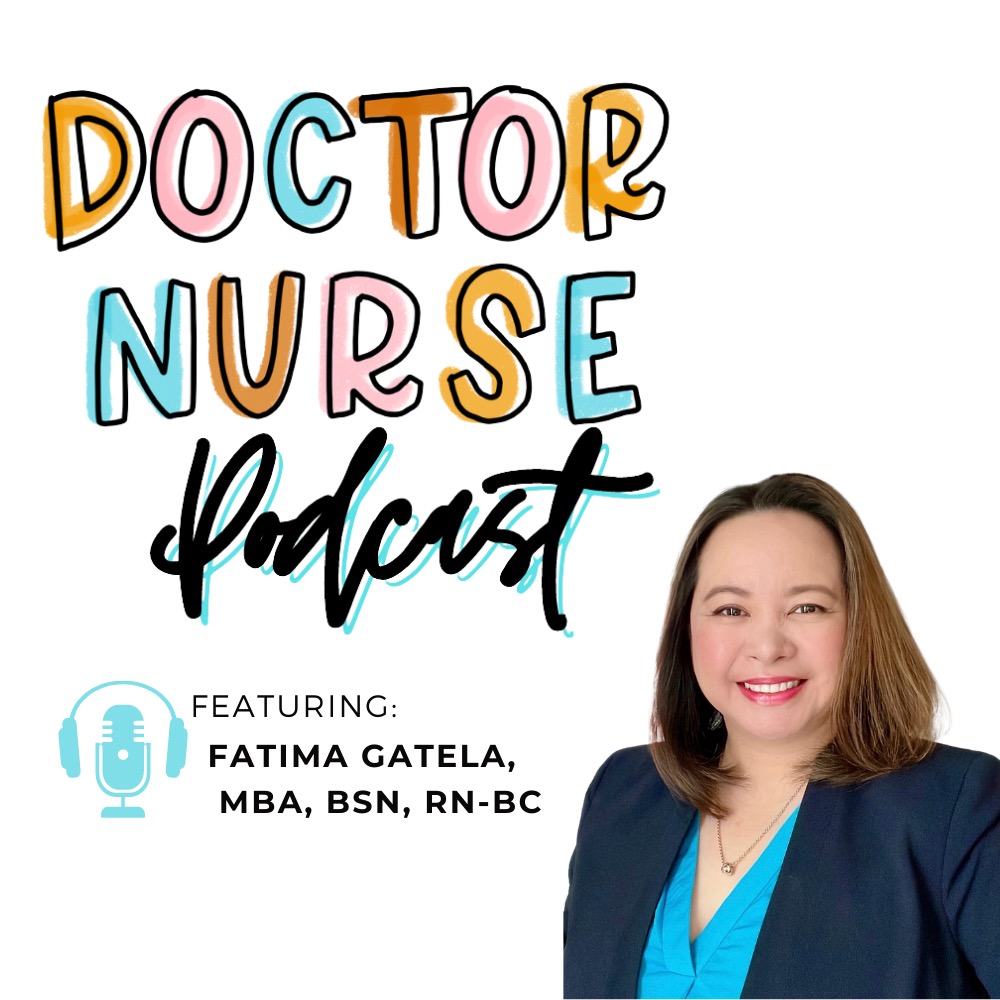
Dr. Sandra Pagenta: Hi, Dr. Nurse Podcast. Guys welcome to the podcast. Today I have Fatima. She is here talking about nursing informatics, so she is my first informatics nurse. I cannot wait to dive into what you’re doing with your career.
Fatima Gatela: Thank you, Sandra. I’m really happy to be here. I’m excited to meet you and excited to share my knowledge about nursing informatics with you and with all your listeners.
Dr. Sandra Pagenta: Let’s dive right in. Describe what your current job title is, what you do for a living, how you see your role and, what it is that you do.
Fatima Gatela: So my current job title is Programs and Solutions Manager. So what it is in more generic terms, is a clinical informatics manager. And what I do on a regular basis involves a lot of problem-solving, a lot of analysis collaboration in consensus building with different stakeholders so that we can come towards an understanding and an agreement of what informatic [00:01:00] solutions.
To provide to our patients and our clinicians so that it helps them make decisions in a better way or better, more informed decisions. And that helps to improve the outcomes of both our patients as well as our other stakeholders, including clinicians and our leadership as.
Dr. Sandra Pagenta: When I think about informatics, and I know that you’re totally gonna like scold me for this, but basically my idea of informatics is emr, a nurse that’s really good at electronic medical records and really is looking for system processes to flow better.
How to make, the nursing world really flow with the technology world. That might be a really rudimentary understanding of what informatics is, but I guess that’s kind of what one of the things maybe a listener is thinking like, Okay, I’ve heard of informatics, but really what does that entail that area of nursing.
Fatima Gatela: Yeah. And you are [00:02:00] not mistaken at all, Sandra. So part of informatics is using systems, right? And using, including the emr, but at its core, informatics really is, and especially nursing informatics. Is about your knowledge and expertise in nursing, and then you marry that. You combine that with your knowledge and skills in other analytical sciences.
So technology being one of them, Computer science being one of them, but also mathematics, like statistics. So that’s one of the. Very basic things about nursing informatics is you need to have some knowledge, skill, and expertise in nursing, and then you combine that with other analytical and informational sciences.
And what you do with that is you use those skills and your knowledge and your expertise. and you use them to transform data and information into knowledge and wisdom. And why do we wanna [00:03:00] do that? We wanna do that so that we can look at problems, we can look at issues and find a way to solve those problems and issues using.
Informatic solutions. So informatic solutions can be emr implementation. That’s one of them. But it can be a report that brings to light certain patterns and trends so that those patterns and trends can be identified and a problem can be Looked at more deeply and therefore solved. So there’s a lot of different things that you can actually do.
In nursing informatics. We use our logic, we use our creativity and our knowledge of nursing as well as other analytical sciences so that we can help. Our patients as well as clinicians, so nurses, doctors, allied health, respiratory therapists, pharmacists, labs, lab staff. We help all of them even help operational [00:04:00] areas.
And help them make better decisions and help come about better
Dr. Sandra Pagenta: outcomes. I’m getting this word picture as you’re talking and you’re describing what you’re doing as like the, you know, the nervous system in the body, how it allows for everything to communicate. I kind of feel like, and dramatics is that those nerves going out from right, the peripheral, like sending out signals to the core of like, Hey, listen, we wanna document a bed wound.
The moment somebody rolls into the emergency room because. We wanna know, did the patient come in with the bed wound or do we wanna with this wound? Do we wanna know if it was acquired when he was here in the hospital? So that needs to be documented. Mm-hmm. . And then that ends up leading into clinical practice.
So the nurse does the skin assessment. The moment the patient hits the door, it goes into the emr, and then we’re able to show, hey, where, when did that. Bed wound occur. And so you’re now able to direct patient care by having kind of marrying those two things. The nursing, work with the EMR [00:05:00] or whatever technology statistics, cuz we know patients that come in with the bed wound, they’re gonna more likely to have da, da da da.
Mm-hmm . So you can actually begin again communicate back to the body in that same analogy that I was describing. And that is an awesome medical.
Fatima Gatela: I love that.
Dr. Sandra Pagenta: I love, But you were doing such a great job describing it. It was just the word picture that I saw and you talking like, so yeah, they’re kind of like the nerves, like communicate with like, how is this working?
What’s the pulse on this? Like is it, is it, is this doing what it’s supposed to? So
Fatima Gatela: that’s another metaphor that we. We use is actually the, a bridge or a translator between different worlds. Cause here’s the clinical world and we use like different concepts, different mindsets we use certain types of terminology.
And here’s the other nonclinical world, right? We, we talk with not just not just developers of technology, but also program managers or project managers. We talk to analysts, and so an informatics nurse [00:06:00] stands in that crossroads and says, Okay, let me help all of you understand each other. Love that.
And
Dr. Sandra Pagenta: that’s a role. Mm-hmm. . Yeah. I love that you’re translator for everyone, And again, it’s such an incredible thing because one of the things that I love about nursing, and one of the things that I have found as I’ve been diving into these conversations with, with nurses that are doing incredible things with their careers is talking about how they’ve married nursing with something else.
Mm-hmm. . And they’re able to find that zone in between that they can operate in. Where it’s like, I’ve married nursing with technology, I’ve married nursing with, you know you know, real estate. I’ve married nurse. Like, they all find little different weird things that it’s like, how did you get here? How did you decide, you know, that these nursing skills can translate into something else?
And I think that that is just such an incredible thing that you were, you were educating other people on. So, You didn’t just wake up and become a nurse in nurse, a nurse in informatics. Like you didn’t just, No. You know, this knowledge didn’t descend [00:07:00] from above. You’ve worked Right to get to this point in your career.
Right. So tell me a little bit about that journey to this spot.
Fatima Gatela: So it was a long and circuitous journey. It started when I came to the us. I came to the US when I was 30 years old as an immigrant from the Philippines, and I started in a med surg unit. I started working in med search unit in Florida.
While waiting for my med, my RN license, I worked for a few months as a cna and then I started working as a Med Sur nurse. But in that community hospital in Florida, they actually already had an EMR at that in the early two thousands. I’m gonna age myself, , I’ve you there,
Dr. Sandra Pagenta: I’ve got all,
Fatima Gatela: So in the early two thousands they had an amazing.
To me at that time, coming from the Philippines where charting was on exclusively on paper they had an emr and it even allowed us to scan the barcodes of our [00:08:00] medications. Oh, wow. So to me, that was like, Oh my God, I really have come to a first world country . It was hard work, but one of the things that.
Was pretty good at, right away was the charting part, , because I felt like I had an aptitude for just understanding where things needed to go what needed to be done on in the documentation. And I didn’t even need a lot of help doing it right, like. I was accepted, but in that sense, I didn’t even need the much percepting.
And one of the questions that I asked my friends and my coworkers at that time was, are nurses involved in building this kind of thing? Because to me, I think it just makes sense that nurses would be involved. , but at that time, I think it was a little too early to be asking that question. Mm-hmm. , they didn’t know.
They thought there might be, but they didn’t know. So fast forward a couple years and I [00:09:00] moved to California with my husband and we moved to Silicon Valley and so a large academic medical center there. and they were, part of their institution was still on paper, but parts, certain parts were already using EMRs and they had a two step EMR implementation project where they initially implemented one type of emr and then about a couple years later they implemented another emr, which was epic.
And it was, I was very fortunate in that institution because they valued education and they were very supportive of my career growth. And I volunteered. I was new to the institution, but I volunteered to be a super user for that. First. I was gonna
Dr. Sandra Pagenta: ask you if you were stick busy. Yeah, we had those. My institution as well.
Super user ethic people. Yeah. Yeah.
Fatima Gatela: Yes. At that time it was actually care cast, [00:10:00] so it’s not a very well known EMR anymore. So I became a care cast super
Dr. Sandra Pagenta: user, which for my listener, I just thought a super user. What does that mean for someone that’s like, I’ve never heard of that.
Fatima Gatela: Oh, okay. So a super user is one of the roles that you can actually do while you’re still at the bedside or in a clinical job.
That’s kind of an informatics role already because you are trained on how to use the EMR system a little bit more than your colleagues. And then when the implementation day comes around or the implementation period, Comes around cuz sometimes it takes more than just a day or two. It takes a week or more.
Sometimes you become the user at the bedside that helps your coworkers. Yeah. So you go troubleshoot, you run when they’re having trouble documenting. And so I have a lot of funny stories about that, but I’ll tell you more about it later. . So I started as a [00:11:00] super user for care cast. When I was new to that institution, I was a step down ICU nurse.
About a year later I was invited to apply to the Neurosurg Trauma icu, which I did. And then shortly after I got off the three month training program in the icu, they were again, looking for super users. This time for Epic. and this is just a testament to how people have supported me along the way because I asked my mentor at that time, I said, I’m really interested.
I, you know, I was really happy to be a care cast, super user, but I’m a little hesitant because I’m new to this unit. And she said, No apply because I’ve seen you as a, as a super user for a care cast. I know what you can do. And then I’ll put in a good word for you. So I was actually one of the newest members in that department, but who became a super user also.
So that was a really, [00:12:00] really valuable experience for me. And that was actually the experience that helped me to decide that I can be a good n informatics nurse. That this was gonna be a career, that I was not just gonna do it to have work, but I was gonna do it because I was good at it. Yeah. I was gonna be thriving, I was gonna be growing.
And so I started. Doing the steps to get there. Yeah. And that’s when I hit some hurdles. Because I didn’t know the first thing to do. Right. Like, okay, I was gonna come up with a resume and try to apply at my own institution. Unfortunately, I was a little late. To the game because by the time I decided to apply, all the roles were already filled.
Wow. And so I said, Okay, now I don’t know what to do. Like, do you know that feeling like you’re [00:13:00] so excited to start? Yes, but you don’t know. You finally found,
Dr. Sandra Pagenta: You finally found what you think that you’re being called to do, right? That, that passion, it’s like, this is where I think I would just flourish.
This would be, this wouldn’t feel like work. This would feel like I was moving in a strength and in something that I’m passionate about, which is easy. And that’s not work. That’s just called working in something that you enjoy. It’s easy. It’s much hard. It’s called fun.
Fatima Gatela: So much. So that’s actually when I started looking back.
That’s when I started to create the system that I teach to other nurses now. But at that time I was just really just trying to figure out how do I break into this nursing specialty. Think is my calling. And fortunately I was able to land a job in another academic medical center in the San Francisco Bay area.
There was some challenges there too because it was now like an hour away from. Where I lived at that time it was [00:14:00] called EHR Application Analyst, was my first job. I absolutely loved it. It was Epic Application Analyst and I actually spent my first day. In the Epic headquarters in Wisconsin, even before I’d, I’d seen my desk at my hospital that I worked
Dr. Sandra Pagenta: in.
So, wait, did that, did that feel like going to Mecca for you? Was that like your, like quintessential Mecca was being able to go to Epic headquarters? Is that what you’re. Yeah. Is like
Fatima Gatela: not, you know, Cause I didn’t, I didn’t know, I had no idea that it would involve training in their headquarters. I thought I was just gonna be trained in, In the hospital.
Yeah. It was. It was great because it was, everything was so new and I don’t know if you’ve been to the headquarters. No.
Dr. Sandra Pagenta: Is it amazing you look at Google? Is it like a Google or,
Fatima Gatela: It’s like a, I think even better than the Google headquarters. Cause I live near the Google headquarters. Yeah, it’s this [00:15:00] huge campus.
Huge buildings. And then the rooms that you study in or you get trained in are, they have themes. And for a geek like me, those themes were like just my alley.
Star
Dr. Sandra Pagenta: Trek Next
Generation
Fatima Gatela: Star. Yes. So the Harry Potter. That is
Dr. Sandra Pagenta: so cool. And this was, so, it was like going mecca. This was like going to like this place you’ve always wanted to see, you know.
Fatima Gatela: Yes. Is that Disneyland for? It’s Disneyland Perfect
Dr. Sandra Pagenta: informatic, Yes. Oh, that’s
Fatima Gatela: so cool. For healthcare technology.
Geek . And of us. Yeah. Then they, you know, they teach you, they feed you there and it’s set in like a pastoral setting. So it’s a geek headquarters set in like very. Pastoral setting with cows in the distance, so,
Dr. Sandra Pagenta: Oh, it’s amazing. Sounds so peaceful. You didn’t wanna leave? I think , I think you really liked that.
Yes. So they, they trained you there so that you They
Fatima Gatela: trained me there to prepare for [00:16:00] my first job in nursing informatics. And so I did that for a couple years. Helped that institution implement Epic. After that I went to consulting. And the reason that I went to consulting, consulting was never in my plans.
But at that time a lot of my friends and coworkers went into consulting and they, they were telling me, you know, you can work for three months and. One month off, then work for another three to six months and take another month off. And I had a little baby at that time and I’m like, Sign me up. to do that.
Dr. Sandra Pagenta: Yeah. Is it pretty lucrative? Is that why you can kind of work and then take a break and work? Take a break? Yes.
Fatima Gatela: Yeah, at that time was very lucrative, I think also because just of the demand at that time. At that time it was around 20. 12 20 13 I don’t know if you remember the Affordable Care Act.
Part of the Affordable Care Act is the High Tech Act, which mandated
Dr. Sandra Pagenta: hospital primary care in the US Yes.
Fatima Gatela: To, [00:17:00] yes. To implement an emr, a certified EMR by 2015. And so if they met that deadline, they would get. Incentives, but if they don’t meet the deadline, then penalties would start after that. So in 2012 and 2013, there was a lot of demand for consultants like I was.
And that was why it was
Dr. Sandra Pagenta: Rative. You were your mama and you wanted to be home, so it gave you flexibility. Yes,
Fatima Gatela: Yes. Fantastic. And I did have like a kind of a high standard because I was a new mama. My friends traveled to their client site every from Mondays to Thursdays and came home either Thursday night or Friday night.
Or Friday morning, and I said, I don’t wanna do that because that’s a little too much. I said, I think the, the minimum I would do is every other week. And so I had those other standards and it took me about 10 months to find the institution that you know, kind of met [00:18:00] my goals or aligned with my goals.
and I loved it. And so instead of doing what my friends did, which was take like a contract for three to six months and then take a one month break, I ended up staying at that institution for a little over three years. Wow. As I consulted, as I consulted.
Dr. Sandra Pagenta: So by holding out for what you wanted, you were able to actually find something that was long term.
And I think that’s important for our, for my listeners to hear. Like sometimes you think it’s just a quick fix, like just take it whatever. Be glad you’re in work, but you’re not prioritizing. And I talk about this all the time, to prioritize your goals and the non-negotiables. These are things that you’re just, It’s not happening.
It’s just can’t, it can’t be done. Because once you set your mind on that and you fixate on that goal, the universe begins, and I, I hate to say the universe, but things begin to, I understand things begin to a align where you’re just like, And I found exactly what I was [00:19:00] looking for and then ended up being three years.
You know, It’s just like I would’ve never thought, you know.
Fatima Gatela: Right, And in the beginning I thought like, am I doing this wrong? Because I was on the phone, I, you know, almost every week talking to recruiters for several months, like almost 10 months, and some, something just wasn’t clicking right. And I’m like, and then my friends were going off consulting and telling me about, you know, staying in hotels, in their hotels and all their travel being paid for and so on, so forth.
I’m like, but I don’t wanna go if it doesn’t meet. These like three things that was in my mind. Yeah. And you’re looking
Dr. Sandra Pagenta: at your baby, like, I don’t wanna leave
Fatima Gatela: you. Right. I don’t wanna leave my, That was, that was one of it. Like, I don’t wanna leave my baby every week, like every Monday to Thursday. And so yes, it does click when you hold up for.
For your goals and, but sometimes it takes a while. to click [00:20:00] yes. Yes,
Dr. Sandra Pagenta: stay true. That was stay true. Yes.
Fatima Gatela: Yeah. And then after that my family’s needs changed. My own needs changed and I wanted to be local cuz my daughter was growing up and she had school. I wanted to be part of whatever things were happening in her school.
Right. Not even doing the. Few times that I traveled for for that consulting job. And so I took a local job and I actually thought I was just gonna be there for a short while. But I’m here. I think I’ve been here for six years now. Oh, wow. Cause I love it. I love you. Love it.
Dr. Sandra Pagenta: What do you love about your job?
Fatima Gatela: I love that I have the opportunity to make positive change not just on systems, but on patients right through, by making positive change in the workflows for clinicians and how we’re. We’re approaching [00:21:00] the issues and problems that clinicians have so that they can, as I mentioned, make decisions better or have the, the information at their fingertips or just make some tweaks in their workflow that it’s gonna make it better.
And the other thing is that I am now a man manager and I’ve had the opportunity to hire and coach. Informatics nurses in my team. And so seeing them, you know, grow in coaching and mentoring them in. Transferring my knowledge and skills to them is something that I felt so fulfilling that, you know, I’m, I’m staying ,
Dr. Sandra Pagenta: so like I love this.
Yeah, no, because it’s true. When you get to a certain point in your career where you understand really what you’re doing and you’re an expert in your field, then it really does become incumbent upon you to. Ex take that expertise and give it to people and say, Hey listen, I understand this really well and I want you to be [00:22:00] successful, so I wanna build up others because now this is your legacy, right?
Fat, see my leg? That’s what you’re describing is I’m creating my legacy. And you’re doing that not only through your work, but you’re also doing that through your coaching business, which I would love to hear a little bit. So you do your own, you have your own little side hustle, which you know here, the Dr.
Nurse Podcast. Yes. I’m all about that. All about making that little side. So yeah, tell me a little bit about
Fatima Gatela: that. So my side hustle actually started as something that was just for my own convenience, which was when I started my very first nursing informatics job my friend started asking me about it, right?
Like I, I was in a high, in a very high acuity icu situation, and suddenly I. Switched. I gave my two weeks notice and they were like, Where are you going? I said, I, I’m gonna be an informatics nurse, . And so people were like, What’s that? So I started sharing with my friends, and then they started sharing with other people in our unit.
[00:23:00] And so between the time that I gave my two weeks notice and the time that I left, Other nurses in my unit, some of them I didn’t really know very well. I dropped into my room, dropped by my room and started asking me questions and I answered them. But then I was started getting text messages from people I hardly knew from my own hosp.
Yeah. Was answering you know, similar questions. So I said, Okay. I’m gonna make a Facebook page so that I can direct people to that Facebook page. That’s a good idea. This was in 2010 and I started, and Facebook pages are not the most easy things to upload, update, and so on. Yeah. And so the, the year after that, I said, Let me make a really basic.
Webpage about nursing informatics. And so I just came up with a webpage and started like little blogs here and there. And and whenever someone would ask me, I said, Oh yeah, look at my blog. And for a while I forgot all [00:24:00] about my little blog because it was just there. And I would just answer like a few comments here and there.
But later on I was getting a lot of comments and, and messages from, it actually started with nursing students who were asking me to help with their homework because their homework had nursing informatics questions. And then it was Masteral students and then a few DMP students. So I’m like, Oh, maybe I need to update this little blog.
Yeah. And so I started updating. And other nurses found me who were not just interested in the academic part of it, but they started asking me about like, how do I improve my resume? Or like how do I, like, what’s the first thing I need to do? And so I started helping them in that way.
Dr. Sandra Pagenta: Yeah. Cause there’s no certification to be a nurse in informatics.
You don’t have to. Take a certification or have they developed that? Now there is
Fatima Gatela: a certification by a ncc, but it’s not a requirement. It’s a [00:25:00] certification. More kind of like an affirmation. That you know what you’re doing, that you know what you’re doing. Yeah. But it’s not required by many. Some, some job postings say preferred, but not really required.
Okay. Got it. And so for a while I was just doing that, like helping people on a one-on-one basis. And then it came to the point where, I was kind of juggling too many questions from many different people. And a really interesting thing happened in 2019. I said, Okay, let me like create a group training thing.
And I’ll take about three months to prepare for it. I’m gonna distill all my knowledge from. Over a decade for almost a decade at that time of knowledge and, you know, work out the system that I used to land. Not just my first job, but my, you know, my, my first three jobs as an informatics nurse and I decided that I would start doing that in [00:26:00] February, 2020.
Very interesting. Because, Let’s go back. You know what happened in January
Dr. Sandra Pagenta: 20 every, Yes. Everyone now everyone went
Fatima Gatela: remote. . Yeah. And wanting to work from home. And so I, that’s what I started doing. And over time I’ve made some improvements in, you know, in the training program. I’ve seen results in other nurses.
and I’ve seen like one of the very first things that I was able to help them with was gain clarity about what it is that they actually want from nursing informatics, because nursing informatics or being an informatics nurse is not a. It’s not a one type of role. There’s actually different roles in nursing informatics.
You can be a coordinator. You can be an analyst, you can be a developer, an educator or a combination of these things. A project manager, a consultant, right? And so one of the [00:27:00] first things that I teach is these are the different roles. What would you like to do? And it is kind of like a, a clouds party moment for many of them because they think, Oh, an informatics nurse is someone who does things with an emr, kind of like you, you gave an example earlier.
And, and so when they, when they realize that there’s so much more. To do and to grow into. They’re like, Oh wow, this is really what I wanna do. And so I’ve been doing that since early 2020 and really also enjoy, you know, mentoring and coaching and training other nurses to get started in this. Like growing specialty.
It’s a new, growing, thriving specialty. And so I’m really excited about that.
Dr. Sandra Pagenta: I think that is just absolutely [00:28:00] like quintessential, like I feel like it was a poster for Child, for the Doct Nurse podcast, like you would be it, because it is just, again, watching a nurse, totally just immersing herself in something, getting really good at it.
One, prioritizing her needs in nursing to make sure that Right. She’s a present mama. She’s doing the things that she can’t look back at the end of her life and think, mm-hmm. , I chose this consulting job and I, I burned myself out. I missed this time with my child. Like you were just like, No, Like, I just, I waited, I.
I waited for that fish to come along to catch that was the one that I truly wanted. Right. And then you were able to still continue progressing your career while you were able to prioritize the thing that was the most important to you. And Yes. And then at the end, now that you’ve got all this depth of knowledge, you’re able to create something that you can then have complete autonomy over and have this side generating income.
That eventually, you never know what this will lead to, especially as you continue to [00:29:00] show yourself as an expert and that you truly understand how to get people from where they are to where they want to be. Yeah, this is a service that you’re creating and now you’ve got something that you’ve got complete autonomy over.
That is just, again, I think. Like, as I look at my career, the thing that I want for my career is just, I don’t necessarily always want, I, I didn’t, I didn’t realize that, but I, I’ve learned that this is not the thing that I’ve always wanted was just to beholden to the hospital work or. You know, whichever.
But to be able to go and say, Hey, listen, listen, I’ve got this thing that I can share with the world that’s mine. And I think that’s just absolutely the coolest thing. And really just like I said, total picture perfect of, of what I think more nurses need to celebrate and talk about. So thank you for sharing all that.
I love your journey. Oh, very welcome. Incredible. Your insight. Into yourself and what you really wanted for, for, for your life. And I, I just think it’s really great. So I want to talk a little bit about, one of the things I was thinking is like [00:30:00] you also just finished your mba and how you decided, or why you decided to choose the mba.
Over the master’s degree in nursing, the msn. We were talking before the podcast and I was like, Yes, I think we need to bring this up and talk about it. Because a nurse that might be like, Okay, well I’ll just get a master’s degree in nursing and then become a nurse, you know, in, in informatics or you know, why did she get the mba?
And I kind of wanted you to delineate as to why you chose that over the master’s in nursing.
Fatima Gatela: Yes. Before I do that, I just wanna, I wanna say that I support lifelong learner, lifelong learning by nurses, right? Whatever format it takes, whether it’s a formal degree, like an MSN or an mba, or if nurses pre other nurses prefer to.
Do more like courses or boot camps because I’m one of them. I’m one of you who are out there trying to learn as much as I can. Not so much to earn more, but really to just. Be the best that I can be, whether [00:31:00] it’s being a, you know, , being a, a good mom or a good manager, or a good informatics nurse, like I just wanna be that person who aims for excellence, not perfection.
Just excellence.
Dr. Sandra Pagenta: Oh, we’re, I love every, like please tell me more, like what other, like, life like lessons have you learned. Tell me all them, because you’re so wise. Yes. .
Fatima Gatela: Thank you, Sandra. Know, wisdom comes from challenges, right? From lessons learning mistakes made. But going back to the MSN versus mba decision that I made, it was not an easy decision.
It actually took me years to decide, should I do an msn, Should I do an mba? While I was thinking about that, at the back of my mind, my career progressed as careers too. And I found myself in a position where my scope was no longer just about nursing informatics. I was, you know [00:32:00] Responsible for programs that involved provider workflows and programs that involved like enterprise wide issues and solutions.
And, and so when I thought about that, I said to myself that in MBA seem to be a more appropriate formal education for me. But even the, the decision to go with an MBA took a while and the decision about which school to go to, to go with took a while because an MBA is not an easy Graduate degree to, to obtain or to apply to.
And here again is, you know, my standards and my goals because I was telling my hobby when I was finally made the decision, I said I wanna fully online mba and I don’t want to pay. I want to be You put that out there, I want
Dr. Sandra Pagenta: you
Fatima Gatela: put it out there. I put it out there, . I don’t wanna pay for it. I wanted, I wanna be in an [00:33:00] MBA program that would give me a hundred percent scholarship.
And so very interestingly, I found an MBA program that was a hundred percent online. And this was around July of 2020. And they were enrolling students. And because I think partly because of the pandemic, they weren’t requiring a gma and, and they were offering scholarships to some students, so merit based scholarships.
And so I applied, I got in, I got a 30% scholarship, and I’m like, Should I ? Yeah, because this is not the 100% scholarship that I , and so I emailed the admissions officer and I said I think that I should get a hundred percent scholarship nicely, very nicely. For these reasons. And they were very nice.
They responded right away and said you know, we have a panel that makes the decisions. We really can’t. But have you tried. Contacting your employer because they [00:34:00] might have some programs. And I said, Okay, let me look into my benefits. Cause I didn’t really look into that and it looked like my employer would reimburse certain educational activities.
And so I emailed HR and they said they would reimburse this mba.
Dr. Sandra Pagenta: Out there, you’re like, I’m just gonna wait for it to show up because it’s coming.
Fatima Gatela: I put it out there. Yes, it’s coming. And so it wasn’t, it wasn’t easy, right? Cause because of the pandemic, there were increased workloads, increased challenges for everyone.
I, I’m sure nothing. Comparable to what our nurses at the front lines experience. I, you know, nothing close, but there were other challenges to getting my team to to be remote or partly remote. That was one of the things that was a challenge, because it’s easy to think, Yeah, I wanna be remote, but, but there’s actually a lot of things that need to go into.
Being remote, like, do you have the right equipment? Do you have the right [00:35:00] chair? So that you don’t get a backache. So, so I am just very glad also that my supervisors and my organization was very supportive of, you know, making things happen correctly for, for that. But those were some of the challenges.
That I was having while I had committed to doing the mba. So, ,
Dr. Sandra Pagenta: you’re a beast. You’re absolute beast.
Fatima Gatela: Fast forward 14 months and after literally not so much blood, but a lot of sweat and some tears I attained my mba. Wow. I’m really happy because there’s a lot of very helpful information, and one of the things that I really loved about it was the, I didn’t know that improvements in operations can be measured. That closely. So one of the things that I learned is, you know how in grocery stores that you you feel that you [00:36:00] are in the slowest line.
And when you transfer to another line that becomes the slowest line, why does it always happen to me? And but there are some retail stores that just have the one line, right? And then as soon as another cashier opens and you go to that cashier, and that has actually came about by. MBA type folks studying that workflow and putting formula applying formula as to how, you know, that flow can be improved.
So that was one of my eureka moments. Like, Oh my God, I can measure these certain, you know, steps in the workflow and improve them. Using yeah, an analytical.
Dr. Sandra Pagenta: It’s really cool to see your passion. Yeah,
Fatima Gatela: and I embrace Myness.
Dr. Sandra Pagenta: I love it. I, you know what is so funny? I love Star Trek and it was one of the things that my husband, when we got married, he was like, so like, you watch, like, like old story track and I’m.
Yeah, like Deep Space Nine, like [00:37:00] Voyager, like, Oh my God, yes. I love those shows. And he’s like, That is so nerdy. And I’m like, Well, don’t tell, I guess. Don’t tell anyone. I don’t know. Now I’m here, I’m announcing on the podcast. I like start track Deep Space nine with Captain Jane and Oh yeah. Voyager Captain Jane.
So, yes.
Fatima Gatela: Yeah, yeah, yeah. I love those shows. Yeah. I’m a. My ideal captain is Captain Picard. Oh. But I feel like Deep Space Nine speaks to me in a different level cuz I feel like they’re my neighbors .
Dr. Sandra Pagenta: Yeah, that’s so well said. That’s a different story. You’re so right. Like Picard is like, he’s the one that we all aspire to be.
But yeah, I loved Captain January. I just felt like she was so relatable and Yeah. I would, I, yeah. Total nerd here with you. To see you and your passion is so inspiring and to hear how, again, you set in your mind this thing and then you just wait for it to be fulfilled.
And that’s something. I’ve been reading a lot of books on kind of the laws of attraction and kind [00:38:00] of bringing these things to you. You have to set it in your mind and you have to fixate on it. Right? And you can’t break. You can’t, And again, like that’s what you’re sort of, you’re like, Well, should I 30 percent’s not a hundred, should I?
And then you’re like, I’m gonna email him, tell him I want a hundred. And then, yeah, like you’re just like, No, I’m gonna keep going back to that, that goal in my mind. And I think, again, that’s why I believe anyone can obtain anything. If you just set your mind on it and you just fixate and you just pour yourself.
Fatima Gatela: What were you gonna say? One of the things that I teach during my training program is to advocate for yourself, right? Because you can’t wait for other people to advocate. You definitely, there may be times that someone else will, but you know yourself best. So advocate for yourself. You do it in a courtes, respectful, even humorous manner, but, Do it.
Dr. Sandra Pagenta: Yes. I love that. So for the last question of the podcast, I think we’ve talked about [00:39:00] challenges, we’ve talked about mentorship. So could you tell me a little bit of advice that you would’ve get to Fatima as she was this baby new baby nurse that you would look back and say, I would’ve told her this piece of advice to hold onto and a piece of advice to toss to a brand new nurse starting off in her career you wish you would’ve known?
Fatima Gatela: So to myself, Who was crying when I was a brand new med search nurse. Yes, because no ratios and not very good pay. It’s med surg. Yes. And very hard work. I was crying literally to my grandma in the Philippines. My grandma raised me and I was like, I wanna go . Yeah. To her I would say, It’s gonna be okay.
It’s gonna be okay, right? Like, do your best and figure out what you really wanna do and then go after it. And it’s gonna be okay. Like, just relax a little bit. Kid .
Dr. Sandra Pagenta: Yeah. I feel like so many guests have also said that. Mm-hmm. , just, it’s gonna be okay. Just hanging there [00:40:00] and again. Mm-hmm. , I think you’ve learned over time just to not compromise on those things.
I think that’s been a, a persistent message in your story of just set your mind on the things that are important to you and just don’t deviate. Don’t settle, don’t, don’t pick second best just because you think first isn’t coming. Because it’s coming. You just gotta give it, you gotta give it a little bit of time.
It might not be right at the time that you think it should be showing up, but it’s coming, right. So just hang in there and it’ll work itself out. That’s really great. So for the last part of our interview is the rapid fire questions. Fatima, are you ready for the rapid fire questions? Sure
Fatima Gatela: thing.
Let’s go.
Dr. Sandra Pagenta: What is your favorite Star Wars Charact?
Fatima Gatela: Leia.
Dr. Sandra Pagenta: Oh, Leia. OK. Leia. And to you, what is the best age to. My age, , the h i,
Fatima Gatela: right now, whatever age I am is the best
Dr. Sandra Pagenta: age to be . I totally agree. And for the last, the last interview question I’m gonna go off script here. If you could be any Star Trek character, what [00:41:00] would you want to, like, what role would you wanna play?
Fatima Gatela: Oh, that’s tough. . I think I wanna be Captain Picard for a year.
His job, I think is fun because he is able to make like a dent in the universe as, as Steve Jobs would say. Yes, like a small dent, like a change, a positive change. But then it also brings with it its own stressors, right? Yeah. Because it is such a, Highly visible. Yeah. Job. Yeah. Sometimes I wish I was like, Spock,
Dr. Sandra Pagenta: I wish because say Spock.
I wish I literally as soon as you finish, I was like, What about Spock? Like he’s pretty cool cause
Fatima Gatela: nerd and can compartmentalize super
Dr. Sandra Pagenta: analytical like,
Fatima Gatela: Yeah, but I think later on we kind of thought that Spark repressed a lot of his own feelings and then that didn’t go quite well for him. Yeah. So I don’t wanna be the, I don’t wanna be one that represses or suppresses [00:42:00] my self to Oh my gosh.
Yeah. To be able to be like, To be like perfect, like I said earlier. Mm-hmm. , I don’t aim for perfection, I aim for excellence, and I want to have joy. I think that, and at the end of the day that’s what I was going for. Like to have joy in my career and in my life and to be in a place where I’m not just doing things to do them, but because I love
Dr. Sandra Pagenta: doing them.
That is so deep. I didn’t even know we were gonna go do that deep with that question. But honestly, what you just said is so true because you want to be able to experience things in Spock doesn’t really get to move into his emotions. He’s gotta stay very constrained and confined even though he’s very analytical and he has this ability to think and all those different things.
Right. Super deep processing on Star, on Star Trek, and you know, tying into nursing, it’s totally like what I’m about . For those of you that are listening, thank you for [00:43:00] tuning in today. Fa mate, thank you for your time. .
Fatima Gatela: I enjoyed. A lot speaking with you. I hope we can speak again soon. Yes. Recorded or not recorded, and thank you for giving me this opportunity to share some of my thoughts and experiences with your listeners.
Absolutely. Hi everyone.
Dr. Sandra Pagenta: And guys, I’m gonna link all her information in the show notes so that you guys can find her, check out her coaching program and just yeah, message her if you are wanting something. She’s so much fun on Instagram’s how I found you. So I love your energy on there. Keep it up girl.
And yeah, thank you. I feel like we’re kindred spirit, so I really enjoyed just getting to talk to you, .
Fatima Gatela: Thank you
Dr. Sandra Pagenta: Sandra, thank you so much. Be I have a wonderful day.
Podcast Description
Fatima Sharon Gatela MBA, BSN, RN-BC in Informatics Nursing. Fatima has a deep and enduring passion for Healthcare, Nursing, and Technology. She currently works at one of the country’s leading academic medical centers, where she helps to ensure that electronic health record (EHR) clinical documentation and content are consistent with federal and state regulations, as well as with organizational policy. She facilitates the improvement and development of EHR tools.
She is also involved in various aspects of clinical informatics, data analytics, and process improvement projects, among others. Previous to this, she was an EHR application project team member at two of the United States’ top-ranked healthcare systems, where she was involved in creating and deploying electronic documentation tools, and troubleshooting EHR and documentation, workflow, and project-related issues. Her clinical experience prior to her transition to Nursing Informatics culminated in a role as a Neurosurgery/Trauma critical care nurse at another wonderful, top-ranked academic medical center, where she was also a clinical application superuser for two EHR implementations (IDX CareCast and Epic).
Her advocacy is twofold – to encourage more clinicians to become involved in informatics-related jobs, roles, and projects, as well as to help them have the tools to excel and be happy in their chosen career path whether it is at the bedside or elsewhere. She believes that nurses have a wealth of caring experience, critical thinking skills, and in-depth knowledge of clinical situations and workflows that enable us to help each other, our workplaces, and ultimately, our patients and their families, in many different ways.
Fatima Links:
https://theinformaticsnurse.com/
Doctor Nurse Podcast Links: https://linktr.ee/DoctorNursePodcast
Success NP- Etsy Shop:https://www.etsy.com/shop/SuccessNP?ref=seller-platform-mcnav
Picmonic covers thousands of hard-to-learn facts and topics, to help you master the material that healthcare students often struggle to learn. This study system helps boosts nursing and nurse practitioner student’s confidence and grades. Picmonic learning system students increase retention and test scores. Why does Picmonic work? Years ago, psychologists and education researchers found mnemonics to be an effective tool in increasing retention and memory recall. Today, lots of different strategies for learning and memorization using mnemonics exist including keyword, phrase, music and image mnemonics. Using the idea of image mnemonics and applying clever pictures and humorous characters tied together with story and audio — and put it online to create the ultimate studying system for retention and memory recall. Use code DOCTORNURSE for 20% off your subscription. https://www.picmonic.com/
Become a NP Preceptor and make up to 8,000 bucks a year: https://nphub.com/preceptor/beforelogin
Latest Episodes
Doctor Nurse podcast brings you weekly shows to help INSPIRE, EDUCATE AND EMPOWER nurses with true stories of initiative and impact.
Doctor Nurse podcast brings you weekly shows to help INSPIRE, EDUCATE AND EMPOWER nurses with true stories of initiative and impact.
Latest Episodes
Doctor Nurse podcast brings you weekly shows to help INSPIRE, EDUCATE AND EMPOWER nurses with true stories of initiative and impact.