Also Available On






Dr. Sandra Pagenta: Hi Daniel. Welcome to the podcast. I said a little bit about who you are before the podcast, so again, just welcome. Thanks for coming on to talk to my cast.
Daniel Tran: Yeah, absolutely. Thanks for having me.
Dr. Sandra Pagenta: So happy to have you on. I’ve introduced my guest to you prior to the podcast, but again, super happy to have you on today to talk about everything you’d be doing in your nursing career.
Daniel Tran: Yeah thanks for having me. Super excited to be here and yeah, let’s get.
Dr. Sandra Pagenta: So, yeah. One of the things I, was saying earlier was I was so glad that I finally had a male on the podcast.
It’s been like a whole female run for a while, and I’ve been like missing some, like male energy. So I’m super glad you’re, you’re here today. Let’s, let’s dive in. Tell me a little bit about yourself as you see yourself and kind of what you do on a day-to-day basis in these recent, these recent times.
Daniel Tran: Yeah, absolutely. So I work online as a personal finance coach for nurses, and I know that’s not. Very conventional job. So we’re gonna have you explain it a bit. So mainly, you know, I help nurses take control of their finances so they can, you know, get on track to achieve financial independence, get on track to retire early.
I’m just making sure that, you know, nurses, if they have any kind of debt, if don’t build their savings, they wanna learn how to invest, build credit, develop a healthier relationship with money, just anything personal finance related. I help coach nurses on that.
Dr. Sandra Pagenta: Interesting. So you’ve become a personal finance coach.
Does that mean you are no longer working as an rn?
Daniel Tran: Yeah. So just for some background people ask me this all the time, right? Yes. So I am a nurse. I still have my license. I’m not practicing anymore. I actually left the bedside November of 2021. So it’s been a bit over a. . I worked as a nurse for around three years on adult, like a psychiatric mental health unit.
And then eventually transitioned to full-time as. As a muddy coach online.
Dr. Sandra Pagenta: Oh, that’s kind of neat. A lot of nurses that listen to my podcast are looking for different things to get involved in how to kind of branch out from the bedside. And so to hear you describe, you are a nurse and now you’ve moved into this, you know, personal finance space that fantastic.
So what led you to kind of start this, because you didn’t wake up one day and just go like, I’m done with bedside. Completely chuck it and just go into personal finance one. You had to figure out personal finance. The other thing too is how did you branch into personal finance and then what was kind of your transition into. Stepping away from the bedside.
So yeah, tell me a little bit about side hustle, turning in into the main hustle.
Daniel Tran: Yeah, I think you hit around the point, there’s like two, like two aspects to it. There’s the personal finance aspect and there’s the entrepreneur aspect. As far as the personal finance, I’ll, I’ll hit on that a little bit.
So, you know, whenever I first started as a nurse, started at 25, 60 an hour. I mean, I live in Texas, so cost of livings a bit cheaper here. Yeah. But I knew that, you know, even though it wasn’t a ton of money, that was more than I was ever making beforehand my first big boy job. Yeah. And I knew that if I was smart with it, even though it wasn’t a lot, I, I could take it pretty far.
I’ve seen examples of it. Just cause my parents grew up like not with a lot of money and they, they took that money pretty far. Just being like, pretty frugal with it. So I knew that if I did that and also invested, I wouldn’t have to work for the rest of my life. So that kind of got me interested. I didn’t expect to become like super obsessed with it, but it’s like a rabbit hole.
Anything, like any hobby that you get super into, just get super obsessed with it sometimes. So that went, that went pretty far. And then what really sparked entrepreneurship, like starting my business was was covid, right? So Covid was, I mean, just the pandemic in general. Whenever it. I know it’s a tough time for a lot of people, you know, but honestly, that’s one of the best times of my life, especially someone with my personality, who’s very, very introverted.
Does a lot of like deep thinking and like self-reflection. Just that time was, was tough for, for a lot of us as nurses, right. And really got me thinking like, what do I want to do first of my life? You know? And it certainly wasn’t bedside. I always told people, even whenever I first started as a nurse, If I wasn’t working nursing two or three years from now, then don’t be surprised.
But the thing is, like whenever I said that, I had no idea what I was gonna do. I just, I just said that. Just talk. Yeah. . Exactly. Just talking. It’s manifest. Yeah. I’m not gonna be here long.
Dr. Sandra Pagenta: I’m not gonna stay here long.
Daniel Tran: Yeah, precisely. So it just got me thinking, you know, should I go back to school? Should I become like a health coach, personal finance coach?
I, I entertained all those ideas. You know, when personal finance coaching was actually the third one on that list, I, I tried, I looked into health coaching first. Looked into going back to NP school first decided not to do those cuz I dunno, it, it just didn’t, it didn’t fill my cup where it didn’t excite me as much as personal finance coaching.
So I started, started doing that for some, some coworkers from, for some some, some close friends. Saw some success out of it, started one on one coaching. Eventually launched my my coaching program. Things took off from there and here we are.
Dr. Sandra Pagenta: Oh my goodness. So when did you officially leave the bedside? Was it at the two year mark
Daniel Tran: It was around the three year mark, but it was a slow transition, you know, I wouldn’t say slow, but it was, it was more so gradual. You know, was full-time, went to part-time pr, red and Ben left altogether in November of 2021. .
Dr. Sandra Pagenta: Nice, nice. So again, one of the things I love to bring up is once you shoot for the stars, like, I’m not gonna be here long.
I got, I’m in two years, I’m gonna be out. Y’all gonna see me, I’m gonna be gone. You’re not gonna see me, I’m gonna be gone. Like, whenever you create that narrative and you start that, you sort of tracking those things to you, right? And so the whole mentality of like, well, I don’t wanna say anything cause you know, I might jinx.
It’s like, no, put it out there because the more you put it out, The more you end up bringing that stuff to you. You don’t have to be afraid and try to like pretend like you know, oh, I’m gonna be doing this for the next 50 years. Maybe you actually say it out loud. You’ll start to believe it. And then again, these things will start to come to you.
So I think that is so cool when I think that’s really neat about your side hustle and how again, it just started slow. That’s awesome. That I advocate for nurses all the time. Don’t quit your day job. Don’t quit your nursing job. Use your nursing job to set yourself free. Yeah. . And I also love that you had multiple things that you were thinking about and you threw a process of elimination.
Were like, Hmm, that doesn’t fill my cup. Being a nurse practitioner sounds super great. It’s what the school is telling me I’m supposed to do is the next step. Yeah. But that really doesn’t fill me up. It doesn’t bring me joy. So why would I do that? Smart. Mm-hmm. . And then secondly, like, with, you know, health coaching, you’re like, well, maybe I like it.
No personal finance. And so again, you just got to kind of figure out where is an area that doesn’t feel like work for you, that just brings you a lot of joy and you get to work out of that space and then use your nursing degree to help bankroll your life until you can let that take over, make it. .
Daniel Tran: Yeah.
Yeah. This is a great point. Just because, you know, a lot of people, they, they choose nursing. They work for a couple years. They, they just realize they don’t wanna do it at all. And I wouldn’t say that’s a mistake. I don’t regret choosing nursing at all. You know, even though I didn’t like it that much, I learned a lot gave me a lot of stability.
And that’s, that’s a gift, you know? Cause with nursing, like the schedule’s so flexible. You have four days off to work on a side hustle. I mean, most jobs aren’t like that, right? You have just two days off. You have the weekends and the weekends. No one wants to do anything. So for me it was, it was a huge blessing.
A blessing. It gave me stability as I worked on a side hustle. See what words, what didn’t work. So for me, I don’t, I don’t regret choosing at all. I think it’s a beautiful thing. It’s see huge stepping. So my. Built a lot of character, and for sure, I can say without any kind of doubt that working as a psych nurse made me a much better coach, you know, prepared me to receive hey, comments on Instagram.
That’s, that’s nothing, right? , I dealt with a lot more as a psych nurse, . You know, of course, like nurses work hard, so I, I really do attribute a lot of my character traits, my work. Towards being a nurse, so definitely made me who I am today.
Dr. Sandra Pagenta: A hundred percent. Yeah. What are some of the aspects of nursing that you found really difficult?
And I don’t really talk about this very often, but I find it interesting that you brought that up and so I kind of wanna dive down deep into that. Like what were some of the things that make nursing difficult for those people that are like, okay, it’s hard, but isn’t it just always hard? Like, what are some of the things that you struggled with that a nurse that’s listening right now will go like, yeah, me too.
Like. Maybe it is time for me to think about some, like something else, because again, I think it’s individualized. And I think you posted something on Instagram. I was, I follow you on Instagram. I think you’re great. And so like one of the things that you wrote was just like the abuse that you. with, you know, we’re under at different times.
And again, psych patients, they’re not fully there. Mm-hmm. . But still, abuse is abuse regardless of if it’s coming from somebody that’s got their whole mind together or they don’t. Mm-hmm. . So what are some of the aspects of your job that were really tough for you? As an rn?
Daniel Tran: Yeah, that’s a great question.
So much to choose about .
Dr. Sandra Pagenta: I know, right? Just you can just gimme like the top like two things that were just like really tough. Yeah, yeah. I got it. But you look back and you’re like, don’t miss that at all. At all.
Daniel Tran: Yeah. So me Nash, I’m a very empathetic person. That’s why I chose to be a psych nurse, right?
I mean, whenever I did psych clinicals in nursing school, I couldn’t see myself doing anything else. I just. Love sitting there talking to patients helping them work through their problems, you know being like a, an outlet for their stress throughout the day and like some of their problems.
And the thing is, you know, sometimes it’s like patients are not always in the right mind. They’re not in a great place. And sometimes you have to deal with affordable abuse, you know, and over time, if you care a hundred percent all the time and you take what they say, you know, super seriously. . You know, you can’t just pick and choose when you care, you know, so whenever you get the verbal abuse, it’s hard to just block it out because you, you can’t pick and choose like, when you care and what you don’t.
Right. So that’s, that’s one of the hardest things is like, struggling with that. That’s why I think that’s why a lot of, you know, ICU nurses, ed nurses, they kind of built up this kind of like emotional armor. It’s like protect themselves, right? They come across as like very hard. I don’t, I don’t blame ’em at all, right?
Cause they need that to keep going on a day to day basis. If you take everyth. , you know, it’s a heart. You just won’t, you, you won’t stay very long. You know, people can only take so much. So just find that balance between being empathetic on a day-to-day basis and you know, trying to block out durable abuse that that comes from time to time.
I found that to be a bit tough, right? Just as human beings, I think as nurses we deal with a lot more trauma, a lot more extreme circumstances that people are really used to seeing on a day-to-day basis. I would say that’s probably like one of the biggest things for. Emotionally. And then I’ll see a second one.
If you got one, if it, this is the way I felt. I’m sure other nurses feel. Okay. Cool. Yeah. So just feeling like I was meant to do something more than just like, working in the bedside. I’m not saying that it’s beneath me, I just feel like it doesn’t really play to my strengths like that. Well, and there’s other skills I’ve always wanted to develop in life, right?
I wanna become a better public speaker. I wanna learn, you know, sales, like marketing and stuff like that. Just. Building something for myself as well, right? So, you know, working at the bedside night shift like rhythm of my, my social life you know, sleep was bad and I just knew that, you know, I could build my own thing and just live life of my terms a bit more and like just kind of cultivate the skills that I feel like I, I naturally gravitate towards.
So, I’m not gonna lie, like the, the psych job that I had was somewhat cushy, especially for a psych job. So I’m not gonna say that it was super hard on a day-to-day basis that just really wasn’t. It was more so knowing that there’s something out there better for me that I could be building. Just knowing that like staying at a job, I felt stagnant, some, maybe somewhat miserable.
Just, just knowing that, just knowing that there was a better option for me, I just couldn’t stand to stay there much longer.
Dr. Sandra Pagenta: Wow. Wow. Hey, that’s huge. Like what you’re describing is that mindset of just this cannot be it. Like there’s got to be more out there. That plays to my strengths. That something again, , every nurse that’s, you’re met for more, you’re met for more.
And I think that’s the whole point of my podcast. That’s the whole thing I’m trying to let nurses see and hear is that, yes, nursing is great and yes, there’s aspects to it that are phenomenal. The flexibility, like you said, the the stability, the the need that’s always there. I think it’s also neat that for someone who is empathetic, you can step into those spaces with people.
and help them along their journey. That’s super rewarding. But what I also hear time and time again is just. . There’s a lid. There’s a lid. There’s only so much you can do. There’s only so much you can climb to. So I think it’s phenomenal that you recognize that really early in your career and that you’re like, it’s time to keep moving.
Like I can’t just stay here because you can’t. Like you can and some people do, but I don’t think that’s you living into your full potential. I think it’s fabulous. Exactly how you’ve identified that you can do more with your. . Fabulous. So what is one aspect of business that was hard for you? Coming from your nursing background and then again, kind of like what you said, this was easy for me because I was a nurse and so building my business, this part was easy.
So hard one and an
Daniel Tran: easy one. So hard thing. You know, people always say things like, starting a business is like risky, right? I. , if you have the spirit, like the entrepreneurial spirit and you don’t start one, I think it’s even more risky. So people fail, fail to consider the cost of inaction, and as a result, there’s a hundred percent chance that they’re not gonna achieve what they want in life.
Right. So come on. I would say for me, yeah, like the, the, the hardest thing or just, it’s just my personality. I’m very introverted. Like I really don’t like being on camera, super camera shy, not naturally great at public speaking. Just like being a content creator, it’s it was very nerve wracking for me just like stepping outta my comfort zone.
Sometimes I watch videos that I made two years ago. I was like, what the heck is that ? So I’m sure I’m sure a year from now I’ll, I’ll. even look back on the, because I made this past year and be like, what the heck is that? They’re just always getting better. Just because I’m very self analytical and just growing up, I care a lot about what, what like other people thought about me, right?
So my biggest fear was putting out video on, on Instagram, like a reel or TikTok. And then, you know, having one of my friends or the people that I grew up with just watching and be like, what the heck is that? Like, it’s so cringe. Like, who’s he think he is? You know? Yeah. And in reality, I have heard people that I know that, that I’ve said that, you know, behind my back.
So the thing is, you know, after some time you see what kind of effect that you can have on this world. You know, the positive changes that you can make over some time, like your, your purpose just become so much bigger than any kind of like you know, hey comment. trash that’s talked behind your back, it doesn’t really matter cause I just have other things I have to focus on.
I’m such a busy person nowadays. Like I don’t have enough time to do things that I want to do. So for me to spend time like worry about a hate comment, it’s just not really worth my time. It used to bother me a lot more than it does now, but if dealing with hate comments every now and then, is the price that I have to pay to do what I do.
More than happy to pay that. .
Dr. Sandra Pagenta: One of the things I was thinking as you were talking about your business and how you’ve grown it and how you started with, I’m assuming healthcare professionals that were just around you at work. Do you exclusively work with healthcare professionals for your business or do you work with anyone?
Daniel Tran: I would say my clientele is probably like 95% nurses. Wow. Maybe like 90%, but yeah. Yeah. People have approached me that are not nurses at. I can’t, I can’t just say no cuz they’re not nurses. Yeah, yeah. I choose. Yeah. But it’s just cause like all of us, we deal with the same money problems, you know, it’s with nurses, I, I, I chose us just because a lot of times we don’t know where to turn, whatever it comes to help with personal finances, you know, we’re financially illiterate.
We don’t know who to trust, where to start. There’s like, there’s all these, this is a big barrier to entry and , they people want to talk to people that are like them, like work with people that are like them. Just having that relatability. We deal with our own problems, you know, nursing. , I don’t wanna say like cult, but there’s like a, a cult like cult-like spirit where people, we just, we, we have that shared sense of difficulty.
So we kind of band together in that sense. So yeah, a lot of people told me that they only work with me because I’m a nurse, you know, and there’s that, that level of trust. I mean, people don’t trust me a hundred percent when, when they first meet me, but like a greater level of trust, just yeah. You know, working with me as opposed to going to a bank and working with a financial advisor.
It feels a lot more like impersonal that.
Dr. Sandra Pagenta: One of the things that I was hearing from what you were saying was nurses trust other nurses because we’re like a band of brothers, right? Like it’s true, like you get it because you’ve been in the trenches. Taking grenades, you know what it’s like, you know, and so we’re the most trusted profession in America, right?
And so it doesn’t make any, it, it makes a lot of sense for them to trust you within, Hey, tell me what to do with my money. Like, I don’t, I don’t know, like, and again, from someone that you know, like intrinsically, nurses take to heart being honest. Having lots of empathy, putting yourself in somebody’s shoes, like you wouldn’t want somebody to like give you bad advice or like, not be honest with you.
And so because of that mentality that we have with dosing medications on people, you know, again, we get a very rare few nurses that are disasters that try to like hurt people and whatever, but disasters, right? Those are very rare. And of course put them all over the news, but. Most, most nurses, bread and butter are just trying to look out for people.
They really are. And so I think it fits so well into your niche. And when you’re describing, you know, the hard parts of nursing, I’m hearing a lot of what. You had to endure as a psych nurse plays super well into coming alongside other nurses that are struggling with fear, anxiety, all these different things that are mental health disorders, right from money problems, money, stress, that.
You can, you know, implement, what is it, the therapeutic method with them on top of giving really great financial advice, you know? And so, yeah, I just think that’s so neat. Tell me about how you’ve merged your nursing skills with a client. For example, like, give me an example if you can. , if you can think of something.
Thanks for listening to the episode. I hope you’re enjoying the conversation. I wanted to take this time and remind you to check out the success. NP Etsy shop. It’s a shop that I design with my best girlfriend, cute nurse practitioner gear hats. Bags, anything you could think of as well as adorable digital products.
Mom life stuff. So resources for nurses to come. We’re just excited about our shop. It’s another way to support the podcast and to get really cool gear. Check it out and be sure to tell your friends about the podcast as well as the se shop if you’d like and what i’m building here, any promotion any sharing helps build my audience and i greatly appreciate it now let’s get back to the episode
Daniel Tran: Yeah, absolutely. Absolutely. So I think we all learned about Maslow’s hierarchy of needs in nursing school, right?
Like, you gotta have like food and shelter. Usually the basic things before we go go up to like self-actualization, right? And I really apply that to the way that I help my clients because some people they don’t know like where to start with their finances, you know, they don’t know if they should pay off their debt, if they should start investing like saving for a house and things of that sort.
I’ve cra I’ve created something called a personal finance roadmap, and it really parallels Maslow’s Harkey of needs, right? So the first thing that I have everybody do, like all my clients, is building up an emergency fund. You know, prior to paying off debt, prior to, you know, paying off credit cards or like investing just because the best thing that you really could buy with money, first and foremost is peace of mind.
That’s, that’s the most important thing. I mean, if you jump straight to investing premature. . That’s very risky because number one probably don’t have the knowledge. And number two, there’s always certain degree of risk with investing. And if you don’t have emergency fund, you’re at enough risk, right?
Things happen in life. It’s not a matter if, if something’s gonna happen, it’s a matter of when. So if you don’t have emergency fund in place, an emergency pops up, you probably have to put on a credit card. You know, credit card debt are very predatory. So building up like a three month emergency fund is like the first step.
Second one is like paying. Pinterest debt, the credit card debt. Because, you know, if, if you don’t pay off credit card debt, then it’s probably gonna compound and it just be like a big rabbit hole. It’s like trying to shovel water outta a sneaking ship and just addressing these big, big problems first.
And then we can get to the point where we’re, you know, investing, contributing for retirement, maybe your money work for you. Cause like I said earlier, if you invest prematurely, you, you might lose. And also what happens if your investments go down, right? There’s not always a guarantee your investments will, will go up.
So if, if your investments are going down and you have a bunch of credit card debt and you don’t have emergency fund, that’s a very scary place to be in. You’ll probably be making very like rash. Investment decisions, like very emotional. So you always wanna invest a place of strength, but it’s hard to do that if you haven’t taken care of the basics, right?
So it’s like very similar to Maslow’s. You just want to, you know, build that, that, that, that security. Make sure you, you have everything in place and then we can move on to investing. Have nothing holding you back. And that plays, you know, you get to shift from playing defense with your money. Just go to going on offense.
You’ll have the mental capacity because you have less stress. You can focus on, you know, new types of investments, going back to school, starting your own business. So just like slowly stair stepping your way up to the point where you just have more like mental ram or like more mental space to just create a higher quality of life for
Dr. Sandra Pagenta: yourself.
That is so good. And do you walk your clients through each one of these steps kind of holding them accountable? Like, how you doing? Did you invest the money you need to do, did you, do you have your emergency fund? This is the goal, let’s get there. You know, that kind of motivational. Mm-hmm. , do you find that very, do you find that very
Daniel Tran: rewarding?
Yeah, a hundred percent. I mean, that’s where the true meaning comes from, is seeing that progress, you know? , a lot of people, they know they should be spending less saving, more investing. It’s like it’s a step by step, but they get lost. Right? Yeah. And one big thing that a lot of personal finance like gurus are missing on online is that they don’t focus enough on like human behavior and psychology.
Right. So I feel that’s another aspect that I have an advantage in just because I’m a psych nurse and like so much of personal finance is psychology. It’s not. Finding the best spreadsheet, finding that investment, but it’s like, it’s getting them in a place where they’re motivated to want to save more, to pay off their debts to, you know, stick to a sustainable budget.
Right? That’s, that’s a huge thing is human behavior. But they don’t know how to go about that. They just feel like they need to be more like disciplined, but I have to help em the right, set up, the right systems and habits so that it’s easier to stick to. Right. So oh, that’s so good. .
Dr. Sandra Pagenta: Yeah, yeah, yeah. I love that book, atomic Habits that, you know, it doesn’t really always take these huge changes, right?
You think it’s like, I had to do all of this, I gotta restructure the budget, I need to put all this stuff in the spreadsheet. It’s gotta be. Some people are like that, but that’s overwhelming for most people, right? You’re just like, I don’t have time for that. Like, and so again, just making those little incremental changes can bring about huge, huge success and huge you know, you’ll see the trickle, trickle down effect from just making those little changes.
And again, holding somebody, holding you accountable, you know, you’re gonna have to get on the phone and talk to somebody that’s gonna. So how you doing? You’re like, I mean, that’s kind of what those psych meetings are, right? I mean, I remember that from my, from my clinicals. You’d sit down and they would talk to you, and then you’d be.
You start off good. You’re like, oh, okay, they’re too, oh no, not good. We’re have help the meds. That’s not right. You know, like, so you, you just have to kind of see how people are doing. I think it’s really, really cool and I think it’s amazing that it plays right into what you learned as a nurse. And so say for a nurse practitioner or a nurse, that’s so saying that’s like, okay.
how did you do it? Did you just take a personal finance course? I’m actually really good at money. I really like doing this. This might be something I’d be interested in. What would you say for an inspiring entrepreneur that’s getting started, what’s something that you would recommend for them to do if they were considering personal finance or just anything in general?
Daniel Tran: Okay. I guess are, are you asking if they wanted to become like a personal finance coach or just like entrepreneurship? In, in
Dr. Sandra Pagenta: general? In general. Like, if you can say like, listen, if you’re thinking about personal finance, take this course. But if you’re thinking about entrepreneurship, this is really what I would recommend before you get started down this road from the advice from a personal finance coach.
Does that make
Daniel Tran: sense? It does. It does. So, yeah. I mean, regardless of what kind of business you’re, you’re, Now, I think it’s good to have that financial literacy, right? Just because you wanna be a prudent business owner. You wanna, you know, raise enough capital, make sure that you’re not in a lot of debt that you put money into the right places to make the right investments, right?
Because all the money that I’ve made for my bus, I haven’t touched it for personal use at all. It’ll, it all goes back to the business, or I just save it. I don’t really feel like I, I need to touch it anytime soon. And I really attribute that to just high financial literacy. I don’t need that money to live.
So just having a baseline knowledge on personal finance, you know, how to, how to save, how to budget how to reinvest back into the business, find the right mentors is super important. And if you find a liking to it, like naturally, then you could maybe look into personal finance coaching. And just like entrepreneurship in general.
I really recommend delving into the things that you naturally gravitate towards, right? So finding the things that look like work to other people, but feel like play to you is, is what I recommend. And if you, if you feel like you don’t have anything that you naturally gravitate towards, that’s a very common feeling.
That just means that you haven’t tried enough things, right? Everyone is born with gifts, one with talents. You just have find out what it is, right? You’re not gonna like everything, but if you try enough things, you will find certain things that you’re. All right, so the reason why I advocate for, you know, going into things that you naturally gravitate towards, just because you won’t have to like, nail yourself in the ground with like hard work all the time because like, it just feels like play to you, right?
And if it feels like play to you, you can work, you can, you know, work hard. All day, you know, like every day of the week. If someone tries to compete with you and they don’t naturally gravitate towards that that, that, that, that, that niche or the industry as much as you do, they just can’t outcompete you, right?
Because they’ll be working hard all day. You’ll, you’ll just, you’ll just be playing all day, right? So they just can’t, they can’t beat you, right? So combine that with your personality and that’ll make you stand out in any niche, any industry. And also just, you know, taking chances on yourself. And just working hard from that culmination took me to places I never even thought was possible.
Dr. Sandra Pagenta: I think that’s really good. Again, finding those strengths. One of the books that I really like it’s the strength, it’s, I think it’s StrengthFinder it’s like a Gallup book that talks about, like, it ties in there, like the things that you’re good at, things that you’re drawn to and there’s just certain things, little aspects of your personality that you just might be like, I’m really kind of self.
You know, motivated. So I don’t really need somebody on top of me telling me I need to do this or do that. I can just get it done or I am, you know, talkative or I like to do, like you said, you say, you say it so often, like who you are, like, I’m introverted. I tend to like COVID was great for me. I had to like, you know, my, my favorite neighbor is the one I never talked to.
I mean, that’s my favorite neighbor. You know? So like those kinds of aspects of your, your personality you just identified and instead of like fighting it. I mean, that’s kind of how I feel. I’m like, why not play to the things you’re good at? Like, why go try to be something that you’re not? Like, go be what you’re good at and go be.
Like a lot . That’s what we need. We need people more in that strength zone instead of working on my weaknesses to be stronger. Like that’s hard, right? That’s work. But when you’re working outta your strengths, you’re like, this is easy, man. Like, I don’t need to, I don’t have to try here. Like I’m trying, I’m playing, but it doesn’t, this is not draining me.
And I think that’s, I think that’s why sometimes nursing is draining is because there are aspects to nursing that fit a lot of people. It’s like, oh, I like that. Oh, I like that. I like talking to people. I. I like being with people, da da da. I like, I like empathy. I like psych. And so then you get there and you’re like, but I hate being verbally abused.
Like, what the heck? And I hate that. You know, I’ve got to come and clock in and clock, you know, different aspects of the job you may not like. So again, like you said, develops your character. It develops some areas that you might be weaker in, but then start building something that feels like play for you.
So love that. Love that. So if you could go back to, . Younger Daniel. Younger Daniel. Mm-hmm. . And he’s, you know, living with his, with his are you Chinese, Vietnamese? I’m Vietnamese. Yeah. Vietnamese. Vietnamese parents. And you’re like, all right, I’m about to just break out into my life. I’m gonna get started.
What would be one thing you would tell him if you could go back to that, to that guy
Daniel Tran: So much as well, but I think the, the main thing is maybe it’s more practical advice as opposed like inspirational, but I’m a very, I’m, I’m not a big risk taker. I’m very like, frugal. That’s just the way that I grew up.
Right? It’s like very common in our culture is because we came over here like not with a lot of money and like, just like more of a scarcity mindset. So I was always like overly frugal in my life. And whenever I made any kind of transaction, like monetarily, I’d always think about the money that I was losing, right?
And the past year I’ve really shifted that a lot to the point where, I really wouldn’t consider myself like that frugal like anymore. Just cuz I think the concept of money itself isn’t really like real, it’s more so like money is just energy, right? Like, ooh money is just like social credits or like IUs from the job that you get, you know?
And for me, I, I feel I can always make more money if, if I want to, right? So any transaction that I make nowadays, I’m more so think. It through the lens of like an investment, right? Is, is what I’m buying giving me a good return on investment, a good roi, right? And I, I apply to everything. Whenever I go to the grocery store, I spend a lot of money on groceries like abnormally high amounts compared to the average person, but also like health is a big part of my life.
That’s one of the most important things to me. So I view as an investment, I’m more than happy to go to Costco, spend three or $400. . For me, I just, I, I eat very healthy. I’m not gonna spare any kind of expense whenever it comes to my health. And I think that the value that I get in return is much more than three or $400.
I’m, I’m happy to pay it. That and also investing into people like mentors, coaches investing into, you know, a nice gym. Just the stuff like that. So I wouldn’t say that I’m like frugal. I’m just more so like very intentional and. The things I really care about. I’m not, I’m not gonna spare any kind of expense.
I’m not gonna be frugal, like education. Like I, I spent over like $35,000 on like coaching programs and courses over the past couple of years. And, you know, some didn’t work out the way that I wanted to. That’s perfectly fine. You know, I think I put, try to put myself in the best position possible and the more that I started spending, the more and more I get in return, you know, so I just, I didn’t view money in that way back then.
I just tried to like hoard as much as. . I’m, I’m a lot more generous now with myself, with other people, and somehow the ma the money just manages to, to flow back. You know, I think you kind of right get what you put out in return. Yes.
Dr. Sandra Pagenta: I love that. So I talk about scarcity, abundance mindset all the time on this podcast.
It’s one of my favorite concepts. And it’s one of the things that, like I fixate on a lot and like people are like, you’re kind of crazy about it. But I’m like, no, it’s so cool. When you think about like, when you give stuff away, when you kind of have this, like you’re not so afraid. I mean, that’s like fear, right?
Just to hold onto money. But whenever you have more of an open hand and then you. . Okay. Like, I’m just gonna live, like, and then I’m gonna believe that like, if I need more money or if I need to, you know, manufacture or figure it out, like I’m gonna be able to do it. And one, you have nursing to fall back on always like mm-hmm.
you can just go be a nurse, you can go pick up a shift to make a thousand dollars, you know, like a 500, $600. Like, you’ll be fine. Yeah. But at the same time, like you do notice that they’re laws that govern the world that like, you can’t outgive, you can’t outgive, you can’t out . mean, I’m sure you could if you were absolutely reckless, but most of the time most people aren’t just giving a ton.
And when you do find that you give back, all of a sudden you’re like, why is this literally, literally, I’ll give a practical example. I went through my kids’ toys. Okay, motherhood. It’s, you have to, like, you are the, the stalking operator for the toys, right? . So I went through the toys and I threw away, I got rid of two boxes of toys.
Christmas comes two weeks later. Guess what? Walks in my door, two boxes of toys Uhhuh. I’m like, I just got rid of this. I just got rid of two toys. Like, I need to get rid of four boxes of toys. You know, like, and so I’m sure four boxes will show up. And so it’s just, it’s crazy that, again, so many entrepreneurs have said that exact thing to me, that that is the one thing that they will never give up is giving, because they have seen it always come back.
It is like a, it is like a cash you can. bounce. You just can’t bounce it. Like every time you think it’s going out, you’re like, it’s gone. That’s it. Give it all away. Comes right back in. So again, I think that’s for someone that’s listening, that’s like, I don’t know, I’m scared. I’m nervous. Don’t be, there’s laws just like when you plant a seed mm-hmm.
and through 30 days later you have a seedling and you’re like, there it is. Some seeds don’t sprout, but most seeds do sprout. And so then you just plant it. And then you know, you, you, there’s laws, right? You don’t plant the seed the next day. Wonder. , the fruit is , takes time. Anything else you’d like to share on the podcast? How people could c find you, reach out to you? Anything Daniel, I’d, I’d give you some space to do that right now.
Daniel Tran: Yeah, absolutely. So main channel was definitely Instagram. I do post do repost a lot of my videos to real to TikTok from time to.
So you can follow me there. I tend to post my, my videos there before I post Instagram. So if you wanna see content there first, you can, but just wealth care pros on, on Instagram. Goldmine to eventually maybe even do a podcast with some friends. Yeah, on the line or, or YouTube. So this is more like, more so like long form content.
I feel like that, that plays my strengths a bit more. . But yeah, you know, if, if it’s someone that’s interested in learning, learning more about personal finances, whether it is, you know, budgeting, paying off debt, saving, investing it’s about all those things on my page. You know, I do have a coaching program.
I feel like you need more one-on-one help, but otherwise, you know, more than free to enjoy the, the content on my page.
Dr. Sandra Pagenta: Sweet. Well, thank you for sharing all that and for the last part of the podcast. It is the rapid fire questions. Daniel, are you ready, Danielle? Let’s do it.
Daniel Tran: You know what, let’s stay ready.
Dr. Sandra Pagenta: Do it. Stay ready. Okay. If you had to give a book to somebody, what would it be?
Daniel Tran: A book personal finance book. I would say the best one I’ve ever read is I Will Teach You To Be Rich by Ramit Satie. Ooh, that’s a good
Dr. Sandra Pagenta: one. Very good book. Okay. And are you a dessert guy? And if you are, what’s your favorite dessert?
Fresno, I know you’re healthy.
Daniel Tran: Yeah, I know you’re
Dr. Sandra Pagenta: healthy. Ah, but I know, I know you got something.
Daniel Tran: I’m a big fan of tiramisu. I’ll definitely I won’t, I won’t say a no to, to that.
Dr. Sandra Pagenta: Yeah. Okay. You would tear up some Tara Masu tear up. Oh, for sure. Yeah,
Daniel Tran: yeah, yeah. Coffee. Yes. Yeah. And
Dr. Sandra Pagenta: a coffee. Ooh. Yes. Very good.
Very good. And what are you binge watching on Netflix? Cause I know you’re not perfect here. I know, I know. You’re binging something. We all. What’s your binging these days? Man?
Daniel Tran: You know, I spent a lot of time on YouTube. I have, I even have YouTube premium that tells you like how much I, how much time I spent on there
But I’ve been binging a lot of clips of the office that, that’s my all time favorite TV show. I’ve probably watched it like 15 times. Like all the seasons. All the seasons. I’m, I’m a huge, yeah, I’m, I’m a huge super fan of the office. Yeah, for
Dr. Sandra Pagenta: sure. Yeah. No, it’s solid. It really is. You can’t, I can’t lie.
You know what? It’s so funny, I did watch the Harry and Megan special, so I was just, I was like sort of hoping you were gonna say that so we can dive down the road. But I saw a little bit of it. Did you? Okay. Yeah. Okay. So I mean, it, it’s drama. I love it. I can’t I can’t lie. So, but Daniel, thank you for coming on the podcast.
Thank you for sharing your time with me, your expertise, your knowledge, your experience, your journey. I know that nurses will get something out of it. So thank you for sharing.
Daniel Tran: Hey, this is a lot of fun. If you ever need me to come back on again, you know, people have more questions about personal finance or entrepreneurship, definitely let me know.
I’d be more than happy to do it again. Thanks for having me.
Dr. Sandra Pagenta: Oh, fantastic. Yes, yes. Thank you so much. All right, guys. Don’t forget to enjoy the journey of your careers, and thanks for hanging out with me today. Bye.
Podcast Description
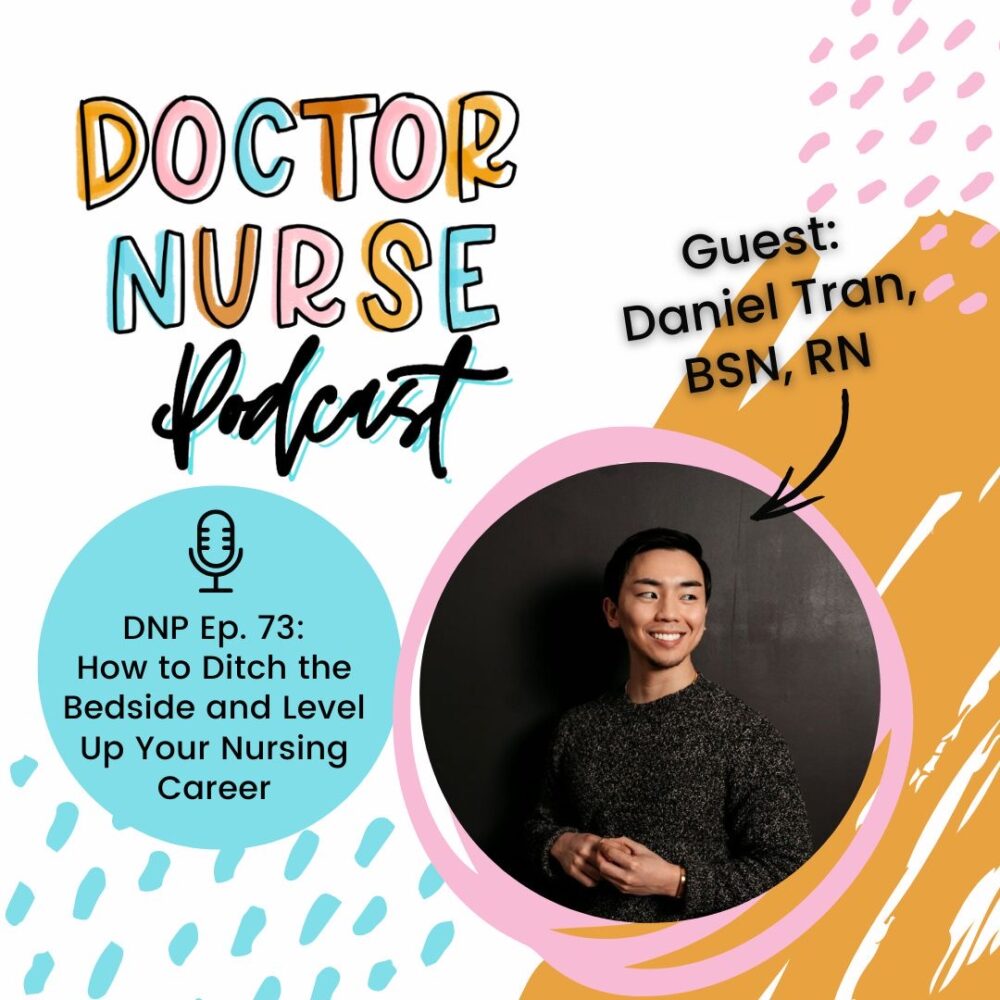
Daniel Tran graduated from the University of Texas-Arlington in 2018 and worked in Psychiatry and Mental Health Nursing for 3 years. In November 2021, he left bedside nursing to pursue entrepreneurship as a personal finance coach—where he helps nurses get rid of debt, achieve financial independence through investing, and get on track to retire early!
@wealthcarepros on IG and TikTok
———————————————————
Follow up with the Doctor Nurse Podcast here! Success NP- Etsy Shop developed by my best friend and me who are both Nurse Practitioners and create beautiful designs for your life! Check us out.
Picmonic covers thousands of hard-to-learn facts and topics, to help you master the material that healthcare students often struggle to learn. This study system helps boosts nursing and nurse practitioner students’ confidence and grades. Picmonic learning system students increase retention and test scores. Why does Picmonic work? Years ago, psychologists and education researchers found mnemonics to be an effective tool in increasing retention and memory recall. Today, lots of different strategies for learning and memorization using mnemonics exist including keyword, phrase, music, and image mnemonics. Using the idea of image mnemonics and applying clever pictures and humorous characters tied together with story and audio — and put it online to create the ultimate studying system for retention and memory recall. Use code DOCTORNURSE for 20% off your subscription.
Latest Episodes
Doctor Nurse podcast brings you weekly shows to help INSPIRE, EDUCATE AND EMPOWER nurses with true stories of initiative and impact.
Doctor Nurse podcast brings you weekly shows to help INSPIRE, EDUCATE AND EMPOWER nurses with true stories of initiative and impact.
Latest Episodes
Doctor Nurse podcast brings you weekly shows to help INSPIRE, EDUCATE AND EMPOWER nurses with true stories of initiative and impact.